



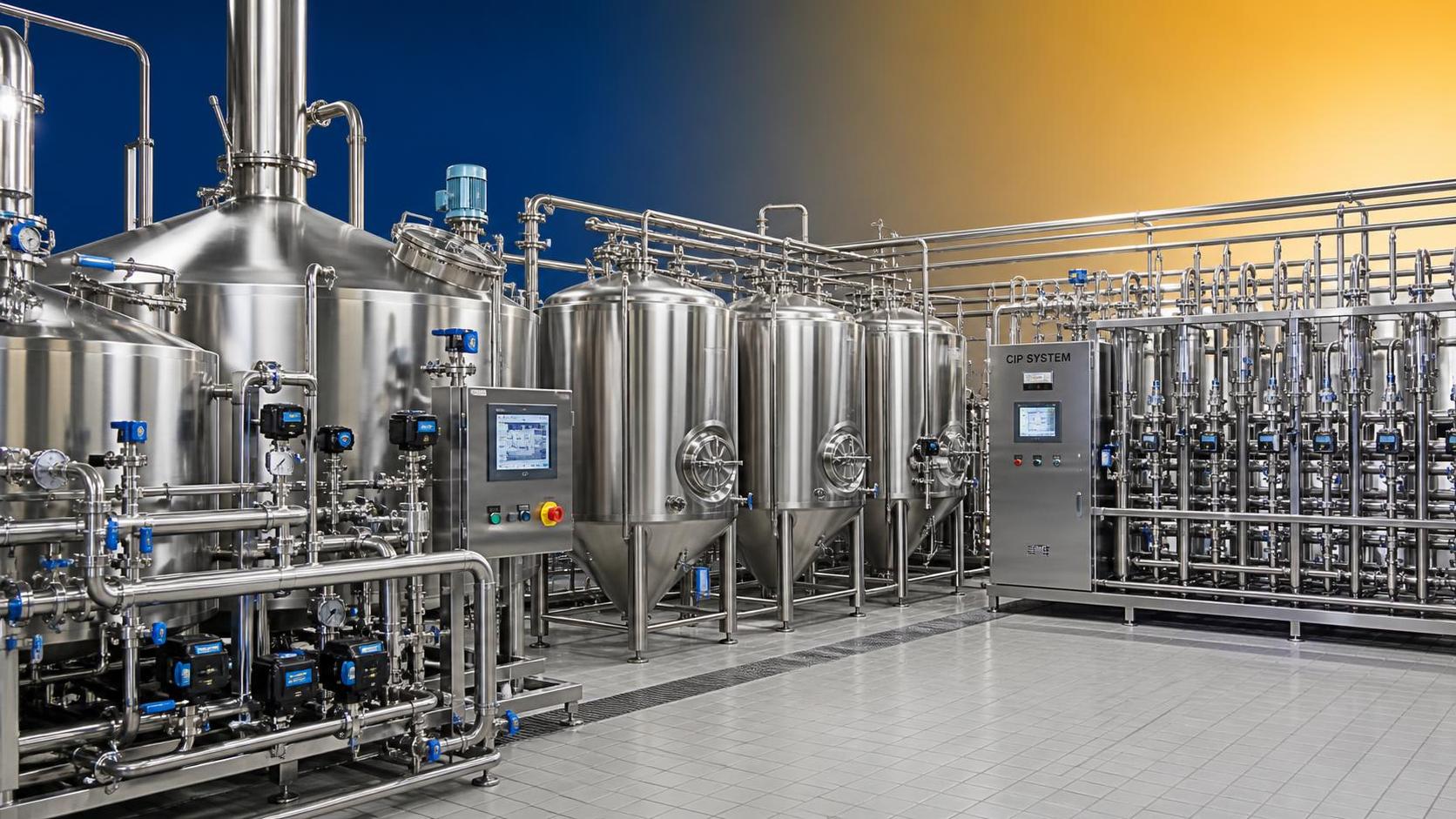
Choosing an automation level for large scale beer production is not simply a question of how many hectoliters a brewery can produce per day. A system that looks efficient on a capacity spreadsheet may become restrictive when the product mix expands, when packaging formats change, or when a quality team needs to trace an off-flavor back to a single fermentation event.
For technical evaluators, the real decision sits at the intersection of process repeatability, recipe flexibility, operator dependency, maintenance capability, and long-term data visibility. This is especially relevant for breweries producing more than one stable flagship beer. A portfolio that includes classic lager, German wheat beer, fruit-flavored beer, sugar-free low-calorie beer, and functional specialty products places very different demands on brewhouse control, cellar management, cleaning, and packaging.
The best automation level is therefore rarely “the highest level available.” It is the level that removes the right operational risks without creating a system that the brewery cannot maintain, adapt, or properly use.
Begin with the production decisions that must be repeatable
Before comparing semi-automatic and fully automated systems, identify which production decisions are too important to rely on individual operator judgment. In large-scale brewing, these usually include mash temperature profiles, wort boiling timing, hop dosing sequences, wort aeration, fermentation temperature curves, tank pressure, CIP parameters, and filling controls.
A brewery can tolerate some manual activity where visual inspection or sensory judgment adds value. It cannot comfortably tolerate variation in critical control points that affect attenuation, bitterness, dissolved oxygen, microbiological stability, or package consistency.
For example, a classic lager program may require tightly repeated fermentation and maturation conditions across many tanks. A fruit beer line introduces dosing and cross-contamination concerns. Sugar-free beer may require closer control of enzyme treatment, fermentation performance, and final analytical targets. These are not identical production problems, and the automation concept should reflect that reality.
A useful early question is: Which steps create the greatest cost or brand risk when they vary from shift to shift? Those steps should be prioritized for automation before less critical tasks.
Three practical automation models for large scale beer production
Automation is better understood as a spectrum than as a binary choice. Most breweries operate with a blend of manual, semi-automated, and automated functions rather than one uniform level across the whole facility.
For many producers, semi-automation is a sensible starting point. Operators may initiate batches, confirm raw material additions, and supervise transfers, while the control system manages temperatures, pump interlocks, and timing. This approach preserves practical brewing involvement and can reduce capital expenditure.
Its limitation becomes visible as production grows. When several batches, tanks, cleaning cycles, and packaging orders overlap, the brewery may depend on operators remembering exception rules or writing information into separate logs. In a high-output environment, that is where small omissions turn into costly delays.
Fully automated process control is often the stronger choice when the brewery needs consistent execution across shifts, frequent production cycles, or a wide distribution footprint. It can automate recipe execution, valve sequencing, tank control, clean-in-place routines, and event recording. However, a fully automated system should not be treated as a black box. If its logic is difficult to understand, modify, or troubleshoot, the brewery may become dependent on external support for routine changes.
Smart automation adds another layer: production data is connected to planning, quality records, maintenance activity, utilities monitoring, or warehouse movement. This can be valuable in large scale beer production, particularly when management wants to understand yield loss, tank utilization, packaging downtime, and lot-level traceability. But it should be introduced with a clear operating purpose, not because dashboards appear modern.
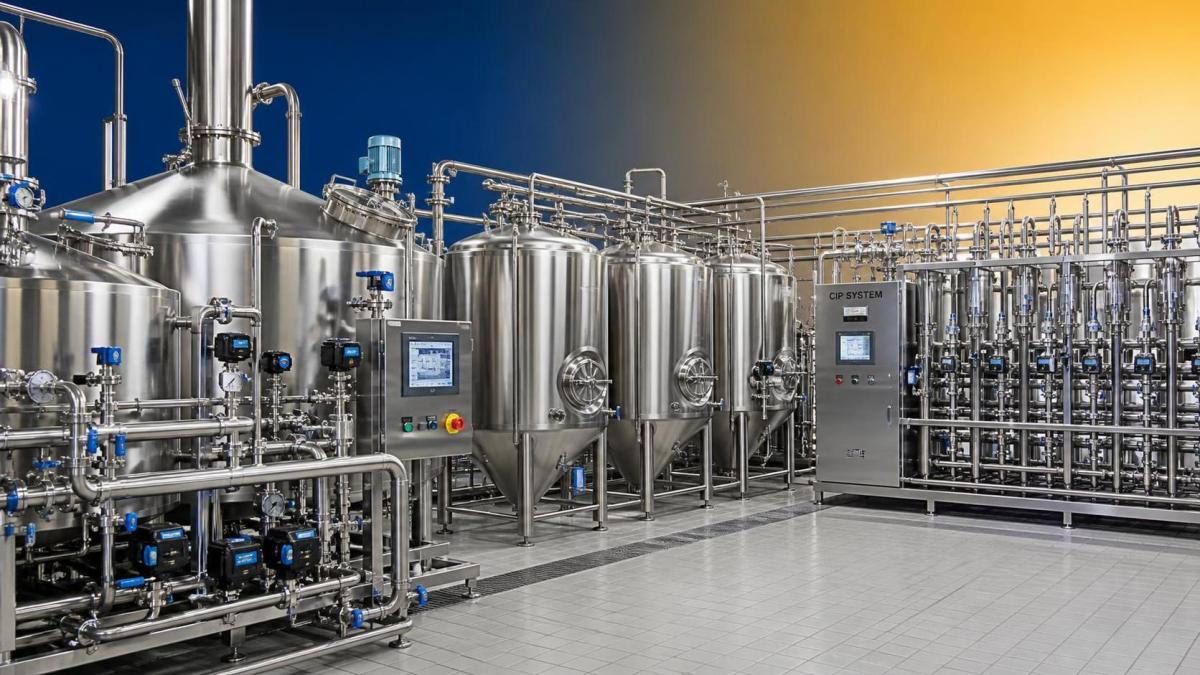
Where automation usually delivers the strongest return
Not every department deserves the same automation investment. A technical evaluation should examine each process area separately.
Brewhouse: automate the repeatable thermal and transfer work
Brewhouse automation is normally the foundation. Automated control of milling feeds, water volumes, mash rests, heating ramps, lautering, wort collection, boiling, whirlpool timing, and transfer sequences reduces variation at the point where beer style is established.
For brands producing both lager and wheat beer, recipe management matters as much as vessel capacity. The system should store controlled recipes with authorized adjustment functions, rather than relying on operators to manually reconstruct process settings. Evaluators should also check whether recipe changes are traceable: who changed a hop addition time, a mash temperature, or a hold period, and when?
Still, recipe automation must allow practical flexibility. Specialty and seasonal beers may need alternative hopping schedules, fruit preparation steps, or non-standard rests. A rigid system designed only for one flagship lager can become a bottleneck when the commercial team expands the portfolio.
Cellar: prioritize fermentation consistency and tank visibility
Fermentation is one of the clearest arguments for automation. In a small operation, an experienced brewer can manually check tanks and make timely decisions. In a large cellar with many vessels at different stages, manual oversight becomes increasingly difficult.
Automated fermentation management should support temperature setpoints, staged profiles, cooling control, pressure monitoring, alarm escalation, and historical trend review. The ability to compare tank behavior against a standard profile is particularly helpful when investigating inconsistent attenuation, sulfur expression, ester levels, or delayed fermentation.
For low-calorie and sugar-free products, the control plan may need closer alignment with laboratory testing. Automation cannot replace analytical verification, but it can ensure that process conditions are documented and deviations are visible early. The same applies to functional specialty beers, where ingredient handling and process timing may require additional controls.
CIP: avoid treating sanitation as a secondary system
In high-volume brewing, cleaning is production capacity. A delayed or incomplete CIP cycle can hold up a tank, compromise product safety, or create avoidable cross-flavor risk. This is particularly important where fruit ingredients, specialty adjuncts, or multiple beer styles are handled in shared equipment.
A robust automated CIP system should control chemical concentration where applicable, temperature, circulation time, flow confirmation, rinse sequence, and return conditions. It should also record completed cycles and flag exceptions. The objective is not merely to press a start button; it is to prove that the defined cleaning procedure actually occurred.
Technical teams should ask whether the CIP design can support future expansion. Adding tanks, filler circuits, or a new fruit beer line later should not require rebuilding the entire control architecture.
Packaging: select automation according to format complexity, not only line speed
Packaging is frequently the most visible constraint in a growing brewery. Yet “faster” is not always the right specification. A line filling cans, bottles, kegs, or mixed formats needs controls that protect fill accuracy, dissolved oxygen targets, seam or closure integrity, coding accuracy, and changeover discipline.
If the business serves supermarkets, restaurants, bars, and export-oriented distributors, packaging traceability deserves close attention. Lot coding should connect finished packs to production batches, raw materials, and relevant quality records. Automated rejection systems and in-line inspection can be appropriate where the cost of packaging errors is high, but the inspection data must be accessible and actionable.
The hidden decision: automation depends on organizational maturity
A sophisticated control platform cannot compensate for unclear work instructions, weak calibration routines, or an unprepared maintenance team. In fact, excessive complexity can create a new kind of vulnerability: production stops because no one on site understands an alarm or has access to the correct control parameters.
When assessing suppliers, technical evaluators should look beyond the equipment demonstration. Ask how the system handles user permissions, remote access, backups, spare parts, software version control, electrical documentation, and local service support. Confirm whether the brewery can export its own process data in usable formats. Data that cannot be reviewed independently is less valuable than it appears.
Training should be role-based. Brewers need to understand recipe execution and process exceptions. Quality personnel need batch history and alarm records. Maintenance teams need diagnostic access, electrical drawings, instrument lists, and preventive-maintenance guidance. Managers need meaningful production indicators rather than an overwhelming volume of screens.
A decision framework for a mixed beer portfolio
For a brewery such as Jinpai Beer, where core lager products may sit alongside German wheat beer, low-calorie options, fruit-flavored beers, and functional specialty beers, a modular automation architecture is usually more practical than a single all-or-nothing purchase.
The brewhouse and cellar may justify a higher degree of automation because these areas carry major consistency and capacity risks. Packaging may require scalable automation based on present formats and channel needs. Specialty dosing, filtration, or blending sections can be designed as controlled modules that are added or upgraded as demand develops.
This approach also aligns well with OEM/ODM production. Contract and customized projects often require recipe confidentiality, reliable batch records, controlled changeovers, and the ability to reproduce approved specifications. Automation should support those commercial requirements without making pilot-scale adjustments unnecessarily difficult.
Questions that reveal whether a proposed system is genuinely suitable
- Can the system run different beer families without extensive manual reprogramming?
- Are recipes version-controlled, with changes linked to named users and time records?
- Can production, quality, and maintenance teams retrieve the same batch history from a reliable source?
- What happens if a sensor fails, a communication link drops, or a utility supply becomes unstable?
- Which operations remain manual, and are those manual steps clearly protected by interlocks or checklists?
- Can additional fermenters, a new packaging format, or a specialty beer process be integrated later?
- Is the control system based on components and software that local technicians can maintain?
- Does the supplier provide clear acceptance criteria for capacity, cleaning performance, controls, and documentation?
These questions often reveal more than a nominal automation label. Two systems described as “fully automated” may differ greatly in traceability depth, flexibility, operator usability, and lifecycle support.
Choose the level that protects quality while leaving room to grow
For stable, high-volume brands, fully automated brewhouse, cellar, and CIP control is often a sound foundation for large scale beer production. It reduces avoidable variation and gives technical teams a dependable record of what happened in every batch. For breweries with frequent product development or complex specialty releases, that foundation should be paired with configurable recipe management and controlled manual intervention points.
Smart, data-integrated automation becomes worthwhile when the business is ready to use it for real decisions: improving tank utilization, reducing loss, coordinating packaging schedules, investigating deviations, and strengthening traceability across channels. It should be the next layer of operational discipline, not an expensive substitute for it.
The strongest selection is rarely the system with the most screens, sensors, or marketing language. It is the one that makes every important beer-making step more repeatable, every deviation easier to investigate, and every future product launch easier to manage. For a brewery building a broad portfolio and serving diverse global channels, that balance is what turns automation from an equipment feature into a durable production capability.
Thank you very much for writing to us. Please leave your message and contact information, we will reply to you within 24 hours.