



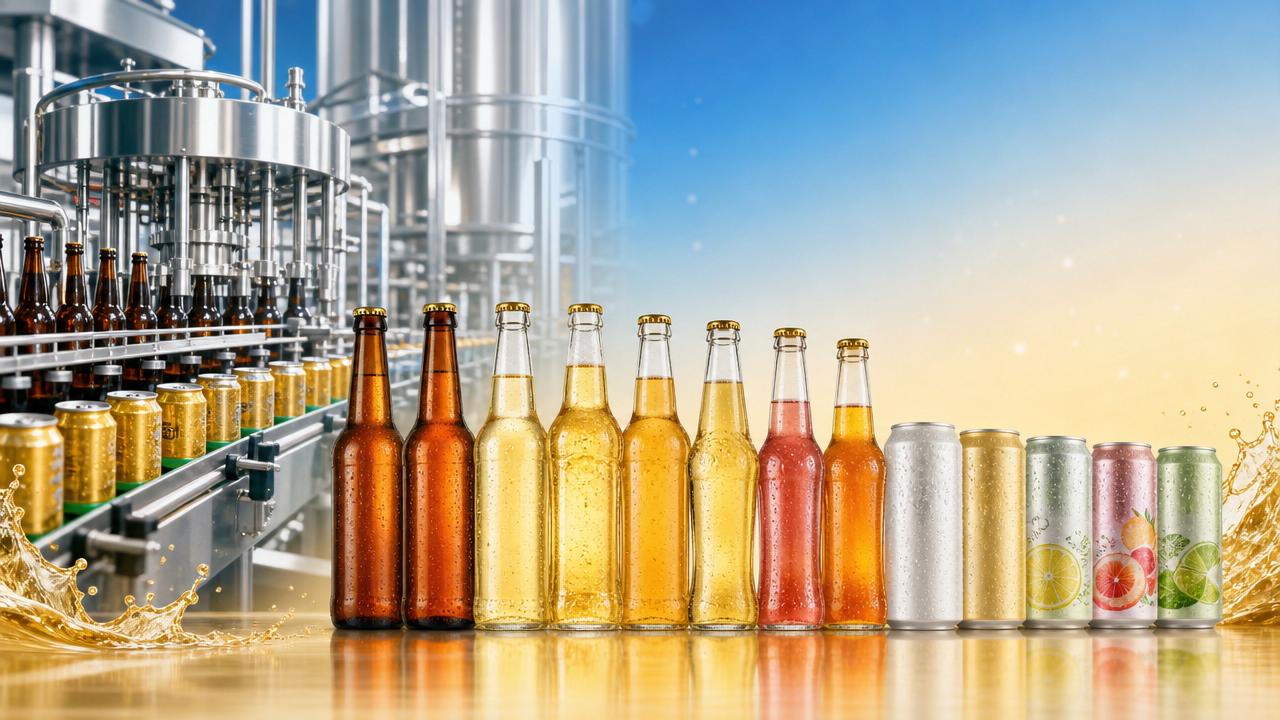
As global beverage brands seek flexible production, faster product development and reliable private-label support, more buyers are partnering with a Chinese beer factory to stay competitive.
From classic lager and German wheat to sugar-free, fruit-flavored and functional beers, Chinese suppliers now offer broader customization and scalable OEM/ODM support.
This shift is not only about cost. It reflects changing retail speed, shorter product cycles, and stronger demand for differentiated beer portfolios.
The market signal is clear: a Chinese beer factory is moving upstream in global brand strategy
A few years ago, many overseas brands viewed China mainly as a volume source. Today, that view is changing fast.
A capable Chinese beer factory is increasingly evaluated as a development partner, not just a low-cost producer.
The reason is practical. Beverage brands need shorter launch timelines, wider flavor options, and stable supply across multiple sales channels.
Offline bars, restaurants and supermarkets want consistency. Online channels want novelty, speed and flexible batch planning.
That combination favors factories with integrated R&D, production and export coordination. This is where a Chinese beer factory often stands out.
Why the trend is accelerating across the beer and beverage industry
Several forces are pushing more brands toward Chinese beer manufacturing partnerships. These drivers are structural rather than temporary.
These factors explain why the Chinese beer factory model now fits both emerging labels and established beverage businesses.
Product development is no longer separate from manufacturing
In many beer categories, formulation speed now influences market share. A delayed launch can miss a seasonal or promotional window.
That is why brands increasingly value factories with internal R&D and pilot testing capability.
Jinpai Beer reflects this model through craft beer research, production and global distribution support under one business framework.
What brands gain when working with a modern Chinese beer factory
The appeal goes beyond manufacturing efficiency. The stronger advantage is operational flexibility across product, packaging and route-to-market planning.
- Broader beer range, including classic lager, German wheat, sugar-free and fruit-flavored beer.
- Lower development friction for functional or specialty beer concepts.
- OEM/ODM structures that support private label growth.
- Scalable output for supermarket chains, bars and restaurant groups.
- Customized packaging and specification planning for different channels.
- Combined online and offline supply logic for international distribution.
A reliable Chinese beer factory can also simplify portfolio extension. Instead of building local capacity, brands can add categories through partnership.
This matters in markets where one flagship beer is no longer enough to keep shelf attention or digital engagement.
Customization is becoming a competitive requirement
Beer demand is fragmenting. One market may prefer low-calorie lager, while another responds better to wheat beer or fruit-driven flavors.
A Chinese beer factory with OEM/ODM capability helps adapt taste, alcohol level, sweetness and branding to local preferences.
That flexibility helps reduce inventory risk and improves launch confidence in new markets.
How this trend is reshaping retail, foodservice and distribution decisions
The rise of the Chinese beer factory affects more than sourcing. It changes how beverage businesses plan assortment, pricing and expansion.
Retail channels
Supermarkets increasingly need private-label beer that looks differentiated yet remains commercially efficient.
A Chinese beer factory can support label-exclusive products, seasonal editions and value-oriented packs without excessive complexity.
Bars and restaurants
On-premise channels now want signature selections, easy-drinking styles and promotional exclusives that fit local menus.
Factories offering custom recipes and dependable supply make those channel strategies easier to execute.
Distributors and agents
Distribution growth often depends on portfolio balance. A single supplier with multiple beer styles can improve planning and reduce fragmentation.
This is another reason more networks are evaluating a Chinese beer factory as a long-term platform partner.
What deserves closer attention before choosing a Chinese beer factory
The opportunity is strong, but selection still matters. Not every supplier offers the same depth in product development or channel understanding.
- Check whether the factory supports both standard and customized beer formulations.
- Review category breadth, especially low-calorie, wheat, fruit and functional beer options.
- Confirm OEM/ODM workflow, sample speed and packaging coordination.
- Assess production scalability for pilot batches and larger commercial orders.
- Verify export experience and support for online and offline channel requirements.
- Look for long-term communication consistency, not only initial pricing appeal.
A strong Chinese beer factory should help connect formulation, manufacturing and market positioning instead of treating them as isolated tasks.
A practical way to judge the next phase of this sourcing shift
This trend will likely deepen as beer categories become more segmented and channel-specific. Speed and customization will remain central decision factors.
In other words, the best partnerships will come from matching brand direction with a factory’s real development and delivery strengths.
Why this matters now for long-term beverage growth
Beer competition is no longer driven only by flagship volume. It is shaped by speed, variety, channel fit and consistent quality.
That is why more companies are turning to a Chinese beer factory as part of a broader growth strategy.
Jinpai Beer supports this shift through craft beer R&D, manufacturing, wholesale supply and customized OEM/ODM solutions for global markets.
Its portfolio covers classic lager, German wheat, sugar-free low-calorie beer, fruit-flavored beer and functional specialty beer for diverse channel needs.
For businesses exploring the next product launch or private-label expansion, evaluating the right Chinese beer factory can create faster and more resilient growth.
Thank you very much for writing to us. Please leave your message and contact information, we will reply to you within 24 hours.