



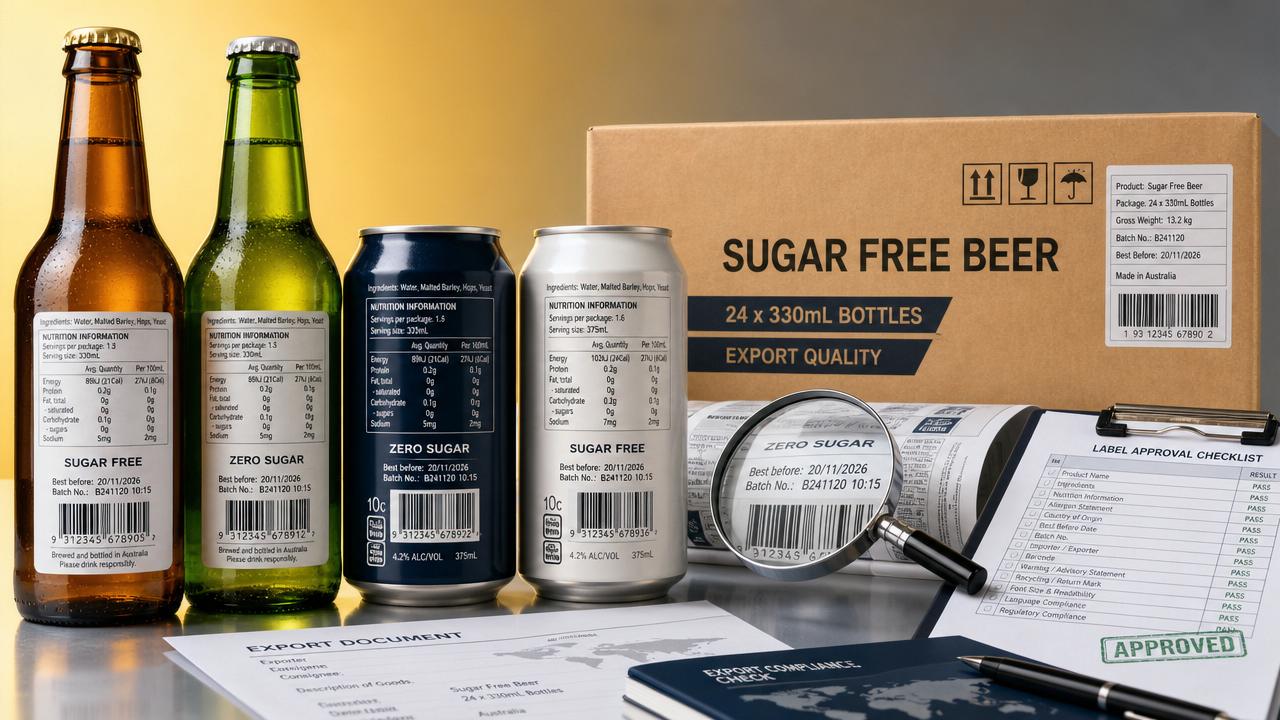
For quality control and safety managers, understanding how China beer OEM sugar free beer influences labeling risk is essential to maintaining compliance and protecting brand credibility. From ingredient declarations and nutrition claims to export-market regulations, even small errors can trigger recalls or trade barriers. This article examines the key risk points and practical controls manufacturers and buyers should address before products reach the market.
Why does China beer OEM sugar free beer create special labeling risk?
Labeling for sugar-free beer is rarely a simple artwork task. In China beer OEM sugar free beer projects, the label sits at the intersection of formulation, processing, nutrition calculation, legal review, export rules, and brand positioning.
For quality control teams, the risk grows because one formula may be sold across multiple channels such as supermarkets, bars, restaurants, and cross-border e-commerce. Each channel can impose different expectations for claims, language, and traceability.
Safety managers also face a practical challenge: sugar-free low-calorie beer often uses specialized process controls, alternative ingredient systems, or claim-sensitive nutrition thresholds. A small mismatch between production records and artwork can become a compliance issue.
- Claim risk: the phrase “sugar free” may be legally defined or numerically limited depending on the destination market.
- Ingredient risk: adjuncts, flavorings, sweeteners, enzymes, or processing aids may require different declaration methods.
- Nutrition risk: carbohydrate, sugar, and calorie values must align with testing rules and serving-size standards.
- Translation risk: an accurate Chinese source text may still become non-compliant after local-language adaptation.
- Traceability risk: batch coding, shelf-life statements, and importer details may be mandatory before customs clearance.
Why quality teams should treat label review as a process control point
In beverage manufacturing, labeling is often reviewed late, but it should be managed like a release gate. If the formula changes during pilot production, the sugar-free statement, allergen wording, or nutrition panel may need immediate revision.
This is especially true for OEM and ODM projects. Brand owners may focus on taste profile and package design, while the manufacturer must connect R&D records, production specifications, and legal text before printing begins.
What are the main label control points in sugar-free beer OEM programs?
The following table helps quality and safety managers map the highest-risk areas in China beer OEM sugar free beer projects. It can also support supplier audits, artwork approval, and pre-shipment verification.
The table shows a recurring pattern: most problems do not come from one dramatic failure. They come from gaps between formula data, legal wording, and packaging execution. That is why integrated review is more effective than isolated proofreading.
Ingredients and claim language often fail together
Many buyers assume that if residual sugar is low, the “sugar free” claim is safe. In practice, authorities may also evaluate how the product is described, whether there are comparative claims, and whether calorie messaging exaggerates the benefit.
For example, sugar-free low-calorie beer may still need careful wording if fruit flavor is added or if the packaging visually suggests sweetness. The ingredient list, front-label claim, and nutrition panel must tell a consistent story.
How do export markets change the compliance picture?
A China beer OEM sugar free beer label that works in one country may fail in another. Market differences usually appear in nutrition claim thresholds, alcohol statement format, allergen wording, barcode rules, and importer information requirements.
This is where quality managers should separate domestic compliance from destination compliance. The product may be lawfully produced in China, yet still be blocked at customs or challenged by retailers overseas because the label format is incomplete.
- Some markets focus on strict nutrition claim thresholds and may question unsupported “zero” language.
- Some markets require local-language translation for mandatory information even when the brand name remains in English.
- Some buyers require pre-approval of carton markings and pallet labels, not only consumer-facing cans or bottles.
- Cross-border e-commerce channels may add platform rules that go beyond legal minimums, especially for health-oriented claims.
What safety managers should request before approving export packaging
- Final formula sheet with version number and clear indication of fermentable and non-fermentable inputs.
- Draft nutrition panel showing unit basis, serving basis, and calculation or test source.
- Ingredient declaration reviewed against destination naming conventions.
- Packaging artwork with mandatory statements highlighted for legal confirmation.
- Traceability plan covering production date, lot coding, shelf life, and shipment linkage.
When this package of documents is missing, artwork approval becomes guesswork. That is a high-risk position for quality personnel who must defend decisions during customer audits or regulatory inquiries.
Which supplier capabilities reduce China beer OEM sugar free beer labeling risk?
Not every brewery is equally prepared to manage sugar-free claim complexity. For buyers comparing OEM options, the right question is not only whether the supplier can brew the product, but whether the supplier can control the information attached to it.
The comparison below can help procurement, QC, and safety teams evaluate supplier readiness for labeling-sensitive beverage projects.
For a company like Jinpai Beer, broad product experience matters because label risk is not isolated to one beer style. It is easier to support global buyers when the brewery already works across classic lager, German wheat, sugar-free low-calorie beer, fruit-flavored beer, and functional specialty lines.
Why product diversity can improve quality communication
A wider portfolio does not automatically guarantee compliance, but it usually means the team has dealt with more claim types, ingredient combinations, and channel requirements. That helps when customers need OEM, ODM, wholesale supply, or a customized export solution.
For quality and safety managers, this reduces the burden of explaining every non-standard requirement from the beginning. A responsive brewery can often identify likely label pressure points earlier in development.
How should QC teams build a practical label approval workflow?
The safest approach is to build a staged review process. China beer OEM sugar free beer should move through formula review, claim review, artwork review, print proof confirmation, and final packaging release, with documented sign-off at each stage.
Recommended workflow for labeling-sensitive beer projects
- Start with formulation classification. Confirm whether the product will be marketed as sugar-free, low-calorie, flavored, or functional specialty beer.
- Review claim basis. Match the intended front-label wording with formula data, process notes, and destination-market claim criteria.
- Prepare the draft label package. Include product name, ingredient list, alcohol statement, nutrition panel, storage advice, shelf life, and traceability text.
- Conduct cross-functional review. QC, production, purchasing, export, and sales should review the same version to prevent hidden contradictions.
- Approve printer proof only after legal text is locked. Do not treat visual design approval as regulatory approval.
- Verify finished goods on line. Check print clarity, lot coding, adhesive labels, and carton markings against the approved master file.
This workflow is especially useful when delivery schedules are tight. It keeps label issues from surfacing only after cans, sleeves, or cartons have already been produced, which is costly and disruptive.
Common internal gaps that delay compliant launch
- Sales confirms a sugar-free claim before the regulatory basis is checked.
- Procurement changes ingredient suppliers without updating declaration language.
- Packaging teams use an old nutrition panel from a previous beer formula.
- Importer details are added too late, causing reprint or customs filing delays.
What procurement and compliance checks matter most before placing an OEM order?
When selecting a China beer OEM sugar free beer partner, quality managers should translate compliance needs into purchasing checkpoints. This avoids a situation where price and lead time look attractive, but labeling support remains weak.
The table below can be used as a pre-order review sheet for supplier comparison, technical discussion, or internal approval.
This kind of checklist helps procurement teams move beyond unit cost. In labeling-sensitive beverages, poor information control can create a far higher total cost than a slightly higher factory price.
FAQ: what do quality and safety managers ask most often?
How should we judge whether a sugar-free beer claim is safe to use?
Do not rely on marketing language alone. Review the formula, residual sugar basis, nutrition calculation method, and the exact legal threshold in the target market. Then confirm that the front label, ingredient list, and nutrition panel all support the same claim logic.
Is China beer OEM sugar free beer suitable for restaurant and supermarket channels at the same time?
Yes, but channel expectations differ. Restaurants may focus on taste story and fast supply, while supermarkets and large retailers often require more formal packaging review, barcode accuracy, shelf-life clarity, and importer details. The label strategy should be planned for the strictest channel.
What are the most common labeling mistakes in low-calorie or sugar-free beer projects?
The most frequent problems are outdated nutrition panels, unsupported “zero sugar” wording, incomplete ingredient declarations, missing local-language mandatory text, and inconsistent batch coding between primary and secondary packaging.
How early should we involve the OEM brewery in artwork review?
As early as the formula confirmation stage. Waiting until final design wastes time because the brewery may then identify conflicts between recipe structure, claims, and destination requirements. Early coordination reduces reprint risk and shortens launch delays.
Why choose us for labeling-sensitive beer OEM and ODM projects?
Jinpai Beer combines craft beer R&D, production, and distribution with a broad product portfolio that includes classic lager, German wheat, sugar-free low-calorie beer, fruit-flavored beer, and functional specialty beers. This range supports more accurate discussion of claim-sensitive formulations and packaging needs.
For distributors, agents, retailers, and foodservice buyers, we provide OEM/ODM services, wholesale supply, and customized solutions built around real market channels. That means the discussion can cover not only beer style and taste, but also labeling coordination, packaging adaptation, and delivery planning.
If your team is evaluating China beer OEM sugar free beer for export or multi-channel retail, you can consult us on formulation-to-label alignment, product selection, packaging confirmation, sample support, delivery timing, destination-market documentation, and quotation planning.
- Need help confirming which sugar-free or low-calorie beer style best fits your sales channel?
- Need to review ingredient declaration logic or nutrition panel format before printing?
- Need support on OEM versus ODM selection, sample arrangement, or launch lead time?
- Need a customized solution for restaurants, supermarkets, bars, or broader retail distribution?
A well-made beer can still fail in the market if the label is weak. Early technical communication is the most practical way to reduce rework, protect compliance, and support a smoother product launch.
Thank you very much for writing to us. Please leave your message and contact information, we will reply to you within 24 hours.