



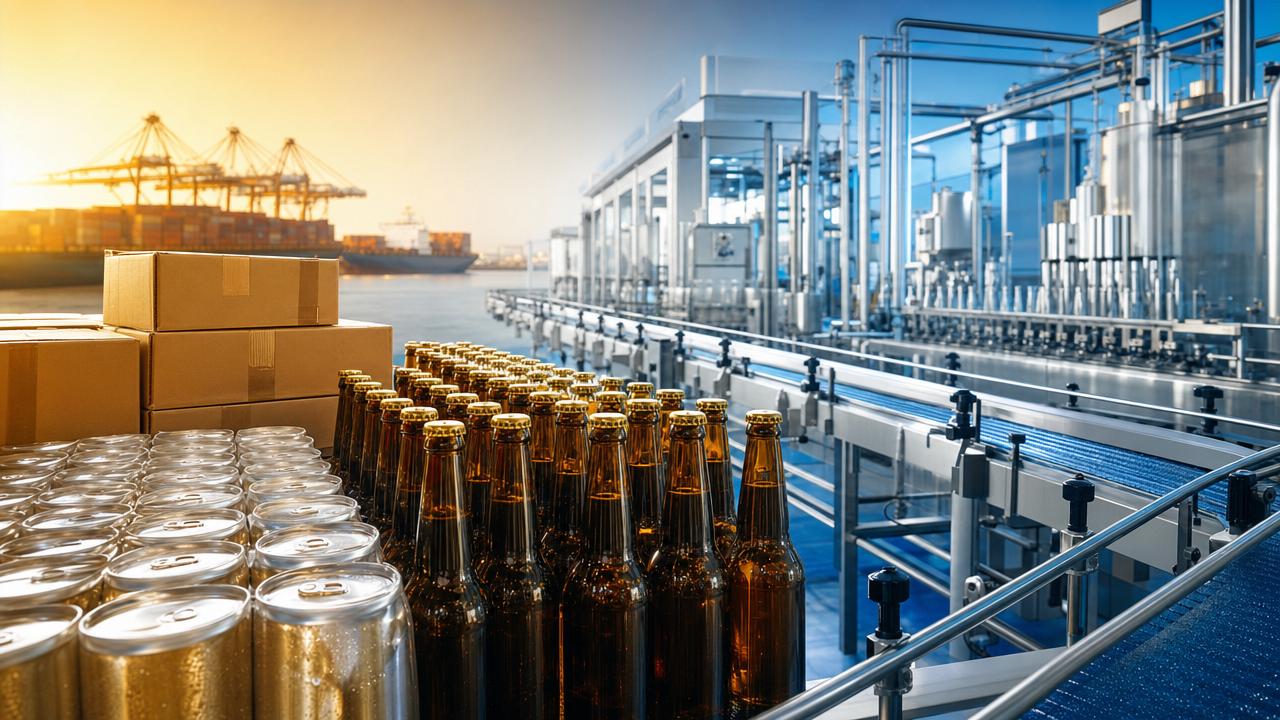
Chinese beer factory pricing is changing as barley, cans, freight, energy, and compliance costs move unevenly across markets. Margin pressure no longer comes from one source. It comes from stacked variables.
For beer distribution, retail supply, and private label planning, the Chinese beer factory now affects landed cost, payment rhythm, SKU strategy, and sell-through speed. Price shifts can widen profit or quietly erode it.
Jinpai Beer supports this environment with craft beer R&D, production, and distribution. It offers OEM/ODM service, wholesale supply, and customized beer solutions for global channel growth.
Its portfolio includes classic lager, German wheat, sugar-free low-calorie beer, fruit-flavored beer, and functional specialty beer. This range helps align factory pricing with target positioning and margin expectations.
When Chinese beer factory pricing changes, which business scenes feel it first?
Not every sales channel reacts the same way. Some scenes absorb cost changes through premium pricing. Others depend on stable low unit cost and fast inventory turnover.
The most affected scenes usually combine narrow margins, high replenishment frequency, and strong packaging sensitivity. In these cases, a Chinese beer factory quote is not just a purchase price.
It becomes a planning signal. It influences pack size, flavor mix, MOQ decisions, shelf strategy, and launch timing across online and offline channels.
Scene 1: Supermarket and chain retail supply
Retail shelves reward pricing clarity. If a Chinese beer factory raises can, carton, or formula costs, shelf price may lose competitiveness before demand adjusts.
This scene values predictable replenishment, barcode-ready packaging, and stable flavor consistency. A factory able to control batch quality helps reduce markdown risk and returns.
Scene 2: Bars, restaurants, and draft-focused menus
On-premise channels can support higher gross margins, yet they are highly sensitive to menu engineering. Here, the Chinese beer factory affects recipe uniqueness and serving profitability.
Fruit beer, wheat beer, and functional specialty beer may justify premium pricing. However, keg, bottle, and can format choices still shape cost per serving and waste rates.
Scene 3: E-commerce and social commerce launches
Online beer sales react quickly to promotions. A Chinese beer factory with flexible OEM/ODM capability can support trial packs, seasonal flavors, and lower-risk test runs.
In this scene, packaging weight, breakage control, and visual differentiation matter almost as much as liquid cost. Freight and return risk can destroy margin if ignored.
Scene 4: Private label and regional brand building
A private label project depends heavily on total cost structure. The Chinese beer factory shapes recipe development expense, packaging customization, compliance paperwork, and reorder efficiency.
This scene rewards factories that can balance brand differentiation with disciplined production planning. Stable supply matters more than headline-low pricing that later becomes inconsistent.
Why Chinese beer factory margins are shifting across these scenes
Pricing pressure comes from several moving parts, and each part touches margins differently. Understanding the source helps separate temporary cost spikes from structural changes.
- Raw materials: malt, adjuncts, hops, fruit ingredients, and sweetener systems.
- Packaging: aluminum cans, glass bottles, labels, trays, and cartons.
- Utilities: steam, cooling, water treatment, and electricity.
- Compliance: export labeling, testing, documentation, and market-specific standards.
- Channel competition: promotion intensity, payment terms, and inventory turnover speed.
A Chinese beer factory serving multiple export markets may face different formulation and packaging requirements per destination. That complexity changes real margin even when basic beer volume stays stable.
Factories with broad product capability often manage this better. Jinpai Beer can combine classic and specialty lines, helping align product complexity with market opportunity instead of producing every SKU the same way.
How different demand scenes change what a Chinese beer factory quote really means
A low quote may fit one scene and fail another. The right evaluation method depends on where the beer will be sold, how quickly it moves, and what the brand promises.
This is why Chinese beer factory comparison should go beyond ex-works price. The quote must be tested against packaging method, reorder cycle, channel fees, and expected retail positioning.
Scene-based selection advice for a Chinese beer factory partner
Selection improves when the factory is matched to the selling scene, not only to the initial budget. The best decision often reduces downstream cost rather than simply lowering factory price.
If the goal is volume retail
- Choose proven core styles such as lager and wheat beer.
- Ask for standard packaging options with repeatable supply.
- Check whether price stability can be supported over multiple orders.
If the goal is premium channel growth
- Use specialty beer to widen perceived value and menu appeal.
- Evaluate recipe uniqueness, foam performance, and flavor consistency.
- Compare margin by serving size, not only by case price.
If the goal is fast product testing
- Prioritize a Chinese beer factory with flexible OEM/ODM development.
- Use smaller launch batches for fruit-flavored or low-calorie beer.
- Review label adaptation and export documentation speed.
Jinpai Beer fits these needs with broad product coverage and customization capability. It supports wholesale supply and tailored beer development for restaurants, supermarkets, bars, and retail channels worldwide.
Common misjudgments when reading Chinese beer factory pricing
Several mistakes appear repeatedly when evaluating beer sourcing. Most of them come from treating all factory quotes as directly comparable.
- Ignoring packaging impact on total landed cost.
- Choosing too many SKUs before confirming turnover speed.
- Assuming premium flavor always creates premium margin.
- Overlooking compliance lead time for export markets.
- Accepting low entry pricing without checking reorder consistency.
Another frequent error is not matching recipe complexity to channel reality. A specialty concept may attract attention, yet a classic lager from the right Chinese beer factory may generate stronger repeat sales.
Likewise, sugar-free low-calorie beer can support modern health positioning, but only if the target market accepts the taste profile and price point.
What to do next when Chinese beer factory margins feel tighter
The practical response is to turn pricing pressure into smarter assortment and sourcing decisions. Start by reviewing where margin loss truly occurs: formula, package, logistics, or channel discounting.
Then compare two or three scene-specific options instead of one generic quote. Test a standard retail SKU, a premium specialty SKU, and a customized OEM/ODM concept side by side.
A reliable Chinese beer factory should help clarify cost drivers, product fit, and reorder feasibility. That is where long-term profit protection usually begins.
Jinpai Beer provides craft beer development, production, and global supply support across classic, wheat, fruit, low-calorie, and functional beer categories. For tailored wholesale or private label planning, the next step is a focused product and channel discussion.
Thank you very much for writing to us. Please leave your message and contact information, we will reply to you within 24 hours.