



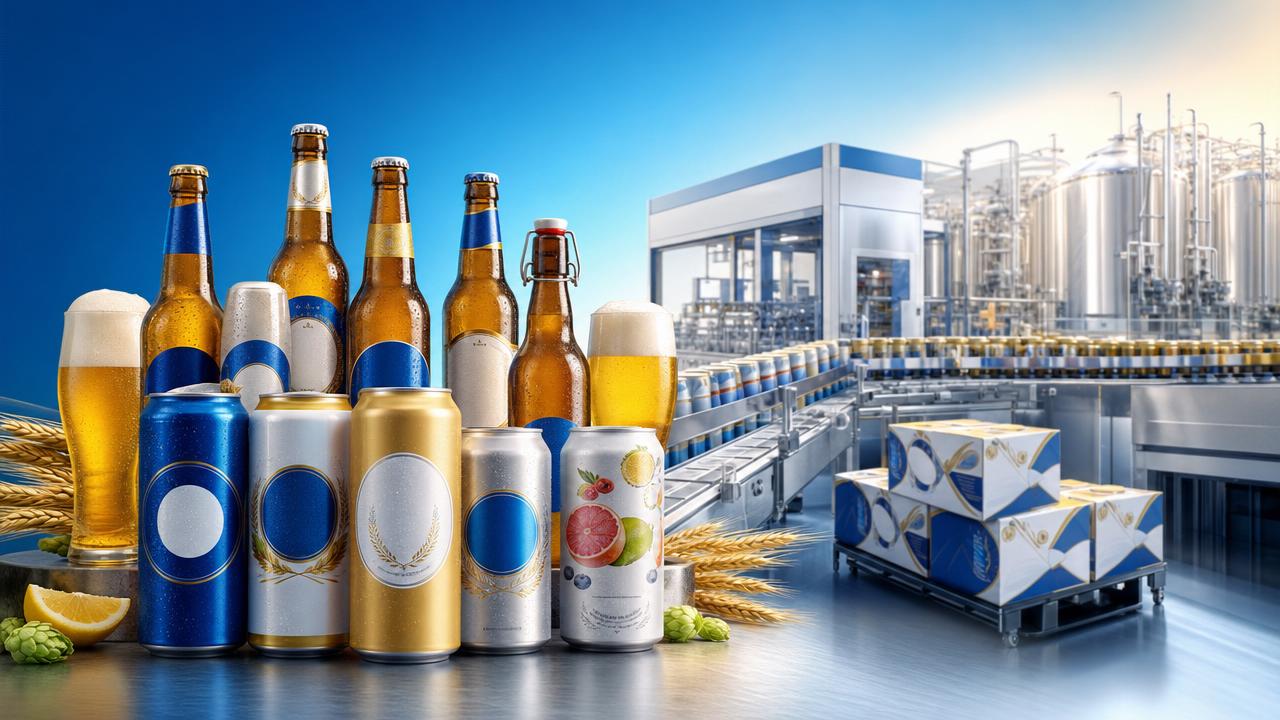
As private label demand accelerates, China beer OEM is becoming a strategic growth engine for brands seeking faster market entry, flexible product development and cost-efficient scaling in 2026. From classic lager and German wheat to sugar-free, fruit-flavored and functional beers, Chinese manufacturers are helping decision-makers build differentiated portfolios that match evolving consumer preferences and global retail opportunities.
Why is China beer OEM gaining momentum in private label strategy?
For business decision-makers, the appeal is not only lower production cost. China beer OEM now offers broader formulation capability, shorter development cycles and stronger packaging flexibility than many buyers expected a few years ago.
Private label beer is no longer limited to entry-level lager. Retailers, distributors and hospitality groups want SKUs that respond to wellness demand, flavor experimentation and channel-specific positioning. That shift favors manufacturers able to combine R&D with scalable production.
Jinpai Beer operates in craft beer R&D, production and distribution, which matters because buyers increasingly need more than filling capacity. They need formulation advice, packaging coordination and portfolio planning across classic and emerging beer categories.
- Faster product launch for supermarket chains, restaurant groups and regional distributors entering new markets under their own labels.
- More flexibility to test sugar-free low-calorie beer, fruit beer or functional specialty beer without building in-house production assets.
- Better cost control through consolidated sourcing, standardized brewing processes and integrated OEM or ODM service support.
What has changed by 2026?
By 2026, buyers are expected to judge OEM partners less by headline price and more by category responsiveness. Can the supplier handle premium wheat beer for bars, value lager for retail and zero-sugar concepts for e-commerce at the same time?
That is where a capable China beer OEM partner stands out. The winning supplier supports both volume production and niche innovation, helping brands reduce launch risk while keeping their assortment relevant.
Which beer categories are driving private label growth?
The product mix behind China beer OEM demand is becoming more diverse. Buyers are not choosing one universal beer. They are selecting a category architecture that fits channel, consumer profile and price band.
The table below shows how different beer styles can support different commercial objectives in private label development.
The practical takeaway is clear. A private label program often performs better when it includes a core volume SKU and one or two differentiated extensions. Jinpai Beer’s portfolio structure supports this approach across mainstream and specialty beer segments.
How should buyers build the right assortment?
A balanced range should match channel economics. Supermarkets may need an accessible lager plus a premium wheat beer. E-commerce sellers may prefer low-calorie and fruit-flavored options. Bar groups often want recognizable classic styles with stronger sensory character.
- Start with one anchor product that can generate repeat purchase and support volume planning.
- Add one premium or trend-driven SKU to improve margin mix and brand perception.
- Use seasonal or channel-exclusive packaging to test demand without overcommitting inventory.
How does China beer OEM compare with other sourcing options?
Decision-makers usually compare three routes: local contract brewing, importing finished branded beer or working with a China beer OEM partner on private label. Each path serves a different business model.
The comparison below helps clarify where China beer OEM creates the most strategic value.
The comparison shows why China beer OEM is attractive for companies that want control. You can shape recipe, pack format and positioning while keeping a closer eye on margin architecture. That is harder when you rely on third-party brands.
Where do buyers make the wrong comparison?
Many teams compare only quoted unit price. That is incomplete. A lower ex-factory price can lose value if the supplier cannot support stable flavor, compliant labels or mixed-SKU planning. Procurement should compare total commercial fit, not just brewing cost.
What should enterprise buyers evaluate before selecting a China beer OEM partner?
The right supplier evaluation framework reduces rework, delays and brand risk. For beer private label projects, buyers should assess product capability, communication quality, packaging execution and export readiness together.
The table below can be used as a practical procurement checklist when screening a China beer OEM candidate.
For many buyers, this checklist is more useful than a generic supplier brochure. It turns supplier selection into a commercial decision, not just a sourcing exercise. Jinpai Beer’s OEM and ODM model aligns well with such structured evaluation because it combines category breadth with customization support.
A practical shortlist for decision-makers
- Choose suppliers that can support both mainstream volume and niche innovation, so your portfolio can evolve without restarting qualification.
- Verify whether product recommendations are tied to your channel strategy, not simply to what is easiest for the factory to produce.
- Ask for clarity on sampling, packaging confirmation, lead time and export documentation before discussing final volume commitments.
How can buyers balance cost, speed and product differentiation?
This is where many private label beer projects succeed or fail. A low-cost launch that lacks clear product differentiation may struggle in retail. A highly creative concept with complex ingredients and packaging may delay launch and damage margin.
The better route is staged development. Start with a commercially reliable base product, then layer innovation where it has a clear sales role.
Recommended cost-management tactics
- Use classic lager as a volume anchor to support pricing competitiveness and smoother production planning.
- Introduce one premium extension, such as German wheat beer, to improve average selling price and category perception.
- Reserve trend-led innovation, such as fruit-flavored or functional beer, for limited runs, online exclusives or seasonal promotions.
- Standardize packaging components where possible to reduce artwork changes, procurement complexity and inventory pressure.
For enterprise buyers with tight launch windows, an experienced China beer OEM partner can also lower hidden cost. Clear communication, coordinated packaging and practical formulation advice reduce revisions that consume time and budget.
What about compliance, labeling and export readiness?
Compliance is often underestimated in beer private label projects. Product taste may be approved quickly, but label requirements, ingredient declarations and destination-market documentation can slow launch if they are addressed too late.
A reliable China beer OEM partner should help buyers prepare for common requirements without making unrealistic claims. Rules vary by market, but disciplined documentation and label review are always important.
Key areas buyers should confirm early
- Ingredient and allergen presentation, especially when wheat-based or flavored products are involved.
- Alcohol content declaration, net content format and barcode or market-specific packaging details.
- Claim wording for sugar-free, low-calorie or functional positioning, which should be reviewed carefully for target-market suitability.
- Shelf-life handling, storage guidance and shipping coordination for long-distance distribution across online and offline channels.
Jinpai Beer’s global supply orientation is relevant here. Buyers serving restaurants, supermarkets, bars and multi-channel retail need a partner that understands how product style, packaging and documentation must work together.
What are the most common mistakes in China beer OEM procurement?
The mistakes are rarely technical alone. Most problems come from mismatched expectations between the buyer’s channel strategy and the supplier’s execution model.
Frequent procurement pitfalls
- Selecting a beer style because it looks trendy, without validating whether the target channel can sell it at the planned price point.
- Treating sampling as a standalone task, rather than linking recipe approval to packaging, lead time and launch calendar.
- Ignoring repeat-order practicality. A first batch may work, but an unstable replenishment plan can break retail momentum.
- Overemphasizing custom features that add cost without helping shelf conversion or consumer understanding.
A strong supplier relationship should help prevent these mistakes. The best China beer OEM partners do not only accept specifications. They challenge unclear briefs and guide buyers toward workable, channel-ready solutions.
FAQ: what do decision-makers usually ask before launching a private label beer project?
How do I choose between OEM and ODM for beer private label?
Choose OEM when you already have a clear recipe concept, packaging direction or brand strategy. Choose ODM when you want a faster route using the supplier’s existing product development experience. For many importers and retail groups, ODM shortens the launch path, while OEM gives deeper product control.
Which China beer OEM products are best for first-time buyers?
A classic lager is usually the safest starting point because it supports broader consumer acceptance and simpler volume planning. If your channel can support premium positioning, adding German wheat beer as a second SKU creates a more complete and commercially balanced range.
Are sugar-free and functional beers worth adding in 2026?
They can be, especially for modern retail, e-commerce and younger consumer segments. However, they should be launched with clear audience targeting and careful label review. These products work best when they extend a core portfolio, not when they replace it entirely.
What should I confirm before requesting a quotation?
Confirm your target beer style, packaging format, channel, expected order pattern and destination market requirements. A quotation becomes more useful when it reflects the real business case, including formulation direction, compliance needs and launch timing.
Why work with Jinpai Beer for China beer OEM in 2026?
Jinpai Beer combines craft beer R&D, production and distribution with a broad product lineup that fits current private label growth patterns. That includes classic lager, German wheat, sugar-free low-calorie beer, fruit-flavored beer and functional specialty beers.
For enterprise buyers, this means one partner can support multiple route-to-market needs. Whether you supply supermarkets, bars, restaurants or online retail, the project can be built around channel fit rather than a one-style-fits-all offering.
What you can discuss with us
- Product selection across lager, wheat, low-calorie, fruit and specialty beer categories.
- OEM or ODM route selection based on launch speed, customization depth and target channel.
- Packaging options, private label development priorities and portfolio structure for retail or horeca channels.
- Sample planning, delivery cycle expectations, export documentation coordination and quotation communication.
If your team is evaluating China beer OEM for private label growth in 2026, a focused discussion can save weeks of internal trial and error. Share your target market, product brief, preferred beer style, channel plan and timeline, and we can help you assess formulation direction, suitable SKU combinations, lead time expectations and customization options.
Thank you very much for writing to us. Please leave your message and contact information, we will reply to you within 24 hours.