



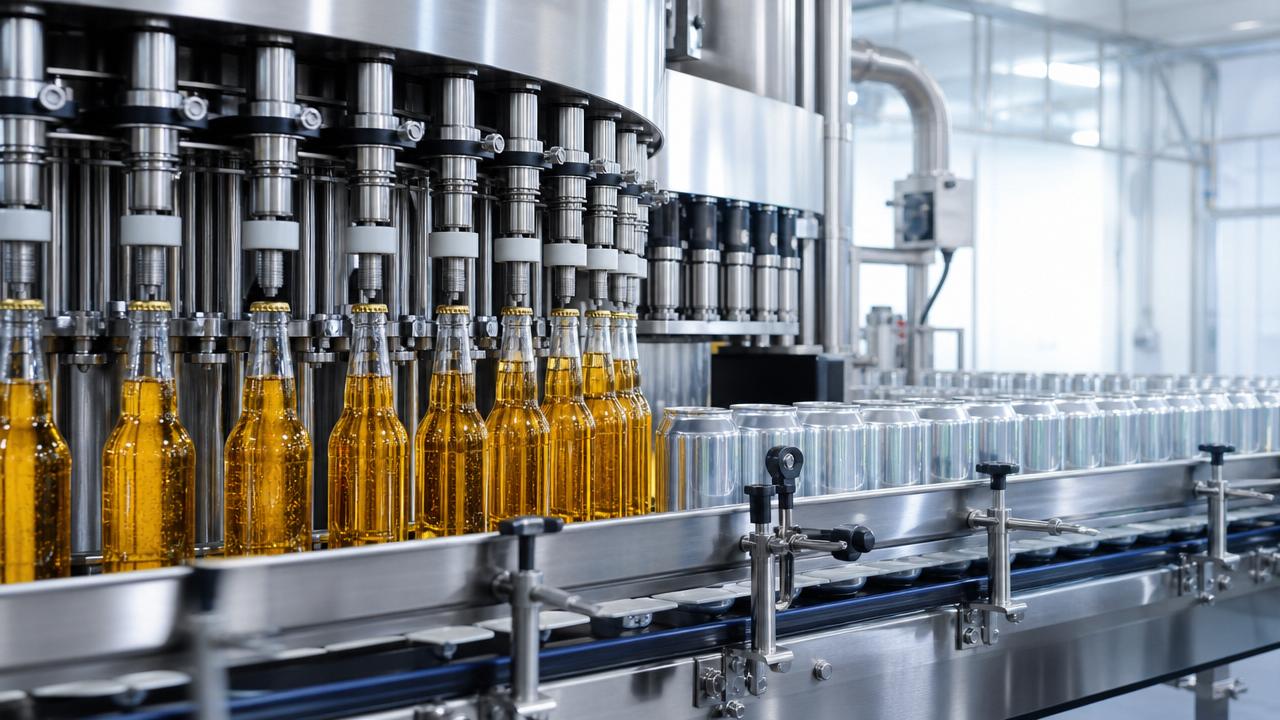
As craft beer competition intensifies in 2026, more breweries are strategically pivoting to Beer OEM contract brewing to scale faster, reduce capex, and focus on branding and distribution. For decision-makers navigating rising production costs, regulatory complexity, and demand volatility, partnering with an experienced OEM provider like Jinpai Beer—specializing in lagers, wheat beers, low-calorie, fruit-infused, and functional craft formulations—offers agility without compromising quality. With global logistics, full-service R&D, and flexible MOQs, Beer OEM contract brewing is no longer a stopgap—it’s the growth accelerator top-tier craft brands trust.
A Structural Shift: From Asset-Heavy Expansion to Strategic Brand-Centric Scaling
The craft beer landscape in 2026 is defined not by volume growth alone—but by strategic recalibration. Over 68% of U.S. and EU-based craft brewers surveyed in Q1 2026 reported slowing year-on-year taproom revenue growth, while e-commerce and specialty retail channels grew at 22–29% CAGR. This divergence signals a fundamental shift: brand equity and channel access now outweigh brewing capacity as primary competitive differentiators. Consequently, Beer OEM contract brewing has evolved from a niche contingency option into a core growth lever—especially for mid-market players targeting international expansion, seasonal innovation, or category adjacency (e.g., functional or sugar-free formats).
Five Key Drivers Accelerating the OEM Pivot
This trend isn’t reactive—it’s systematically driven by converging economic, operational, and consumer forces:
Who Benefits Most—and Where Risk Lurks
Not all businesses gain equally from Beer OEM contract brewing. The highest ROI accrues to three distinct profiles:
- Regional Brands Targeting Global Retail Chains: Supermarkets and duty-free operators increasingly require multi-market compliant, shelf-stable variants—exactly where Jinpai Beer’s dual-lab R&D (flavor stability + microbiological safety) delivers measurable shelf-life extension.
- Restaurant Groups Launching House Brands: With proprietary recipes but zero brewing infrastructure, these partners leverage OEM for speed-to-shelf—while retaining full IP ownership and label control.
- Functional Beverage Startups Entering Beer Adjacency: CBD-infused, adaptogen-blended, or vitamin-enriched beers demand specialized fermentation expertise and regulatory navigation—capabilities embedded in Jinpai’s functional craft platform.
Conversely, brands with underutilized brewhouses (>40% idle capacity) or those prioritizing hyper-local authenticity may face margin compression or brand dilution if OEM partnerships lack rigorous quality governance.
Beyond Brewing: The OEM Partner as Innovation Co-Engineer
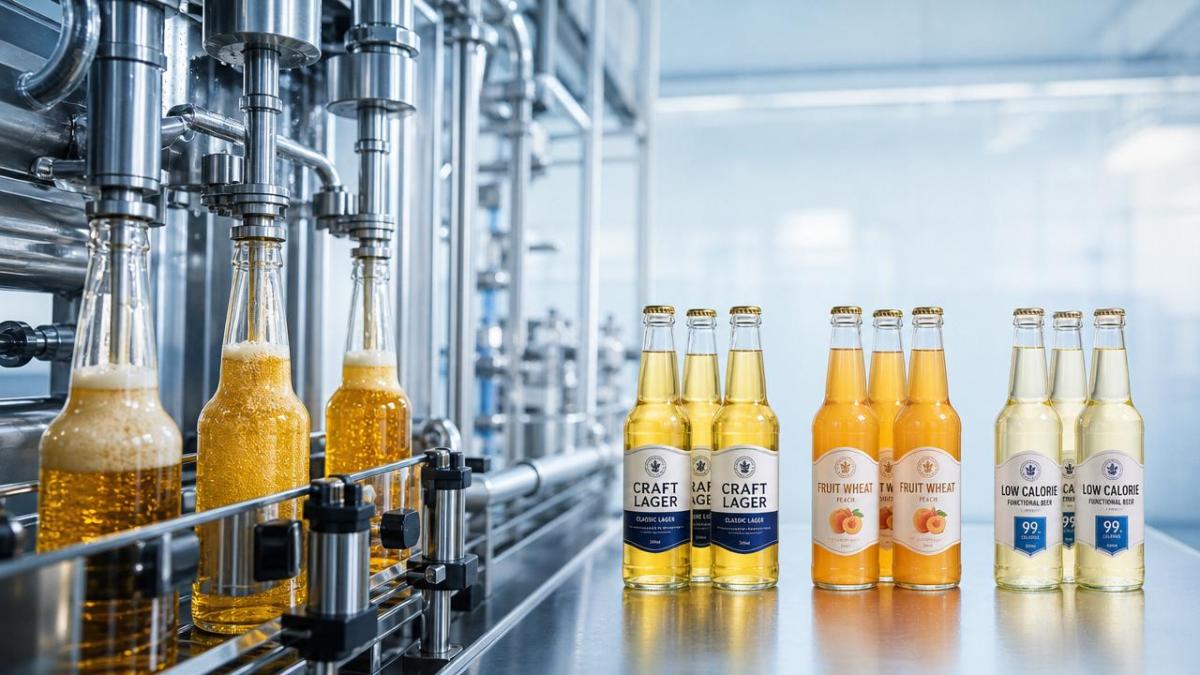
Top-tier Beer OEM contract brewing providers now operate as integrated innovation partners—not just production vendors. At Jinpai Beer, this manifests in three actionable ways:
- Formulation-as-a-Service: From low-calorie lager base optimization (<99 kcal/330ml) to yeast strain selection for tropical fruit expression—R&D support begins pre-batch, not post-spec.
- Channel-Ready Packaging Integration: Direct collaboration with global label printers, can suppliers, and cold-chain logistics partners ensures seamless go-to-market alignment—from Amazon FBA pallet specs to EU EPR-compliant shrink-wrap.
- Real-Time Market Feedback Loops: Shared analytics dashboards track sell-through velocity, regional flavor preferences, and returns data—enabling rapid iteration without batch lock-in.
Actionable Next Steps for Decision-Makers
If your brand is evaluating Beer OEM contract brewing in 2026, prioritize clarity over speed. Begin with these three diagnostic questions:
- What percentage of your current production cost is tied to non-core activities (e.g., wastewater treatment, can line maintenance, lab QA labor)? If >35%, OEM unlocks immediate P&L leverage.
- Which new market or channel requires launch within 90 days—and does your current infrastructure support compliant, scalable execution? If “no” to either, OEM de-risks entry.
- Do you have a pipeline of ≥3 untested product concepts (e.g., sugar-free IPA, matcha-kombucha sour)? Low-MOQ OEM enables validation before capital commitment.
Jinpai Beer supports this evaluation with zero-cost technical consultations, free sample kits across five core platforms (classic lager, German wheat, sugar-free low-calorie, fruit-flavored, functional specialty), and co-developed commercialization roadmaps. For enterprise decision-makers, flexibility isn’t optional—it’s the baseline requirement for sustainable craft brand growth in 2026 and beyond.
To explore how Beer OEM contract brewing can accelerate your next phase—whether scaling in Southeast Asia, launching a functional wellness line, or entering premium grocery retail—contact Jinpai Beer’s Global Partnership Team today. We serve restaurants, supermarkets, bars, and distributors worldwide with end-to-end OEM/ODM solutions, wholesale supply, and fully customized craft beer development.
Thank you very much for writing to us. Please leave your message and contact information, we will reply to you within 24 hours.