



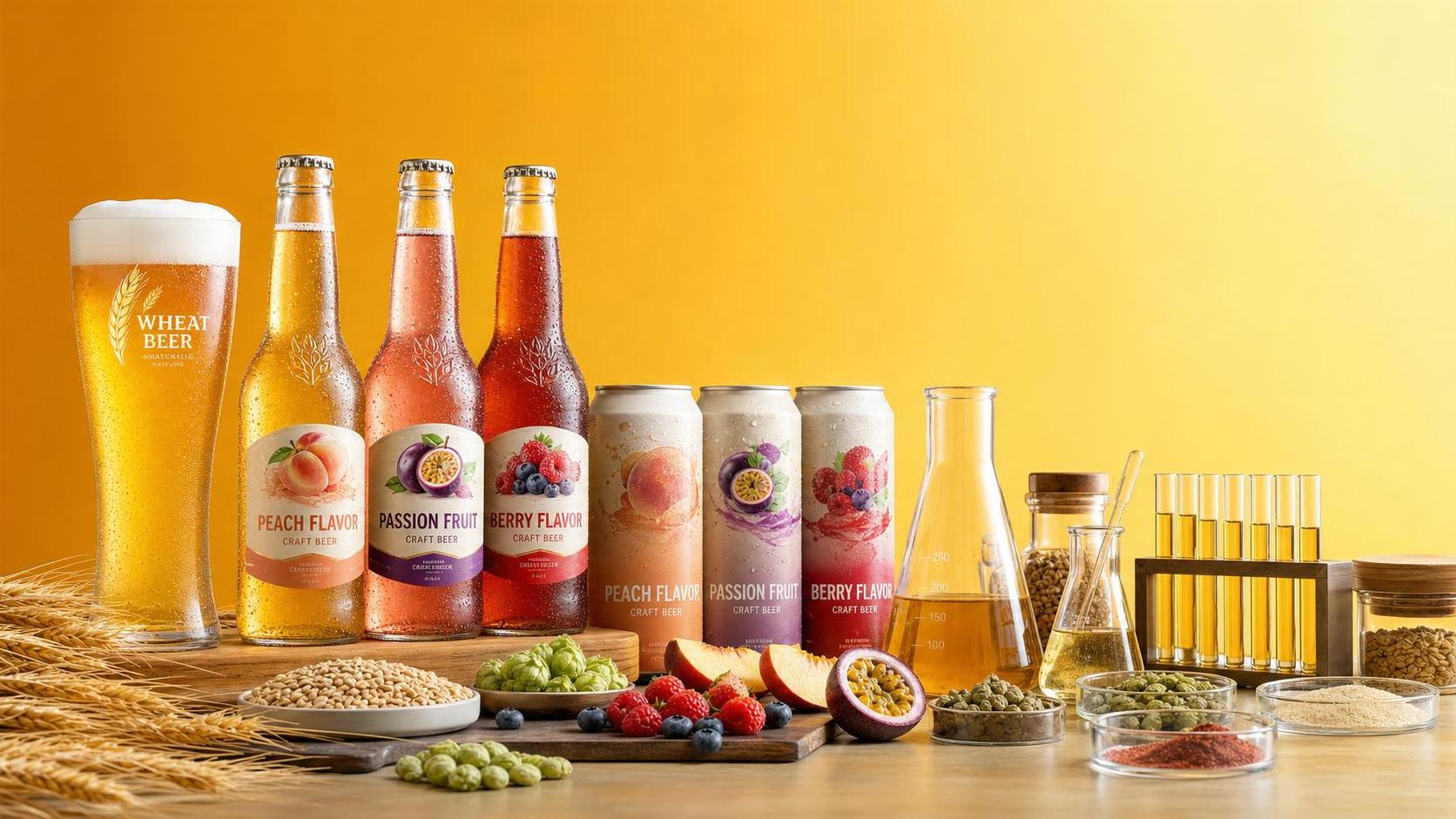
Yes—Do China beer OEM factories offer R&D support? For brands seeking unique taste, positioning and market differentiation, the answer is often yes. A capable China beer OEM can help develop custom beer formulas by combining brewing expertise, ingredient selection and market-oriented product design, making it easier to turn ideas into scalable craft beer products for diverse retail and distribution channels.
What does R&D support from a China beer OEM actually include?
When buyers ask, “Do China beer OEM factories offer R&D support,” they often mean more than brewing. They want recipe development, sensory adjustment, packaging alignment, shelf-life considerations, and production feasibility in one coordinated service.
In the beverage industry, formula development is not only about taste. It also affects cost, stability, target alcohol level, bitterness, color, foam retention, ingredient compliance, and how the beer performs in supermarkets, bars, restaurants, and e-commerce channels.
A strong OEM partner should be able to translate a concept such as “refreshing low-calorie wheat beer for retail chains” or “fruit craft beer for nightlife channels” into a workable formula and production plan.
- Recipe ideation based on flavor direction, target consumers, and local market trends.
- Ingredient selection covering malt, hops, yeast, fruit components, sweeteners, and functional additions where applicable.
- Pilot testing and tasting rounds to refine aroma, mouthfeel, sweetness, bitterness, and finish.
- Scale-up verification to confirm the formula can be manufactured consistently in commercial batches.
- Packaging and positioning advice so the beer formula matches the sales channel and price point.
For importers and private-label brands, this integrated support reduces trial-and-error costs. It also shortens the path from concept to launch, which matters when seasonal products or trend-driven flavors need fast execution.
Why custom beer formulas matter more today
The craft beer category is more segmented than before. Distributors are not only buying standard lager. They are looking for sugar-free low-calorie options, fruit beers, German wheat, and specialty styles that can stand out on crowded shelves.
That is where OEM R&D becomes commercially valuable. Instead of competing on generic taste alone, a brand can launch a product with clearer positioning, stronger storytelling, and better channel fit.
Which custom beer projects are most suitable for OEM formula development?
Not every beer idea requires deep formulation work. However, several business scenarios strongly benefit from OEM collaboration. These are usually cases where market differentiation, speed, and reliable production are equally important.
The table shows that Do China beer OEM factories offer R&D support is especially relevant when a buyer needs more than contract filling. The more differentiated the product, the more important technical and commercial alignment becomes.
Jinpai Beer serves this kind of demand with a broad craft beer portfolio that includes classic lager, German wheat, sugar-free low-calorie beer, fruit-flavored beer, and functional specialty beers. That range helps shorten development time because the team can build from proven product directions rather than starting blindly.
Common buyer types that benefit most
- Distributors entering a new local craft segment with private-label SKUs.
- Retailers needing exclusive formulations to avoid direct price comparison.
- Restaurant and bar groups wanting signature beers matched to menu concepts.
- Brand owners testing health-oriented beer trends such as lower sugar or lighter calorie positioning.
How does a China beer OEM develop a custom beer formula step by step?
A practical development process matters as much as brewing skill. Buyers often face tight launch windows, uncertain target taste, or limited technical knowledge. A structured OEM workflow helps reduce revision cycles and avoid costly misunderstandings.
- Define the product brief, including style, target ABV, bitterness level, calorie goals, packaging type, sales channel, and target retail price.
- Recommend a recipe direction based on existing style knowledge, raw material options, and production practicality.
- Prepare trial samples or pilot batches for sensory review and early technical validation.
- Refine the formula through feedback on aroma, sweetness, hop character, body, carbonation, and aftertaste.
- Confirm packaging, labeling information, and channel-specific requirements before mass production.
- Scale production with quality consistency checks and shipment coordination.
This process is especially useful for overseas buyers who may not be able to supervise brewing on site. Clear milestones make decision-making easier and keep formula development tied to commercial reality.
What information should buyers prepare first?
To get better R&D support from a China beer OEM, buyers should prepare a focused brief. Vague requests such as “make it trendy” or “something premium” often slow the project and increase sample revisions.
- Target market and customer group, such as young urban drinkers or supermarket family buyers.
- Preferred style reference, such as crisp lager, banana-clove wheat beer, or berry-forward fruit beer.
- Basic technical direction, including expected ABV, bitterness, sweetness, and calorie positioning.
- Planned packaging, such as cans, bottles, or gift-oriented formats.
- Expected order volume, repeat frequency, and preferred launch timeline.
What should you compare when selecting an OEM partner for beer R&D?
Not every manufacturer that offers OEM production can support custom beer development effectively. If the key question is Do China beer OEM factories offer R&D support, the next question should be how deep and practical that support really is.
This comparison helps buyers distinguish basic contract manufacturers from true development partners. For a custom craft beer launch, that difference can determine whether the product is merely produced or genuinely market-ready.
Jinpai Beer combines R&D, production, and distribution experience, which is useful when a buyer needs formula advice linked to channel realities. A beer for supermarkets may need broad appeal and cost control, while a beer for bars may need stronger aroma identity and story value.
Red flags buyers should not ignore
- The supplier only discusses price and minimum order quantity, but not taste goals or market fit.
- There is no clear process for sample confirmation or formula revision.
- The factory cannot explain how a low-sugar, fruit, or specialty formula behaves in production.
- Packaging choices are disconnected from shelf life, transport, or channel requirements.
How do cost, MOQ, and timing affect custom formula development?
Many buyers assume custom beer formulas are prohibitively expensive. In reality, costs depend on how far the formula moves from existing production capabilities, what ingredients are selected, and how many sample rounds are needed.
Projects based on classic lager or German wheat can often move faster than highly customized fruit or functional specialty beers. Low-calorie or sugar-free products may also require more technical adjustment to maintain flavor and mouthfeel.
The key takeaway is that custom development is not a single cost category. Buyers should ask which parts affect price most: raw materials, sample rounds, packaging choices, or production volume. That makes budget planning more realistic.
Timing also depends on responsiveness. Fast feedback on sample taste, packaging design, and specification sheets can significantly shorten the launch cycle.
What about compliance, quality consistency, and export readiness?
For international buyers, formula creativity alone is not enough. The beer must also be practical for export, labeling, and repeat ordering. This is why the question Do China beer OEM factories offer R&D support should include quality and compliance coordination.
A responsible OEM should discuss ingredient transparency, production consistency, shelf-life planning, and label-related information early in the process. This is especially important for fruit-flavored, low-calorie, or functional beer concepts.
Practical compliance points to review
- Ingredient declarations should match the destination market’s expectations and import requirements.
- Alcohol content, net content, and packaging information should be reviewed before final printing.
- Claims related to low calorie, sugar reduction, or functional positioning should be checked carefully for local use conditions.
- Batch consistency matters for repeat distribution, especially when the same private-label beer is sold across multiple outlets.
Because Jinpai Beer operates across R&D, production, and distribution, it is well positioned to align product design with practical channel needs. That matters for buyers serving restaurants, supermarkets, bars, and mixed retail networks where packaging, taste, and turnover conditions differ.
FAQ: Do China beer OEM factories offer R&D support in real buying situations?
Can an OEM help if I only have a flavor idea, not a finished recipe?
Yes. Many buyers start with only a concept such as citrus wheat beer, lighter lager for female consumers, or a low-calorie summer SKU. A capable OEM can convert that idea into a formula proposal, tasting samples, and production suggestions.
How many sample rounds are usually needed for custom beer formulas?
It depends on how specific the brief is. A standard lager variation may need fewer revisions, while fruit beer or sugar-free development may need more tasting and adjustment rounds. Clear sensory feedback from the buyer usually speeds up the process.
Is OEM R&D suitable for small or mid-sized brand owners?
Often yes, especially when those brands want private-label differentiation without building their own brewery. The right OEM partner can lower entry barriers by providing development support, manufacturing resources, and packaging coordination under one supply model.
What is the biggest mistake buyers make when requesting custom beer development?
The biggest mistake is focusing only on taste and ignoring channel fit. A beer that tastes good in a sample may still fail if the price, packaging, calorie positioning, or retail appeal does not match the intended market.
Why choose us for custom craft beer OEM and ODM projects?
If your question is not just “Do China beer OEM factories offer R&D support,” but “Which partner can turn my idea into a sellable beer product,” practical capability matters. Jinpai Beer brings together craft beer R&D, production, distribution understanding, OEM/ODM services, wholesale supply, and customized solutions.
Our product range covers classic lager, German wheat, sugar-free low-calorie beer, fruit-flavored beer, and functional specialty beers. This allows us to support different market strategies, from entry-level retail products to more differentiated craft concepts for bars, restaurants, and specialty channels.
If you are evaluating a new beer project, you can contact us to discuss specific topics such as formula direction, style selection, packaging options, sample support, estimated delivery cycle, OEM or ODM workflow, and quotation planning for your target market.
- Need help confirming whether a lager, wheat, fruit, or low-calorie concept fits your channel?
- Need sample support for a private-label launch or distributor program?
- Need to compare packaging, delivery timing, and customized solution options before ordering?
Share your target market, expected flavor profile, packaging preference, and order plan. We can help you evaluate product selection, custom beer formula feasibility, sample development, and supply coordination for long-term cooperation.
Thank you very much for writing to us. Please leave your message and contact information, we will reply to you within 24 hours.