



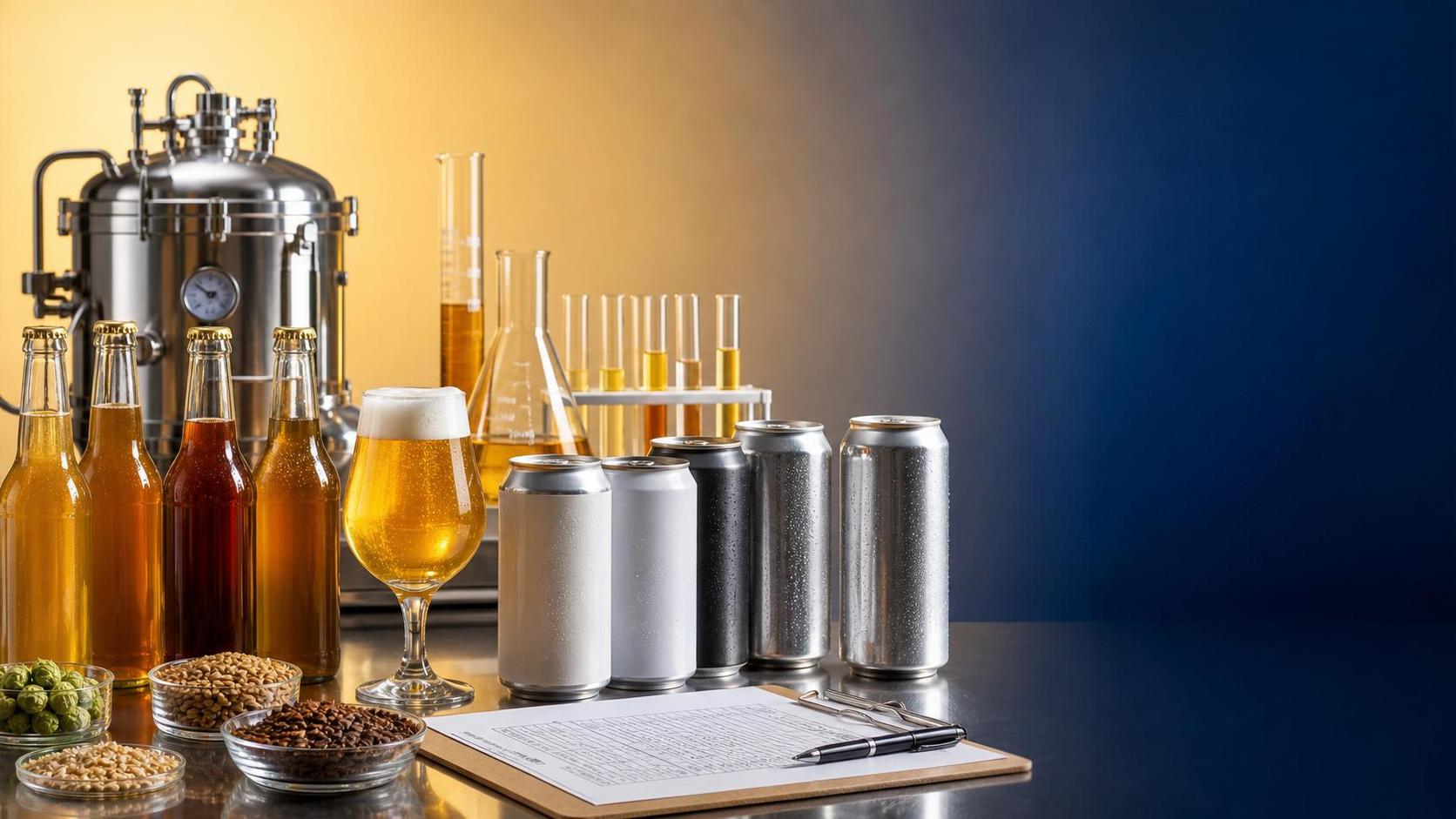
When evaluating manufacturing partners, many buyers ask: Do China beer OEM factories offer R&D support? The answer depends on the factory’s technical team, formulation capabilities and customization process. For importers, distributors and brand owners, verifying real R&D strength is essential to ensure product innovation, stable quality and faster market response in craft beer and specialty beverage development.
Why do buyers ask whether China beer OEM factories offer R&D support?
In the beverage alcohol market, product success rarely comes from packaging alone. Flavor stability, shelf-life performance, ingredient compatibility and regulatory fit all influence repeat orders. That is why the question, Do China beer OEM factories offer R&D support, matters far beyond a simple factory tour.
For craft beer, low-calorie beer, fruit beer and functional specialty beer, formulation work is often more complex than standard lager production. Buyers need a partner that can translate market ideas into scalable recipes, pilot samples and production-ready specifications.
A factory may claim OEM capability, yet true R&D support means more than filling cans or bottles. It usually includes concept discussion, ingredient evaluation, sensory adjustment, brewing trials, process optimization and packaging compatibility checks.
- Importers want products tailored to local taste preferences, tax structures and channel positioning.
- Distributors need differentiated SKUs that reduce direct price competition in supermarkets, bars and retail chains.
- Brand owners need faster launch cycles, controlled quality and room for seasonal or trend-driven innovation.
If a supplier cannot explain how formulas are developed, tested and adjusted, the buyer may face expensive delays after label design, sample approval or first shipment. In beer OEM, weak R&D support often becomes visible too late.
What does real R&D support from a beer OEM factory actually include?
When buyers ask, Do China beer OEM factories offer R&D support, they should define the term clearly. Not every supplier provides the same depth of technical service. Some only adjust alcohol content or sweetness. Others can co-develop a full product roadmap.
In beer and specialty beverage manufacturing, practical R&D support generally covers the areas below.
This table shows why the answer to Do China beer OEM factories offer R&D support cannot be reduced to a yes-or-no claim. Buyers need to confirm which technical services are available and which are only promised in sales language.
Signs of shallow support
- The supplier only offers an existing catalog without meaningful formula adjustment.
- Sample feedback rounds are limited or undocumented.
- No one can explain ingredient interactions, processing limits or expected flavor drift during storage.
Signs of stronger support
- The factory asks about target market, consumption occasion, retail price and competitor style before recommending a recipe.
- Technical staff can discuss original gravity, ABV range, bitterness balance, sugar reduction or fruit stability in plain commercial terms.
- There is a clear sampling and revision process before commercial production begins.
How can buyers verify R&D support before placing a beer OEM order?
The safest approach is to evaluate evidence, not slogans. If you are comparing suppliers and asking, Do China beer OEM factories offer R&D support, build your verification process around technical interaction, sample quality and production logic.
The checklist below helps buyers test whether a factory’s development capability is practical and commercially useful.
This type of evaluation is especially useful for private label beer, craft beer launches and channel-specific products. It helps buyers separate a packaging manufacturer from a real development partner.
A practical buyer workflow
- Share your target market, channel and desired price band before asking for a sample.
- Request product recommendations by style, such as classic lager, German wheat, sugar-free low-calorie beer or fruit-flavored beer.
- Ask for sample notes that explain each formula’s positioning and feasible adjustments.
- Confirm how sample approval transfers into raw material selection, brewing control and packaging execution.
Which product categories require stronger R&D support?
Not all beer projects demand the same level of development work. A standard contract lager may require limited adjustment, while a low-calorie, fruit-infused or functional concept needs more formulation input and testing.
For buyers asking, Do China beer OEM factories offer R&D support, the answer becomes more important as product complexity increases.
Higher-complexity categories
- Sugar-free or low-calorie beer, where taste balance and body retention need careful work.
- Fruit-flavored beer, where aroma expression and stability during storage are critical.
- Functional specialty beer, where positioning, ingredient compatibility and claim sensitivity require more caution.
Medium-complexity categories
- German wheat beer, where yeast character, haze profile and drinkability must align with market preference.
- Craft-style lager, where clean fermentation and flavor differentiation still matter in crowded channels.
Jinpai Beer focuses on R&D, production and distribution across these categories. That matters to buyers who need one supplier capable of handling both mainstream and specialty beer programs under OEM or ODM models.
What should buyers compare when selecting among China beer OEM factories?
Price is important, but selection based on unit cost alone often leads to hidden losses. If the product misses market taste, needs repeated rework or fails to hold consistency across batches, the original saving disappears quickly.
The comparison below helps buyers assess factories more realistically.
For many overseas buyers, the stronger partner is not always the cheapest supplier on the first quote. It is often the one that shortens decision cycles, lowers reformulation risk and improves the chance of repeat sales after launch.
How do compliance, packaging and channel needs affect R&D evaluation?
Beer product development is not only about taste. It must also match the destination market’s labeling, ingredient and channel realities. Buyers often underestimate this point when asking, Do China beer OEM factories offer R&D support.
A technically useful supplier should discuss whether the product is intended for bars, restaurants, supermarkets, convenience retail or e-commerce. Each route can influence packaging format, shelf expectations and flavor profile preference.
- Bars may favor fresher flavor expression, distinctive craft identity and keg or premium packaged formats.
- Supermarkets may prioritize shelf appeal, repeatable taste and broader consumer acceptance.
- Online channels may require stronger packaging durability and clear product differentiation for digital conversion.
On compliance, buyers should ask for support on general documentation readiness, ingredient disclosure logic and export communication. A responsible factory will stay within what it can support and avoid making careless promises about market claims.
Common mistakes buyers make when judging beer OEM R&D capability
Even experienced buyers can misread development capability during sourcing. The following mistakes are common in beer and specialty beverage procurement.
- Assuming a large product catalog automatically means strong R&D. A catalog shows range, not necessarily development depth.
- Approving samples without discussing batch transfer. A great sample is not enough if production control is weak.
- Ignoring target consumer preference. A technically sound beer can still fail if it does not fit the local drinking occasion.
- Choosing by lowest price while overlooking reformulation time, relabeling risk and delayed launch costs.
A better method is to compare total project value: development speed, communication quality, sample accuracy, product range and readiness for long-term line extension.
FAQ: Do China beer OEM factories offer R&D support for global buyers?
How can I tell whether a factory offers real beer formulation support?
Ask for a structured development discussion rather than a price sheet only. A capable supplier should talk about beer style direction, sweetness, bitterness, alcohol range, fruit profile, low-calorie balance or specialty concept feasibility, depending on your project.
Is R&D support only necessary for craft beer?
No. It is especially important for craft beer and functional beer, but even standard lager projects benefit from flavor positioning, packaging adaptation and consistency planning. The more competitive the channel, the more valuable technical differentiation becomes.
Can China beer OEM factories support low-calorie and fruit beer development?
Some can, some cannot. Buyers should verify this through sample programs and technical communication. In these categories, balancing flavor, drinkability and production stability requires more than basic filling capacity.
What should I prepare before contacting a beer OEM factory?
Prepare your target market, preferred beer style, expected packaging format, estimated order volume, channel plan and desired price range. This helps the factory recommend a practical development path instead of giving generic options.
Why choose us for beer OEM, ODM and customized product development?
Jinpai Beer is engaged in the R&D, production and distribution of craft beer with a broad portfolio covering classic lager, German wheat, sugar-free low-calorie beer, fruit-flavored beer and functional specialty beers. This range helps buyers develop products for different retail and on-trade channels without switching suppliers for each category.
For importers, distributors and brand owners, our OEM and ODM services are designed around commercial realities: product selection, customization direction, sample support, packaging coordination and scalable supply for global online and offline markets.
If you are still asking, Do China beer OEM factories offer R&D support, the next step is not guesswork. It is direct project evaluation. You can contact us to discuss flavor direction, beer style selection, packaging options, sample planning, delivery timing, certification-related questions and quotation details based on your market needs.
- Need help choosing between lager, wheat, fruit beer or sugar-free low-calorie lines? We can discuss suitable options by channel and target consumer.
- Need sample support for a private label or distributor brand? We can align on formula direction and revision priorities first.
- Need to confirm delivery cycle, customization scope or export communication requirements? We can review them with your order plan and packaging path.
Whether you are launching a new craft beer brand, expanding a supermarket portfolio or testing a specialty beer concept for bars and retail, a capable partner should bring both production execution and practical R&D thinking. That is the standard buyers should use when evaluating China beer OEM factories.
Thank you very much for writing to us. Please leave your message and contact information, we will reply to you within 24 hours.