



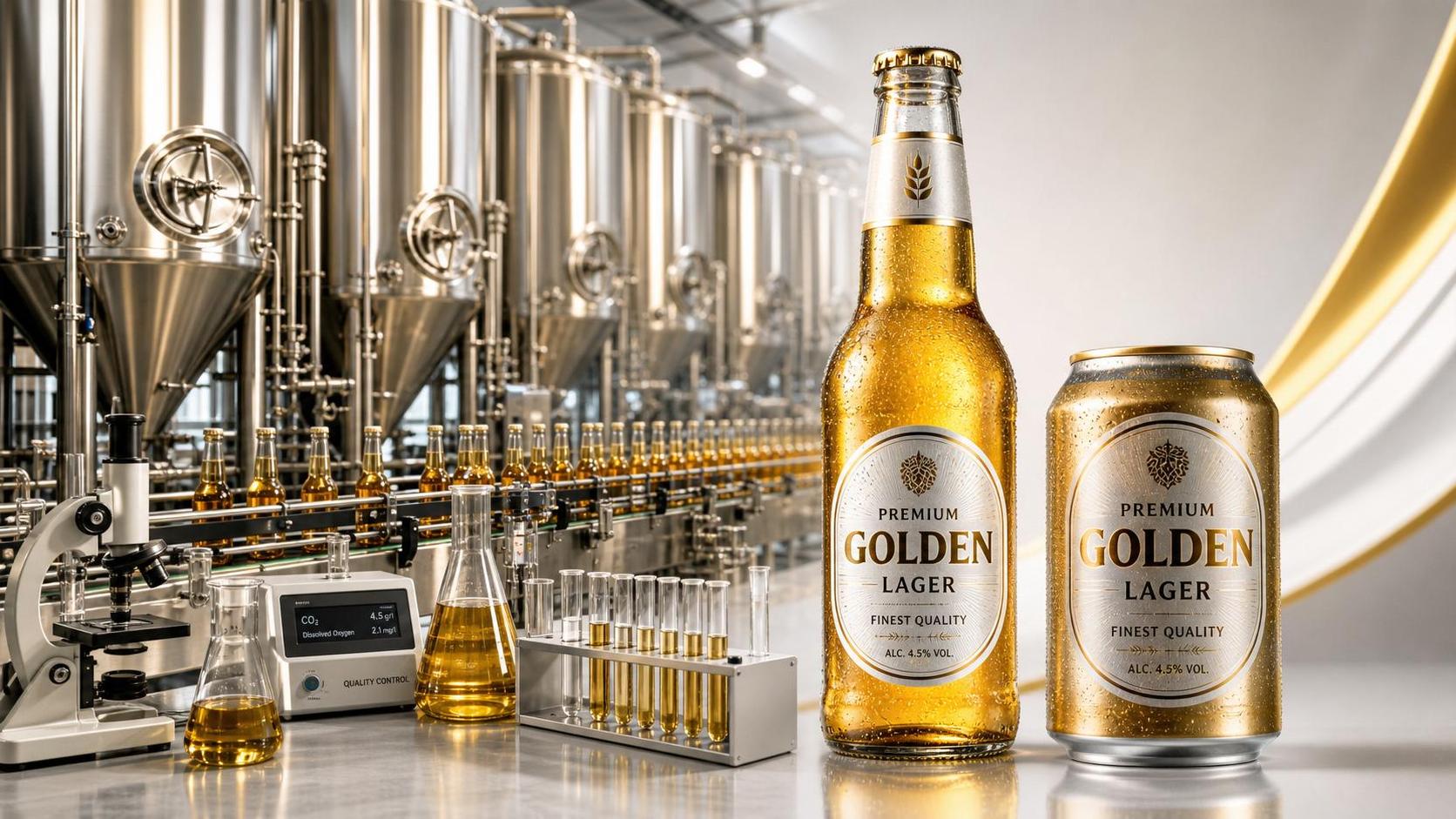
How to verify quality stability of Chinese beer factories? In 2026, procurement teams need to look beyond price and capacity first. The real starting point is whether a brewery can deliver consistent taste, batch-to-batch quality, compliant production and reliable supply at scale. For importers, distributors and private-label buyers, checking these fundamentals early helps reduce risk, protect brand reputation and secure long-term business growth.
What should procurement teams check first before comparing price?
The fastest way to answer how to verify quality stability of Chinese beer factories is to begin with process consistency, not packaging design or initial quotation. In beer procurement, a low ex-factory price means little if flavor drifts, foam retention changes, or shelf-life performance becomes unstable after shipment.
For alcoholic and non-alcoholic beverage buyers, quality stability usually means the brewery can reproduce the same sensory profile, carbonation level, microbiological condition, filling accuracy and logistics performance across different production runs. That is the real commercial baseline for supermarket chains, restaurant groups, bar channels and private-label brands.
Before discussing promotional support or container loading plans, procurement teams should verify five first-layer indicators:
- Whether recipes and raw material standards are documented and controlled across batches.
- Whether fermentation, filtration, pasteurization or sterile filling steps are monitored with traceable records.
- Whether laboratory testing covers microbiology, original gravity, alcohol content, bitterness, dissolved oxygen and package integrity.
- Whether the brewery can manage stable lead times during peak season, not only during sample approval.
- Whether export communication, complaint handling and corrective action are mature enough for long-term cooperation.
If a factory cannot give clear answers on these points, procurement risk remains high even when the sample tastes good. A single successful sample is not proof of stable mass production.
How to verify quality stability of Chinese beer factories through a practical checklist?
A structured checklist helps buyers compare breweries objectively. In beverage sourcing, quality stability depends on production discipline, laboratory control and supply chain coordination. The table below summarizes the first checkpoints procurement teams should use during supplier screening.
This checklist shows why the question is not simply how to verify quality stability of Chinese beer factories, but how to verify repeatability under real export conditions. The best suppliers can explain not only what they produce, but how they keep it stable from pilot sample to full container shipment.
Which production and lab signals reveal stable brewing capability?
Look for controlled brewing, not just attractive samples
Many buyers approve a sample too quickly. A brewery may produce one strong sample manually, but mass orders require repeatable industrial control. Procurement teams should ask how the approved flavor profile is converted into standard operating instructions for every run.
For example, classic lager, German wheat, sugar-free low-calorie beer, fruit-flavored beer and functional specialty beers all carry different technical risks. Fruit inputs may affect sediment and flavor drift. Low-calorie recipes can change body and mouthfeel. Wheat beer may show haze variation if process discipline is weak.
Key technical indicators buyers should discuss
- Alcohol by volume tolerance and how often it is verified during and after production.
- Original gravity or extract control for consistent body and taste structure.
- Microbiological monitoring before filling and after packaging release.
- Dissolved oxygen control, especially for cans and export beer with longer transit times.
- Shelf-life validation under normal storage and transport-related temperature exposure.
If a supplier answers only in general terms such as “our quality is good,” that is not enough. Stable breweries discuss ranges, controls, deviations and release standards in clear operational language.
What documents and compliance points should importers review early?
When buyers ask how to verify quality stability of Chinese beer factories, compliance review should happen early, not after packaging design is finished. Missing or incomplete documentation often delays shipment, label approval or customs clearance, especially for new private-label projects.
The table below helps procurement teams connect compliance review with quality stability, because strong documentation usually reflects stronger process management.
A compliant brewery is not automatically the right brewery, but weak documentation is often an early warning sign. Procurement teams should treat document quality as part of product quality.
How should buyers compare factories for OEM, ODM and wholesale beer projects?
Different sourcing models require different evaluation logic. A distributor buying ready-to-sell lager has different concerns from a private-label buyer developing a sugar-free fruit beer. That is why how to verify quality stability of Chinese beer factories must be matched to the project type.
Comparison by procurement scenario
- For wholesale supply, focus on stable production scheduling, standard product consistency, container optimization and reorder speed.
- For OEM projects, focus on whether the supplier can lock approved taste targets, packaging details and repeated production quality across future orders.
- For ODM development, focus on formulation capability, pilot testing, flavor adjustment discipline and regulatory coordination for new market entry.
Jinpai Beer’s product range is relevant here because broad category capability matters in real procurement. A brewery that works across classic lager, German wheat, low-calorie options, fruit-flavored beer and functional specialty beers is better positioned to support channel-specific development without forcing one formula into every market.
For restaurant chains and bars, draft-like freshness, foam performance and repeat orders matter most. For supermarkets and retail chains, shelf presentation, packaging durability and flavor consistency over inventory cycles matter more. For importers building a private label, formulation control and document readiness often come first.
What mistakes do procurement teams make when checking beer factory stability?
Mistake 1: Judging the supplier by one sample only
One retained sample cannot represent long-term production. Buyers should request batch comparison information, repeat sample confirmation, or at minimum a discussion on standardization methods before final approval.
Mistake 2: Ignoring packaging risk
Seam quality in cans, crown cap sealing in bottles and transport carton performance directly affect export stability. Flavor may be stable in the tank but fail in market due to oxygen ingress or leakage.
Mistake 3: Overvaluing low MOQ without checking scalability
A brewery may accept a trial order, but struggle when your second or third order doubles. Procurement teams should ask how production planning changes between sample scale, first order and annual contract volume.
Mistake 4: Delaying compliance review
Label translation, alcohol declaration, ingredient description and destination-market requirements should be aligned before mass production. Last-minute changes increase both cost and error risk.
A practical procurement process for stable beer sourcing in 2026
If your team is still asking how to verify quality stability of Chinese beer factories, use a phased decision process. It reduces surprises and creates a clearer approval path between sourcing, technical, compliance and sales teams.
- Define the sales channel first: bar, supermarket, convenience retail, restaurant group or online private label.
- Lock product type and target profile: lager, wheat, low-calorie, fruit-flavored or specialty functional direction.
- Review specifications, process controls and basic testing scope before sample approval.
- Confirm packaging format, shelf-life expectation and transport route, especially for export climates and transit duration.
- Check batch records, release logic and issue-handling workflow before large-volume orders.
- Start with a manageable first commercial order, then evaluate reorder stability based on real market feedback.
This process helps buyers balance speed and caution. It is especially useful for global distributors and agents who must protect local market reputation while expanding new SKU lines.
FAQ: How to verify quality stability of Chinese beer factories more confidently?
How many samples should buyers review before placing a larger order?
There is no universal number, but one sample is rarely enough for private-label or long-term programs. Buyers should at least compare the approval sample with documented production standards and ask how future batches will be matched. For complex products such as fruit-flavored or functional beers, repeat confirmation is even more important.
Which beer categories are usually harder to keep stable?
Fruit-flavored beers, low-calorie beers and some specialty functional beers often need tighter process control because flavor balance, body, sweetness perception and ingredient interaction can shift more easily than in a standard lager. Wheat beer can also show visual and taste variation if haze control and yeast management are inconsistent.
Should buyers prioritize factory scale or technical flexibility?
It depends on the project. For supermarket replenishment and nationwide distribution, production scale and scheduling reliability matter heavily. For ODM and differentiated private labels, technical flexibility, sample development and process discipline may matter more than headline capacity.
What is the most overlooked indicator of quality stability?
Traceability is often overlooked. When a brewery can link every packaged lot to raw materials, process records and final checks, problem resolution becomes faster and less costly. That is a strong sign of operational maturity.
Why choose a brewery partner with broad product and customization capability?
Procurement teams rarely buy beer as a standalone product decision. They buy a future supply relationship. A brewery with R&D, production and distribution capability can usually support more stable transitions from concept to sample to commercial launch.
Jinpai Beer focuses on craft beer development and offers a full range that includes classic lager, German wheat, sugar-free low-calorie beer, fruit-flavored beer and functional specialty beers. For buyers, this matters because category depth supports better matching between channel demand and technical feasibility.
Its OEM, ODM, wholesale supply and customized solution model is suitable for distributors, agents, restaurant groups, supermarkets, bars and retail partners that need more than a standard product list. The real value is not only product variety, but also the ability to align formulation direction, packaging needs and supply planning with different market strategies.
If your team is evaluating how to verify quality stability of Chinese beer factories for 2026 sourcing, the next step should be a focused technical and commercial discussion. You can consult on product selection, packaging formats, sample support, delivery cycles, OEM or ODM pathways, target market compliance needs and quotation planning based on your channel and volume goals.
A clear conversation at the beginning saves time later. It helps confirm whether the supplier can deliver stable taste, reliable packaging, practical lead times and scalable cooperation for your market.
Thank you very much for writing to us. Please leave your message and contact information, we will reply to you within 24 hours.