



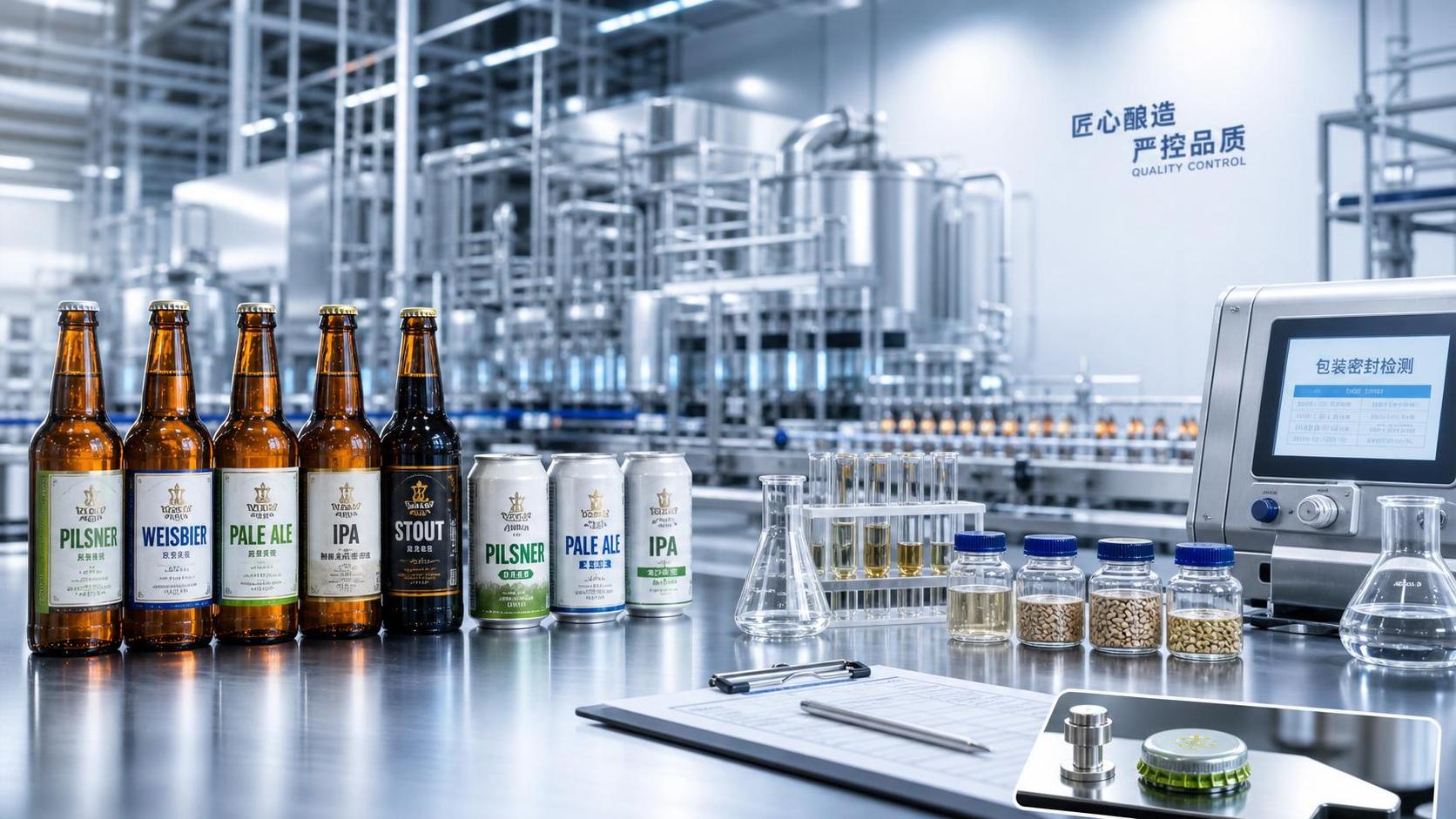
When sourcing beer from China, buyers often ask: How to verify quality stability of Chinese beer factories? Two common answers are third-party audits and batch consistency data, but they reveal different sides of factory performance. For importers, distributors and private-label brands, understanding how these tools work together is essential to reducing supply risk, protecting product reputation and building long-term confidence in a brewery partner.
In the beer and beverage sector, quality stability is not just about whether one shipment passes inspection. It is about whether a brewery can deliver the same flavor, alcohol level, clarity, carbonation, packaging integrity and shelf performance across 3 batches, 30 batches or even 300 batches over time.
For importers serving supermarkets, restaurant chains, bars and online retail channels, one unstable batch can trigger returns, label disputes, customer complaints or loss of shelf space. That is why the question is not simply which tool is better, but which tool answers which risk.
For companies evaluating OEM or ODM partners such as Jinpai Beer, a brewery with a broad portfolio including classic lager, German wheat, sugar-free low-calorie beer, fruit-flavored beer and functional specialty beers, the strongest verification method is usually a combination of factory-level audits and production-level consistency records.
Why quality stability matters more than one-time compliance
A brewery can perform well during a single visit and still struggle to maintain stable output over a 6-month or 12-month supply cycle. In beer production, raw material variation, fermentation control, filtration settings, filling line hygiene and storage temperature can all shift the final product in measurable ways.
For example, a difference of 0.2% to 0.5% ABV, a bitterness shift of 3 to 5 IBU, or a carbonation change of 0.2 to 0.4 volumes CO2 may be enough for experienced consumers or chain buyers to notice. In fruit beer and low-calorie beer, flavor balance and sweetness control can be even more sensitive.
Typical buyer concerns in cross-border beer sourcing
- Whether every batch matches the approved golden sample
- Whether packaging and filling quality remain stable during peak season output
- Whether microbiological control is reliable over long-distance export cycles of 30 to 60 days
- Whether OEM recipes can be repeated accurately after reformulation or packaging changes
These concerns explain why buyers asking How to verify quality stability of Chinese beer factories? should not rely on only one document, one inspection or one meeting. Stability is a system issue, not a snapshot issue.
What third-party audits really verify
A third-party audit is a structured review performed by an independent inspection or compliance body. In practical beer sourcing, it usually focuses on site conditions, process control, traceability, sanitation management, staff practices, quality documentation and regulatory alignment.
A standard audit may take 1 to 2 days on site, with 4 to 8 major checkpoints and dozens of detailed observations. For first-time buyers, it helps confirm whether a factory has the operational discipline needed to support export business.
Key strengths of third-party audits
1. They evaluate system readiness
Audits are valuable for checking whether the brewery has standard operating procedures, cleaning schedules, batch traceability, incoming material checks and corrective action processes. This is especially important when developing private-label beer with repeated production schedules.
2. They identify structural risk early
An audit can reveal issues that are not visible in a finished sample, such as weak segregation between raw and finished goods, poor cold chain handling, insufficient calibration frequency or incomplete records for bottle and can line sanitation.
3. They support supplier comparison
If a buyer is comparing 3 to 5 Chinese breweries, a consistent audit checklist creates a more objective sourcing baseline. It helps procurement teams evaluate management capability, not just price per carton or taste profile.
The table below shows what a third-party audit can and cannot reliably confirm in beer factory assessment.
The key takeaway is clear: audits are strong for verifying whether a brewery has a controllable system, but they are weaker at proving that the system delivers stable sensory and technical output over repeated production runs.
What batch consistency data reveals that audits cannot
Batch consistency data is the ongoing record of actual production results. In beer manufacturing, this may include ABV, original gravity, final gravity, pH, bitterness, color, dissolved oxygen, CO2 level, fill volume, seam or crown integrity, turbidity and microbiological results.
Unlike a 1-day audit, batch records reflect performance over time. Reviewing data from at least 3 to 6 consecutive batches gives buyers a more realistic picture of whether the brewery can repeat the same product under normal operating conditions.
Why this matters in beer OEM and export supply
A brewery may have strong paperwork and clean equipment, yet still produce noticeable variation if yeast management, dry hopping timing, fruit addition ratios or filtration pressure are not controlled tightly. This is common in craft beer, wheat beer and flavored beer categories.
For private-label projects, buyers should request not only the specification sheet but also historical production ranges. For example, if target ABV is 4.5%, actual results should ideally remain within a narrow working band rather than drifting from 4.2% to 4.8%.
Useful consistency indicators buyers can request
- ABV trend across the last 5 to 10 batches
- pH range before and after packaging
- CO2 level at filling and after retention sampling
- Dissolved oxygen after filling, especially for cans and bottles
- Microbiology release results by batch
- Fill volume deviation and packaging defect rate
The following table outlines the practical value of batch consistency data for beer quality verification.
For buyers focused on the question How to verify quality stability of Chinese beer factories?, batch consistency data often provides stronger evidence of real output stability than a one-off compliance review alone.
Third-party audits vs batch consistency data: which is better?
If the goal is to screen a new Chinese brewery quickly, third-party audits usually come first. If the goal is to confirm repeatable quality after trial production or before a long-term contract, batch consistency data is often more decisive.
Best use cases for each method
- Use audits during supplier prequalification, especially before the first order.
- Use consistency data after sample approval and during trial or pilot production.
- Use both before annual contracts, exclusive distribution agreements or large retail launches.
Audits are better when:
- You are evaluating a new supplier with no transaction history
- You need to check process discipline, facility condition and traceability systems
- You want an independent site review before developing OEM beer
Consistency data is better when:
- You need proof that recipe execution remains stable over 3 or more production cycles
- You are sourcing sensitive SKUs such as wheat beer, fruit beer or sugar-free low-calorie beer
- You want to reduce risk of flavor drift between launch batch and reorder batch
The most reliable answer is that they serve different functions. Audits verify capability. Batch data verifies consistency. Together, they provide a more complete risk picture for beer import and distribution decisions.
A practical verification framework for beer buyers
Instead of choosing one tool in isolation, buyers can use a 5-step verification process. This is especially useful when working with a brewery that offers wholesale supply, OEM/ODM cooperation and customized solutions across multiple beer styles.
Step 1: Pre-screen factory capability
Review product range, packaging options, export experience, communication speed and documentation readiness. At this stage, request basic specifications for 2 to 3 relevant SKUs, such as lager, wheat beer or fruit-flavored beer.
Step 2: Arrange an independent audit
Use a practical checklist covering sanitation, process control, warehousing, line clearance, sampling practice and record traceability. The audit should focus on export-readiness, not only general factory appearance.
Step 3: Approve sample and technical target
Confirm target parameters such as ABV, bitterness, color, sweetness profile, package format and shelf-life expectation. For private-label beer, lock the target before mass production starts, including artwork and packaging tolerance points.
Step 4: Review 3 to 6 batch records
Request production data from consecutive batches, not isolated best-case samples. This is one of the most practical ways to answer How to verify quality stability of Chinese beer factories? because it tests repeatability under normal production conditions.
Step 5: Monitor first shipments
For the first 1 to 3 export orders, keep tighter control over pre-shipment samples, packaging inspection and retained sample evaluation. Once stable performance is proven, monitoring frequency can be adjusted to the risk level and order volume.
The table below summarizes this sourcing workflow for beer importers and private-label buyers.
This process is practical because it balances time, cost and risk. It avoids the mistake of over-trusting a polished audit report or over-trusting a single strong lab result without context.
Common mistakes buyers make when verifying Chinese beer factories
Mistake 1: Judging by sample taste alone
A sample can be excellent, but mass production may differ if process windows are wide. Always connect sensory approval with measurable batch records and packaging control data.
Mistake 2: Treating audits as proof of future consistency
An audit verifies present conditions and management quality at a specific time. It does not automatically prove that every shipment over the next 12 months will remain stable.
Mistake 3: Ignoring product category sensitivity
Classic lager may tolerate slightly wider variation than a fruit-flavored beer or sugar-free low-calorie beer, where sweetness, aroma and aftertaste need tighter control. Verification depth should match product complexity.
Mistake 4: Failing to define acceptance ranges
If the buyer does not agree on acceptable ranges for ABV, pH, CO2, color or packaging defects before production, later disputes become difficult to resolve. Stability should be defined in numbers, not only in descriptive words.
How breweries can build buyer confidence faster
From the supplier side, breweries that want to win long-term export business should prepare both audit readiness and consistency visibility. Buyers in the global beer trade are increasingly looking for transparency, not just pricing flexibility.
What serious beer suppliers should be ready to share
- Product specification sheets for key styles and packaging formats
- Batch trend records for critical technical indicators
- Defined process checkpoints for brewing, fermentation and filling
- Clear OEM/ODM development workflow from sample to commercial order
For a brewery like Jinpai Beer, this approach is particularly relevant because buyers may source multiple categories at once, from classic lager and German wheat to functional specialty beers. The broader the portfolio, the more important standardized control and repeatable batch execution become.
Third-party audits and batch consistency data are not competing proofs. They answer different questions inside the same sourcing decision. Audits show whether a beer factory is managed in a controlled way. Batch records show whether that control translates into stable beer in real production.
For importers, distributors, retailers and private-label brands asking How to verify quality stability of Chinese beer factories?, the most reliable path is to combine both methods: audit the system, then validate the output across multiple batches and first shipments.
If you are evaluating a brewery partner for OEM, ODM or wholesale craft beer supply, Jinpai Beer can support product development across diverse beer styles and channel needs. Contact us to discuss your sourcing requirements, request product details or get a customized solution for your market.
Thank you very much for writing to us. Please leave your message and contact information, we will reply to you within 24 hours.