



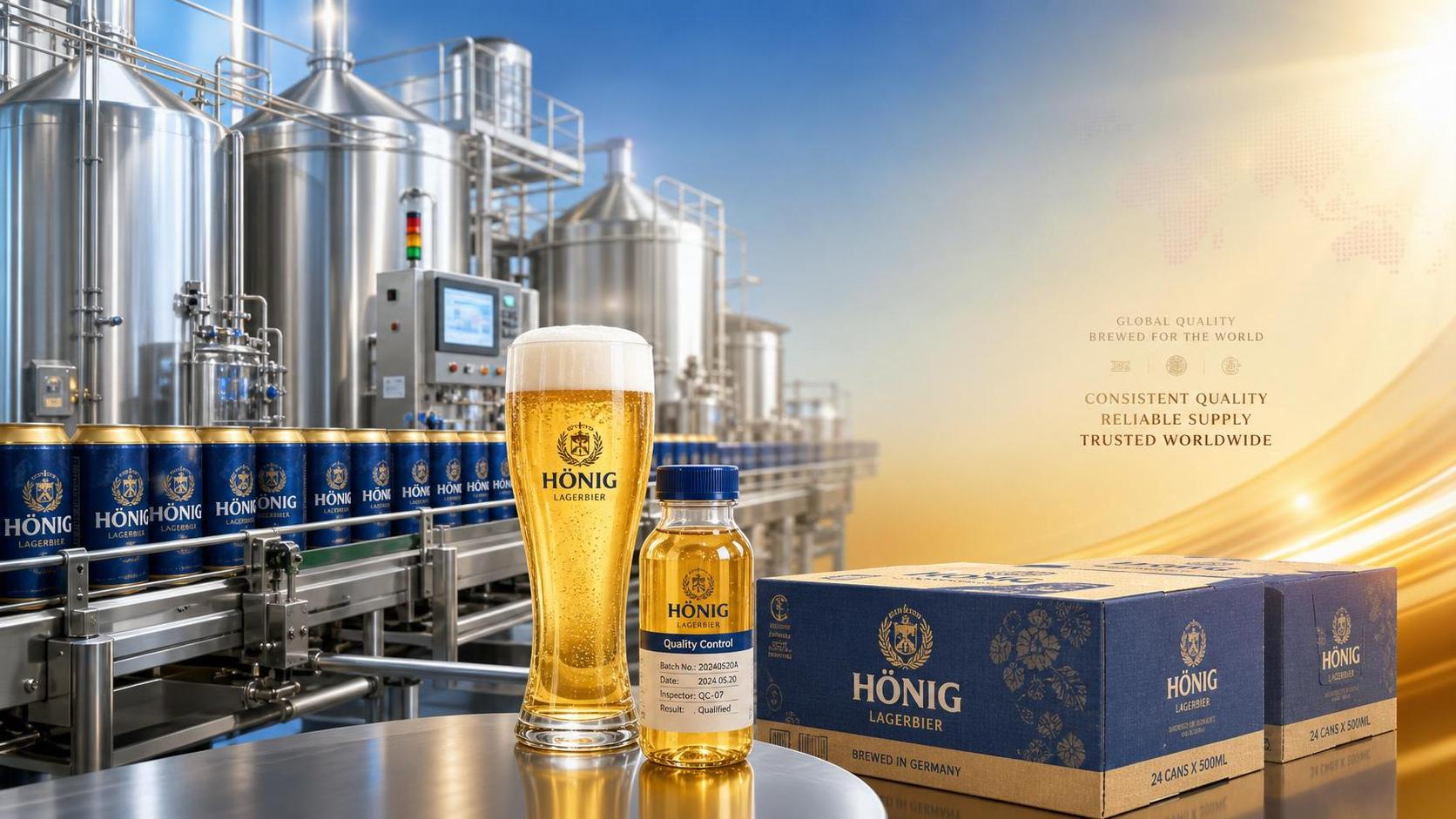
When sourcing beer for long-term supply, consistency matters as much as price and capacity. How to verify quality stability of Chinese beer factories? The answer lies in evaluating brewing standards, batch consistency, certifications, raw material control and OEM/ODM experience. For importers, distributors and retail buyers, a stable manufacturing partner helps reduce risk, protect brand reputation and support sustainable market growth.
Why quality stability matters more than a low initial price
For beer buyers, quality stability is not just a production topic. It directly affects repeat orders, shelf performance, customer complaints, and channel trust. A factory may offer attractive pricing, but if flavor, foam retention, alcohol content, or packaging consistency shifts between batches, downstream costs rise quickly.
This is why many importers ask, “How to verify quality stability of Chinese beer factories?” The practical answer starts with process control rather than sales language. A stable beer manufacturer should show clear brewing logic, documented quality checkpoints, and the ability to reproduce the same product profile over time.
In the beverage alcohol sector, instability can appear in several forms:
- Flavor drift, such as noticeable variation in bitterness, sweetness, body, or aroma between shipments.
- Physical instability, including haze inconsistency, sediment issues, weak foam, or poor carbonation control.
- Packaging deviation, such as leaking cans, label adhesion problems, carton weakness, or coding errors.
- Shelf-life risk, especially when beer is exported through long logistics routes and variable storage temperatures.
For restaurants, supermarkets, bars, and regional distributors, these issues do not stay inside the factory. They become refund requests, damaged brand perception, and lost shelf space. That is why a long-term beer sourcing decision must begin with quality stability verification.
How to verify quality stability of Chinese beer factories? Start with the right evaluation framework
A reliable evaluation framework should cover brewing, raw materials, packaging, testing, and supply execution. Buyers who only compare quotations often miss the hidden factors that determine whether a supplier can support steady expansion in multiple channels.
The table below helps buyers assess the most relevant dimensions when reviewing a Chinese beer manufacturer for long-term cooperation.
This framework turns a vague quality discussion into a practical buyer checklist. It also helps compare factories more objectively, especially when several suppliers claim similar brewing capacity or product range.
What documents and evidence should buyers request?
Buyers should request records that show consistency over time, not only one-time promotional materials. Useful documents include product specifications, batch testing records, packaging standards, shelf-life validation references, and sample retention procedures.
- Product specification sheets covering style, ABV, bitterness, color, ingredient profile, and packaging format.
- Batch-level quality records that show repeated compliance instead of one ideal sample.
- Inspection standards for cans, bottles, caps, labels, trays, and outer cartons.
- Traceability details for ingredients and production dates.
- OEM/ODM approval workflows, especially for formula, artwork, and packaging confirmation.
Which technical indicators reveal batch consistency in beer production?
When asking how to verify quality stability of Chinese beer factories, many buyers focus only on taste. Sensory review matters, but stable beer production also depends on measurable technical indicators. These indicators help reduce subjectivity and support quality claims with data.
Core production and finished product indicators
The following table highlights common technical points that importers and private label buyers should review during factory evaluation and sample confirmation.
A factory does not need to present quality in overly technical language to be credible. What matters is whether it can explain how each indicator is controlled from brewing to filling, and how deviations are recorded and corrected.
Why sensory consistency still matters
Beer is purchased by consumers, not instruments. So buyers should combine lab review with sensory checks. For example, classic lager should deliver a clean and repeatable profile. German wheat should maintain expected yeast and clove or banana notes. Fruit-flavored beer should balance aroma and sweetness without becoming artificial or unstable in storage.
For long-term OEM or private label projects, the most useful practice is to approve a reference sample and convert it into a controlled specification. That prevents a future shipment from being described as “close enough” when the actual market experience is different.
How to evaluate raw materials, brewing standards, and OEM/ODM capability
Stable beer does not start at the packaging line. It starts with ingredients, process design, and production discipline. Buyers who want to know how to verify quality stability of Chinese beer factories should pay close attention to what happens before fermentation, during fermentation, and before shipment.
Raw material control points
- Malt consistency matters because changes in extract potential and color can alter body, foam, and final appearance.
- Hop sourcing affects bitterness accuracy and aroma profile, especially in craft-oriented or specialty formulas.
- Yeast management is essential for fermentation behavior, flavor development, and microbiological safety.
- Water treatment should be stable because mineral composition influences taste, clarity, and process repeatability.
Brewing and packaging standards worth reviewing
Ask the supplier how recipes are standardized, how fermentation is monitored, how filling oxygen is controlled, and how finished goods are released. A reliable answer usually includes records, not only verbal claims. Buyers should also review whether the factory can support multiple packaging formats without increasing defect risk.
This point is especially important for exporters serving different channels. Bars may focus on draft or small-format retail packs, while supermarkets often need shelf-ready cartons and label precision. If a supplier cannot maintain the same quality across packaging formats, supply stability becomes fragile.
Why OEM/ODM experience reduces long-term risk
OEM/ODM capability is not only about custom branding. It reflects whether the factory can translate a commercial brief into a repeatable production outcome. This includes product style alignment, packaging adaptation, label compliance, sampling, and change control.
Jinpai Beer’s product portfolio is relevant here because diverse categories require different stability management methods. Classic lager, German wheat, sugar-free low-calorie beer, fruit-flavored beer, and functional specialty beers do not share identical formulation challenges. A supplier active in research, production, and distribution is usually better positioned to align product design with market and channel requirements.
What certifications, compliance, and export readiness should buyers check?
Certifications alone do not guarantee perfect beer quality, but they do indicate whether a factory follows structured management practices. For international beer sourcing, buyers should also examine market-specific compliance readiness, especially for labels, ingredients, packaging information, and shipment documentation.
The table below summarizes practical compliance checkpoints for beverage importers and distributors.
For many distributors, compliance readiness is part of quality stability. A beer that tastes good but arrives with packaging errors or incomplete label information is still a supply risk. Long-term reliability means the product, the paperwork, and the shipment condition all remain controlled.
Procurement guide: how to compare Chinese beer factories before signing a long-term deal
The best sourcing decisions are staged. Buyers should avoid committing based only on a single tasting session or a low offer. Instead, compare factories through a process that combines technical review, commercial evaluation, and pilot execution.
- Define the channel first. A bar-focused craft range, a supermarket private label, and a low-calorie retail line require different quality priorities.
- Confirm product specifications in writing. This should include style, ABV, flavor profile, package type, shelf expectations, and market label requirements.
- Request samples from more than one batch if possible. One excellent sample does not prove long-term consistency.
- Review production and QC logic. Ask how deviations are handled and how sample approval connects to mass production.
- Test operational responsiveness. Timely answers on lead time, customization, revisions, and packaging details often predict future supply performance.
Comparison points buyers often overlook
- Whether the supplier can keep flavor consistency when scaling from sample to container order.
- Whether packaging design changes slow production or create avoidable errors.
- Whether low-calorie, sugar-free, fruit, or functional formulas have extra stability controls.
- Whether the supplier understands destination-market retail, bar, and distributor requirements.
This is where an experienced partner becomes valuable. Jinpai Beer provides a broad craft beer range together with OEM/ODM services, wholesale supply, and customized solutions. For buyers, that means one partner can support standard products as well as differentiated channel programs, reducing the need to manage several fragmented suppliers.
Common mistakes when judging factory stability
Many long-term supply problems begin with an incomplete evaluation. Even experienced beverage buyers can underestimate how quickly small process variations create market-level issues.
Mistake 1: equating capacity with consistency
A large production setup may support volume, but volume alone does not prove that taste, carbonation, or packaging details remain stable across repeated orders. Buyers should verify process control, not only output scale.
Mistake 2: approving only one sample round
A single favorable tasting may reflect a carefully prepared trial lot. More confidence comes from checking later sample rounds, pilot production, or retained batch records linked to the same formula.
Mistake 3: ignoring packaging stability
Beer quality can decline even if the liquid is brewed correctly. Weak carton performance, seam defects, oxygen ingress, or poor label durability can damage the product before it reaches the shelf.
Mistake 4: underestimating customization complexity
Private label beer often involves formula adjustments, market-specific design, and multi-format packaging. Without disciplined OEM/ODM management, even a good brewery can struggle to deliver consistency across SKUs.
FAQ: how to verify quality stability of Chinese beer factories in real sourcing situations
How many sample rounds are reasonable before placing a bulk beer order?
For standard products, one to two rounds may be enough if the specification is clear and the supplier has strong documentation. For OEM or customized beer, more rounds are often justified, especially when flavor positioning, sweetness level, fruit profile, or low-calorie performance must be aligned with your market.
Is quality stability more important for craft beer than for mainstream beer?
It is important for both, but the risk profile differs. Mainstream styles are judged heavily on repeatability and clean taste. Craft and specialty beers may tolerate stylistic complexity, but they still require stable execution in aroma, body, shelf performance, and packaging reliability.
What should distributors prioritize when buying for supermarkets or bars?
Supermarkets usually prioritize shelf life, packaging appearance, barcode and label accuracy, and broad consumer acceptance. Bars may care more about freshness perception, style distinctiveness, and serving performance. A stable supplier should adapt product and packaging plans to each channel instead of offering one generic solution.
Can a Chinese beer factory support both standard wholesale and private label development?
Yes, but buyers should verify whether the supplier has enough product depth and process control to manage both efficiently. Factories with experience across classic lager, wheat beer, low-calorie beer, fruit beer, and functional specialty beer are often better prepared to support mixed sourcing strategies.
Why choose us for stable long-term beer supply
If your team is evaluating how to verify quality stability of Chinese beer factories, the goal is not just to find a producer. It is to secure a partner that can support long-term market growth with dependable product execution, practical customization, and responsive supply coordination.
Jinpai Beer combines R&D, production, and distribution in the craft beer segment, with products covering classic lager, German wheat, sugar-free low-calorie beer, fruit-flavored beer, and functional specialty beers. This broad category coverage helps buyers match product style to retail, bar, restaurant, and distribution channels more precisely.
We also support OEM/ODM projects, wholesale supply, and customized solutions for global partners. If you are comparing factories for long-term cooperation, you can contact us to discuss sample support, product selection, packaging formats, delivery cycle planning, private label development, and routine export coordination.
A practical next step is to share your target market, preferred beer style, packaging requirement, estimated order volume, and certification or label expectations. Based on that, we can help you review suitable product options, confirm specifications, and discuss a sourcing path built for stability rather than short-term compromise.
Thank you very much for writing to us. Please leave your message and contact information, we will reply to you within 24 hours.