



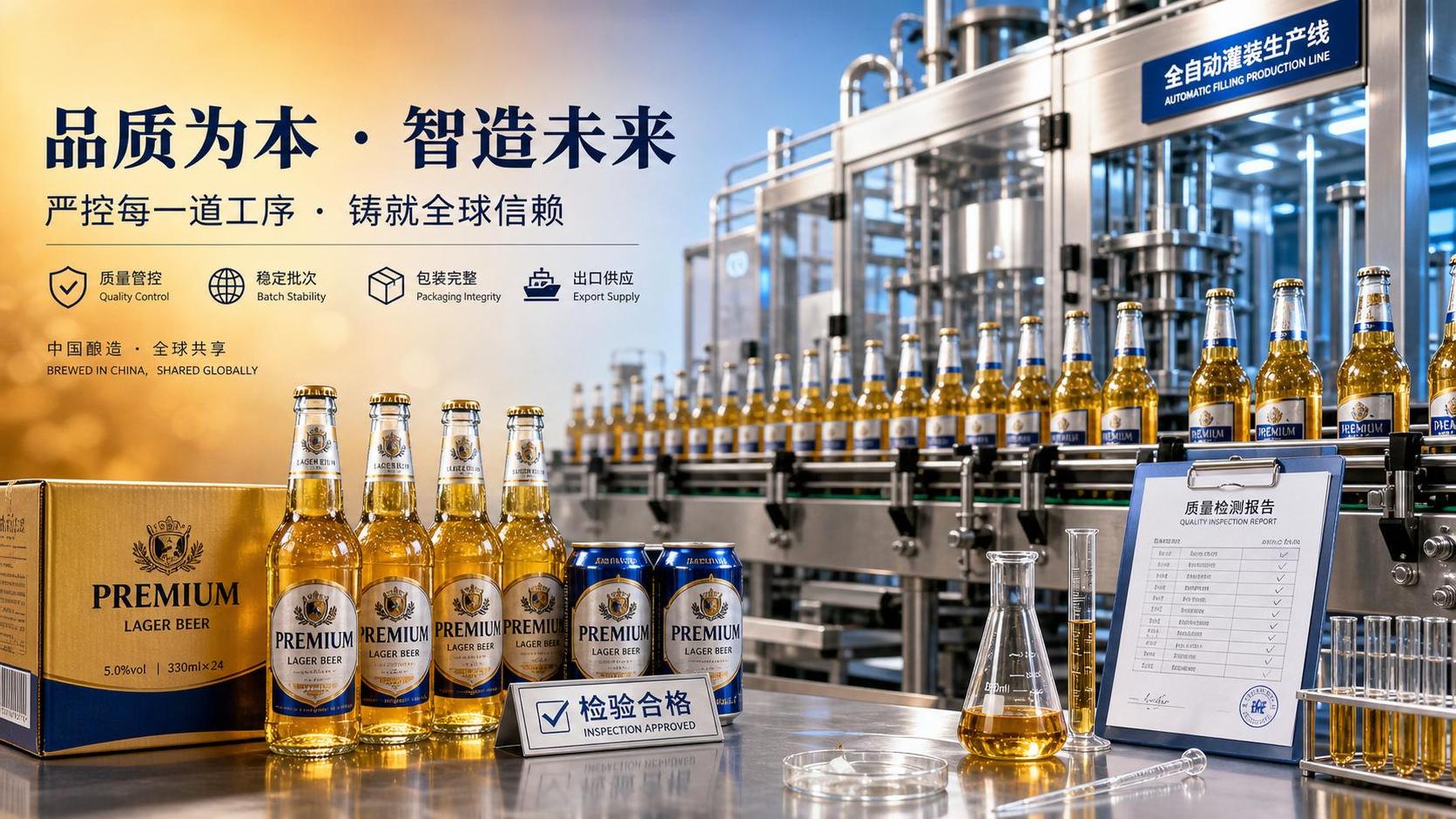
When sourcing beer from China, overlooking consistency can lead to costly quality disputes, damaged brand reputation and unstable market performance. So, How to verify quality stability of Chinese beer factories? This question matters for importers, distributors and private-label buyers seeking reliable long-term partners. Understanding the risks behind inconsistent brewing, packaging and supply standards is the first step to making safer, smarter purchasing decisions.
Why does quality stability matter so much in beer sourcing?
Beer is not a simple shelf product. It is a living beverage category shaped by recipe control, fermentation precision, packaging hygiene, storage conditions and batch consistency. If a factory cannot keep these variables stable, the buyer may face repeat claims, retailer complaints and weak reorder rates.
For importers and brand owners, the real issue is not only whether the first shipment tastes acceptable. The bigger concern is whether the fifth, tenth and twentieth shipment still match the approved sample in flavor, appearance, foam retention, carbonation, alcohol level and package integrity.
This is exactly why buyers ask, How to verify quality stability of Chinese beer factories? The answer requires more than reading a product catalog. It requires checking the whole manufacturing system, from raw materials to filling lines and from quality records to export execution.
- Unstable beer flavor can cause private-label brands to lose consumer trust quickly, especially in supermarket and online channels where negative reviews spread fast.
- Packaging inconsistency, such as weak seams, leaking cans or poor label adhesion, can result in customs issues, warehouse damage and distributor disputes.
- Inconsistent lead times and replenishment performance can break seasonal campaigns, bar promotions and retail shelf plans.
What risks do buyers face if they fail to verify quality stability of Chinese beer factories?
Before comparing suppliers, buyers should identify the practical consequences of poor verification. The table below summarizes common sourcing risks in the beer and beverage industry and shows why How to verify quality stability of Chinese beer factories? is a purchasing question, not just a technical one.
These risks often appear together. A factory with unstable raw material control may also struggle with production records, traceability and shipment planning. That is why buyers should evaluate quality stability as a system rather than as a single inspection point.
The most overlooked hidden costs
The visible cost of a bad shipment is usually credit compensation or replacement. The hidden cost is bigger: lost shelf space, delayed launches, marketing waste, emergency logistics, customer service pressure and lower distributor confidence in future cooperation.
For restaurants, bars and supermarkets, stable beer quality directly affects repeat purchase behavior. If draft-like mouthfeel disappears, fruit beer aroma changes, or sugar-free low-calorie beer tastes inconsistent, end users may switch brands immediately.
How to verify quality stability of Chinese beer factories before placing an order?
Buyers should use a practical verification framework. A low price or attractive sample should never replace process review. If you are asking How to verify quality stability of Chinese beer factories?, start with the checkpoints below and request objective evidence for each one.
- Review batch records. Ask how the factory records original gravity, final gravity, alcohol content, bitterness targets, fermentation temperature and filtration or pasteurization parameters.
- Compare multiple batches, not one sample. Request retained samples or batch-to-batch data for the same SKU produced at different times.
- Check incoming raw material management. Malt, hops, yeast, fruit ingredients, sweeteners and cans should follow defined supplier standards and lot traceability.
- Evaluate packaging control. Ask how the factory manages seam integrity, fill volume, oxygen pickup, label accuracy and carton durability for export routes.
- Verify shelf-life logic. The factory should explain storage recommendations, product stability expectations and transport considerations for each beer style.
- Assess communication discipline. A reliable beer factory responds clearly on specification changes, artwork approvals, lead times and corrective actions.
What documents and signals should buyers request?
Documentation does not guarantee performance, but poor documentation is a warning sign. In beverage sourcing, strong quality systems usually leave a paper trail that supports traceability and faster problem-solving.
- Product specifications with alcohol, extract, ingredient statement, package format and storage notes
- Batch inspection records for core sensory and physical indicators
- Packaging material standards for bottle, can, crown, carton and label control
- Corrective action procedures for nonconforming lots and complaint handling
- Export experience by channel, such as supermarkets, bars, e-commerce or distributor networks
Which factory capabilities reveal long-term beer quality stability?
Not all Chinese beer factories operate at the same level. Some can produce a nice trial sample but struggle with scaling. Others are better equipped for stable OEM and ODM cooperation. The table below helps buyers compare the capabilities that matter most.
A capable partner is not defined by a sales promise alone. It is defined by whether the factory can repeat quality across different beer styles, packaging forms and order cycles while still meeting market-specific needs.
Why product diversity can actually reduce buyer risk
A brewery with broader craft beer development capability often has stronger process control because different categories require different technical discipline. Classic lager, German wheat, sugar-free low-calorie beer, fruit-flavored beer and functional specialty beer each place different demands on recipe balance, fermentation and shelf stability.
Jinpai Beer’s focus on R&D, production and distribution across multiple craft beer styles is relevant here. For buyers, that means one supplier may support core volume products and differentiated retail or bar offerings under one coordinated supply relationship.
What should importers, distributors and private-label buyers inspect on site?
A factory audit should focus on operational reality. If a site visit is possible, buyers should not spend all their time in the showroom. The best insights usually come from brewhouse flow, fermentation management, packaging lines, warehouse practices and record visibility.
On-site beer factory inspection checklist
- Observe whether raw materials are clearly identified by lot and storage condition, especially malt, hops, adjuncts and fruit-related ingredients.
- Ask how tanks are scheduled and cleaned between different beer types to reduce cross-influence and flavor deviation.
- Inspect the filling area for hygiene discipline, packaging handling and in-process checks such as seam or cap inspection.
- Review how finished goods are stored before export, including temperature awareness, stack stability and carton protection.
- Verify whether the team can explain complaint response procedures without hesitation or contradiction.
If an on-site audit is not practical, a structured video audit can still be useful. Ask the supplier to walk through the full process in sequence, not only polished presentation areas. Consistency usually shows up in details.
How do packaging, channel and product style affect stability assessment?
How to verify quality stability of Chinese beer factories? also depends on your business model. A beer made for supermarket shelves has different stability priorities from a beer designed for bars or online retail bundles. The same is true for cans, bottles and gift packaging.
The table below helps buyers connect application scenarios with the most critical stability checks before approval.
This scenario-based approach reduces sourcing blind spots. Buyers should align factory verification with channel expectations instead of using one generic checklist for every beer project.
What standards and compliance points should buyers discuss?
Beer import compliance varies by market, but buyers should always discuss product labeling, ingredient declaration, shelf-life marking, packaging material suitability and traceability. If the supplier has experience serving multiple countries and channels, communication tends to be smoother during approval and shipment preparation.
It is reasonable to ask about general quality management practices, hygiene procedures, product testing routines and export document coordination. The goal is not to collect certificates for decoration. The goal is to confirm that the factory can support a compliant and stable beer supply program.
Common buyer mistakes
- Approving a beer only by tasting one fresh sample without checking repeatability over time
- Comparing prices without comparing process control, packaging standards and complaint response ability
- Ignoring how product style affects stability, especially for fruit-flavored and functional specialty beers
- Assuming a factory can scale private-label production simply because it can make a sample
FAQ: How to verify quality stability of Chinese beer factories?
How many samples should a buyer test before approving a beer project?
One sample is rarely enough. Buyers should ideally compare at least different production points or controlled trial batches for the same SKU. This is especially important for OEM and ODM beer, where flavor replication and packaging execution matter as much as the first tasting impression.
Which beer categories need stricter stability review?
All categories need review, but fruit-flavored beer, sugar-free low-calorie beer and functional specialty beers often require closer attention because ingredient balance, sweetness profile, aroma expression and shelf performance can shift more easily than standard lager programs.
Can a low price still be acceptable if quality records look weak?
Usually, that is a high-risk trade-off. In beer sourcing, weak records often mean weaker traceability and slower issue resolution. The initial savings can disappear quickly after one claim, one rejected lot or one failed private-label launch.
What is the safest way to start cooperation with a new Chinese beer factory?
Start with clear specifications, confirmed packaging details, a sample approval process and a pilot order if feasible. Define what must remain stable across future orders, including flavor profile, alcohol range, package appearance and delivery expectations.
Why choose us for stable beer OEM, ODM and wholesale cooperation?
For buyers asking How to verify quality stability of Chinese beer factories?, the best answer is to work with a supplier that combines product development capability, structured production thinking and channel-oriented service. Jinpai Beer focuses on the R&D, production and distribution of craft beer across classic lager, German wheat, sugar-free low-calorie beer, fruit-flavored beer and functional specialty beers.
This range matters because many distributors and private-label buyers need more than one product type. They may need a mainstream lager for supermarkets, a differentiated wheat beer for restaurants, a low-calorie option for health-conscious consumers and fruit or specialty beer for seasonal campaigns. Coordinating these needs with one capable partner can reduce communication gaps and supply complexity.
Our OEM/ODM services, wholesale supply and customized solutions are designed for global distributors, agents and partners serving online and offline channels. If you are evaluating a new beer sourcing project, you can consult us on product selection, packaging formats, target market positioning, delivery cycle planning, sample support, labeling coordination and quotation details.
If your current concern is not just price but long-term consistency, now is the right time to discuss your beer style requirements, channel scenario, expected order volume and technical preferences. A more stable supply decision begins with a more detailed sourcing conversation.
Thank you very much for writing to us. Please leave your message and contact information, we will reply to you within 24 hours.