



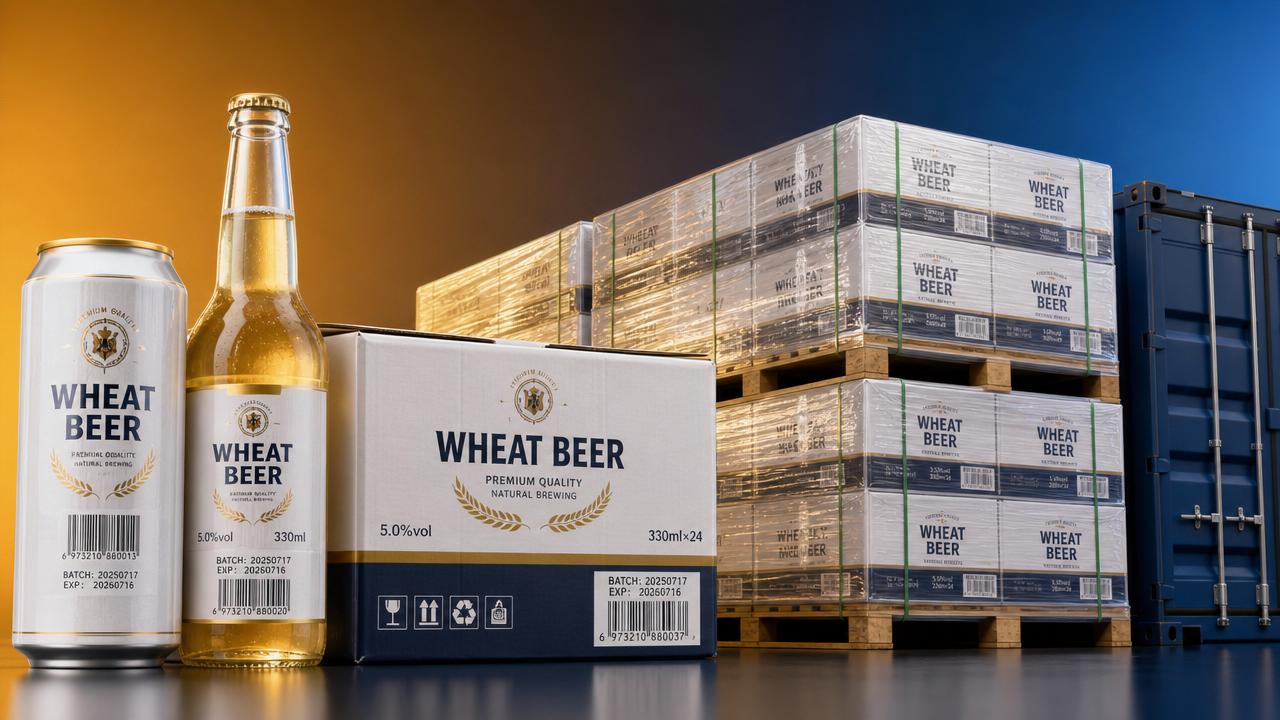
As key export markets tighten compliance, labeling and traceability standards, choosing a reliable White Label Beer Supplier has become a critical step in business evaluation. For importers, distributors and retail buyers, the right partner must offer not only diverse beer products, but also stable production, OEM/ODM flexibility and export-ready quality control to reduce risk and support long-term market growth. In the beverage industry, especially in beer exports, regulatory shifts now affect product naming, ingredient disclosure, alcohol labeling, packaging consistency, shelf-life verification and digital traceability. That means working with an experienced White Label Beer Supplier is no longer just about price or flavor selection; it is about market access, brand protection and supply chain resilience.
What do tighter export rules mean for a White Label Beer Supplier?
Tighter rules usually refer to stricter checks on label accuracy, formula transparency, batch records, food safety documentation and country-specific packaging requirements. In many regions, beer sold under a private label must meet the same legal and technical standards as major branded products. A capable White Label Beer Supplier should therefore understand how to adapt recipes, labels and documentation to destination-market rules before shipment leaves the factory.
For example, one market may require clear allergen statements for wheat beer, while another may focus on nutritional claims for sugar-free low-calorie beer. Fruit-flavored beer and functional specialty beer can face even closer scrutiny because ingredients, additives and claims are often reviewed more carefully. If the supplier cannot align product information with local rules, the result may be delayed customs clearance, relabeling costs or rejection at port.
This is why a modern White Label Beer Supplier must combine brewing capability with export compliance support. It is no longer enough to produce good beer; the supplier must also provide batch traceability, stable specifications and documentation that can stand up to audits.
Which compliance areas matter most when selecting a White Label Beer Supplier?
The most important compliance areas often include labeling, ingredient control, packaging standards, microbiological safety and shipment records. A dependable White Label Beer Supplier should be able to explain how each area is managed in practical terms, not just promise general quality.
- Labeling accuracy: product name, ABV, ingredient list, net content, date coding and importer-specific information must match destination rules.
- Traceability: each batch should be traceable from raw materials to finished cans, bottles or kegs.
- Packaging integrity: carton strength, can seam quality, bottle safety and pallet stability matter in long-distance export.
- Product consistency: classic lager, German wheat, fruit beer and specialty formulas should maintain repeatable taste and physical stability.
- Document readiness: test reports, certificates and production records should be available when needed.
A strong White Label Beer Supplier also knows that compliance is not static. Export conditions change, especially in retail channels where claims, barcodes, multilingual packaging and sustainability information may be updated with little notice. Choosing a supplier with a responsive technical and packaging team can significantly reduce adjustment time.
How can OEM/ODM flexibility help under stricter market standards?
OEM/ODM flexibility becomes more valuable when target markets are fragmented. A qualified White Label Beer Supplier should be able to adjust beer style, sweetness, alcohol level, calorie profile, packaging format and branding details according to channel and region. This is especially useful when one country favors a clean classic lager profile, while another prefers German wheat beer, fruit-flavored beer or functional specialty beer with a differentiated concept.
Jinpai Beer focuses on R&D, production and distribution of craft beer and offers a broad portfolio including classic lager, German wheat, sugar-free low-calorie beer, fruit-flavored beer and functional specialty beers. With OEM/ODM services, wholesale supply and customized solutions, the company supports both online and offline sales channels worldwide. In a compliance-driven environment, this range matters because not all products fit all markets in the same way. The ability to reformulate, relabel or redesign packaging without sacrificing production stability can create a real advantage.
An export-ready White Label Beer Supplier should also help confirm whether a concept is commercially realistic. A visually attractive fruit beer idea may still need ingredient review, shelf-life validation and transport testing. A sugar-free beer may require stricter support for nutritional positioning. ODM support is useful because it connects product development with actual compliance feasibility.
How do you compare one White Label Beer Supplier with another?
The best comparison method is to evaluate capability across product, compliance, operations and communication, not just unit cost. Low pricing from a White Label Beer Supplier can become expensive if label revisions, inconsistent flavor or incomplete records create shipment delays.
When comparing a White Label Beer Supplier, it also helps to request market-specific examples. Ask how the supplier handled a label update, a formula adaptation or a packaging change for different export destinations. Specific answers usually reveal more than broad claims.
What risks and common mistakes should be avoided?
A common mistake is assuming that a supplier with strong brewing skills automatically understands export compliance. In reality, a White Label Beer Supplier may produce appealing beer but still struggle with destination-specific barcode placement, legal wording, shelf-life display or carton markings. Another frequent issue is approving attractive packaging before confirming whether all mandatory label elements fit correctly.
There is also risk in over-customizing too early. A highly specialized product can increase minimum order pressure, validation time and inventory complexity. In many cases, starting with a market-proven base such as classic lager or German wheat, then adapting branding and pack format, is more efficient than launching a fully new formula immediately. A seasoned White Label Beer Supplier should be able to recommend a lower-risk path.
Another avoidable error is neglecting transport and storage conditions. Beer quality depends not only on brewing but also on filling, sealing, packaging and logistics. For fruit-flavored beer and functional specialty beer, stability control is particularly important. The right White Label Beer Supplier should discuss shelf life, container conditions and packaging protection as part of the project, not as an afterthought.
How should businesses prepare for costs, lead times and next steps?
Under tighter regulations, costs and lead times should be assessed as part of compliance planning. A White Label Beer Supplier may need time for sample development, artwork confirmation, legal review, packaging sourcing and final production scheduling. Trying to shorten every stage can increase the chance of label mistakes or product inconsistency.
A practical preparation process usually includes these steps:
- Define the target market, sales channel and expected beer style.
- Confirm product concept with a White Label Beer Supplier that offers suitable OEM/ODM options.
- Review label, ingredients and packaging requirements before final design approval.
- Validate samples for taste, stability and commercial positioning.
- Align production plan, documentation and delivery timeline.
This approach supports better launch discipline and helps balance speed with reliability. In export beer business, a slightly longer but well-managed preparation cycle is often more profitable than a rushed launch with compliance gaps.
Quick FAQ summary: what should matter most right now?
As export standards continue to tighten, selecting the right White Label Beer Supplier is becoming a strategic decision rather than a routine sourcing task. The strongest partner will combine broad beer development capability, dependable production, customized OEM/ODM service and practical export compliance support. Jinpai Beer offers a complete range of craft beer solutions, from classic lager and German wheat to sugar-free low-calorie beer, fruit-flavored beer and functional specialty beers, with worldwide supply through online and offline channels.
If the goal is to build a stable private label beer business in changing global markets, the next step is clear: review target-market requirements, shortlist an export-ready White Label Beer Supplier, and validate product, packaging and documentation together before launch. That preparation can reduce risk, improve shelf success and support long-term channel growth.
Thank you very much for writing to us. Please leave your message and contact information, we will reply to you within 24 hours.