



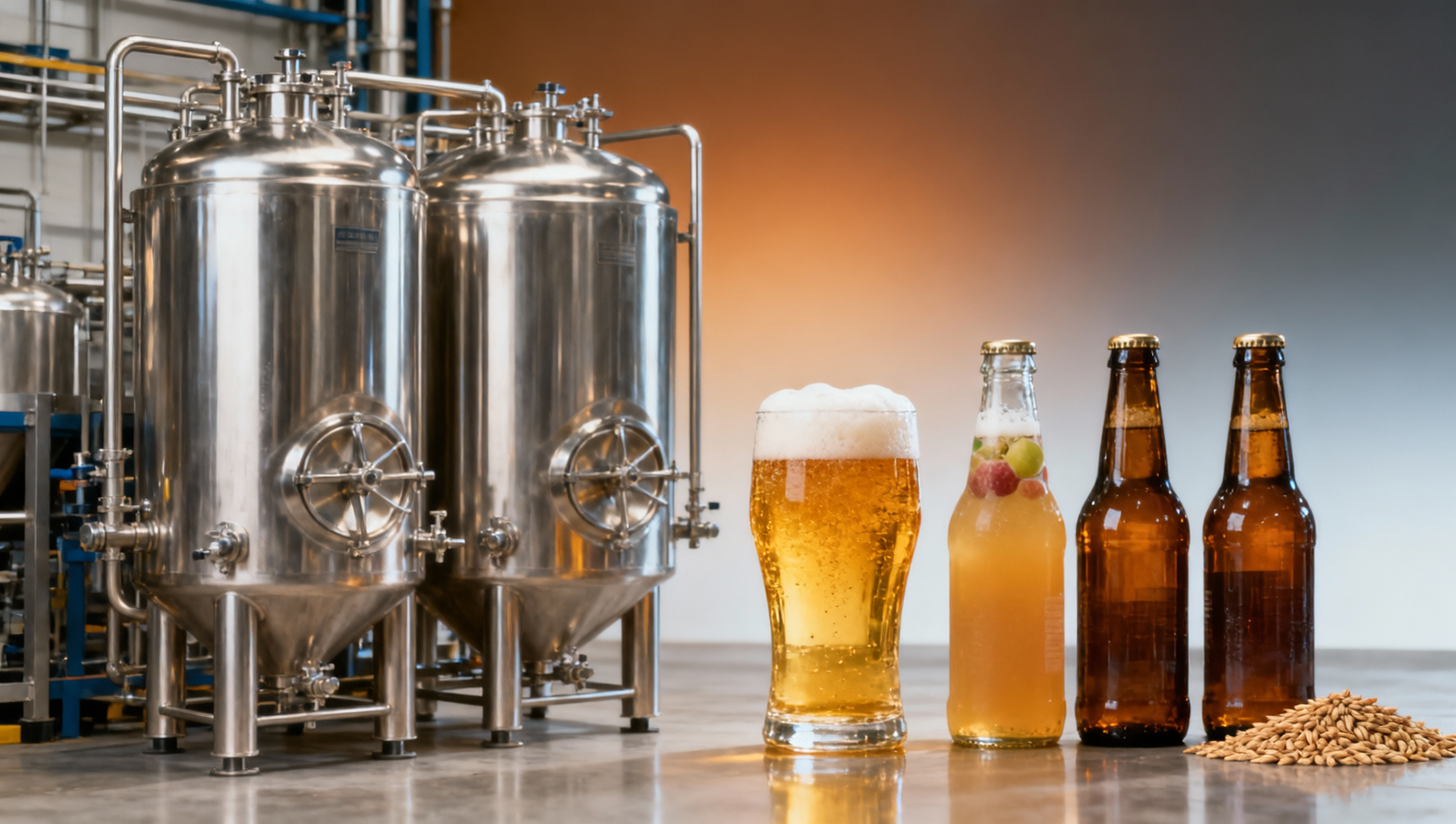
When the Factory Choice Changes the Product Plan
Choosing between a Beer factory and a Malt drink factory is rarely a naming issue. It affects formulation freedom, production flow, label claims, channel fit and expansion speed.
In beverage projects, similar-looking products may require very different manufacturing paths. A craft-style line, a fruit-led refreshment drink and a low-calorie functional beverage do not ask for the same factory logic.
That is why the Beer factory versus Malt drink factory decision should be made early. Once equipment layout, process validation and packaging format are fixed, switching direction becomes expensive.
For brands building around classic lager, German wheat or specialty beer, a Beer factory often supports stronger fermentation depth and style consistency. For lighter, sweeter or hybrid malt beverages, a Malt drink factory may offer more flexibility.
In practice, the right answer depends on what the product must become after launch, not only on what it tastes like today.
Why Similar Beverage Ideas Lead to Different Factory Models
A Beer factory is usually built around brewing, fermentation control, yeast handling, maturation and stable sensory repeatability. It fits products where beer identity is central to the commercial value.
A Malt drink factory often works better when the brief emphasizes flavor adjustment, sweetness balance, lower alcohol positioning or blended beverage development. The core need is broader formulation adaptation.
This difference matters across global retail channels. Bars may prioritize draft character and authentic brewing notes. Supermarkets may care more about flavor accessibility, shelf rhythm and packaging variation.
Businesses offering OEM and ODM solutions often see this split clearly. One project asks for brewing credibility. Another needs fast line extension across fruit-flavored, sugar-free or functional specialty drinks.
A quick comparison before line planning
The table helps, but the final decision still depends on where the product will be consumed, how quickly the portfolio will change and what regulatory path will apply in each market.
If the Goal Is Craft Credibility, a Beer Factory Usually Fits Better
When the plan centers on classic lager, German wheat or brewing-led specialty beer, a Beer factory usually gives the right technical backbone. Flavor depth and process discipline matter more than fast recipe variation.
This is common in restaurant and bar channels. Buyers there often judge foam performance, aroma persistence, mouthfeel and batch consistency. Those signals come from brewing control, not only from flavor design.
A Beer factory also makes sense when the product story needs authenticity. If fermentation, malt selection and beer style origin are part of market positioning, the manufacturing route should support that narrative directly.
The tradeoff is lower freedom for rapid concept changes. A Beer factory can innovate, but each new flavor or functional direction must still respect the underlying brewing architecture.
What to confirm in this scenario
- Whether beer identity must remain obvious after packaging and shelf transport.
- Whether the channel expects premium brewing cues rather than beverage-style drinkability.
- Whether future SKUs will stay inside a beer family or move toward cross-category drinks.
When Flavor Range and Faster Iteration Matter, a Malt Drink Factory Can Be Smarter
A Malt drink factory becomes attractive when the product plan stretches beyond traditional beer boundaries. Fruit-flavored beverages, sweeter profiles, lighter drinking experiences and functional concepts often land here.
In supermarket and online channels, this matters more than many teams expect. The product may need quick SKU expansion, seasonal variants and easier acceptance among consumers who do not actively seek craft beer.
For sugar-free low-calorie drinks, the challenge is not only reducing sugar. Balance, body and aftertaste must remain stable at scale. A Malt drink factory can be better suited when formulation work is intensive.
This route also helps when the business model includes private label or custom development for multiple regions. Different markets may ask for different sweetness levels, alcohol styles or flavor systems.
Typical signs that the Malt drink factory route is stronger
- The product concept depends on flavor rotation and short launch cycles.
- Retail channels need approachable taste rather than deep beer typicity.
- Several export markets require localized recipes under one supply framework.
Different Channels Push the Decision in Different Directions
A Beer factory and a Malt drink factory may both produce appealing beverages, but channel structure changes what “fit” really means. The same liquid can perform differently in bars, supermarkets and e-commerce bundles.
Restaurants and bars usually reward signature style, pouring quality and repeat sensory experience. That leans toward the Beer factory model, especially for craft-led portfolios.
Mass retail often values broader shelf appeal, packaging efficiency and portfolio variety. A Malt drink factory can support that wider commercial spread more comfortably.
For cross-border business, the best approach is often to match the factory choice to the priority channel first, then check whether the same platform can stretch into adjacent channels later.
How channel reality changes the factory decision
Where Teams Often Misjudge Beer Factory and Malt Drink Factory Options
A common mistake is deciding from product appearance alone. A beverage can look like beer on shelf, yet require a Malt drink factory because the real complexity lies in flavor layering or nutritional positioning.
The reverse also happens. A brand may chase fast innovation and choose a Malt drink factory, then discover that the channel expects brewing authenticity the product cannot convincingly signal.
Another weak decision point is focusing only on entry cost. A lower initial setup may create higher reformulation cost, slower approvals or limited room for future beer-style expansion.
It is also risky to treat all export markets as one scenario. Label rules, alcohol definitions, flavor preferences and functional ingredient tolerance may shift the better choice from Beer factory to Malt drink factory, or back again.
Checks worth making before locking the route
- Map the first three planned SKUs, not only the launch SKU.
- Test whether the channel buys the beer story or the drinking experience.
- Review formulation limits, shelf requirements and labeling implications together.
- Estimate changeover time and validation cost for future line extensions.
A Practical Way to Choose the Better Factory Model
The better choice is usually the one that supports both current launch logic and next-stage portfolio growth. If the product lives or dies by brewing character, start from the Beer factory model.
If the roadmap includes fruit-led concepts, sugar-free low-calorie variants or functional specialty beverages, the Malt drink factory route may protect speed and flexibility better.
Businesses with broad R&D and custom manufacturing capability can often evaluate both paths more realistically. That matters when one supply partner must support OEM, ODM, wholesale and differentiated channel development.
Before moving ahead, compare the intended channel mix, compliance path, formulation complexity, packaging plan and expansion horizon. A Beer factory or Malt drink factory should be chosen as a long-term operating fit, not a short-term label.
The clearest next step is to sort products by real use case, then test which factory model handles those cases with fewer compromises in taste, process control and commercial scalability.
Thank you very much for writing to us. Please leave your message and contact information, we will reply to you within 24 hours.