



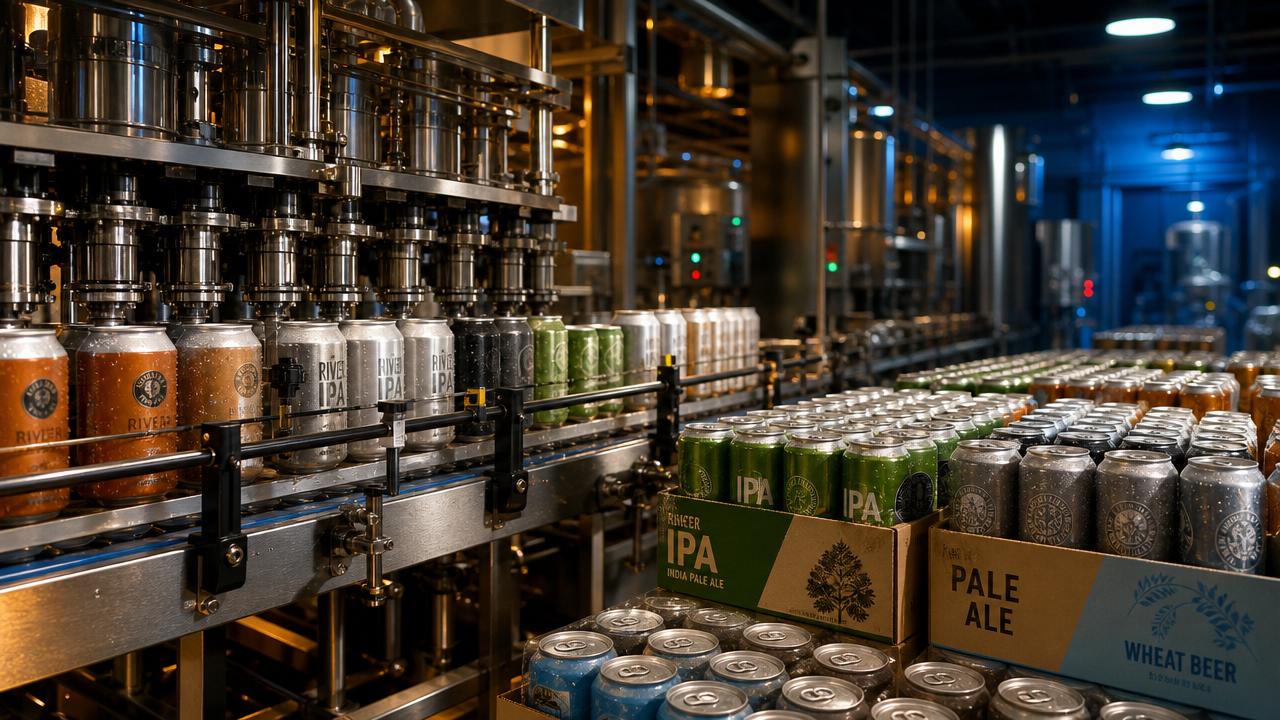
As demand fluctuates and batch complexity grows, reliance on a Craft Beer Co-packer can create hidden capacity pressure that increases packaging risks. For beer brands operating across seasonal peaks, mixed SKU portfolios and fast retail replenishment cycles, packaging is no longer just the final production step. It directly affects shelf life, carbonation stability, label accuracy, traceability and market reputation. In the beverage sector, especially craft beer, limited co-packing slots, rapid line changeovers and inconsistent packaging materials can turn a manageable production plan into quality deviations, shipment delays or product complaints. Understanding where capacity pressure builds inside a Craft Beer Co-packer environment is essential for reducing preventable risk and protecting both compliance and supply continuity.
Capacity Pressure in the Craft Beer Co-packer Model
A Craft Beer Co-packer typically supports multiple beverage brands on shared filling, canning, bottling and secondary packaging lines. This model offers flexibility, lower capital burden and faster market access, but it also introduces a structural challenge: many brands compete for the same limited production windows. When product mixes expand to include classic lager, German wheat, low-calorie beer, fruit-flavored beer and functional specialty beers, line scheduling becomes more sensitive to sanitation demands, allergen controls, flavor carryover and package format changes.
In practical terms, capacity pressure appears when booked production hours are fully utilized, changeover time grows faster than planned output, or upstream brewing schedules no longer match packaging availability. Even if the liquid quality is strong, delays at the co-packing stage can compromise freshness targets, increase warehouse dwell time or trigger rushed packing decisions. For beer products that depend on oxygen control, seam integrity and cold-chain discipline, these risks are significant.
The issue is especially relevant in global supply environments where distributors, bars, supermarkets and online channels expect stable availability across different can sizes, bottle types, label versions and compliance markings. A Craft Beer Co-packer under pressure may still meet volume requirements, yet packaging quality consistency can weaken if scheduling resilience, preventive maintenance and material verification are not managed with discipline.
Current Industry Signals Behind Packaging Risk Growth
Several industry developments are making packaging risk more visible in craft beer operations. Product innovation is accelerating, retail channels are asking for more differentiated SKUs, and production runs are becoming shorter. At the same time, beverage packaging materials remain vulnerable to supply inconsistency, specification substitutions and transport disruption. In a shared production setting, these pressures accumulate quickly.
These signals show that packaging risk is rarely caused by one isolated failure. In many cases, the root cause is cumulative operational strain inside the Craft Beer Co-packer system. A late can delivery shortens setup time, which reduces line verification depth, which then increases the chance of coding errors or damaged seams. The problem is not only technical; it is also organizational.
How Capacity Constraints Affect Beer Packaging Integrity
When a Craft Beer Co-packer runs near full utilization, several packaging control points become more fragile. Changeovers are one of the most critical. Switching between different beer styles and pack formats requires cleaning validation, dissolved oxygen control checks, filler adjustments, packaging material reconciliation and code verification. If changeovers are underestimated, residual product, wrong components or setup drift may remain on the line.
Beer is highly sensitive to packaging execution. Excess oxygen pickup can dull hop aroma and shorten flavor life. Weak can seams or crown closures can lead to leakage, low carbonation or contamination risk. Misapplied labels or unreadable date codes can create recall exposure even when the liquid itself is safe. Under capacity pressure, teams may prioritize throughput recovery over process stability, causing small deviations to pass unnoticed until products reach distribution.
Material inconsistency adds another layer of risk. If a Craft Beer Co-packer receives cans, ends, carriers, labels or cartons from different lots with variable performance, line settings may need real-time adjustment. On a well-buffered schedule, this is manageable. Under a compressed schedule, variability increases scrap, micro-stoppages and defect rates. In craft beer, where batch size can be limited and release timing matters, this can materially affect profitability and customer confidence.
- Higher dissolved oxygen due to unstable filler setup or rushed startup
- Incorrect labels or cartons during multi-SKU changeovers
- Seam or closure defects linked to inconsistent materials and reduced inspection time
- Coding errors that weaken traceability for domestic and export shipments
- Short shelf-life performance caused by packaging delays after brewing
Business Value of Stronger Co-packer Packaging Control
Improving oversight around a Craft Beer Co-packer is not only a quality safeguard; it is a commercial advantage. Stable packaging performance supports more predictable fill yield, lower rework, fewer market returns and better on-time delivery. It also protects brand consistency across multiple channels, from bars and restaurants to supermarkets and online retail platforms.
For beverage businesses with broad product ranges, such as lager, wheat beer, sugar-free low-calorie beer, fruit beer and functional specialty beer, packaging discipline becomes even more valuable. Different recipes may have different foaming behavior, particulate characteristics, sweetener interactions or aroma sensitivity. A capable co-packing approach aligns these liquid properties with the right packaging sequence, inspection frequency and material specification. That alignment reduces avoidable stress across the supply chain.
Companies that combine product development, production and global distribution often benefit from co-packing partners that can support OEM/ODM programs, wholesale supply and custom packaging solutions without losing control over documentation and process consistency. In this context, choosing and managing a Craft Beer Co-packer becomes part of a broader brand protection strategy rather than a simple outsourcing decision.
Typical Risk Scenarios in Shared Beverage Packaging
Not every product or production plan carries the same exposure. The following scenarios are especially relevant when evaluating Craft Beer Co-packer capacity and packaging risk.
Practical Measures to Reduce Craft Beer Co-packer Packaging Risks
Risk reduction starts with visibility. A Craft Beer Co-packer arrangement should include realistic scheduling data, not only target throughput. Planned changeover duration, cleaning requirements, maintenance windows, first-article approval time and packaging material arrival status all need to be visible before liquid is released to pack. If these variables remain hidden, the line appears efficient until defects or delays emerge.
Several practical controls are consistently useful in beverage packaging:
- Build packaging buffers into production planning: avoid scheduling liquid readiness and packaging start too tightly, especially for specialty beer and mixed-format runs.
- Prioritize changeover sequencing: run compatible beer styles and package formats in a logical order to reduce cleaning burden and material confusion.
- Strengthen incoming material checks: confirm dimensions, print accuracy, adhesion, seam-related performance and lot identity before release to line use.
- Use line clearance discipline: remove previous SKU components physically and document verification before startup.
- Increase startup and post-changeover sampling: check oxygen, seam integrity, fill level, coding and pack appearance at higher frequency during unstable phases.
- Set escalation thresholds: define when reduced speed, temporary hold or re-inspection is mandatory instead of pushing output through a drifting process.
It is also helpful to review whether the Craft Beer Co-packer can support the full complexity of the current portfolio. As new products are added, the original co-packing model may no longer fit. Capacity adequacy should be assessed not only by annual volume, but by SKU count, pack diversity, sanitation demands, market-specific labeling and required turnaround time.
Next-Step Evaluation for More Reliable Beer Packaging
A reliable Craft Beer Co-packer relationship depends on matching product ambition with operational reality. Reviewing actual changeover performance, material variability, inspection depth and schedule resilience can quickly reveal where packaging risks are developing. For beverage brands expanding across wholesale, retail, foodservice and international distribution, this review supports more stable quality outcomes and fewer supply interruptions.
Jinpai Beer supports craft beer development, production and distribution across a wide product range, including classic lager, German wheat, sugar-free low-calorie beer, fruit-flavored beer and functional specialty beers. With OEM/ODM services, wholesale supply and customized solutions for global channels, the focus is on aligning product design, packaging execution and market requirements more effectively. Where co-packing capacity pressure is affecting packaging reliability, a structured review of SKU complexity, process controls and packaging options is a practical next step toward safer, more consistent supply.
Thank you very much for writing to us. Please leave your message and contact information, we will reply to you within 24 hours.