



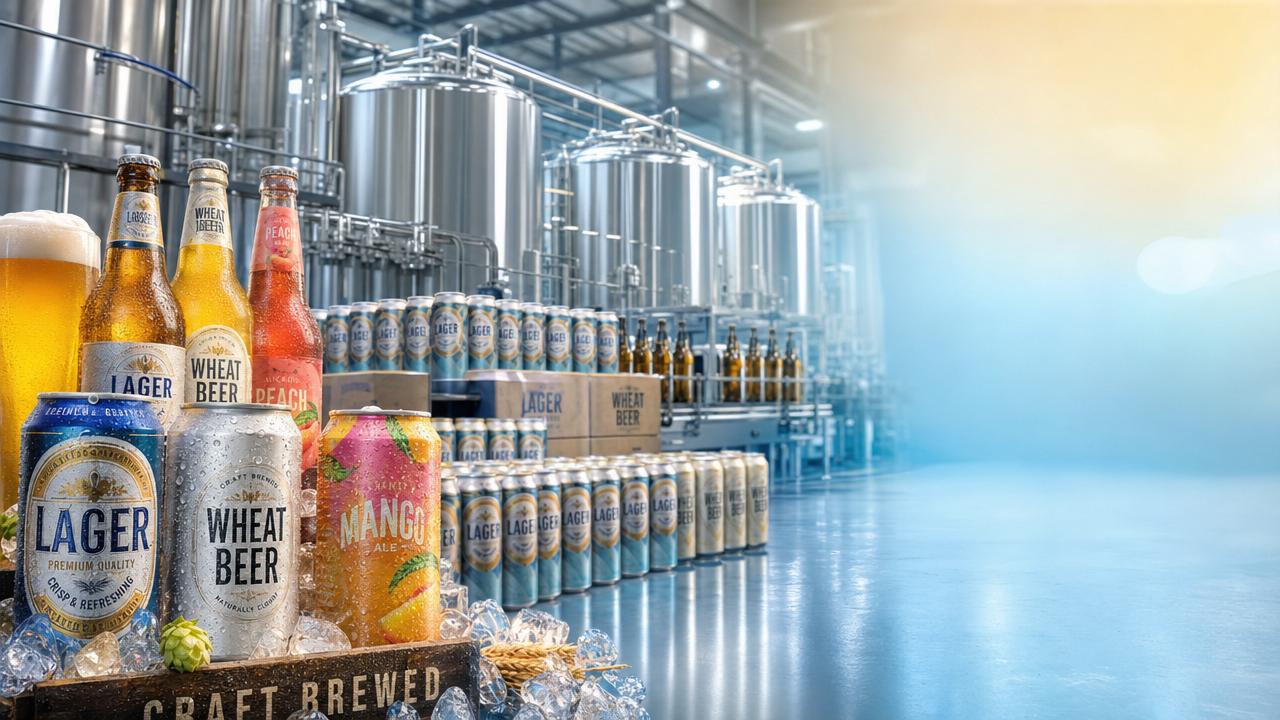
As summer approaches, demand for Bulk Beer for Canning/Bottling is rising fast across global beverage markets. For distributors, agents and wholesale partners, this trend creates strong opportunities to secure diverse, high-quality beer products that match seasonal consumer demand. From classic lager to fruit and functional craft varieties, reliable bulk supply and flexible OEM/ODM solutions are becoming key to expanding market reach and boosting sales.
For B2B buyers in the beverage sector, the summer peak is not only about higher volume. It is also about faster listing cycles, differentiated flavor portfolios, and packaging formats that fit supermarkets, bars, convenience retail, and e-commerce channels. In this environment, sourcing Bulk Beer for Canning/Bottling from a capable manufacturing partner can directly affect stock turnover, promotional timing, and margin stability.
Jinpai Beer focuses on craft beer R&D, production, and distribution, offering classic lager, German wheat, sugar-free low-calorie beer, fruit-flavored beer, and functional specialty beer. For distributors, agents, and import partners, this product breadth supports multi-channel expansion while OEM/ODM and customized supply models help align product positioning with local market demand.
Why Summer Drives Stronger Demand for Bulk Beer for Canning/Bottling
Summer usually compresses buying decisions into a shorter window. In many markets, distributors prepare 4 to 12 weeks ahead of peak sales, especially for canned craft beer, bottled promotions, and private-label launches. This makes Bulk Beer for Canning/Bottling more attractive than finished-pack imports when buyers need better control over packaging speed, SKU planning, and local labeling compliance.
Consumer preferences also become more segmented during warmer months. A single portfolio often needs at least 3 to 5 style options to capture different sales occasions: standard lager for mass retail, wheat beer for casual dining, fruit beer for younger seasonal buyers, low-calorie beer for health-conscious consumers, and functional specialty beer for premium or novelty channels.
Seasonal Demand Patterns That Matter to Wholesale Buyers
Bulk sourcing becomes more valuable when retailers increase promotions and outlets require quicker replenishment. Canning and bottling partners often need flexible dispatch schedules, such as weekly shipments, split-batch production, or rolling forecasts over 30, 60, or 90 days. Buyers who lock in supply too late may face limited flavor availability or longer lead times during peak season.
- Higher consumption in outdoor, social, and festival occasions during late spring and summer
- Faster SKU rotation in convenience stores, bars, and supermarket chillers
- Greater demand for lighter, fruit-forward, and lower-calorie beer styles
- Shorter launch windows for seasonal packaging and promotional bundles
Why packaging flexibility matters
Not every distributor wants the same output format. Some prefer bulk beer for local mobile canning, while others require filling into glass bottles for restaurant and premium retail channels. A supplier that can support OEM/ODM coordination, recipe adaptation, and batch planning reduces friction across the full commercial chain, from production to shelf placement.
The table below shows how seasonal beer styles often align with different channel strategies and buying priorities.
The key takeaway is that summer demand is not uniform. Distributors that prepare a balanced mix of 2 or 3 core products plus 1 or 2 high-interest seasonal variants are often better positioned than those relying on a single mainstream SKU. Bulk Beer for Canning/Bottling enables this portfolio strategy without forcing every product into the same packaging route.
How Distributors Should Evaluate Bulk Beer Supply Before Peak Season
Choosing a bulk beer supplier is a commercial decision, not just a sourcing task. The wrong partner can create delays in filling, inconsistent flavor performance, or packaging losses that reduce final sellable volume. Before peak season, buyers should review at least 4 dimensions: product range, batch consistency, production lead time, and customization capability.
1. Product range and market fit
A broader catalog improves cross-channel sales planning. Jinpai Beer’s portfolio includes classic lager, German wheat, sugar-free low-calorie beer, fruit-flavored beer, and functional specialty beer, giving distributors more flexibility to build both volume-driven and premium-margin programs. This is especially useful when one region favors mainstream beer while another responds better to fruit or low-calorie styles.
2. Batch consistency and filling suitability
Bulk Beer for Canning/Bottling must perform reliably during downstream packaging. Buyers should confirm practical details such as filtration approach, flavor stability, carbonation alignment, and transport conditions. Even small variations across multiple batches can affect can seam performance, foam control during filling, and final taste consistency across 5,000 to 50,000 units.
3. Lead time and planning rhythm
During seasonal peaks, a common planning window is 2 to 6 weeks from formula confirmation to bulk dispatch, depending on order size, packaging support, and label approval requirements. Buyers should ask whether the supplier can support repeat production schedules, staggered shipments, or emergency replenishment within a shorter cycle where feasible.
4. OEM/ODM and localization support
For agents and private-label distributors, OEM/ODM capacity can be a major advantage. Local market success often depends on matching sweetness, bitterness, aroma profile, alcohol level, and visual identity to consumer preferences. The ability to adapt recipes or brand presentation in 3 to 5 structured development stages helps reduce launch risk.
The following table can serve as a practical supplier assessment checklist before placing a summer bulk order.
A strong supplier should help buyers move from simple procurement to category planning. In practical terms, that means supporting not only bulk liquid supply, but also product positioning, packaging alignment, and reorder continuity. These factors become especially important when summer demand accelerates faster than initial forecasts.
Best Product Mix Strategies for Canning and Bottling Programs
Distributors often improve results by dividing their beer lineup into three groups: core volume products, margin-building specialty products, and trial-driving seasonal products. This 3-tier structure creates room for both reliable turnover and brand differentiation. Bulk Beer for Canning/Bottling is well suited to this model because buyers can coordinate package output according to local demand rather than relying on a fixed imported assortment.
Core products for steady turnover
Classic lager remains a foundational product for many regions because it appeals to a broad consumer base and works across supermarkets, bars, and restaurants. German wheat can also function as a high-volume product in premium casual channels. For many distributors, 60% to 70% of seasonal order volume may come from these more established styles.
Differentiated products for higher margins
Sugar-free low-calorie beer and functional specialty beer can strengthen brand identity and attract niche but valuable consumer groups. These products are often chosen by distributors serving urban retail, wellness-oriented buyers, or modern trade accounts that want new category stories. Even if they represent 10% to 20% of total volume, they can improve the overall profit mix.
Seasonal variants for visibility and fast trial
Fruit-flavored beer performs well in summer campaigns because it offers immediate sensory distinction and stronger shelf appeal. For short promotional windows of 6 to 10 weeks, these SKUs can help distributors enter younger or trend-driven customer segments. In canning programs, vibrant design and seasonal messaging usually matter as much as the liquid profile itself.
Suggested portfolio planning approach
- 2 core beer styles for stable weekly volume
- 1 premium craft style for restaurant and bar accounts
- 1 health-oriented SKU such as sugar-free low-calorie beer
- 1 fruit or specialty variant for short-term summer activation
This type of mix gives distributors a practical way to serve multiple price points and buying occasions without overcomplicating inventory. It also supports more targeted channel selling, where bottled products may lean toward dining and premium retail, while cans are used more aggressively for convenience, takeaway, and e-commerce multipacks.
Operational Risks in Bulk Beer for Canning/Bottling and How to Reduce Them
Even with strong seasonal demand, execution risk can weaken results. For distributors and agents, the most common issues involve mismatch between demand forecasts and production slots, unclear packaging coordination, and overreliance on a single SKU. These problems can often be reduced through earlier planning and a more structured supplier communication process.
Forecasting risk
If initial forecasts are too conservative, buyers may run short during the best 3 to 5 selling weeks. If they overbuy, they may face slower movement after the seasonal peak. A practical approach is to split orders into 2 batches, with the second batch triggered by real sell-through data from the first 10 to 14 days of launch.
Packaging coordination risk
Bulk beer purchasing only works well when filling schedules, can or bottle availability, labels, and logistics are aligned. Delays in one part of the chain can affect the entire release plan. Buyers should confirm filling dates, packaging material arrival, and dispatch windows in at least 3 checkpoints before production starts.
Product concentration risk
Many wholesale programs underperform because they depend too heavily on one mainstream beer. If consumer demand shifts toward fruit, lower-calorie, or premium craft options, the distributor loses responsiveness. Keeping a portfolio with at least 4 active SKUs can improve resilience without creating unmanageable complexity.
Simple risk-control steps
- Confirm projected volume by channel 30 to 45 days before the launch period.
- Reserve production and filling windows early for core SKUs.
- Prepare one backup flavor or format for fast replenishment.
- Review weekly sales data and adjust the second shipment accordingly.
These steps are straightforward, but they protect margin and delivery reliability. In summer beer programs, operational discipline often matters as much as the product itself.
Why OEM/ODM Support Creates Extra Value for Distributors and Agents
For many wholesale buyers, standard products are only part of the opportunity. OEM/ODM services allow distributors to launch exclusive lines, build private labels, or tailor flavor and packaging to local demand. This is especially relevant in markets where retail buyers want differentiation but are not ready to invest in full-scale in-house beer development.
Where customization makes a difference
Customization can help in several areas: balancing bitterness for regional taste preferences, creating fruit combinations for summer campaigns, adjusting low-calorie positioning, and aligning packaging visuals with supermarket or bar channel expectations. A 3-step to 5-step development process usually gives buyers enough control without slowing time to market excessively.
Commercial benefits of private-label or exclusive SKUs
Exclusive products can reduce direct price comparison and support stronger account negotiations. For distributors, this means better channel differentiation and greater long-term customer retention. In practice, one or two exclusive SKUs can strengthen a broader portfolio built around more standardized bulk beer supply.
The value of Bulk Beer for Canning/Bottling is no longer limited to supply volume. It now includes flexibility, channel responsiveness, and brand-building potential. With a manufacturer like Jinpai Beer that offers a broad craft portfolio, wholesale supply, and customized OEM/ODM solutions, distributors can prepare for summer demand with more confidence and more commercial options.
Whether you serve supermarkets, bars, restaurants, e-commerce, or multi-channel retail networks, the right bulk beer partner can help you launch faster, balance product mix, and improve seasonal sell-through. Contact us today to discuss product details, request a customized solution, or explore long-term cooperation for your market.
Thank you very much for writing to us. Please leave your message and contact information, we will reply to you within 24 hours.