



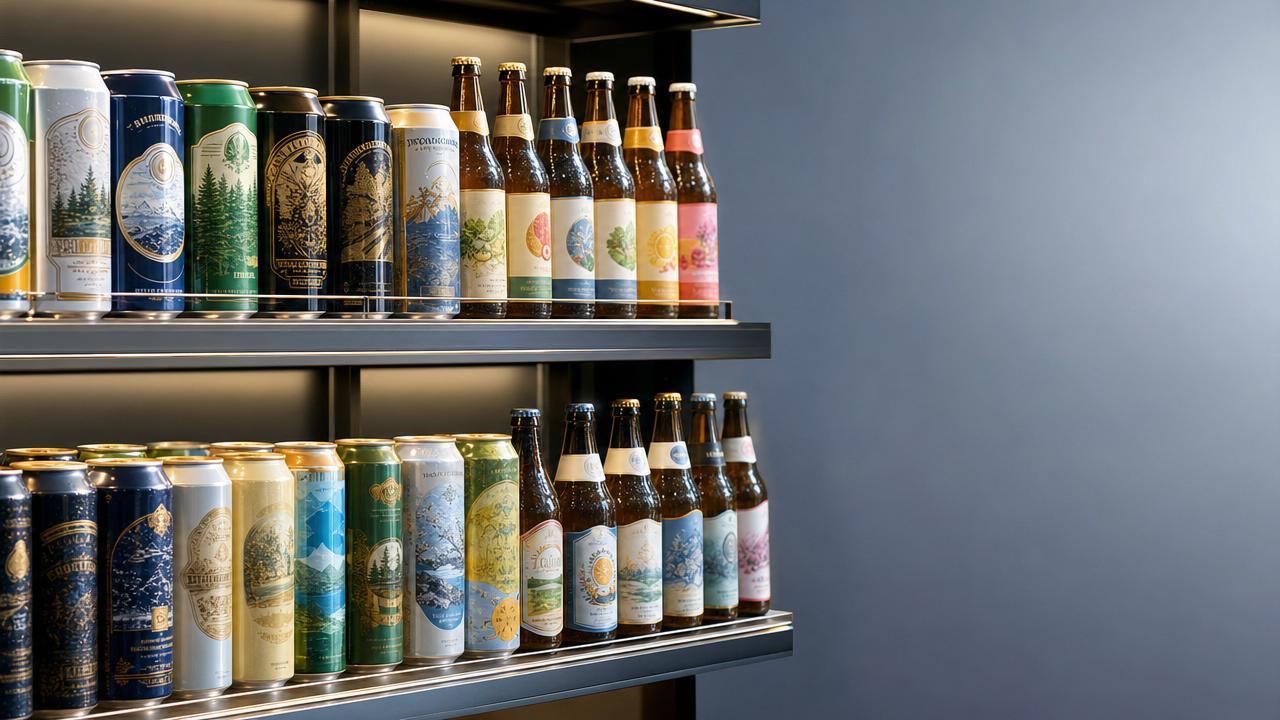
Custom Beer Packaging Design is no longer only about making a can or bottle look attractive. For beverage operators, purchasing teams and brand execution staff, the real advantage now is speed: faster shelf testing, faster buyer feedback and faster decisions on which packaging direction deserves a wider rollout. In a crowded beer market, that speed can reduce launch risk and help teams avoid investing in a design that looks good on screen but performs poorly in stores.
This matters even more in craft beer, where product lines are broader and consumer preferences shift quickly. A business may be comparing a classic lager, a German wheat beer, a sugar-free low-calorie beer and a fruit-flavored line at the same time. Each product may need different color coding, messaging hierarchy, format choices and retail positioning. The ability to test those choices quickly is becoming a practical operating advantage, not just a branding preference.
For users and operators working close to execution, the key question is simple: how can Custom Beer Packaging Design help a product get clearer shelf visibility, stronger recognition and better market response without slowing down production plans? The answer lies in combining flexible packaging development with realistic shelf testing methods, data-based revisions and supply support that can move from sample to production efficiently.
Why faster shelf testing matters more than ever in beer packaging
Traditional packaging development often moved in a slow sequence. A team discussed concepts, approved artwork, produced samples and only later discovered how the design actually behaved on a retail shelf. At that point, changing format, typography, claim placement or color balance could be expensive and time-consuming. Faster shelf testing shortens this cycle and lets operators validate choices earlier.
In beer retail, shelf competition is intense. Bottles and cans fight for attention among local brands, imported products, seasonal releases and private-label alternatives. A package has only a short moment to communicate style, flavor, alcohol strength, calorie positioning or premium identity. If shoppers cannot identify the product quickly, even a well-made beer may lose its chance.
Faster testing helps teams answer practical questions before full rollout. Does the sugar-free variant stand out clearly from the classic lager? Can shoppers distinguish fruit flavors at a glance? Does the premium German wheat packaging still feel authentic when placed next to lower-priced alternatives? These are real shelf questions, and they are easier to answer with structured testing than with internal opinion alone.
For operators, speed also reduces hidden operational waste. If packaging problems are found early, teams avoid extra label revisions, delayed procurement, unused stock and confusion across sales channels. In other words, better and faster packaging validation supports not just marketing performance, but execution efficiency across the supply chain.
What buyers and operators actually need from Custom Beer Packaging Design
When people search for Custom Beer Packaging Design, they are often not looking for abstract design theory. They want packaging that works in real business conditions. That means it should be visually competitive, easy to produce, suitable for target channels and adaptable to different product types. A concept that looks creative but cannot support quick testing or scalable production has limited commercial value.
Operators usually focus on five concerns. First, they need packaging that helps products get noticed quickly. Second, they need clear differentiation among SKUs, especially in mixed product portfolios. Third, they need formats and materials that fit filling, transport and retail handling. Fourth, they need a process that supports revisions without long delays. Fifth, they need confidence that the final design can move smoothly into OEM or ODM production.
For beer brands working with multiple channels, another concern is consistency. A package may appear in supermarkets, bars, convenience stores, e-commerce displays and distributor catalogs. The design must remain recognizable across these touchpoints. Fast shelf testing is valuable because it shows whether the core branding system remains strong when the product is viewed from different distances and in different merchandising conditions.
This is why Custom Beer Packaging Design now overlaps with product strategy. It is not only about artwork. It is about choosing a visual structure that supports recognition, testing speed, line extension and manufacturing practicality at the same time.
How shelf testing improves design decisions before large-scale launch
Shelf testing works best when it simulates real buying conditions instead of asking people whether they “like” a design. In beer packaging, this means placing concept variants in a realistic shelf set with competitor products, multiple pack sizes and different lighting or display contexts. The goal is to observe visibility, clarity and emotional response under the same pressure shoppers experience in stores.
For example, a team may test two can designs for a fruit-flavored beer. One uses bright fruit illustrations and bold flavor names. The other uses a more premium, minimal approach. On a presentation board, both may look appealing. On a shelf, however, one may disappear next to colorful competitors while the other may create faster flavor recognition. Shelf testing turns subjective debate into usable evidence.
It can also reveal issues that internal reviewers overlook. A logo may be too small to identify at one meter away. A low-calorie message may be buried beneath decorative graphics. A color system for product variants may be too subtle, creating confusion between wheat beer and classic lager. These are not minor details. They directly affect pick-up rate and repeat purchase potential.
Fast shelf testing does not always require a full national trial. It can be done through mock retail displays, digital shelf simulations, sample placement in selected partner stores or controlled feedback from distributors and retail buyers. The most effective approach is usually a staged process: concept comparison first, small-batch validation second and broader launch third.
Which packaging elements most affect shelf performance
Not every packaging detail has equal impact. If operators need to prioritize, they should focus on the elements most likely to influence shelf recognition and purchase decisions. In beer packaging, the strongest variables are usually format, color architecture, logo prominence, flavor communication and message hierarchy.
Format matters because it shapes both perception and usability. A slim can, standard can, glass bottle or multi-pack carton each sends different signals about convenience, price level and occasion. Testing different formats can show whether a product should lean toward casual refreshment, premium gifting, bar service or modern health-conscious consumption.
Color architecture is often the fastest recognition tool in a crowded shelf environment. A classic lager may benefit from strong gold, deep blue or heritage green. A sugar-free low-calorie beer may perform better with cleaner white, silver or light color systems that imply freshness and lightness. Fruit beer may need more direct flavor coding, but excessive decoration can reduce premium feel. Testing helps find the right balance.
Logo prominence determines whether brand assets survive shelf clutter. Craft beer brands sometimes overemphasize illustration and underemphasize the primary brand mark. That may create artistic appeal but weaken repeat recognition. In contrast, an overly dominant logo can hide product-specific selling points. Custom Beer Packaging Design needs to manage this balance carefully.
Message hierarchy is equally important. Consumers should quickly understand what the beer is, who it is for and why it is different. If a package tries to communicate too many claims at once, the shelf impact weakens. Fast testing can identify which one or two messages deserve top placement, such as “German Wheat,” “Sugar-Free,” “Low-Calorie,” “Fruit Flavor” or “Craft Brewed.”
How to organize a faster packaging test workflow in practice
For execution teams, the most useful improvement is a repeatable workflow. A practical process starts with defining the business question before any design review. Are you testing a new product launch, a line extension, a package refresh or channel-specific packaging? If the goal is unclear, the testing result will also be unclear.
Next, build a limited number of meaningful variants. Too many design directions slow decision-making. In most cases, two to four strong options are enough. Each option should reflect a specific hypothesis. One may emphasize premium craft identity, another flavor visibility, another health positioning and another retail simplicity.
Then evaluate the concepts under realistic shelf conditions. This can include printed mockups, 3D visualizations, distributor review sessions, trial placement in sample stores or digital comparison against key competitors. The most valuable feedback is not “Which design is prettier?” but “Which package is recognized faster?” “Which variant is easiest to understand?” and “Which one would a buyer choose for this channel?”
After that, connect design feedback with production reality. A package that tests well but requires complex decoration, unstable materials or long procurement cycles may create downstream problems. Operators should review whether the winning concept fits filling compatibility, label application, carton performance, shipping stability and order flexibility.
Finally, move into sample production quickly. The gap between approved concept and physical trial should be short. This is where a supplier with OEM/ODM capability becomes especially useful, because design refinement and production preparation can happen in a more connected workflow.
Why OEM/ODM flexibility supports better packaging outcomes
Faster shelf testing has more value when the supply side can respond just as quickly. If every packaging adjustment leads to long communication cycles or rigid minimums, testing loses efficiency. Flexible OEM/ODM support helps turn market feedback into revised samples and production-ready solutions with less delay.
For a beer business with multiple product categories, this flexibility matters. A classic lager may need mainstream retail packaging, while a fruit beer may require more expressive graphics and a low-calorie product may need cleaner health-oriented cues. When packaging and product development are aligned, brands can adapt faster without rebuilding the whole process each time.
Jinpai Beer’s product range reflects this need for flexibility. With offerings that include classic lager, German wheat, sugar-free low-calorie beer, fruit-flavored beer and functional specialty beers, packaging must support different consumer expectations while maintaining coherent brand logic. OEM/ODM collaboration can help match the packaging direction to each segment’s actual market role.
For global distributors, agents and retail channel partners, another advantage is speed in localized execution. Different markets may respond to different claims, design cues or pack configurations. Custom Beer Packaging Design backed by a flexible production partner makes it easier to adjust for regional preferences while keeping core product quality and branding under control.
Common mistakes that slow testing and weaken shelf results
One common mistake is treating packaging approval as a purely internal creative decision. Teams often choose the design they personally prefer, not the one that performs best under shelf conditions. This leads to late-stage regret when distributors or retailers react differently than expected.
Another mistake is trying to say everything on the label. Operators sometimes add too many claims, icons, stories and certifications in the hope of increasing value. In reality, overloaded packaging is harder to scan and weaker at distance. Shelf testing often shows that a simpler message structure performs better.
A third problem is weak SKU differentiation. This becomes serious when a brand carries multiple beer styles. If the classic lager, wheat beer and fruit variants look too similar, shoppers may pick the wrong product or ignore the range altogether. Custom design should create a family appearance without sacrificing quick variant recognition.
Teams also underestimate production implications. A design may depend on effects, finishes or structures that are difficult to reproduce consistently at scale. If the final shelf appearance differs from the tested concept, the testing value is reduced. The best process includes manufacturability checks early, not after full approval.
How to judge whether a packaging direction is ready for rollout
Before moving from testing to broader launch, operators should use a short decision checklist. First, is the product identifiable within seconds at normal shelf distance? Second, does the packaging clearly communicate the beer type or primary selling point? Third, is the variant system easy to understand across the full range? Fourth, does the design remain strong beside direct competitors? Fifth, can the package be produced reliably and efficiently?
If the answer to any of these points is unclear, the design may need another test round. That does not mean the concept failed. It means the team is using evidence to reduce commercial risk before committing more budget. In beer, where new launches compete for limited attention, this discipline is often what separates a smooth rollout from a weak one.
Operators should also compare shelf test findings with channel strategy. A design that works in bars may not work as well in supermarkets. A package that performs in premium retail may need simplification for high-volume mainstream channels. Good packaging decisions come from matching design results to the environments where the product will actually sell.
Conclusion
Custom Beer Packaging Design is increasingly valuable because it helps teams do more than create a good-looking product. It supports faster shelf testing, quicker buyer feedback and better launch decisions. For operators and execution teams, that means less guesswork, lower revision waste and a stronger chance of putting the right package into the right channel at the right time.
In a market where beer categories are expanding and consumer attention is limited, packaging must work hard and work fast. The most effective approach is to combine clear design priorities, realistic shelf testing and flexible OEM/ODM execution. When those elements are aligned, brands can improve recognition, differentiate product lines and move from concept to market with greater confidence.
For businesses developing craft beer, low-calorie beer, fruit beer or other specialty lines, the future of packaging is not only customization for appearance. It is customization for decision speed, retail performance and practical scalability. That is the real direction behind faster shelf testing, and it is where stronger packaging results begin.
Thank you very much for writing to us. Please leave your message and contact information, we will reply to you within 24 hours.