



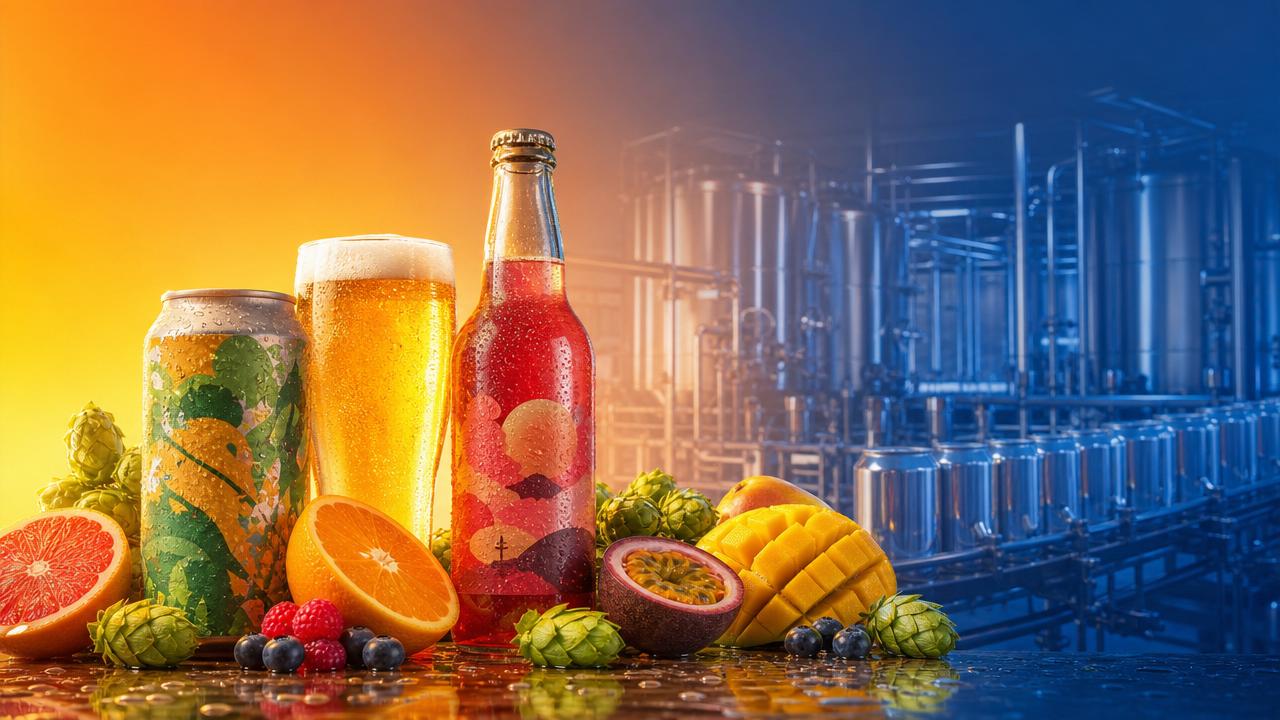
As a Sour Beer / IPA Manufacturer expands capacity and product lines, it reflects more than business growth—it signals changing consumer tastes and new opportunities in craft beer markets. From tart sour profiles to hop-forward IPA innovation, these shifts are reshaping demand across retail, bar and distribution channels, offering valuable insights for buyers, distributors and industry researchers tracking the future of beer consumption.
In the beverage industry, style expansion is often an early indicator of where volume, margin and brand attention are moving next. When a Sour Beer / IPA Manufacturer invests in new brewing systems, pilot recipes, packaging formats or export-ready SKUs, it usually points to measurable demand shifts rather than short-term experimentation. That makes a structured evaluation useful for anyone comparing beer suppliers, reviewing category trends or planning a broader craft portfolio.
Why a structured review matters when a Sour Beer / IPA Manufacturer expands
A capacity expansion can look impressive on paper, but the real value lies in understanding what it means for product fit, consistency, route-to-market potential and long-term category momentum. Sour beer and IPA are not interchangeable growth styles. Each has distinct consumer drivers, ingredient pressures, shelf-life considerations and market education needs.
A checklist approach helps separate genuine market opportunity from trend-chasing. It also makes it easier to compare a Sour Beer / IPA Manufacturer across supply reliability, flavor innovation, packaging options, private label flexibility and export readiness. In a market where craft beer success depends on both storytelling and operational discipline, clear evaluation criteria support better decisions.
Core points to review before responding to this style demand shift
- Check whether the Sour Beer / IPA Manufacturer expanded because of repeat sales, new channel demand or export growth, not only because craft styles are popular on social media.
- Review the style range carefully, including hazy IPA, session IPA, fruited sour, kettle sour and low-alcohol variants that match current drinking occasions.
- Confirm production capabilities for stable quality, especially yeast control, hop handling, souring methods and packaging practices that protect freshness and flavor expression.
- Evaluate whether packaging options include cans, bottles and draft formats suited to supermarkets, bars, restaurants and cross-border distribution programs.
- Examine how the manufacturer balances innovation with core volume lines, since excessive novelty can weaken sell-through if the consumer base is still developing.
- Look at formulation diversity, such as sugar-free, low-calorie, fruit-flavored or functional specialty beer, which can widen the addressable market beyond classic craft drinkers.
- Verify OEM/ODM support, recipe customization and label compliance services if local adaptation or private brand development is part of the growth plan.
- Assess supply chain readiness for seasonal peaks, hop procurement, fruit ingredient sourcing and lead times that can affect launch timing and margin control.
- Study channel performance data to see whether sour beer and IPA are growing through trial purchases only or building sustainable repeat demand.
- Compare the expansion with broader beer category movement, including premiumization, lower-calorie drinking, flavor exploration and demand for differentiated craft stories.
What the rise of sour beer and IPA says about consumer demand
The growth of a Sour Beer / IPA Manufacturer often reflects two parallel market trends. First, consumers increasingly want stronger flavor identities. Sour beer answers that need through acidity, fruit notes and a more adventurous profile than mainstream lager. IPA meets it through aroma intensity, hop complexity and a broad range of bitterness levels, from easy-drinking session styles to double IPA expressions.
Second, craft beer demand is becoming more occasion-based. Some drinkers want refreshing fruit-forward sour beer for warmer weather, food pairing and social novelty. Others prefer IPA for premium bar menus, taproom rotation and collector-style limited releases. A Sour Beer / IPA Manufacturer that expands both styles may be responding to a fragmented but higher-value demand landscape.
Retail shelf and e-commerce sales
In retail, eye-catching flavor cues and packaging matter. Fruited sour beer, sugar-free options and approachable IPA formats tend to perform better when the product story is easy to understand quickly. A Sour Beer / IPA Manufacturer with a clear labeling strategy, consistent can design and mixed-case flexibility is better positioned for supermarket and online listing success.
For e-commerce, durability and freshness are critical. IPA quality drops faster when oxygen control is poor, while sour beer may face consumer confusion if the flavor profile is not described precisely. Product pages should explain ABV, bitterness, fruit character, calorie profile and ideal serving occasions.
Bars, restaurants and draft programs
In on-trade environments, style rotation and drinker education become more important. IPA often works as a flagship craft offering, while sour beer can serve as a conversation starter or seasonal differentiator. A Sour Beer / IPA Manufacturer with draft stability, keg support and food-pairing guidance can create stronger placement opportunities in bars and restaurant menus.
Menu compatibility also matters. Citrus-led IPA may pair well with fried foods, grilled meats and spicy dishes. Fruited or lightly tart sour beer can fit desserts, salads, seafood and brunch menus. These practical use cases help convert style curiosity into repeat orders.
Global distribution and private label programs
For international markets, the best expansion stories combine trend relevance with dependable execution. A Sour Beer / IPA Manufacturer that also offers classic lager, German wheat, sugar-free low-calorie beer, fruit-flavored beer and functional specialty beer can support a broader beverage strategy rather than a single-style launch.
Jinpai Beer operates across R&D, production and distribution of craft beer, with OEM/ODM services, wholesale supply and customized solutions for online and offline channels worldwide. This kind of model matters because style demand shifts rarely happen in isolation. They usually sit inside a larger portfolio need involving core volume beers, premium specialties and localized packaging requirements.
Commonly overlooked issues when evaluating a Sour Beer / IPA Manufacturer
Freshness risk in IPA: Hop-driven beer is highly sensitive to time, temperature and oxygen. An attractive recipe means little if storage and transport conditions weaken aroma before the product reaches the shelf or tap.
Flavor inconsistency in sour styles: Sour beer can vary significantly depending on fruit input, souring technique and fermentation control. Expansion should be backed by process discipline, not only creative recipe development.
Overestimating novelty demand: Trial purchases can be strong for unusual flavors, but repeat demand may favor more balanced and accessible expressions. A Sour Beer / IPA Manufacturer should show depth across both entry-level and enthusiast products.
Ignoring local drinking preferences: Some markets want softer bitterness, lower ABV or fruit-led aromas. Others value classic West Coast bitterness or dry, crisp finishes. Style success depends on regional fit.
Missing compliance and labeling details: Fruit beer, low-calorie claims and functional specialty beer often require precise declarations. Export growth can slow quickly if documentation is not ready from the beginning.
Practical steps to turn market signals into a stronger beer portfolio
- Start with a balanced style mix that includes one accessible IPA, one differentiated sour beer and one dependable core lager or wheat beer for volume stability.
- Request shelf-life, packaging and logistics details early, especially for hop-forward products where freshness can directly affect consumer satisfaction and reorder rates.
- Test flavor positioning by channel, using fruit-forward sour beer for promotional visibility and more structured IPA styles for premium craft credibility.
- Use OEM/ODM capabilities to localize ABV, sweetness, bitterness and label design instead of importing a one-size-fits-all craft beer concept.
- Build launch materials that explain taste profile, food pairing and serving temperature so unusual styles become easier to understand and sell repeatedly.
Quick comparison table for style-driven expansion
FAQ about working with a Sour Beer / IPA Manufacturer
How can expansion signal real demand instead of temporary hype?
Look for signs such as repeat orders, broader channel penetration, SKU rationalization and investment in process quality. A serious Sour Beer / IPA Manufacturer expands systems, sourcing and packaging support—not just flavor count.
Which style is easier to introduce in new markets?
That depends on local taste habits. IPA often benefits from stronger craft recognition, while fruit-forward sour beer can attract consumers seeking lighter, more playful flavor experiences. Trial testing is usually the safest path.
Why is portfolio breadth important?
A broader range creates flexibility. Beyond sour beer and IPA, styles such as classic lager, German wheat, low-calorie beer and functional specialty beer can support different price points, channels and seasonal needs.
Conclusion and next-step direction
The expansion of a Sour Beer / IPA Manufacturer is a useful market signal because it captures where consumer curiosity, premium positioning and flavor diversification are moving inside the beer category. Still, growth potential should be judged through a practical lens: style fit, quality control, channel alignment, packaging readiness, compliance support and long-term repeat demand.
For businesses reviewing new craft beer opportunities, the strongest approach is to compare style innovation with dependable execution. Jinpai Beer’s combination of craft beer R&D, global supply capability, OEM/ODM services and diversified product offerings provides a flexible base for retail, bar, supermarket and private label development. The next step is simple: map target channels, define preferred taste direction, confirm technical and packaging requirements, and then shortlist a Sour Beer / IPA Manufacturer that can support both current demand and future category evolution.
Thank you very much for writing to us. Please leave your message and contact information, we will reply to you within 24 hours.