



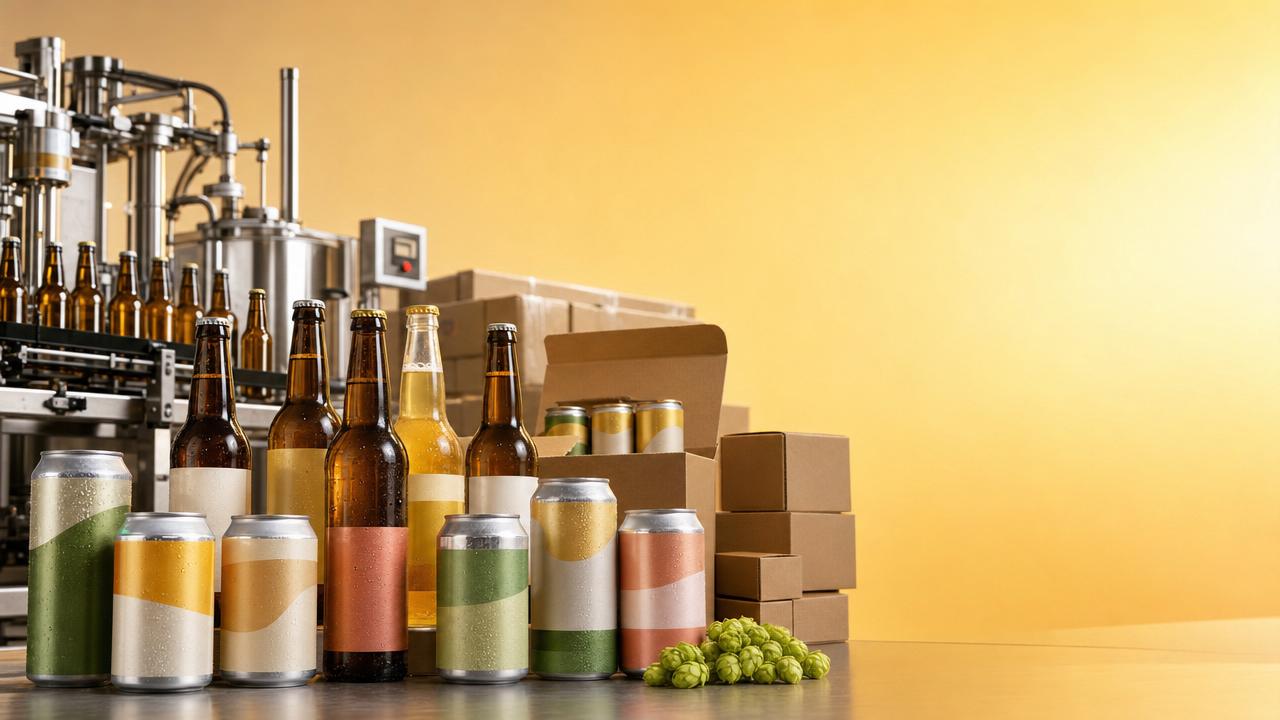
For business evaluators exploring profitable beverage opportunities, a Low MOQ Beer Manufacturer can significantly reduce market entry risk for emerging brands. Jinpai Beer combines craft beer R&D, flexible OEM/ODM production and a diverse product portfolio to help partners launch faster with controlled costs. From classic lager to functional specialty beers, this model makes product testing, channel adaptation and brand building more practical in competitive global markets.
Why the Low MOQ Beer Manufacturer model is gaining momentum
The beer and beverage sector is shifting away from one-size-fits-all volume logic. In many markets, demand is fragmenting into niche flavor preferences, health-oriented choices, regional channel needs and shorter trend cycles. This change makes large upfront production runs less attractive, especially for new labels testing market fit. As a result, the Low MOQ Beer Manufacturer model is becoming a practical entry path for brands that want to validate demand before expanding production.
At the same time, buyers are no longer looking only for standard lager. They are comparing low-calorie beer, sugar-free options, fruit-flavored variants, German wheat styles and functional specialty beers that can match different retail and hospitality settings. A Low MOQ Beer Manufacturer allows smaller batch planning, faster SKU trials and more flexible product positioning. This is especially important when online sales, supermarkets, bars and restaurants each require different packaging, taste profiles and pricing structures.
Jinpai Beer fits this market direction by combining product development, scalable production and customized solutions. Instead of forcing a new brand into high inventory commitments, the company supports phased launches that align with real channel feedback. That is why the idea of working with a Low MOQ Beer Manufacturer is no longer a niche option; it is increasingly part of a more cautious and data-driven market entry strategy.
The clearest trend signals behind lower minimum order strategies
Several signals suggest that flexible production is becoming a core competitive factor in alcoholic beverages. The trend is not only about smaller order sizes. It reflects a broader shift toward faster testing, channel-specific planning and reduced capital pressure during product launch.
What is driving the shift toward a Low MOQ Beer Manufacturer
The rise of the Low MOQ Beer Manufacturer approach is driven by a mix of market, operational and branding factors. It is not simply a cost issue. It is a response to how beverage brands now need to enter the market, learn quickly and scale with evidence instead of assumptions.
- Lower barrier to entry: Smaller production commitments allow new beer concepts to launch without tying up excessive capital in first-batch inventory.
- Better product-market testing: Flavor trials, packaging experiments and pricing validation become easier when a Low MOQ Beer Manufacturer can support controlled batch sizes.
- Channel-specific customization: Bars may need differentiated flavor profiles, while supermarkets may prioritize packaging shelf appeal and consistent value positioning.
- Health and lifestyle diversification: Demand for sugar-free, low-calorie and functional beers is pushing producers to diversify faster than traditional large-run systems allow.
- OEM/ODM maturity: As customized beer development becomes more efficient, working with a Low MOQ Beer Manufacturer is now a realistic route to brand building rather than just contract filling.
Jinpai Beer’s portfolio reflects these drivers well. With capabilities spanning classic lager, German wheat, fruit beer, sugar-free low-calorie beer and functional specialty products, it can support both mainstream and differentiated concepts. This range matters because a successful launch often depends on matching the right beer style to the right market window rather than pushing a single universal product.
How lower MOQ production changes brand launch economics
One of the biggest effects of choosing a Low MOQ Beer Manufacturer is the restructuring of entry cost. Traditional beer sourcing often requires large initial volumes, which increase risk across production, warehousing, channel acceptance and promotional timing. A lower MOQ model changes that balance by making launch spending more modular.
Instead of committing heavily to a single SKU, a new brand can allocate budget across formula selection, label design, sampling, digital promotion and channel trials. This improves learning speed because underperforming variants can be adjusted early. It also protects cash flow when market feedback is slower than expected. In practical terms, a Low MOQ Beer Manufacturer helps convert beverage entry from a high-stakes inventory bet into a staged commercial experiment.
There is also a strategic benefit. Lower MOQ production encourages a more disciplined launch sequence: start with a defined audience, test one or two channels, optimize the product story and then expand. For craft and specialty beer categories, that discipline often matters more than immediate scale. Jinpai Beer’s OEM/ODM support can strengthen this process by aligning formulation, packaging and batch planning with real market use rather than fixed assumptions.
Where the impact is strongest across business operations
The influence of a Low MOQ Beer Manufacturer goes beyond production volume. It affects several operational areas that determine whether a beverage brand can move from concept to repeatable sales.
Product development and portfolio planning
Smaller minimums make it easier to build a portfolio step by step. A launch can begin with classic lager as the traffic driver, then add wheat beer, fruit beer or functional variants once demand patterns become clearer. This phased structure reduces waste and improves decision quality.
Channel adaptation
Online platforms often benefit from novelty and rapid rotation, while bars and restaurants may value stable taste identity and food-pairing relevance. Supermarkets usually demand packaging clarity and repeat purchase potential. A Low MOQ Beer Manufacturer provides the flexibility to adapt product choices and packaging configurations for each route to market.
Brand positioning
New labels can test whether they should lead with craft quality, wellness appeal, fruit flavor accessibility or functional differentiation. This is especially valuable in export-oriented business, where the same brand concept may need different emphasis across regions.
What deserves close attention before choosing a Low MOQ Beer Manufacturer
Low MOQ is attractive, but it should not be evaluated in isolation. The right production partner must support quality consistency, formulation flexibility and long-term scalability. A low entry quantity only creates value when it is matched by reliable execution.
- Product breadth: Check whether the supplier can support both classic and emerging categories such as sugar-free or functional beer.
- OEM/ODM capability: A true Low MOQ Beer Manufacturer should help with recipe refinement, packaging adaptation and market-oriented customization.
- Scalability path: Early low-volume success should be able to transition smoothly into larger repeat orders without changing product identity.
- Channel relevance: The supplier should understand how beer performance differs across restaurants, supermarkets, bars and online retail.
- Quality stability: Even for smaller runs, flavor consistency, shelf-life control and batch reliability remain essential.
A practical way to judge the next market move
The broader takeaway is clear: the market now rewards adaptability as much as scale. A Low MOQ Beer Manufacturer is valuable because it supports smarter entry decisions, faster product learning and better alignment with fragmented consumer demand. For beer brands aiming to test, refine and grow with less exposure, this model offers a commercially sound path.
Jinpai Beer stands out in this context by combining craft beer R&D, customized OEM/ODM service and a full category lineup suitable for global channels. Whether the focus is classic lager, German wheat, fruit-flavored innovation or sugar-free functional beer, the company provides a workable framework for lower-risk launches and long-term brand development. If the next step is to enter the market with greater flexibility, working with a capable Low MOQ Beer Manufacturer is a strong place to begin.
Thank you very much for writing to us. Please leave your message and contact information, we will reply to you within 24 hours.