



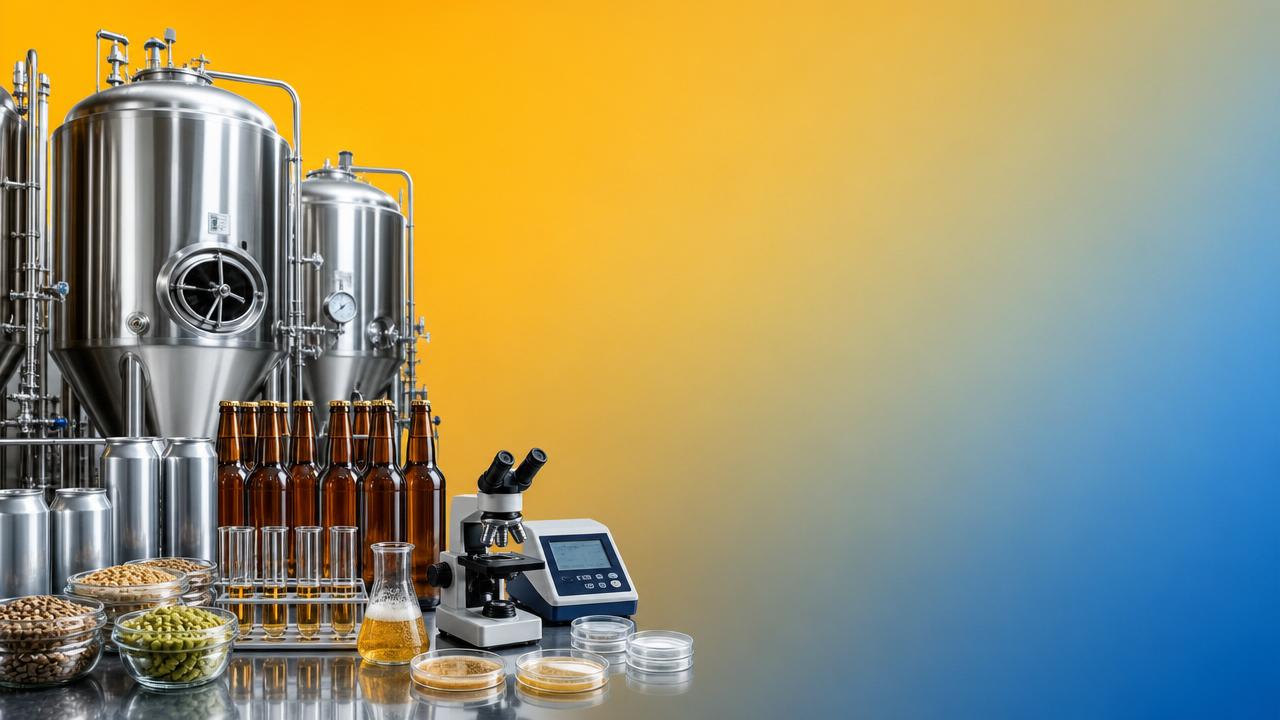
For quality control and safety managers evaluating outsourcing partners, a key question is: Do China beer OEM factories offer R&D support strong enough to reduce quality risks? In practice, the answer is yes—but only with the right manufacturer. In beer production, meaningful R&D support is not limited to creating a new flavor or adjusting bitterness. It also includes raw material screening, process validation, microbiological control, packaging compatibility, shelf-life verification and support for regulatory compliance.
The real issue is not whether a factory claims to have R&D, but whether that capability can systematically lower the probability of batch instability, contamination, flavor drift, packaging failure or market complaints. For quality and safety teams, this distinction matters because OEM quality risks often appear after scale-up, after shipment or after the product enters multiple retail channels.
If you are assessing a China beer OEM partner, the most useful approach is to evaluate how its R&D team works with production, QA and supply chain functions. A capable partner should be able to convert product ideas into controlled manufacturing standards, define critical risk points before mass production and provide data that supports release decisions. That is the kind of R&D support that genuinely reduces quality risk.
What quality and safety managers are really trying to find out
When people search “Do China beer OEM factories offer R&D support,” they usually are not asking a general marketing question. They want to know whether an OEM can help prevent failures that internal teams may not fully control once production is outsourced. This is especially important for importers, brand owners, distributors and retail-channel suppliers that need consistency across regions and batches.
For this audience, the main concerns are practical. Can the OEM validate ingredients before use? Can it predict how a fruit beer, wheat beer or sugar-free low-calorie beer will behave during storage? Can it identify formulation risks that affect foam stability, haze, carbonation, sediment or flavor retention? Can it provide evidence that a customized product remains safe and stable under real logistics conditions?
In other words, readers in quality control or food safety roles are trying to judge whether R&D is integrated into risk management. They are less interested in broad statements about innovation and more interested in whether the factory can reduce deviations, support CAPA actions, improve specifications and prevent recurring complaints.
Why R&D support matters more in beer OEM than many buyers expect
Beer may appear to be a standardized product, but OEM manufacturing introduces multiple variables that can increase quality risk. Even a stable classic lager can become inconsistent when raw material sources change, brewhouse parameters are adjusted, filling lines run at different speeds or export packaging faces long transit times. Specialty products carry even more complexity.
German wheat beer, fruit-flavored beer, functional specialty beer and sugar-free formulations each have their own technical challenges. Wheat beers may show greater sensitivity in haze appearance and yeast-related flavor expression. Fruit beers may face pH variation, aroma volatility and refermentation risks. Low-calorie and sugar-free products may require tighter control over fermentation completeness, sensory balance and microbiological stability.
This is where R&D creates operational value. A strong team should identify product-specific risk factors early, then build preventive controls into the process. Instead of reacting to complaints after launch, the manufacturer should be able to define formulation tolerances, process windows and packaging limits before commercial production begins.
For quality managers, this means fewer surprises during onboarding, scale-up and post-launch monitoring. For safety managers, it means better assurance that process controls, validation data and testing plans are aligned with the actual product risk profile.
What real R&D support from a China beer OEM should include
Not all R&D functions are equal. Some factories only support recipe adjustment for commercial appeal. That may help product development, but it does not necessarily reduce quality risk. A stronger OEM provides technical support across the entire product lifecycle.
First, raw material validation is essential. The OEM should assess malt, hops, yeast, adjuncts, fruit inputs, sweeteners, functional ingredients and packaging materials against product requirements. This includes sensory suitability, specification matching, supplier consistency and contamination risk. If an OEM cannot explain how incoming materials are qualified for different beer styles, its R&D function may be too shallow to support reliable outsourcing.
Second, process development and optimization should be evidence-based. A competent beer OEM should establish critical parameters for mashing, boiling, fermentation, maturation, filtration, carbonation and filling. More importantly, the R&D team should translate development results into production standards that can be repeated at scale. Quality risk often emerges when a pilot recipe performs well but is not robust enough for full-volume operation.
Third, shelf-life and packaging compatibility testing should be part of the support. Beer stability depends not only on formulation but also on oxygen pickup, closure integrity, light exposure, CO2 retention and transport conditions. R&D should help determine whether a product performs differently in cans, bottles or other packaging formats, and whether export distribution may shorten sensory shelf life.
Fourth, analytical and microbiological support is critical. A useful OEM partner should be able to test key indicators such as alcohol content, bitterness, pH, original gravity, final gravity, dissolved oxygen, dissolved CO2, turbidity and microbiological load. R&D does not replace QA, but it should help define which tests matter most for each product and why.
Fifth, regulatory and labeling alignment should be built into development. This matters particularly for functional beers, sugar-free claims, low-calorie positioning and export requirements across different markets. A technically sound product can still become a commercial risk if label claims, ingredient declarations or compliance documents are incomplete or inconsistent.
How R&D reduces the most common beer OEM quality risks
One of the biggest advantages of strong R&D support is that it shifts control from reactive correction to preventive design. For quality and safety managers, that can significantly reduce exposure across several known risk categories.
Batch inconsistency: Differences in flavor, bitterness, color, foam retention or mouthfeel are common complaints in contract manufacturing. R&D helps by defining tighter formulation specifications, selecting stable ingredient combinations and setting acceptable operating ranges for fermentation and finishing.
Microbiological risk: Beer is not immune to contamination, especially in products with added fruit ingredients or lower alcohol balance. R&D can help validate sanitation-sensitive steps, identify vulnerable points in ingredient addition and establish hold-time limits that reduce microbial growth opportunities.
Flavor instability during storage: Oxidation, aroma fading and off-flavor development can damage brand reputation even when products initially pass release testing. R&D can support accelerated and real-time stability studies, compare packaging options and recommend process improvements that protect flavor retention.
Scale-up failure: A recipe that works in trial production may behave differently in larger tanks or on a faster packaging line. Effective R&D support includes scale-up review, parameter adjustment and line validation before full launch. This is especially important for customized products sold through supermarkets or broad retail channels where consistency matters most.
Claim and compliance risk: For low-calorie, sugar-free or specialty-positioned beer, unsupported claims can create regulatory or customer disputes. R&D can work with QA and regulatory teams to verify whether the product composition and testing results support intended claims.
Questions to ask when evaluating whether a beer OEM’s R&D is truly risk-focused
Many factories will say they offer OEM/ODM services and technical development. Quality and safety managers need a more structured way to verify whether that support is credible. The right questions often reveal how mature the system really is.
Ask how the OEM handles product transfer from development to production. Is there a formal handover with approved specifications, process parameters and quality checkpoints? Or does production rely mainly on operator experience? A controlled transfer process reduces variation and supports traceable execution.
Ask what validation work is done before mass production. Does the factory run pilot trials, sensory comparisons, packaging tests and stability studies? Does it document deviations during trial batches and update standards accordingly? Real R&D support should produce records, not just verbal assurance.
Ask how the factory manages new ingredients or customized formulations. This is highly relevant for fruit-flavored beer and functional specialty beers. A reliable OEM should explain compatibility testing, microbial risk review and any impact on filtration, fermentation or shelf life.
Ask what data can be shared with customers. While some information may be confidential, the OEM should be able to provide enough technical evidence to support quality decisions. Typical examples include COA structure, test items, pilot reports, shelf-life plans, sensory standards and packaging validation summaries.
Ask how R&D, QA and production cooperate during problem-solving. If complaints occur, can the factory perform root cause analysis across formulation, process and material dimensions? An isolated R&D department is less useful than one embedded in continuous quality improvement.
Signs that an OEM’s R&D support may be too weak to protect your product
There are several warning signs that quality managers should not ignore. One is when the supplier focuses almost entirely on price, lead time and packaging design but provides little technical detail about product validation. Another is when the factory can create many flavors quickly but cannot explain stability risks or test methods behind them.
A weak OEM may also rely on generic specifications across very different beer categories. If classic lager, German wheat, fruit beer and sugar-free beer are all managed with nearly identical control logic, the factory may not be accounting for category-specific risks. That can lead to instability after launch.
Another concern is the absence of documented shelf-life methodology. If a supplier simply states a shelf life without explaining the basis, quality teams should question whether the product has been evaluated under realistic storage and transport conditions.
Finally, pay attention to how the factory responds to technical questions. Strong partners usually welcome detailed discussion around process windows, material controls and testing plans. Weak partners often answer with broad sales language and limited operational evidence.
How a capable China beer OEM can support safer and more stable market expansion
For companies entering new markets or expanding across channels, R&D support has strategic value beyond product development. It helps make outsourcing more predictable. This is important when supplying restaurants, bars, supermarkets and mixed retail channels that may expose beer to different storage and turnover conditions.
At Jinpai Beer, for example, the value of a broad product portfolio is strongest when it is matched by technical support across R&D, production and distribution realities. Offering classic lager, German wheat, sugar-free low-calorie beer, fruit-flavored beer and functional specialty beer means quality systems must account for different ingredient profiles, process sensitivities and market expectations. That is where integrated OEM/ODM support becomes important for risk control.
For overseas buyers, a manufacturer with practical R&D capability can also improve communication efficiency. Instead of discussing product concepts only in commercial terms, both parties can align on measurable requirements: target flavor profile, shelf-life expectations, packaging format, claim support, test scope and release criteria. This reduces ambiguity and helps prevent disputes later.
In many cases, the best R&D support does not mean the most complex technology. It means a disciplined ability to anticipate where quality can fail and to build controls before that happens. For quality and safety managers, that is the kind of support that makes an OEM relationship sustainable.
Final assessment: Do China beer OEM factories offer R&D support?
Yes, many China beer OEM factories do offer R&D support, but the depth and usefulness of that support vary widely. For quality control and safety professionals, the important question is not whether R&D exists in name, but whether it actively reduces risk across formulation, processing, packaging, shelf life and compliance.
A strong OEM partner should help you validate raw materials, optimize process conditions, assess product stability, support accurate claims and solve problems with documented technical logic. These capabilities are especially important for customized products and diversified portfolios, where risk increases with complexity.
If you are selecting a China beer OEM, evaluate R&D as part of the factory’s quality assurance system rather than as a separate innovation function. The right partner will not only help develop beer products that sell, but also build the technical foundation that keeps those products consistent, safe and reliable in the market.
Thank you very much for writing to us. Please leave your message and contact information, we will reply to you within 24 hours.