



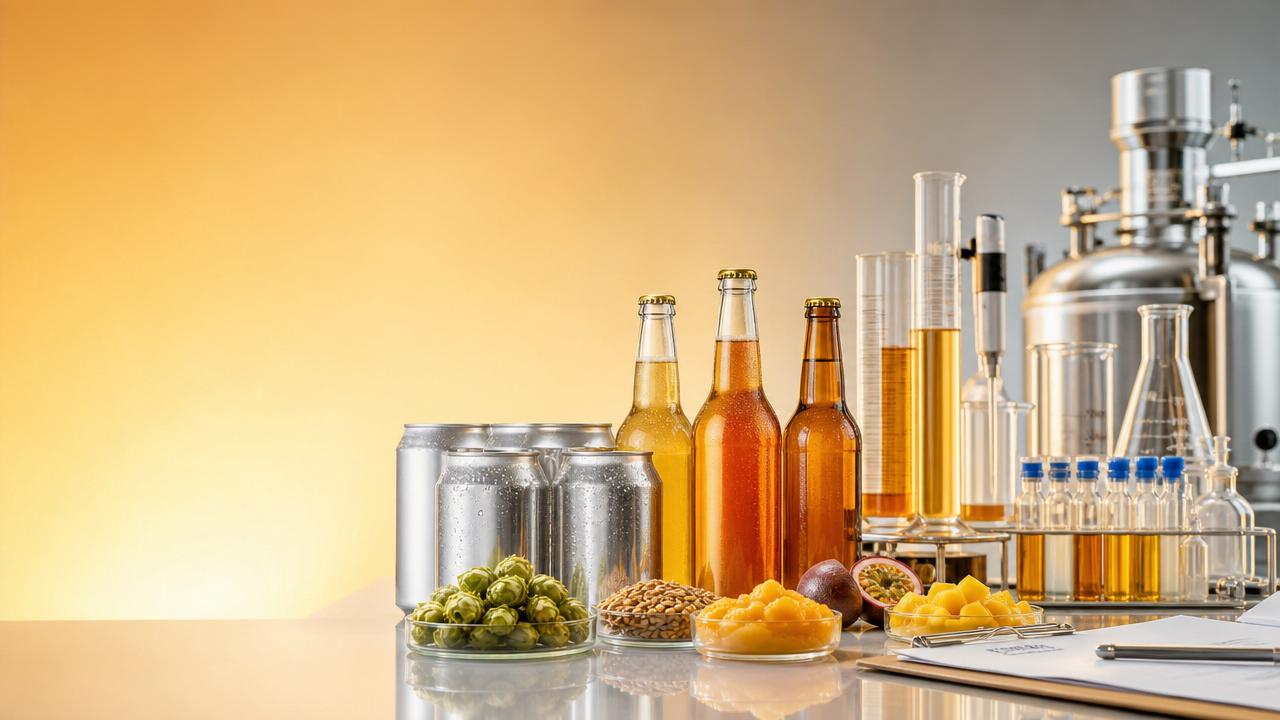
Do China beer OEM factories offer R&D support for new flavor launches? For business decision-makers seeking faster market entry and differentiated products, the answer can directly impact growth. Jinpai Beer combines craft beer expertise with OEM/ODM capabilities, helping partners develop classic, fruit-flavored, low-calorie and functional beers tailored to target markets. Understanding how Chinese OEM factories support formulation, testing and customization is key to choosing the right manufacturing partner.
In the beer and beverage sector, speed alone is not enough. A new SKU that reaches shelves in 60 to 120 days but misses local taste preferences, regulatory labeling needs, or channel pricing targets can still fail. For importers, retailers, restaurant groups, and private-label brand owners, the real question is not only whether a factory can brew beer, but whether it can co-develop a market-ready product with practical R&D support.
The short answer is yes: many capable China beer OEM factories do offer R&D support. However, the depth of that support varies widely. Some suppliers only adjust sweetness or alcohol levels, while stronger partners can assist with flavor concept development, pilot testing, shelf-life review, packaging alignment, and production scale-up. For companies evaluating OEM/ODM cooperation, understanding these differences is essential to reducing launch risk.
What R&D Support Should You Expect From a China Beer OEM Factory?
When buyers ask, “Do China beer OEM factories offer R&D support,” they usually mean more than recipe mixing. In practical B2B terms, R&D support should cover at least 4 areas: flavor development, technical feasibility, production validation, and commercial adaptation. A factory with real development capability helps turn a concept into a scalable beverage product instead of a one-off sample.
Core R&D Functions for New Flavor Launches
For new beer flavor launches, the first stage is usually concept clarification. This may include target ABV such as 2.5% to 5.5%, bitterness range such as 8 to 25 IBU, sweetness level, fruit profile intensity, calorie target, and intended sales channel. A supermarket product often requires broader consumer acceptance than a niche craft beer sold through bars or specialty bottle shops.
The second stage is formulation development. This can involve malt selection, hop balance, yeast behavior, fruit puree or essence compatibility, sugar control, and stability under pasteurization or filtration conditions. For sugar-free or low-calorie beer, the challenge becomes more technical because reducing sugar may affect body, aroma retention, and aftertaste. Functional specialty beers may require even tighter process control to protect flavor consistency.
The third stage is pilot testing. A capable OEM partner should be able to produce small trial batches before full-scale production. Trial runs may take 7 to 21 days depending on beer style, fermentation time, and sample review cycles. This step helps buyers assess not only taste but also foam stability, haze level, color, and packaging fit.
The table below outlines what business buyers should typically expect when evaluating whether a Chinese beer manufacturer provides meaningful R&D support rather than simple contract filling.
The key takeaway is that R&D support should connect technical development with commercial goals. For decision-makers, this means the best OEM partner is not simply the one with the lowest unit cost, but the one that can help achieve repeatable quality, suitable pricing, and stronger shelf appeal.
Beer Categories Commonly Developed Through OEM/ODM
In today’s market, new flavor launches are no longer limited to standard lager. Buyers often request German wheat beer, fruit beer, sugar-free low-calorie beer, and functional specialty beer. Each category has different development priorities. Fruit-flavored beer may need better aroma preservation, while low-calorie beer often requires balance between calorie reduction and drinkability.
Jinpai Beer’s product range reflects these commercial realities. A broad portfolio allows partners to start from an established style base, then customize flavor, packaging, and channel positioning. This can shorten development time by 2 to 6 weeks compared with building an entirely new concept from zero.
Examples of Development Directions
- Classic lager for mass retail, often focused on clean taste and cost control
- German wheat beer for restaurants and bars seeking stronger craft positioning
- Fruit-flavored beer designed for younger consumers and seasonal promotions
- Sugar-free or low-calorie beer for health-conscious segments
- Functional specialty beers for differentiated branding strategies
How the New Flavor Development Process Usually Works
A reliable development process is one of the clearest signs that a supplier can truly answer the question, “Do China beer OEM factories offer R&D support?” Process discipline matters because beverage launches involve taste testing, packaging checks, ingredient sourcing, production scheduling, and approval loops. Without a structured workflow, even a promising formula can stall.
A Typical 5-Step OEM/ODM Workflow
Most well-organized projects move through 5 stages. Stage 1 is brief definition, where the buyer clarifies target market, style, can or bottle format, desired ABV, and expected annual volume. Stage 2 is formula design and sample planning. Stage 3 is sample brewing and sensory evaluation. Stage 4 is packaging and compliance confirmation. Stage 5 is production launch and delivery scheduling.
From inquiry to final production, a practical timeline may range from 4 to 10 weeks for adaptation of an existing base formula, and 8 to 16 weeks for a more customized product. The range depends on fermentation profile, ingredient complexity, packaging artwork finalization, and how many sample rounds are required.
The following table shows a practical development timeline that many beverage buyers can use as a benchmark during supplier evaluation.
A structured process creates better internal planning for buyers. Procurement, sales, quality, and branding teams can align earlier, reducing costly redesigns or launch delays after the first sample has already been approved.
Where Delays Usually Happen
Common delays often happen in 3 places: unclear flavor brief, late packaging changes, and mismatch between sample taste and mass-production feasibility. For example, a highly aromatic fruit beer may work in a bench sample but perform differently after filtration, carbonation, and transit exposure. This is why scale-up validation is as important as initial tasting.
Decision-makers should ask early whether the supplier can document revision rounds, sample lead times, and commercial batch controls. These details matter far more than broad promises of customization.
How to Evaluate R&D Capability Before Choosing a Beer OEM Partner
Not every supplier that advertises OEM/ODM service offers the same development depth. Some factories mainly excel at production execution, while others can actively support product innovation. If your strategy involves new flavor launches, private label expansion, or category testing across multiple channels, R&D capability should be a formal part of supplier selection.
5 Practical Evaluation Criteria
A useful supplier review should include at least 5 criteria: category experience, sample responsiveness, formulation flexibility, packaging coordination, and scale-up consistency. Buyers should also review whether the manufacturer can support more than one product line, such as lager, wheat beer, fruit beer, and low-calorie options, because this often signals broader technical familiarity.
- Ask how many sample rounds are normally included before production approval.
- Confirm whether flavor adjustment is possible for sweetness, aroma, color, or alcohol range.
- Check whether the supplier can support both OEM and ODM projects.
- Review MOQ expectations for trial orders and repeat production.
- Clarify lead times for formula revision, packaging confirmation, and export shipment.
The table below can be used as a practical decision tool for procurement and brand teams comparing different Chinese beer manufacturers.
This type of evaluation helps move the conversation beyond generic claims. When buyers systematically compare suppliers, they are more likely to identify partners that can support product innovation and long-term portfolio development, not just one-time manufacturing.
Warning Signs to Watch For
There are several warning signs. One is when the supplier cannot explain its sample process in concrete terms. Another is when every proposed flavor sounds identical except for label design. A third is when lead times are quoted vaguely without separating sample cycle, packaging cycle, and production cycle. In beverage projects, unclear process details often lead to higher cost later.
Buyers should also be cautious if the supplier cannot discuss stability considerations for fruit, low-calorie, or functional beer segments. These styles involve more than branding; they often require closer attention to ingredient interaction, flavor retention, and process compatibility.
Why R&D-Driven OEM Cooperation Matters for Global Beer Brands and Distributors
For global distributors, importers, supermarket chains, and restaurant groups, new flavor launches are often tied to channel expansion or seasonal demand. A summer fruit beer, a low-calorie line extension, or a bar-exclusive wheat beer may each target different consumer occasions. In these cases, choosing a factory with R&D depth can improve both launch speed and product-market fit.
Commercial Benefits of Strong Factory Collaboration
The first benefit is faster validation. Instead of taking 3 to 4 months to test multiple suppliers, a responsive OEM/ODM brewery can narrow options through coordinated sampling. The second benefit is portfolio flexibility. If one supplier can support classic lager, German wheat, sugar-free low-calorie beer, fruit-flavored beer, and functional specialty beers, buyers can build a more coherent product roadmap.
The third benefit is channel customization. Restaurants may need draft-friendly or premium-positioned SKUs, supermarkets may favor mainstream flavor acceptance and shelf efficiency, and bars may seek stronger story-driven craft profiles. A factory that understands these differences can recommend better positioning rather than simply producing the same beer under different labels.
Best Fit Scenarios for R&D-Supported OEM Beer Projects
- Private-label brands launching 2 to 5 initial SKUs in a new market
- Distributors testing fruit beer or low-calorie beer as a seasonal category extension
- Retailers seeking differentiated packaging and price segmentation
- Hospitality groups building exclusive house-label beer programs
For companies working across online and offline channels worldwide, a supplier with integrated R&D, production, and distribution understanding can simplify decision-making. Jinpai Beer’s positioning in craft beer R&D, production, wholesale supply, OEM/ODM services, and customized solutions aligns well with buyers who need more than basic contract brewing support.
Frequently Asked Questions From Buyers
Can a China beer OEM factory develop a flavor from scratch?
Yes, but the degree of originality depends on the supplier’s technical depth and your project brief. Some factories can build from a concept direction, while others work best by modifying an existing style base. Buyers should confirm how many revision rounds are realistic and how long each round takes.
Is ODM better than OEM for new flavor launches?
ODM can be faster if you want to adapt a proven formula with lighter customization. OEM may be more suitable if you already have a defined flavor target or branding strategy. In practice, many successful projects combine both approaches: start from an established base, then fine-tune aroma, sweetness, alcohol, or packaging.
What should buyers prepare before requesting samples?
Prepare 6 key items: target market, desired beer style, ABV range, packaging format, estimated order volume, and channel positioning. The more specific the brief, the more useful the R&D response will be. This often shortens early communication by 1 to 2 weeks.
So, do China beer OEM factories offer R&D support for new flavor launches? The answer is yes, but buyers should look carefully at how deep, structured, and commercially relevant that support really is. The strongest manufacturing partners help with concept definition, formulation, sample testing, packaging coordination, and scale-up consistency across multiple beer categories.
For business decision-makers, the right OEM/ODM brewery can do more than produce beer. It can help accelerate launch timelines, reduce trial-and-error costs, and build differentiated products for restaurants, supermarkets, bars, and retail channels. If you are evaluating new flavor development, private label beer, or customized craft beer solutions, now is the right time to review your options with a capable R&D-driven partner.
Contact Jinpai Beer today to discuss your product concept, request tailored OEM/ODM recommendations, and get a customized solution for your next beer launch.
Thank you very much for writing to us. Please leave your message and contact information, we will reply to you within 24 hours.