



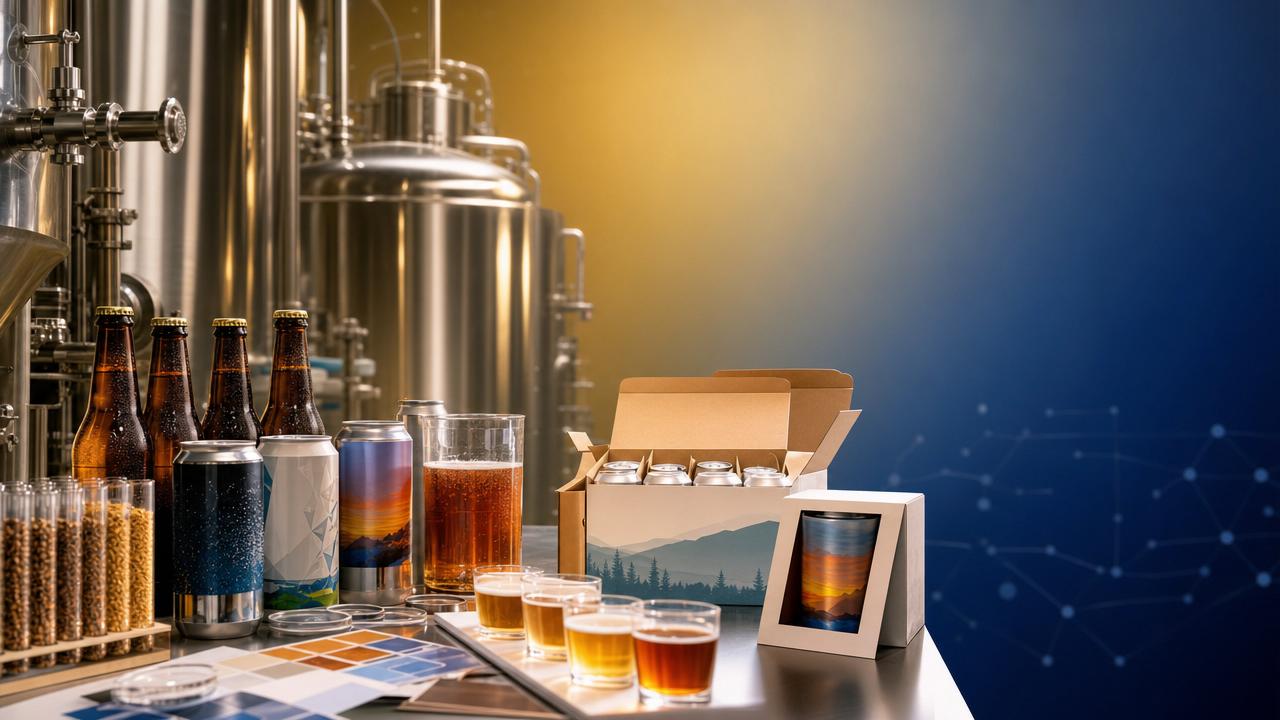
Do China beer OEM factories offer R&D support for faster launches? For project managers under pressure to shorten timelines, the answer can directly affect product success. A capable OEM partner does more than manufacture—it helps with recipe development, flavor testing, packaging optimization and compliance planning. With integrated R&D support, beer brands can reduce trial-and-error, improve coordination and move from concept to market with greater speed and confidence.
In the alcoholic beverage sector, speed alone is not enough. A launch that reaches shelves 4 to 8 weeks earlier but misses flavor expectations, label requirements or channel fit can still fail. For project managers and engineering leads overseeing timelines, supplier coordination and commercialization risk, the real question is not only whether Chinese beer OEM factories can produce beer, but whether they can support a structured development process from idea to finished SKU.
For importers, private-label operators, hospitality groups and retail brand owners, the best OEM partner combines brewing capability with R&D coordination. That may include recipe adjustment, pilot sampling, sensory validation, can or bottle selection, shelf-life planning and adaptation for target markets. Companies such as Jinpai Beer, which covers craft beer R&D, production and distribution across classic lager, German wheat, sugar-free low-calorie beer, fruit beer and functional specialty beers, reflect the broader market shift toward integrated OEM/ODM support rather than simple contract filling.
Why R&D Support Matters in China Beer OEM Projects
When buyers ask, “Do China beer OEM factories offer R&D support,” they are usually trying to reduce 3 major risks: product mismatch, timeline overruns and compliance delays. In beer development, each of these can add 2 to 6 weeks if handled sequentially instead of in parallel. An R&D-capable factory helps solve this by aligning formulation, packaging and production constraints early in the process.
For project managers, this support is practical rather than theoretical. If a fruit-flavored beer has unstable aroma in transit, or a low-calorie beer loses body after adjustment, an experienced team can recommend changes in malt balance, adjunct use, fermentation profile or carbonation range before mass production begins. That cuts down repeated revisions and improves first-pass approval rates.
What R&D Support Usually Includes
Not every OEM supplier provides the same level of technical input. Some only follow a fixed formula, while others participate from concept definition through packaging validation. In practical beer OEM work, R&D support often includes at least 5 linked activities rather than just sample brewing.
- Style and recipe design for lager, wheat, low-calorie, fruit or functional beer
- Small-batch pilot brewing and sample iteration, often in 2 to 4 rounds
- Sensory review covering bitterness, aroma, mouthfeel, color and finish
- Packaging matching for glass bottle, can and secondary packing formats
- Label, ingredient and market-entry coordination for destination markets
This is where the answer to “Do China beer OEM factories offer R&D support” becomes more nuanced. Yes, many do, but the value depends on whether the support is integrated into a launch workflow with clear milestones, technical feedback and decision checkpoints.
The table below outlines the difference between a production-only beer OEM and an OEM with active R&D involvement. This distinction matters when launch windows are tight and channel requirements are specific.
For faster launches, the second model is usually more effective. It reduces handoff friction between procurement, marketing, quality and production teams, especially when a project needs to move from brief to first shipment within 6 to 12 weeks.
Typical Launch Scenarios Where R&D Saves Time
Private Label for Retail Chains
Retail buyers often require differentiated products with price discipline. A sugar-free low-calorie beer may need flavor balance at a lower calorie target while staying cost-viable. R&D input helps avoid over-engineering the recipe and keeps the product aligned with the shelf price band.
Seasonal or Limited Edition Projects
Fruit beers and seasonal craft lines have narrow selling windows. If development slips by 3 or 4 weeks, the market opportunity can weaken. Factories with pilot testing and faster sample feedback are better positioned to support these short-cycle launches.
Hospitality and On-Trade Custom Programs
Bars, restaurants and entertainment groups often need a house beer that fits local preferences. In these projects, recipe tuning, package size selection and draft or packaged format decisions are closely linked. R&D support helps turn commercial goals into a workable brew specification.
How to Evaluate R&D Capability in a China Beer OEM Factory
If you are comparing suppliers, asking “Do China beer OEM factories offer R&D support” is only the first step. The more useful question is how that support is delivered, documented and tied to production feasibility. A strong OEM partner should be able to explain its process in measurable terms, not vague claims.
From a project management perspective, evaluation should cover at least 4 areas: technical depth, sample responsiveness, packaging integration and market-compliance awareness. These directly influence whether the factory can support faster launches without creating hidden rework after approval.
Key Questions to Ask During Supplier Screening
- How many sample rounds are typically included before commercial production?
- What is the normal lead time for the first sample—7 days, 14 days or longer?
- Can the team adjust ABV, IBU, sweetness, acidity or fruit profile based on target feedback?
- Does the factory support cans, glass bottles and different pack counts for export channels?
- How are recipe changes reviewed for scale-up impact, cost impact and filling compatibility?
Clear answers to these points reveal whether the supplier is operating with a development mindset or simply reacting to incoming requests. For buyers entering multiple markets, label translation and ingredient declaration support can also save 1 to 2 review cycles later.
The following checklist can help procurement and project teams compare beer OEM factories using practical launch criteria instead of generic sales language.
A supplier that scores well on these factors is generally better suited to compressed launch schedules. It also improves predictability for internal stakeholders who need approvals, costing and market-entry plans aligned on a fixed calendar.
Signs of Real Technical Support Versus Basic Service
A real R&D-supporting factory will discuss fermentation behavior, ingredient interactions and filling implications, not just offer a flavor catalog. For example, reducing sugar and calories in beer is not only a formulation change. It may also affect mouthfeel, aroma lift and consumer acceptance, which often requires 2 or 3 balancing adjustments.
Likewise, fruit-flavored beer projects can require testing for haze, aroma stability and flavor consistency after transport. If the OEM team can explain these variables and suggest mitigation steps before production, that is a strong indicator of useful development support.
A Practical Workflow for Faster Beer Launches
The reason many buyers continue asking, “Do China beer OEM factories offer R&D support,” is that speed depends on process discipline. Even a technically strong brewery can slow a project if approvals are fragmented. The most efficient launches typically follow a 5-step workflow with defined owners, dates and acceptance criteria.
Step 1: Product Brief and Commercial Target
Start with a clear brief covering beer style, target ABV range, sweetness or bitterness expectations, target retail channel, preferred packaging and expected MOQ. A brief that defines only “premium craft beer” is too vague. A better example would be “330 ml can, 4.5% to 5.0% ABV, low-calorie, clean finish, positioned for supermarket retail.”
Step 2: Sample Development and Feedback Loop
Most beer OEM projects need 1 to 3 sample rounds, depending on complexity. A classic lager may move faster than a functional specialty beer. The project team should define review criteria in advance, including aroma intensity, sweetness perception, carbonation level, packaging appearance and price feasibility.
Step 3: Packaging and Compatibility Review
Packaging is often treated as a later-stage task, but it should be reviewed during sample approval. Can size, bottle color, crown or lid type, pasteurization approach and carton strength can influence shelf life, freight efficiency and breakage rate. For export projects, even a 5% packaging redesign delay can disrupt the vessel booking window.
Step 4: Compliance and Artwork Confirmation
Before mass production, labels and declarations should be checked against destination-market rules. This stage can involve ingredient wording, alcohol statement format, barcode placement and language requirements. Early coordination here is one reason R&D-backed OEM services create faster launches than isolated production service alone.
Step 5: Pilot Run to Full Production
A pilot run helps confirm whether the approved sample behaves consistently at production scale. Once validated, the factory can move into scheduled manufacturing, packing and shipment preparation. For many standard OEM beer projects, the path from approved sample to first batch may fall within 3 to 6 weeks, depending on materials and order volume.
The process below summarizes how project teams can align R&D tasks with launch control points.
The exact timing varies by formula complexity and packaging availability, but a managed workflow like this gives project leaders clearer control over dependencies. It also makes supplier performance easier to evaluate after launch.
Where Jinpai Beer Fits in OEM and ODM Launch Support
For brands looking to shorten development cycles, a supplier with broad product coverage can simplify sourcing decisions. Jinpai Beer operates across craft beer R&D, production and distribution, with product categories including classic lager, German wheat, sugar-free low-calorie beer, fruit-flavored beer and functional specialty beers. This range is useful when one customer plans not just 1 SKU, but a 3 to 5 SKU roadmap across different channels.
Its OEM/ODM model is especially relevant for project managers who need one partner to support concept development, manufacturing and packaging coordination without moving between multiple vendors. For wholesale buyers, distributors, agents and retail channel operators, that can improve communication speed and reduce the administrative burden of managing parallel suppliers.
Best-Fit Buyer Profiles
- Distributors building local beer portfolios with differentiated imported or private-label products
- Restaurant groups and bars seeking branded house beer for recurring purchase programs
- Supermarket and retail operators launching exclusive packaged beer lines
- Brand owners testing low-calorie, fruit or specialty concepts in online and offline channels
These buyer groups typically care about launch speed, channel fit, repeatability and long-term supply stability. That is why the question “Do China beer OEM factories offer R&D support” should be treated as a strategic sourcing issue, not only a technical one.
Common Mistakes to Avoid
Choosing on Price Alone
A lower unit price can be offset by longer sampling cycles, packaging errors or reformulation after market feedback. Total project cost often depends more on avoiding one failed batch or one missed launch window than on saving a small amount per carton.
Approving Samples Without Scale-Up Review
A bench sample that tastes right may still behave differently in larger production. Project teams should confirm how the recipe performs at manufacturing scale before locking launch dates.
Treating Compliance as the Final Task
Late-stage label changes are one of the most common causes of delay. Early review saves time, especially for exports with market-specific labeling rules and documentation expectations.
Yes, China beer OEM factories can offer meaningful R&D support for faster launches, but the level of support varies widely. The strongest partners help manage recipe development, sample iteration, packaging decisions and compliance coordination as one connected process. For project managers under timeline pressure, that integrated model reduces uncertainty and improves launch control from concept through shipment.
If you are planning a private-label beer, a customized craft line or a new retail-ready SKU, working with an experienced OEM/ODM supplier such as Jinpai Beer can make commercialization more efficient. To discuss product categories, sampling options, packaging formats or a customized launch plan, contact us now to get a tailored solution and explore the right next step for your market.
Thank you very much for writing to us. Please leave your message and contact information, we will reply to you within 24 hours.