



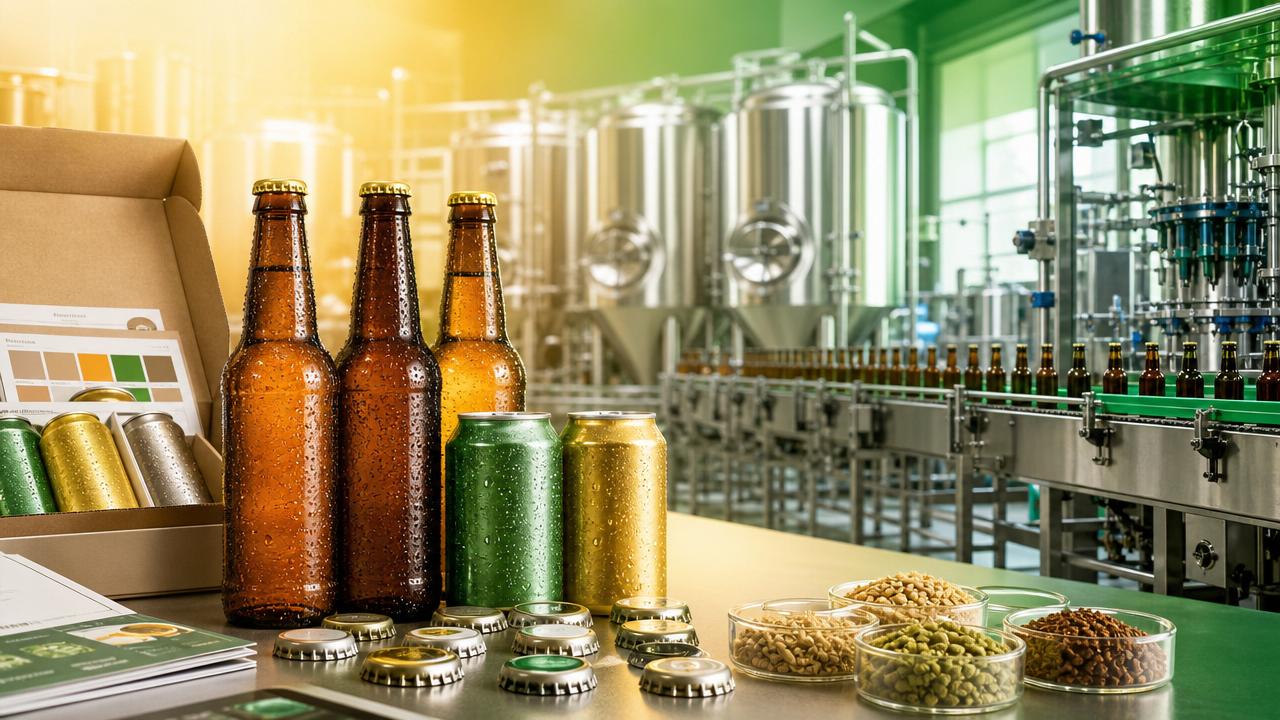
Launching a new beer product through ODM beer services can look simple on paper, yet many projects run into delays, misaligned specifications, unstable quality and costly communication gaps. For project managers, understanding where these issues typically begin is the key to keeping development, production and market entry on track while reducing risk and improving launch efficiency.
Why More New Beer Launches Are Failing at the Coordination Stage
A clear shift is happening in the beer and beverage sector. New product cycles are getting shorter, flavor experimentation is increasing, and buyers now expect more than standard lager formats. Sugar-free options, fruit-infused recipes, low-calorie positioning and functional specialty concepts are moving from niche demand to regular portfolio planning. This trend makes ODM beer services more valuable, but it also makes execution far more complex.
For project managers and engineering leads, the biggest issue is no longer whether a supplier can brew beer. The real question is whether the ODM partner can translate a commercial concept into a scalable, compliant and repeatable production plan. In many new launches, what goes wrong is not a single technical failure. It is a chain reaction: unclear product positioning leads to unstable formula decisions, unstable formula decisions create packaging and sourcing changes, and these changes then push timelines, cost and quality off course.
This matters even more in craft and customized beer development, where sensory expectations are high and product differentiation is often tied to very specific taste, color, aroma or functional claims. ODM beer services can accelerate launch speed, but only when the project structure is strong enough to absorb changing inputs without breaking delivery.
The Main Trend Signals Behind Rising ODM Beer Service Risks
Several market signals are changing how ODM beer services operate. First, SKU expansion is increasing. Brands are launching more seasonal, regional and channel-specific products than before. Second, formulation expectations are becoming more demanding. Buyers want sugar-free, low-calorie, fruit-flavored or functional beer with stable shelf performance and consistent taste. Third, global distribution creates different compliance and labeling requirements across markets. Fourth, packaging customization has become a major part of product identity, which adds more supplier coordination points.
These signals create pressure at every stage of a launch. A project that used to involve one standard formula and one packaging type may now include multiple flavor trials, special ingredient approval, customized cans or bottles, outer carton variations, retail channel requirements and export documentation. As complexity rises, weak coordination within ODM beer services becomes visible very quickly.
What Often Goes Wrong in ODM Beer Services for New Launches
1. Product briefs are commercially attractive but technically incomplete
One of the most common failures in ODM beer services begins at the briefing stage. Marketing teams may define a product by trend language such as “clean-label,” “easy-drinking,” “fruit-forward” or “functional refreshment,” but production teams need measurable targets. Alcohol content, bitterness, sweetness, turbidity, carbonation, shelf life, ingredient limitations and packaging compatibility all need to be defined. If they are not, the ODM supplier is forced to make assumptions, and assumptions are expensive.
2. Sample approval does not reflect mass-production reality
Another recurring issue is the gap between lab or pilot samples and commercial production. In ODM beer services, a launch may look successful during tasting, but scaling introduces changes in raw material behavior, fermentation control, filtration, filling conditions and transport stability. Project managers often discover too late that the approved sample was never tied to a production-ready control plan. This is especially risky for wheat beer, fruit-flavored beer and functional formulations, where sensory balance can shift easily.
3. Packaging development runs separately from brewing development
In many new launches, packaging is treated as a parallel task rather than an integrated one. That creates friction. Can type, bottle color, cap system, label material, pasteurization tolerance and carton strength can all affect line efficiency and product stability. When packaging decisions lag behind formula decisions, ODM beer services become reactive instead of planned. The result may be missed filling slots, last-minute substitutions or appearance defects that weaken the launch.
4. Compliance reviews happen too late
A beer product intended for multiple markets may require different ingredient declarations, nutrition presentation, alcohol labeling or claim restrictions. Yet many teams only review compliance near shipment. In ODM beer services, this late-stage check is a major source of waste because it can trigger relabeling, artwork revisions or even formula adjustment. New categories such as low-calorie, sugar-free and functional beer are especially exposed because their claims invite closer scrutiny.
5. Communication is frequent but not decision-based
High message volume does not mean high project clarity. A launch can involve brand teams, sourcing staff, quality teams, packaging vendors and the brewery, yet still lack one version of the truth. Weak ODM beer services often suffer from scattered approvals, undocumented changes and delayed sign-off authority. For project managers, the danger is that everyone feels informed, but no one is controlling change impact across cost, time and quality.
Why These Problems Are Becoming More Common
The increase in launch failure points is not random. It is driven by structural changes in the market. Consumers expect novelty faster. Retailers want differentiated products that fit specific channels. Brands seek lighter, healthier and more lifestyle-oriented beer propositions. At the same time, supply chains remain sensitive to ingredient lead times, packaging availability and cross-border logistics.
This means ODM beer services are no longer simple contract production arrangements. They now sit at the center of innovation management, manufacturing feasibility, channel compliance and brand speed. Any ODM partner that only focuses on brewing output without integrated project discipline will struggle as complexity continues to rise.
How the Impact Spreads Across Project Roles
The consequences of weak ODM beer services are felt differently across the organization. For project managers, the first impact is schedule instability. For engineering or operations leads, it is line disruption and inefficient changeovers. For procurement, it is emergency sourcing and cost variation. For commercial teams, it is late market entry and weaker launch confidence. Understanding these role-based effects helps teams detect trouble earlier.
What Stronger ODM Beer Services Should Look Like Going Forward
As the industry shifts toward more specialized beer products, stronger ODM beer services will increasingly be defined by cross-functional control rather than production capacity alone. The supplier should be able to support concept translation, formula feasibility review, packaging compatibility checks, quality standard setting and channel-oriented documentation in one connected process.
For example, a capable partner in craft beer development should not only propose flavor direction but also explain ingredient stability, expected production tolerance and risks during scale-up. In sugar-free low-calorie beer or fruit beer projects, the ODM team should also identify where shelf-life behavior, sweetness perception or haze stability may shift after commercial filling. These are not optional extras anymore. They are becoming core service expectations.
Signals Project Managers Should Track Before Problems Escalate
In a changing market, early signals matter more than late fixes. Project managers working with ODM beer services should watch for a few practical indicators. If product language remains subjective after the kickoff stage, risk is already rising. If samples are approved without a production condition record, scale-up risk is high. If packaging artwork, container selection and filling plan are owned by different teams without one integrated schedule, delay risk is rising. If market claims are confirmed before compliance review, rework risk is rising.
Another important signal is how the ODM partner handles change requests. A mature supplier will assess effect on lead time, cost, inventory, process control and quality release. A weaker one may simply say yes and absorb the confusion later. In today’s launch environment, disciplined pushback is often a positive sign.
Practical Judgment Framework for New Launches
How Manufacturers and Brand Owners Can Respond More Effectively
The most effective response is not to slow down innovation, but to structure it better. In practical terms, that means building launch gates around evidence rather than assumptions. For ODM beer services, every new beer project should connect five areas from the start: product intent, technical specification, packaging compatibility, compliance path and supply timing. If one of these areas remains vague, the launch is not actually ready to move forward.
It also helps to choose partners that understand both standard beer production and newer category development. A manufacturer involved in R&D, production and distribution across classic lager, German wheat, sugar-free low-calorie beer, fruit-flavored beer and functional specialty beer is usually better positioned to identify category-specific risks early. That experience becomes especially valuable when OEM and ODM projects must serve supermarkets, bars, restaurants and mixed online-offline channels at the same time.
A Forward-Looking View on ODM Beer Services
Looking ahead, ODM beer services will continue to expand because the market rewards speed, differentiation and channel flexibility. But the service model is also becoming more demanding. Buyers will expect faster development while also expecting better documentation, stronger quality consistency and fewer surprises during commercialization. The providers that adapt will be those that combine brewing capability with project discipline, packaging coordination and global market awareness.
For project managers, the main takeaway is simple: most launch failures do not start at the end of the process. They start when trends create more complexity than the project system can handle. The right response is to judge ODM beer services not only by product range or price, but by how well the partner manages change, converts ideas into specifications and keeps development linked to production reality.
Final Action Guide for Teams Planning the Next Launch
If your business is evaluating ODM beer services for a new launch, the most useful next step is to confirm a few decision-critical questions early. Is the concept defined in technical terms? Has the sample been tied to scalable production conditions? Are packaging, quality and compliance teams aligned before artwork is finalized? Are change approvals documented and controlled? And does the supplier have enough category experience to support the exact type of beer you want to bring to market?
Answering those questions will give project managers a stronger basis for judging risk, timing and launch readiness. In a market where beer innovation is accelerating, better decisions in ODM beer services are increasingly what separates a smooth product launch from a costly delay.
Thank you very much for writing to us. Please leave your message and contact information, we will reply to you within 24 hours.