



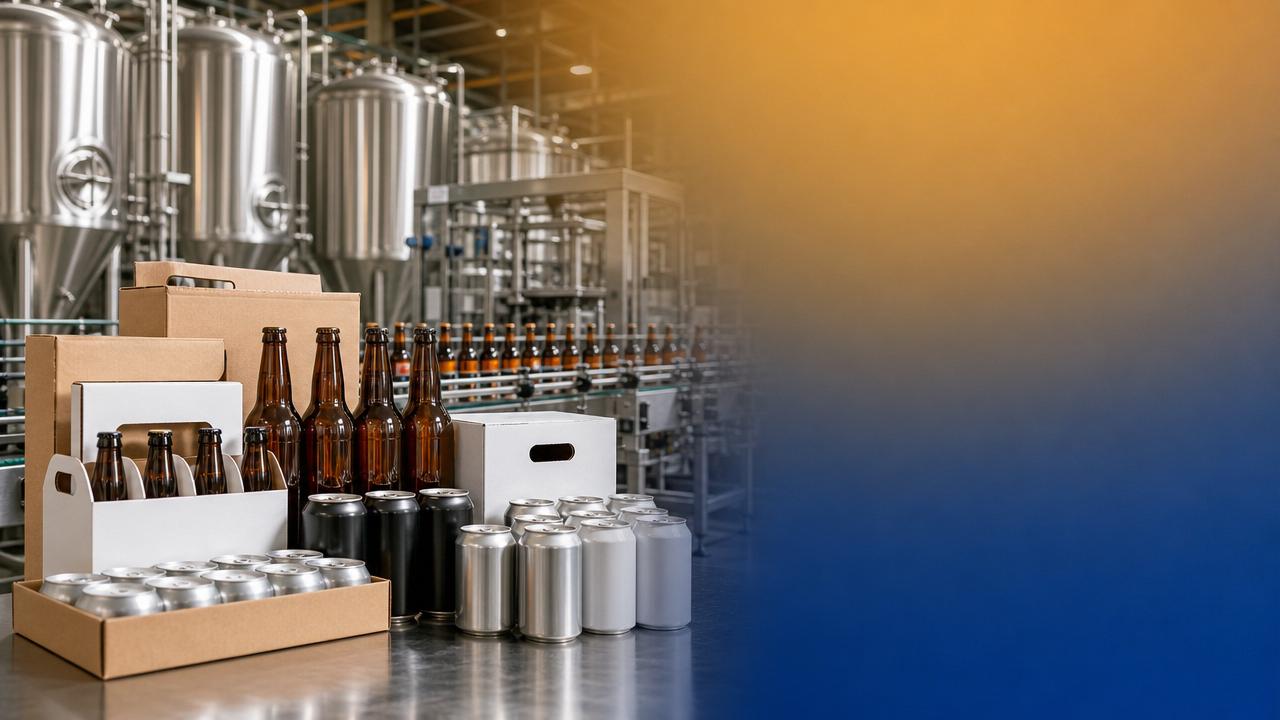
For finance decision-makers, the real question is not only whether to brew in-house, but how fast margins can shift when volume, equipment, labor and compliance costs change. In today’s competitive market, China beer OEM offers a flexible path to control upfront investment and improve cash flow. This article breaks down where costs rise, where savings appear, and how to choose the model that best supports profitability and long-term growth.
What Finance Buyers Really Need to Know First
If you are evaluating China beer OEM versus in-house production, the fastest useful conclusion is this: OEM usually wins when your priority is conserving capital, testing demand, and keeping cost structure flexible. In-house production becomes more attractive when volume is stable, capacity utilization is high, and you need deeper control over process, margins, or proprietary production assets.
For finance approvers, the decision is rarely about brewing philosophy. It is about payback speed, cash flow timing, downside exposure, and how quickly costs can move against you. Beer margins are sensitive to packaging, raw materials, labor, energy, tax handling, and production efficiency. A small change in one area can make one model clearly superior for a given stage of business.
That is why a good comparison must go beyond headline unit price. A lower ex-factory OEM quote can still become expensive if forecasts are inaccurate, specifications keep changing, or logistics are poorly planned. Likewise, an in-house plant that looks efficient on paper can become a financial burden if output remains below breakeven utilization.
Where Costs Change Fast in In-House Beer Production
In-house brewing gives a company direct control, but it also concentrates risk. The biggest financial pressure usually starts before the first sale: brewhouse investment, fermentation tanks, filling lines, water treatment, cold storage, quality systems, and site preparation. These are fixed costs that continue regardless of sales performance.
For a finance team, this means the cost structure is front-loaded. Cash leaves early, while revenue arrives later and may scale unpredictably. If the brand is still developing, that timing mismatch can weaken liquidity and increase the real cost of growth.
Equipment depreciation is only one part of the picture. Maintenance, spare parts, calibration, sanitation systems, utilities, wastewater treatment, and safety compliance also rise faster than many first-time operators expect. In beverage manufacturing, production downtime is especially costly because idle assets continue to absorb overhead while sales windows may be seasonal.
Labor also changes faster than forecast models often assume. Skilled brewmasters, quality technicians, packaging line operators, warehouse staff, and maintenance teams are not just payroll items. They require recruitment, training, scheduling, backup coverage, and management oversight. If turnover rises or labor markets tighten, operating costs can escalate quickly.
Another often underestimated cost is underutilization. When a plant runs below optimal capacity, fixed expenses are spread across fewer units, lifting the effective cost per bottle or can. This is one of the main reasons in-house production may look strategically attractive but financially underperform during early growth stages.
Why China Beer OEM Often Improves Cash Flow Earlier
China beer OEM changes the financial equation because it converts major fixed costs into more variable operating costs. Instead of funding a full production system, buyers can leverage an established manufacturer’s equipment, technical team, sourcing network, and compliance processes. This significantly reduces initial capital exposure.
For financial decision-makers, that matters because preserved capital can be redirected into brand building, distribution expansion, channel incentives, or working capital. In many cases, the best return does not come from owning brewing assets too early. It comes from selling more effectively while using external production capacity.
China beer OEM can also accelerate speed to market. Launch delays have a real financial cost, especially in trend-driven categories such as craft beer, fruit-flavored beer, low-calorie beer, and functional specialty beer. If in-house setup takes many months, the opportunity cost may exceed the apparent savings from internal production.
OEM also helps smooth demand uncertainty. If orders rise, a capable manufacturer may scale output faster than a new in-house facility can. If demand softens, the buyer is not left carrying the same level of fixed overhead. This flexibility can protect margins during volatile periods and reduce the risk of overbuilding capacity.
That said, OEM savings are strongest when the partnership is structured well. Forecast discipline, clear specifications, efficient SKU planning, and quality alignment are necessary. Without those controls, cost variability can shift from fixed overhead into rush orders, rework, inventory mismatch, or avoidable logistics expense.
Unit Cost Is Important, but Total Cost Tells the Truth
Many sourcing discussions start with a simple question: which model gives the lower unit cost? That is useful, but incomplete. Finance teams should compare total landed and operating cost, not just production price. This includes packaging, freight, inventory carrying cost, compliance support, waste, quality claims, financing cost, and the cash tied up before sale.
In-house production may eventually show a lower nominal cost per unit at high volumes, but only if utilization is consistently strong and operational discipline remains high. If output fluctuates, the average cost can rise sharply. A plant designed for future scale can become expensive long before it becomes efficient.
With China beer OEM, the unit price may include the manufacturer’s margin, but it can still produce a better financial result because fewer hidden costs sit outside the quote. Companies often save on staffing complexity, maintenance burden, equipment financing, and time-related losses.
A useful finance framework is to compare both options across three lenses: cost per unit sold, cash required before sale, and risk-adjusted downside if forecast assumptions fail. This approach gives a more realistic answer than unit economics alone.
How Volume Changes the Better Choice
Volume is one of the most important variables in this decision. If your order profile is still inconsistent, seasonal, channel-dependent, or market-testing in nature, OEM generally offers a stronger risk-return balance. It allows you to buy production capacity without committing to permanent internal overhead.
If your brand already has predictable throughput across multiple channels and your production line can run at high utilization, in-house economics may improve significantly. At that point, fixed assets are spread over larger output, and operational control may support stronger long-term gross margin.
However, finance teams should be cautious about using projected volume instead of proven volume. Overestimating demand is one of the most expensive mistakes in manufacturing investment. A plant built on optimistic assumptions can damage return on invested capital for years.
A practical test is to evaluate whether current and near-term demand can keep core equipment efficiently loaded, not just occasionally busy. If the answer is no, China beer OEM is often the more disciplined financial choice.
The Hidden Risk Categories That Affect Profitability
The decision between China beer OEM and in-house production is not just a cost comparison. It is also a risk allocation decision. In-house production puts technical, labor, utility, maintenance, and regulatory execution risk directly on your business. OEM transfers part of that operating burden to a specialized manufacturer.
Quality consistency is a major profitability issue. In beer, flavor stability, carbonation, filling accuracy, packaging integrity, and shelf-life performance all affect customer satisfaction and channel confidence. If quality issues appear at scale, costs can emerge through returns, brand damage, distributor friction, and lost repeat sales.
Compliance is another area where costs can rise unexpectedly. Labeling rules, export documentation, ingredient declarations, and production standards may differ across markets. A reliable OEM partner with export experience can reduce error rates and simplify execution, especially for businesses selling through international online and offline channels.
Supply chain risk also deserves attention. Raw material price swings, can and bottle availability, carton cost changes, and freight volatility can impact both models. But a large OEM supplier may have stronger purchasing leverage and diversified sourcing, which can partially buffer cost shocks.
When OEM Makes More Financial Sense Than Ownership
China beer OEM is often the better path when a company is entering new markets, launching new SKUs, building a private label range, or serving customers with varied packaging and flavor needs. It works particularly well when flexibility, product breadth, and speed matter more than factory ownership.
For importers, brand owners, distributors, supermarket suppliers, restaurant groups, and retail-focused beverage businesses, OEM can reduce complexity while supporting professional product delivery. It is also well suited to businesses that want to test classic lager, German wheat, sugar-free low-calorie beer, fruit-flavored beer, or functional specialty beers without building separate internal production capabilities.
Financially, OEM is strongest when capital preservation is a strategic priority. If your organization has higher-return uses for cash than plant investment, outsourcing production may create superior enterprise value even if nominal production cost is not the absolute lowest possible.
When In-House Production Can Still Be the Right Move
In-house production may make sense when your company has stable high volume, strong balance sheet support, a clear long-term capacity plan, and a strategic reason to internalize production. This may include proprietary process needs, complex product development cycles, or a margin structure that justifies direct manufacturing control.
It can also be attractive if your management team has proven operational capability in beverage manufacturing. Owning a brewery is not only an asset decision; it is an execution decision. The financial outcome depends heavily on whether the business can run the plant efficiently and consistently.
For some mature brands, in-house production supports stronger negotiating power, custom process control, and long-term manufacturing independence. But these benefits only outweigh the cost burden when scale and management discipline are already established.
How Finance Teams Should Evaluate a China Beer OEM Partner
If OEM is under consideration, partner selection becomes the central control point. Finance teams should look beyond quote comparison and assess the supplier’s real ability to protect margin. Key questions include production capacity, quality system maturity, export experience, lead time reliability, SKU flexibility, and ability to support formulation or packaging customization.
You should also review minimum order quantities, payment terms, sample approval process, raw material sourcing stability, defect handling procedures, and documentation support. These factors directly affect working capital, inventory risk, and total cost of ownership.
A capable manufacturer such as Jinpai Beer can be valuable not only because of production capacity, but because of breadth of offering and customization support. For buyers managing multiple channels or targeting different consumer segments, access to classic lager, wheat beer, low-calorie options, fruit flavors, and functional specialty products can reduce development friction and improve commercial responsiveness.
The best OEM relationships are not transactional only. They are structured around forecast coordination, transparent costing logic, quality alignment, and market-specific execution. This is what turns China beer OEM from a short-term sourcing solution into a financially scalable business model.
A Simple Decision Framework for Financial Approvers
If you need a practical internal decision rule, start with five questions. First, is demand proven enough to keep owned capacity highly utilized? Second, is capital better used in production assets or market expansion? Third, how much operational complexity can the organization absorb today? Fourth, what is the downside if forecasts miss? Fifth, how important is speed to launch?
If utilization is uncertain, cash must be protected, and launch speed matters, OEM is usually the stronger choice. If volume is dependable, asset productivity is likely to stay high, and production control is strategically essential, in-house production may justify the investment.
The key is to avoid making a prestige decision where a financial decision is needed. Ownership can look attractive from a brand perspective, but if it weakens agility or return on capital, it may not be the right move at the current stage.
Conclusion: Choose the Model That Protects Margin Under Real-World Change
The real difference between China beer OEM and in-house production is not simply who brews the beer. It is who carries which costs, when those costs appear, and how resilient your margin remains when market conditions change. For finance decision-makers, this is the center of the issue.
In-house production can create value at scale, but it demands volume stability, operational strength, and significant capital commitment. China beer OEM offers a faster, more flexible structure for businesses that want to reduce upfront risk, improve cash flow, and adapt to changing demand with less fixed-cost pressure.
For many growing beverage brands and channel-driven buyers, OEM is not a compromise. It is a financially disciplined way to scale. The right choice is the one that supports profitability not only in ideal conditions, but also when forecasts, costs, and market timing move faster than expected.
Thank you very much for writing to us. Please leave your message and contact information, we will reply to you within 24 hours.