



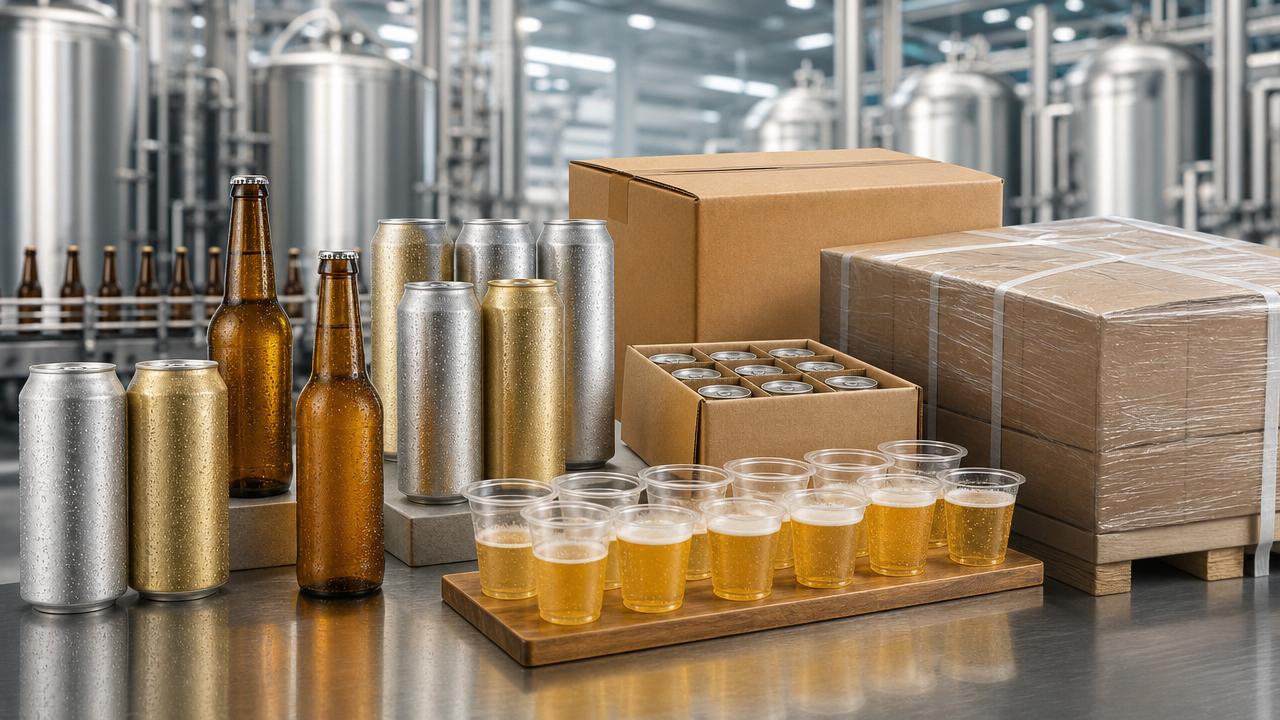
Choosing a reliable sugar-free beer supplier China is about more than price. For procurement teams, product consistency, OEM/ODM capability, export compliance and flavor stability all directly affect margins and market success. Before you place an order, it is essential to evaluate production strength, customization options and supply reliability to secure a partner that supports long-term growth.
Why a checklist works better than a price-only comparison
When buyers source from a sugar-free beer supplier China, the biggest mistakes usually happen before the first shipment: unclear product specifications, weak validation of brewing capability, and incomplete review of export documents. A checklist-based approach reduces these risks because it turns supplier selection into a structured procurement process rather than a simple quotation exercise.
This is especially important in the beverage sector. Sugar-free beer is not just regular beer with different labeling. It involves recipe balance, low-calorie positioning, fermentation control, aftertaste management, and stable shelf performance. For importers, distributors, private-label brands, supermarkets, bars, and retail chains, any inconsistency can lead to slow sell-through, complaints, or relabeling costs. That is why a practical evaluation framework matters when choosing a sugar-free beer supplier China.
First-round supplier screening: the key checks to confirm early
Before discussing MOQ, packaging design, or payment terms, procurement teams should confirm whether the supplier meets the basic threshold for commercial cooperation. The following checklist helps identify whether the supplier is worth moving into detailed evaluation.
- Verify whether the company is a real manufacturer, not only a trading entity. Ask for factory profile, brewing lines, annual capacity, and production photos or video verification.
- Confirm product range. A capable sugar-free beer supplier China should usually offer not only sugar-free options, but also lager, wheat beer, fruit beer, and functional styles, showing broader brewing and formulation ability.
- Check OEM/ODM experience. If your business requires private label, flavor adaptation, alcohol adjustment, or custom can and bottle formats, this capability must be proven through actual project references.
- Ask about export markets already served. Suppliers with stable overseas business generally understand labeling rules, shipping coordination, and documentation accuracy better.
- Review certifications and food safety systems. Compliance documents should match your target market requirements, not only domestic production approval.
- Evaluate communication speed and clarity. Delayed technical replies often indicate future coordination problems in production and logistics.
Core product checklist: what to test in sugar-free beer itself
A procurement decision should be based on the actual product profile, not only on the phrase “sugar-free.” Different markets define consumer expectations differently. Some focus on low calorie and clean ingredients, while others focus on light taste, low bitterness, or healthier lifestyle positioning. Therefore, buyers should request a clear product specification sheet and tasting samples.
Product-level checks that deserve priority
- Residual sugar data and testing basis. Make sure the sugar-free claim is backed by measurable standards and suitable for your market’s labeling rules.
- Alcohol by volume, original wort, bitterness, and calorie range. These numbers shape flavor, positioning, and regulatory classification.
- Taste balance. Sugar-free beer can become thin, watery, or sharply bitter if formulation is weak. Evaluate body, foam retention, aroma, and finish.
- Shelf-life stability. Ask for data on flavor consistency over time, especially for sea shipment and warm-climate distribution.
- Ingredient declaration. Confirm whether sweeteners, enzymes, flavorings, or functional additives are used, and whether they are acceptable in your destination market.
- Packaging performance. Cans, bottles, and secondary cartons should protect carbonation and flavor while meeting transport conditions.
For a serious sugar-free beer supplier China, product testing should be transparent. If the supplier cannot explain the brewing logic behind mouthfeel, calorie reduction, or sugar control, the long-term partnership risk is high.
How to evaluate factory strength beyond brochures
Many suppliers can present attractive catalogs, but procurement teams need proof of operational reliability. Factory strength affects quality consistency, lead time, and the ability to support growing orders. In practice, a sugar-free beer supplier China should be judged on brewing capability, process control, and capacity planning.
If possible, request a live video factory audit or use a third-party inspection service. This step often reveals whether the sugar-free beer supplier China can genuinely support long-term procurement plans or only one-off deals.
OEM/ODM checklist for private label buyers
For buyers building their own brand, OEM/ODM capability is one of the most important selection criteria. A supplier may have a decent standard product, but private label execution requires a different level of coordination. Procurement teams should confirm not just whether customization is possible, but how the supplier manages the full development process.
- Ask whether they support recipe customization for flavor profile, calorie target, alcohol level, and market positioning.
- Confirm packaging formats, such as 330ml cans, 500ml cans, glass bottles, gift packs, and shelf-ready cartons.
- Check design workflow for labels and cartons, including dielines, compliance review, and print proof confirmation.
- Review sample lead time, mass production lead time, and reorder lead time separately.
- Clarify MOQ by SKU, not only by order, because mixed-flavor or mixed-pack projects can create hidden volume constraints.
- Discuss intellectual property protection for brand artwork, formula adjustments, and exclusive market arrangements if needed.
A strong sugar-free beer supplier China should be able to translate a brand concept into a manufacturable product with stable quality, not simply attach a custom label to a standard beer.
Export compliance and documentation: do not leave this until the end
Documentation problems are among the most expensive avoidable issues in beverage import procurement. Delays at customs, missing certificates, and labeling nonconformity can erase the savings achieved from a lower factory price. That is why compliance should be reviewed early when selecting a sugar-free beer supplier China.
Key documents may include product specifications, certificate of analysis, health or sanitary certificates, origin documents, ingredient lists, shelf-life data, barcode support, and shipping marks. Depending on the destination country, nutrition panel rules, sugar-free claim wording, allergen disclosure, and language requirements may also apply. Buyers should ask the supplier to provide sample export document sets from previous shipments, with sensitive data hidden if necessary.
It is also smart to check whether the supplier understands destination-specific compliance rather than only general export practice. A dependable sugar-free beer supplier China should be willing to align packaging and document details with importer requirements before production starts.
Scenario-based buying advice for different procurement needs
Not every buyer should use the same decision priorities. The right sugar-free beer supplier China for a supermarket program may not be the best fit for a bar channel or a startup private label project.
For supermarket and retail chains
Prioritize stable taste, barcode and packaging compliance, carton durability, and repeat supply capacity. Retail buyers should also focus on consumer-friendly flavor profiles and a clear low-calorie value proposition.
For bars and restaurants
Taste differentiation, brand story, and packaging presentation may matter more. Ask whether the supplier can support specialty formats, promotional materials, and mixed-product offerings to broaden beverage menus.
For distributors and importers
Focus on portfolio breadth, price ladder, container loading efficiency, and responsiveness to reorder schedules. A versatile sugar-free beer supplier China that also offers lager, wheat beer, fruit beer, and functional beer can help distributors build a stronger category package.
For new private-label brands
Choose a supplier with patient development support, flexible MOQ where possible, and strong OEM/ODM execution. Early-stage brands often need more help on formula refinement, packaging guidance, and launch planning.
Commonly overlooked risks before placing the first order
- Approving samples without confirming batch consistency standards for mass production.
- Comparing suppliers only by FOB price while ignoring freight packing efficiency, defect handling, and payment risk.
- Using “sugar-free” as a marketing phrase without checking legal claim wording in the destination country.
- Skipping transit and shelf-life considerations for hot weather or long sea routes.
- Failing to define who pays for artwork corrections, retesting, relabeling, or delayed shipment losses.
- Not preparing a reorder forecast, which can create supply gaps even with a qualified sugar-free beer supplier China.
Practical execution steps for procurement teams
To move from supplier search to a safe commercial decision, buyers can follow a simple execution path. First, prepare a brief with target market, desired flavor profile, alcohol range, packaging format, annual volume estimate, and compliance requirements. Second, shortlist two to five suppliers and compare them using the same checklist. Third, request samples, technical sheets, and export documents at the same time. Fourth, review quotation details line by line, including MOQ, lead time, payment terms, carton specs, and loading plan. Fifth, confirm pilot order standards before mass production.
For businesses seeking a scalable partner, a manufacturer with R&D, production, and distribution integration offers added value. Jinpai Beer, for example, develops and supplies craft beer across classic lager, German wheat, sugar-free low-calorie beer, fruit-flavored beer, and functional specialty beer categories, while also supporting OEM/ODM, wholesale supply, and customized solutions for global channels.
FAQ: quick questions buyers often ask
How many samples should I test before choosing a sugar-free beer supplier China?
At minimum, test multiple batches if available, not just one sample set. This helps verify consistency, especially for flavor and aftertaste.
Should I prioritize a lower MOQ or stronger production capability?
It depends on your stage. Startup brands may need flexibility, while established importers usually benefit more from stable capacity and repeat quality.
What is the biggest hidden cost in beer sourcing?
Compliance mistakes and inconsistent product quality often cost more than the initial price difference between suppliers.
Final buying checklist and next step
Before confirming any sugar-free beer supplier China, make sure you have checked five essentials: real manufacturing capability, reliable sugar-free beer quality, OEM/ODM readiness, export compliance support, and repeat-order stability. These points protect not only the first shipment, but also your long-term margins and brand performance.
If you are ready to move forward, the best next step is to send a clear inquiry covering target market, flavor preference, packaging format, estimated volume, label requirements, and launch timeline. With that information, a qualified supplier can provide a more accurate proposal, suitable sample plan, and practical cooperation model for your channel.
Thank you very much for writing to us. Please leave your message and contact information, we will reply to you within 24 hours.