



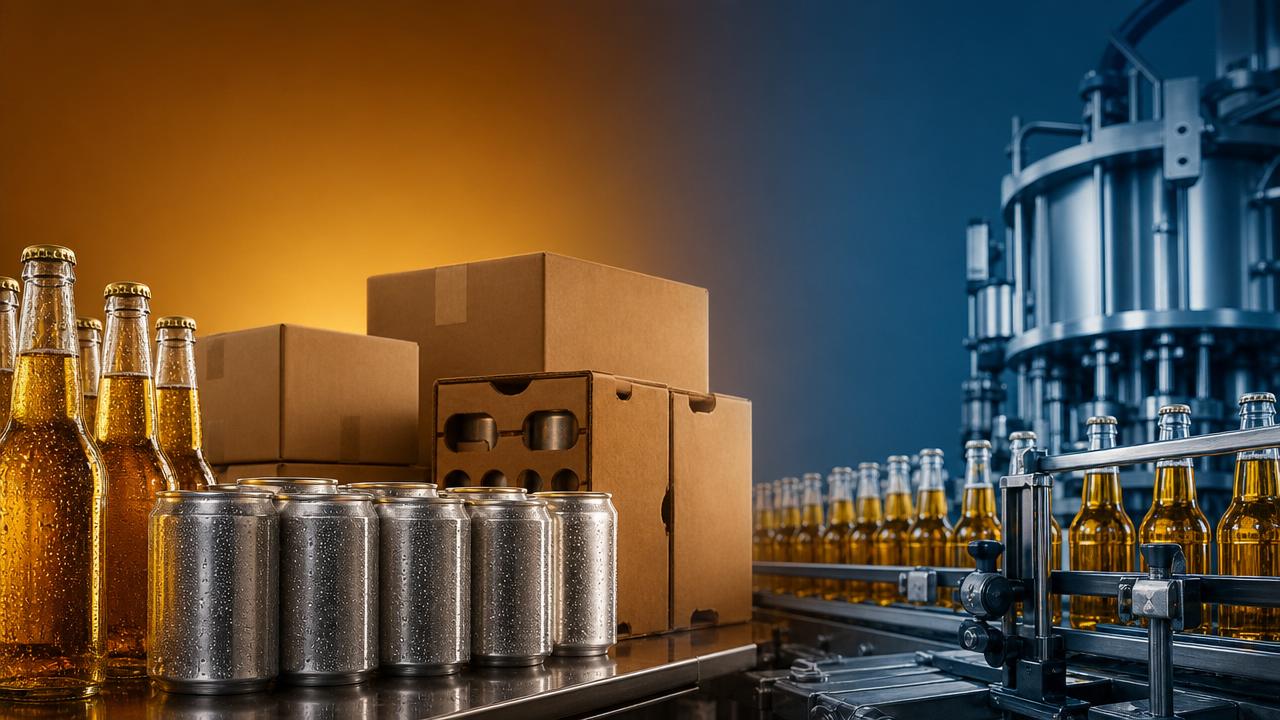
In Beer OEM projects, similar quotes do not always mean the same delivery timeline. For procurement and evaluation teams, overlooking lead-time factors can result in stock shortages, missed promotions and higher supply-chain risk. From formulation complexity to packaging readiness and production scheduling, several hidden variables affect speed. Understanding these differences is essential when comparing suppliers and making reliable sourcing decisions.
Why can similar Beer OEM quotes lead to very different delivery times?
This is one of the most common sourcing questions in Beer OEM. A quotation often shows unit price, packaging format, minimum order quantity and payment terms, but it does not automatically reveal how fast a supplier can move from confirmation to shipment. Two factories may offer nearly the same price for lager, wheat beer or fruit-flavored beer, yet one may need 25 days while the other needs 45 or even 60 days.
The reason is simple: price reflects commercial terms, while lead time reflects operational readiness. A supplier may quote aggressively to win business but still face formula validation, raw material sourcing, can or bottle procurement, label proofing, production line congestion, or export documentation delays. For business evaluation teams, this means Beer OEM comparison should never stop at the quotation sheet.
In practical procurement, lead time is shaped by three layers. First, there is product complexity: a classic lager with standard packaging usually moves faster than a functional specialty beer with custom ingredients. Second, there is supply-chain readiness: if cans, cartons, crowns or labels are not in stock, even a prepared brewery cannot start on time. Third, there is scheduling priority: some manufacturers have stable capacity buffers, while others are already fully booked by seasonal orders.
What hidden factors affect Beer OEM lead times the most?
When evaluating Beer OEM suppliers, buyers should look beyond the visible quote and identify the hidden steps that consume time. These steps are often the real reason behind delayed launches.
1. Formula and sample confirmation
A standard beer based on an existing recipe is usually faster than a customized product. If alcohol level, bitterness, sweetness, calorie profile or fruit flavor need adjustment, repeated sampling may be required. Sugar-free low-calorie beer and functional specialty beer can take longer because ingredient balance, taste stability and shelf-life performance need closer verification.
2. Packaging material readiness
Many Beer OEM delays start with packaging, not brewing. Bottles, cans, printed cartons, trays, labels and lids may each have separate suppliers. If custom packaging artwork is approved late, all downstream steps move back. A brewery with strong production capability still cannot pack finished beer without the right materials.
3. Production line scheduling
Beer OEM factories often run multiple SKUs for domestic and export clients. Similar quotes may come from suppliers with very different capacity utilization. One plant may have immediate line availability; another may need to wait for existing production commitments to clear. Peak seasons before holidays, summer demand, or major promotions can quickly extend schedules.
4. Fermentation, filtration and quality control cycle
Beer is not a simple fast-turn product. Different styles require different brewing and maturation windows. German wheat beer, for example, may follow a different process rhythm than standard lager. Quality checks, microbiological testing and finished-product inspection also add time, especially for export-oriented Beer OEM orders where consistency matters.
5. Export compliance and logistics preparation
For overseas buyers, the timeline does not end at packing. Shipping booking, customs documents, label compliance, certificate preparation and port arrangements all influence actual delivery. Some suppliers quote factory lead time only, while others include export preparation. That difference alone can mislead evaluation teams.
How should procurement teams compare Beer OEM lead times in a practical way?
A useful comparison method is to break one total timeline into measurable checkpoints. Instead of asking, “What is your lead time?” ask, “What is the lead time for each stage?” This makes hidden risks visible and helps business evaluators compare suppliers on operational reality rather than sales language.
This type of stage-by-stage review is especially important for restaurants, supermarket chains, importers and retail distributors that run promotional calendars. In Beer OEM, a lower quote can become more expensive if a late launch leads to missed shelf windows or out-of-stock situations.
Are some Beer OEM products naturally faster to launch than others?
Yes. Product type has a direct effect on timeline. Procurement teams should not assume that all beer categories can be delivered at the same speed, even from the same manufacturer.
Classic lager is often the fastest Beer OEM option because the formula, raw materials and packaging formats are usually more standardized. If the buyer accepts a proven recipe and common can or bottle specifications, the path to production is relatively short.
German wheat beer may require more careful process management due to style-specific brewing characteristics. Fruit-flavored beer often introduces extra sourcing and flavor validation steps, especially when target markets have strict taste expectations. Sugar-free low-calorie beer can require more technical adjustment to preserve drinkability while meeting nutritional claims. Functional specialty beers may take the longest because they involve additional ingredients, claim verification and quality-control attention.
This is why a competent Beer OEM partner should explain not only whether a product can be made, but also how complexity changes the manufacturing rhythm. That level of transparency is valuable during supplier evaluation.
What are the biggest mistakes buyers make when evaluating Beer OEM timelines?
One common mistake is treating lead time as a single number. In reality, Beer OEM timing should be split into sampling time, packaging preparation time, production time and shipment preparation time. Without that breakdown, buyers may compare numbers that do not mean the same thing.
Another mistake is assuming that a supplier with modern equipment always delivers faster. Equipment matters, but scheduling discipline, packaging coordination and export experience matter just as much. A brewery may have excellent brewing capacity yet still lose time due to poor communication with packaging vendors or slow approval processes.
A third mistake is ignoring internal buyer delays. Beer OEM projects are often slowed not by the brewery, but by late artwork approval, frequent specification changes, unclear carton language requirements, or delayed deposit payment. Evaluation teams should measure supplier risk honestly while also controlling their own decision cycle.
The final mistake is choosing only on first-order economics. If a supplier offers a very competitive quote but cannot support repeat ordering rhythm, the long-term supply picture becomes unstable. For distributors and retailers, consistent replenishment is often more important than a small initial price advantage.
How can a buyer reduce delay risk before placing a Beer OEM order?
Delay prevention begins before purchase order issuance. The buyer should build a simple but disciplined pre-order checklist that tests whether the Beer OEM supplier is truly ready to execute.
It is also wise to ask for a realistic timeline range instead of the shortest possible promise. In Beer OEM sourcing, an honest estimate such as “30 to 40 days depending on packaging arrival” is more useful than a fixed but unreliable promise of 25 days. Procurement professionals should reward transparency, not just optimism.
What should business evaluation teams ask a Beer OEM supplier before approval?
To make a sound sourcing decision, evaluation teams should ask questions that reveal execution capability, not only sales confidence. The following points are especially relevant when assessing a Beer OEM partner:
- How many days are needed for sampling, packaging procurement, production and shipment preparation separately?
- Which materials are standard stock items, and which require custom purchasing?
- What happens if artwork approval is delayed by one week?
- How is peak-season capacity managed for repeat Beer OEM customers?
- Can the supplier support both OEM volume growth and stable replenishment cycles?
- What quality-control steps are mandatory before finished goods release?
- Does the supplier have experience with the target market’s labeling and export requirements?
For a company such as Jinpai Beer, the discussion may also extend to product portfolio fit. Since the business covers craft beer R&D, production and worldwide distribution, buyers can compare whether a project is better suited to a classic lager, German wheat, sugar-free low-calorie beer, fruit-flavored beer or a functional specialty concept. This matters because product selection itself influences lead time, launch risk and long-term channel performance.
So, how should buyers make the final Beer OEM decision when quotes look similar?
When Beer OEM quotations appear similar, the smarter decision usually comes from evaluating timeline reliability, not just purchase price. A supplier that explains every stage, confirms packaging readiness, shows realistic production planning and understands export requirements is often the safer commercial choice. That reliability protects launch dates, distributor relationships and inventory continuity.
For business evaluation personnel, the key is to compare total execution quality: formula readiness, packaging coordination, capacity visibility, quality assurance and shipping support. This broader view turns Beer OEM sourcing from a price comparison exercise into a risk-managed supply decision.
If you need to confirm a specific Beer OEM plan, timeline, quotation logic or cooperation model, it is best to start by clarifying four points with the supplier: the exact product style, whether packaging is standard or customized, the earliest available production slot, and the full lead-time breakdown from sample approval to shipment. Those answers will tell you far more than a similar quote ever can.
Thank you very much for writing to us. Please leave your message and contact information, we will reply to you within 24 hours.