



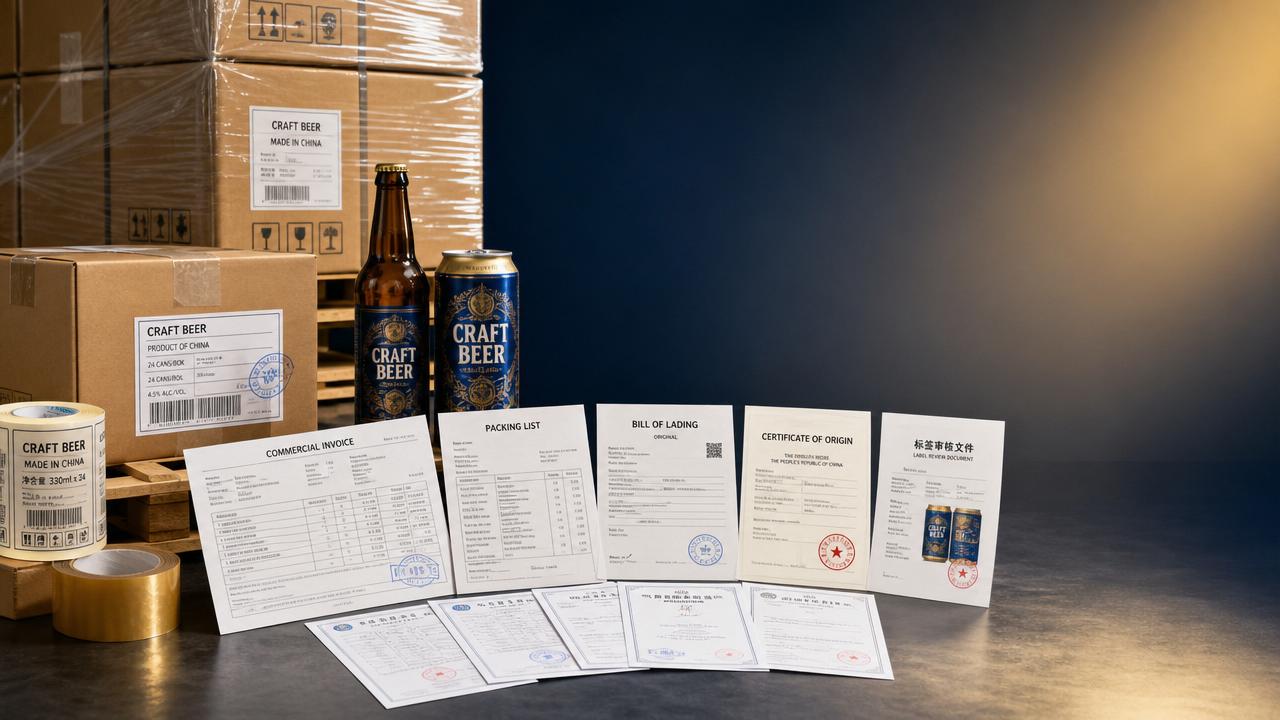
What Import Documents Matter in Chinese Craft Beer Factory Export
Understanding what import documents matter in Chinese craft beer factory export is essential for smooth customs clearance and reliable delivery.
For beer imports, correct paperwork reduces delays, avoids storage charges, and supports compliant entry into different markets.
From invoices and labels to certificates and shipping files, each document affects release speed, tax treatment, and product acceptance.
This article explains the key checkpoints for Chinese craft beer factory export and helps organize document review before shipment.
Why a Document Checklist Matters
Beer is a regulated beverage category, so customs, food safety, excise, and labeling requirements often overlap.
A missing detail on alcohol content, ingredient declaration, or consignee information can stop clearance even when goods are ready.
In Chinese craft beer factory export, a checklist creates consistency across OEM orders, mixed flavors, private labels, and multi-channel distribution.
It also supports traceability for products such as classic lager, German wheat, sugar-free low-calorie beer, fruit beer, and functional specialty beers.
Core Documents to Review Before Shipping
- Commercial invoice with exact product name, HS code, alcohol percentage, Incoterms, currency, unit price, and total value matching the purchase order and shipment booking.
- Packing list showing carton count, can or bottle size, net weight, gross weight, pallet details, batch references, and flavor breakdown for each SKU.
- Bill of lading or air waybill with correct shipper, consignee, notify party, port names, package count, and release method consistent with customs filing.
- Certificate of origin when required for customs preference, importer review, or market access verification under destination country trade rules.
- Health certificate, sanitary certificate, or food-related compliance document if the importing market requests proof for beverage safety and manufacturing supervision.
- Product specification sheet listing ingredients, original gravity if needed, ABV, shelf life, storage conditions, packaging material, and brewing process summary.
- Label artwork and final label approval file confirming language, allergen declaration, net content, date coding, importer details, and warning statements.
- Laboratory test report when requested, especially for alcohol content, microbiological status, heavy metals, additives, or sugar-related claims on low-calorie beer.
- Export customs declaration data from China, ensuring the declared quantity, value, and product description align with all commercial and transport documents.
- Insurance certificate for CIF or other insured shipments, confirming coverage amount, voyage details, and claim conditions for cargo loss or damage.
- Purchase contract or proforma invoice that defines product specifications, packaging standard, payment terms, document set, and claim handling responsibilities.
- Pallet fumigation or packaging material statement if destination rules require treatment evidence for wooden pallets or related shipping materials.
Key Matching Points Across Documents
The biggest issue in Chinese craft beer factory export is not always a missing document.
Often, the problem is inconsistency between files.
Check these fields line by line before cargo departure:
- Brand name, product name, and flavor description should match invoice, packing list, label artwork, and shipping mark without abbreviation conflicts.
- Bottle or can volume, pack configuration, and carton quantity must remain identical across all transport and customs documents.
- Alcohol by volume should be consistent on specifications, labels, and market registration files, especially where excise tax depends on ABV bands.
- Production date format and shelf life statement should follow destination standards and be readable on both labels and cartons.
- Importer name and address should match registration details where local beverage import rules require prior filing or labeling approval.
Different Situations Need Different Supporting Files
Private Label and OEM Orders
OEM and ODM beer projects need stricter label control because branding, claims, and importer information often change by market.
For Chinese craft beer factory export, keep approved artwork versions, carton mark confirmations, and signed specification sheets in one file set.
Mixed Containers with Multiple SKUs
When one shipment includes lager, wheat beer, fruit beer, and low-calorie products, document detail becomes more important.
Use a packing list with SKU-level counts, pallet positions, and batch references to reduce inspection confusion and warehouse receiving errors.
Markets with Strict Food Labeling Rules
Some countries require local language labels, nutrition panels, allergen wording, or recycling marks before customs release.
In these cases, Chinese craft beer factory export should include pre-shipment label verification and a final photo confirmation after production.
Online Retail and Supermarket Supply
Retail channels often request barcode files, shelf-ready packaging details, and traceability information beyond customs basics.
Prepare product data sheets and batch records early if the shipment supports both customs entry and downstream retail listing.
Commonly Overlooked Risks
Wrong HS code selection can affect duty rate, excise assessment, and customs review scope.
Beer with fruit ingredients or functional positioning may require closer classification review.
Alcohol percentage rounding is another frequent issue.
If the label shows one value and the specification sheet shows another, clearance may pause for explanation or retesting.
Shelf life statements are often copied from domestic formats without checking destination expectations.
Imported beer may need a specific date format, storage note, or best-before wording.
Sugar-free or low-calorie claims can trigger extra scrutiny.
Keep formula support, test reports, and claim wording aligned with local food advertising and labeling rules.
Late document release also creates avoidable cost.
If the original bill of lading or signed certificates arrive after vessel arrival, storage and demurrage may increase quickly.
Practical Steps for Better Execution
- Create one master document matrix covering commercial, customs, shipping, label, and quality files for every Chinese craft beer factory export order.
- Lock product names, pack sizes, and ABV values before mass production so artwork, cartons, invoice data, and booking information stay consistent.
- Request destination import requirements in writing before production, especially for certificates, label language, and alcohol-specific declarations.
- Review final scanned documents against pre-shipment photos of labels, cartons, and pallets before submitting customs or couriering originals.
- Archive batch records, test reports, and approved artworks by order number to support repeat purchases and post-arrival questions.
How Product Range Affects Documentation
A broad portfolio can increase document complexity.
Classic lager may follow a standard process, while German wheat beer may require specific ingredient presentation.
Fruit-flavored beer may need flavor description accuracy, and functional specialty beers may need careful claim management.
For sugar-free low-calorie beer, keep nutrition references and supporting test data ready if the market asks for evidence.
This is especially important in Chinese craft beer factory export where one supplier may serve bars, supermarkets, restaurants, and online retail at the same time.
Final Notes for Smoother Importing
Successful Chinese craft beer factory export depends on complete, accurate, and matched import documentation.
The essential set usually includes invoice, packing list, transport document, origin file, label records, and any required health or test certificates.
Before shipment, verify consistency in product description, ABV, pack size, quantity, consignee details, and compliance wording.
For repeated orders, use a standardized review process and update it by market, product type, and channel requirement.
That approach helps reduce border delays, protect product integrity, and support stable growth in global craft beer trade.
Thank you very much for writing to us. Please leave your message and contact information, we will reply to you within 24 hours.