



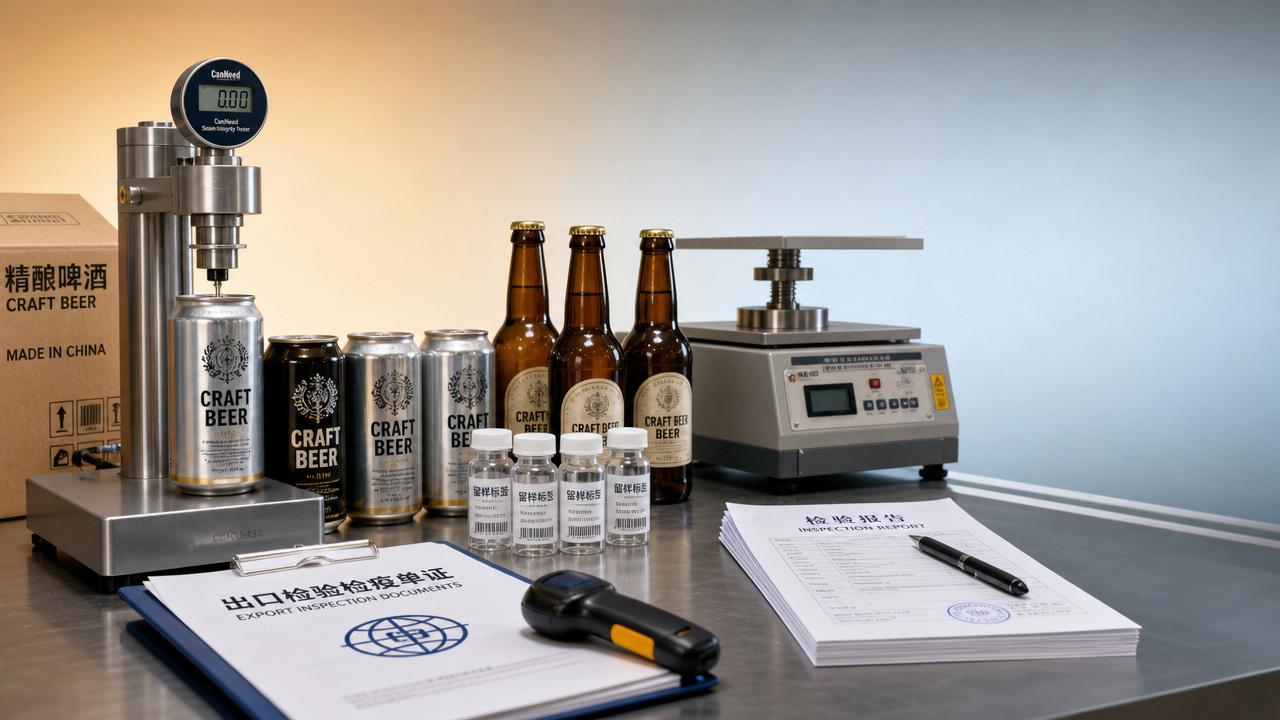
When evaluating a Chinese craft beer factory export project, early quality checks reduce compliance risk, batch instability and shipment delays. A structured review helps confirm whether a supplier can support global beverage channels with reliable export performance.
For a Chinese craft beer factory export assessment, the key is not only tasting beer. It means checking brewing control, ingredient traceability, packaging durability and document accuracy before orders scale up.
Jinpai Beer develops and produces classic lager, German wheat, sugar-free low-calorie beer, fruit beer and functional specialty beers. It also supports OEM, ODM, wholesale supply and customized solutions for diverse retail and food service channels.
Why early screening matters in different export scenarios
A Chinese craft beer factory export project looks different across markets. A supermarket launch needs shelf-life consistency. A bar channel needs flavor freshness. Private label programs require tighter packaging and formula control.
Early screening prevents a common mistake. Many suppliers can brew attractive samples. Fewer can deliver stable mass production under export conditions, label regulations and long-distance logistics pressure.
In beverage trade, quality issues often appear before shipment. They are visible in unstable gravity, unclear microbiology records, weak can seam data, or incomplete certificate files. Detecting them early saves time and cost.
Scenario one: evaluating bottled or canned beer for retail shelves
Retail shelf placement demands stable appearance, long shelf life and dependable consumer experience. In this Chinese craft beer factory export scenario, packaging and product consistency matter as much as flavor.
Core checks for shelf-ready export beer
- Check dissolved oxygen control after filling.
- Review can seam or crown sealing records.
- Confirm pasteurization or cold-chain assumptions.
- Verify date coding clarity and abrasion resistance.
- Assess carton compression strength for sea freight.
Retail exports face long warehouse cycles. If oxygen pickup is high, hop aroma fades early and sweetness rises. If carton strength is weak, leakage and dent claims increase during container movement.
For Chinese craft beer factory export readiness, request retained sample records. A factory that tracks flavor, haze, pressure and package integrity over time usually manages export retail risks better.
Scenario two: supplying bars, restaurants and fast-turn draft programs
On-trade channels focus on freshness, repeatability and serving stability. Draft beer, keg beer and fast-turn packaged beer require a different review than supermarket products.
What to verify for on-trade performance
- CO2 specification consistency between batches.
- Foam retention and head stability data.
- Keg sanitation validation and valve compatibility.
- Cold storage guidance for transit and local handling.
A Chinese craft beer factory export supplier may produce excellent tasting samples. Yet draft instability can appear if carbonation drifts, yeast control weakens, or keg cleaning records are incomplete.
This matters especially for wheat beer, fruit beer and specialty recipes. These styles are more sensitive to sediment, aroma loss and microbiological deviation during transport and repeated handling.
Scenario three: launching private label or OEM beer programs
Private label creates added pressure on formula consistency, artwork control and regulatory alignment. In a Chinese craft beer factory export OEM project, one missing check can affect thousands of printed units.
Early review points for OEM and ODM beer
- Freeze the approved recipe and tolerance range.
- Approve multilingual labels against destination rules.
- Confirm packaging material lead times and backups.
- Match barcode, tax and recycling requirements.
- Set final sample and mass production sign-off rules.
OEM beer projects fail early when recipes remain informal. Without fixed bitterness, alcohol and color limits, later batches may pass internal taste review but fail market expectations.
Jinpai Beer supports OEM and ODM across multiple beer categories. For export cooperation, that flexibility is most valuable when backed by written specifications, packaging validation and documented change control.
Scenario four: exporting specialty beer to regulated or premium markets
Sugar-free low-calorie beer, fruit-flavored beer and functional specialty beers face extra scrutiny. Claims, ingredients and additives must match destination laws and actual production capability.
In this Chinese craft beer factory export scenario, quality assessment should include nutritional calculation logic, sweetener control, allergen statements and stability tests for added ingredients.
Questions worth checking early
- Are flavor compounds heat stable during processing?
- Can the factory prove low-calorie calculations?
- Are functional claims compliant in each market?
- Is sediment behavior acceptable through shelf life?
Premium markets also care about sensory uniformity. A specialty beer may pass chemical tests, yet still fail if fruit aroma varies between batches or sweetness lingers inconsistently.
How quality priorities change by export scenario
Practical fit recommendations before selecting a Chinese craft beer factory export partner
A useful review should combine documents, factory observation and sample verification. One single tasting session is never enough for a Chinese craft beer factory export decision.
- Ask for batch records from at least three production runs.
- Review microbiology monitoring frequency and action limits.
- Check COA format, lot coding and traceability speed.
- Run transit simulation for fragile packaging formats.
- Confirm export documents for target markets in advance.
- Retest shelf samples after storage intervals.
For beverage projects with multiple SKUs, start with the most sensitive item first. Fruit beer and functional products often reveal factory control weaknesses earlier than classic lager.
Common misjudgments that delay export beer projects
One common error is trusting a good pilot sample too much. Pilot brewing may use extra attention, while commercial runs expose limits in filtration, filling speed and packaging discipline.
Another mistake is reviewing beer quality without packaging context. A sound liquid product can still fail export if labels peel, cans dent, or cartons collapse in humid shipping conditions.
Documentation is also underestimated. In a Chinese craft beer factory export program, incorrect ingredient declarations, missing certificates or inconsistent alcohol statements can stop customs clearance.
Finally, teams often ignore destination-specific expectations. A beer accepted in one market may face stricter shelf-life, claim or recyclability rules in another region.
Next steps for a more reliable export assessment
To move forward, build a scenario-based checklist before comparing suppliers. Define whether the project targets retail shelves, on-trade freshness, OEM packaging or specialty claims.
Then request evidence that matches that scenario. For a Chinese craft beer factory export partner, the strongest sign is not broad promises. It is consistent data, clear records and repeatable production results.
Jinpai Beer offers craft beer R&D, production, distribution, OEM and ODM support for global channels. For export cooperation, early technical review creates a safer path to stable supply and long-term market development.
Thank you very much for writing to us. Please leave your message and contact information, we will reply to you within 24 hours.