



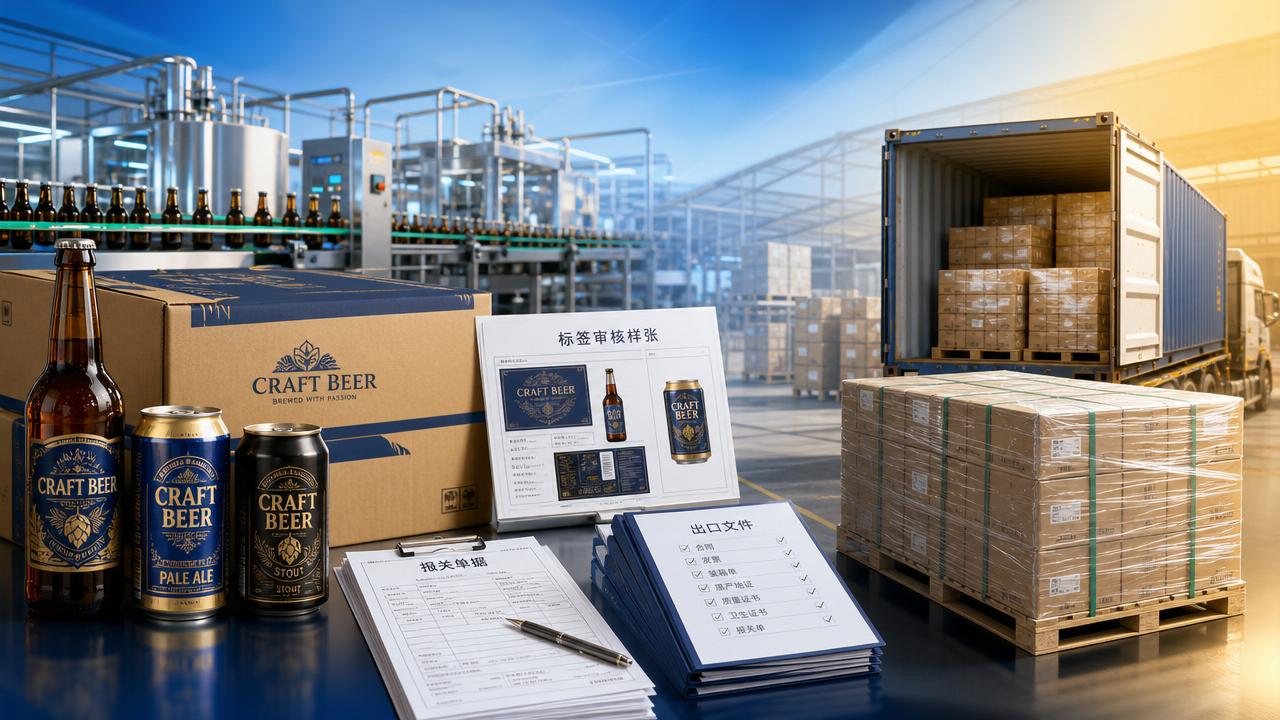
For project managers responsible for timelines, budgets and cross-border coordination, delays in Chinese craft beer factory export orders can quickly disrupt launch plans and market commitments. From formula confirmation and packaging approval to compliance checks and production scheduling, several hidden bottlenecks can slow delivery. Understanding where these delays most often happen is the first step to building a more reliable sourcing and export process.
In the beverage sector, export lead time is rarely determined by brewing alone. A Chinese craft beer factory export project often involves 6 to 10 linked checkpoints, including recipe lock-in, label review, packaging sourcing, production queue booking, finished beer testing, customs documents and shipping coordination.
For buyers serving supermarkets, bars, restaurants and retail chains, even a 7-day delay can affect shelf plans, seasonal promotions and distributor commitments. Companies such as Jinpai Beer, which offers OEM, ODM, wholesale supply and tailored craft beer solutions, usually work across multiple product types, from classic lager and German wheat to sugar-free low-calorie beer, fruit beer and functional specialty beers. That variety creates opportunity, but it also adds project complexity.
Where Chinese Craft Beer Factory Export Orders Commonly Slow Down
Most delays do not come from one major failure. They come from several small approvals that slip by 2 to 5 days each. When these steps stack together, the shipment window may move by 2 to 4 weeks.
Formula Confirmation Often Takes Longer Than Buyers Expect
For OEM and ODM projects, recipe confirmation is often the first bottleneck. A factory cannot safely plan raw materials, brewing tank allocation or filtration scheduling until alcohol content, bitterness, sweetness, flavor profile and shelf-life targets are approved.
In practical terms, one sample round may take 5 to 10 days, and 2 to 3 rounds are common for fruit-flavored beer or functional specialty beer. If the buyer changes sweetness level, fruit aroma intensity or calorie claims after tasting approval, the export timeline can reset at the production planning stage.
Why project managers should pay attention
A recipe is not just a flavor decision. It affects ingredient sourcing, fermentation time, filtration method, filling conditions and compliance review. A wheat beer and a sugar-free low-calorie beer may require different process controls, which can change lead time by 3 to 7 days.
Packaging Approval Is One of the Most Frequent Export Delays
Packaging is often underestimated in Chinese craft beer factory export work. Buyers may confirm the beer itself quickly, but can delays follow if can artwork, bottle labels, carton marks or tray specifications are still under revision.
New printed cans or custom labels usually need 7 to 15 days depending on supplier queue, print complexity and volume. If the buyer requests multilingual compliance text, nutritional panels or barcode adjustments late in the process, packaging lead time can overtake brewing lead time.
The table below shows typical delay points during packaging and pre-production approval in export beer projects.
The main takeaway is that packaging and data approval can delay export orders just as much as brewing. For project managers, early version control on labels and cartons often saves more time than pushing the factory for a faster filling date.
Production Scheduling Depends on Tank Capacity and Order Mix
A craft beer exporter may produce several beer styles at the same time, but tank usage is not unlimited. Fermentation and maturation can take anywhere from 12 to 30 days depending on the product. If a buyer enters the queue late, the next available run may shift by 1 to 2 weeks.
This is especially relevant when an order includes mixed SKUs such as lager, wheat beer and fruit beer in different packaging formats. Multi-SKU export plans create more changeovers in brewing, filling and packing lines, and each changeover adds labor and scheduling pressure.
- Higher SKU count usually means longer coordination time.
- Short runs below normal MOQ may wait for material consolidation.
- Peak periods before holidays can stretch booking time by 5 to 10 days.
- Late deposit payment may cause a reserved production slot to be released.
Compliance, Documentation and Shipping Issues That Hold Orders Back
After brewing and packaging are aligned, many Chinese craft beer factory export delays still happen in the final third of the project. This is where documentation accuracy matters as much as production speed.
Label Compliance and Import Market Rules Can Stop a Ready Shipment
Different countries require different label content, language rules and beverage declarations. An export beer label may need alcohol by volume, ingredient list, net content, shelf life, storage conditions and importer details. If any of these are incomplete, rework may add 3 to 10 days.
For project managers, the risk is highest when the product is marketed with claims such as sugar-free, low-calorie or functional. These claims may trigger extra review internally or by the importer, especially when the wording is not finalized before print approval.
Three documentation points that should be checked early
- Product name, beer category and alcohol declaration match the commercial invoice and packing list.
- Label text and carton marks match the importer’s required language and barcode setup.
- Claim-related wording for sugar, calories or functional positioning is reviewed before mass printing.
Export Documents Need Tight Cross-Checking
Even when beer is packed and palletized, shipping can still pause if paperwork is inconsistent. Common export document sets include invoice, packing list, bill of lading details, certificate-related support documents where needed, and destination-specific declarations requested by the buyer.
A mismatch in carton count, gross weight, HS code usage or consignee details can cause customs or freight booking problems. Correcting those errors may take only 24 hours in simple cases, but 3 to 5 days if cargo release windows are missed.
The following table outlines the export control points that most often affect shipment release in beverage projects.
For most export teams, shipping delay is not caused by the ocean carrier alone. It is often the result of incomplete data handed over too late. A disciplined document review 5 to 7 days before cargo cutoff can prevent expensive last-minute corrections.
Freight Availability and Seasonal Congestion Still Matter
Beer is a relatively heavy beverage product, and freight planning needs to account for container loading efficiency, destination port schedules and transit stability. During busy export periods, vessel space can tighten, and a missed cutoff may move the order to the next sailing by 7 to 14 days.
Project managers should not treat ex-factory completion date as final delivery security. There should be a buffer of at least 5 working days between factory release and vessel cutoff, especially for first orders, mixed SKUs or customized packaging projects.
How Project Managers Can Reduce Export Delays Before They Happen
The best way to improve Chinese craft beer factory export reliability is to build control into the workflow before the order enters production. That means managing approvals as a project, not just as purchasing tasks.
Use a Stage-Gate Process With Fixed Approval Owners
A practical export order can be divided into 5 stages: product brief, sample approval, packaging confirmation, production release and shipping release. Each stage should have one responsible approver on the buyer side and one on the factory side.
Without named decision-makers, feedback loops become fragmented. A design team may change artwork, a sales team may revise product claims, and a procurement team may push shipping urgency, but no one sees the total lead-time impact. That is how 48-hour delays turn into 2-week setbacks.
A simple stage-gate checklist
- Lock recipe targets before packaging design starts.
- Freeze label text before printing purchase orders are issued.
- Confirm MOQ, SKU split and carton specs before production booking.
- Review export documents against final packing data before shipment booking.
Choose Suppliers That Can Support Both Product Diversity and Process Discipline
Not every brewery handles export projects with the same level of coordination. For buyers sourcing classic lager, German wheat, fruit beer, sugar-free low-calorie beer and custom concepts under one program, internal communication at the factory matters as much as brewing capability.
A supplier like Jinpai Beer, working across R&D, production and worldwide distribution channels, can be more suitable for project-based buyers because the discussion covers product development, OEM or ODM fit, packaging customization and export support in one chain rather than separate disconnected vendors.
Build Realistic Lead Times Into Launch Planning
For a repeat order with standard packaging, a shorter cycle may be possible. For a first customized order, project managers should usually plan for a broader window, often 4 to 8 weeks before ocean transit. That buffer covers recipe review, material lead time, production queue and document checks.
Trying to compress every step can increase rework. In beverage exports, one rushed label revision or one missed document field often causes more delay than a properly managed 3-day review cycle upfront.
Questions Buyers Should Ask Before Placing a Craft Beer Export Order
A better sourcing process begins with better questions. Before confirming a Chinese craft beer factory export order, project managers should clarify the points below to prevent avoidable delays.
Pre-order questions that improve delivery predictability
- How many sample rounds are expected for this beer style and flavor profile?
- What is the packaging lead time for custom cans, labels and cartons at the current season?
- What MOQ applies by SKU, packaging format or print batch?
- How far in advance should production slots be reserved for first orders?
- What export documents will the factory prepare, and what must the importer provide?
- How many working days before vessel cutoff should final shipping data be locked?
Why these questions matter
These questions turn vague expectations into measurable milestones. Once timing, ownership and document scope are visible, the project manager can track risk earlier and reduce surprises during final shipment release.
Delays in Chinese craft beer factory export orders most often come from recipe revisions, packaging approval, production scheduling, compliance checks and shipping documentation rather than from one dramatic manufacturing issue. For project managers, the winning approach is structured coordination: lock specifications early, control label versions, align lead times with real factory capacity and verify documents before the cargo cutoff date.
If you are sourcing craft beer for retail, hospitality or distribution channels and need a more dependable export process, working with an experienced brewery partner can reduce risk across product development, OEM or ODM customization and shipment execution. To discuss a tailored craft beer export plan, get customized solutions, or review product and packaging details for your market, contact us today.
Thank you very much for writing to us. Please leave your message and contact information, we will reply to you within 24 hours.