



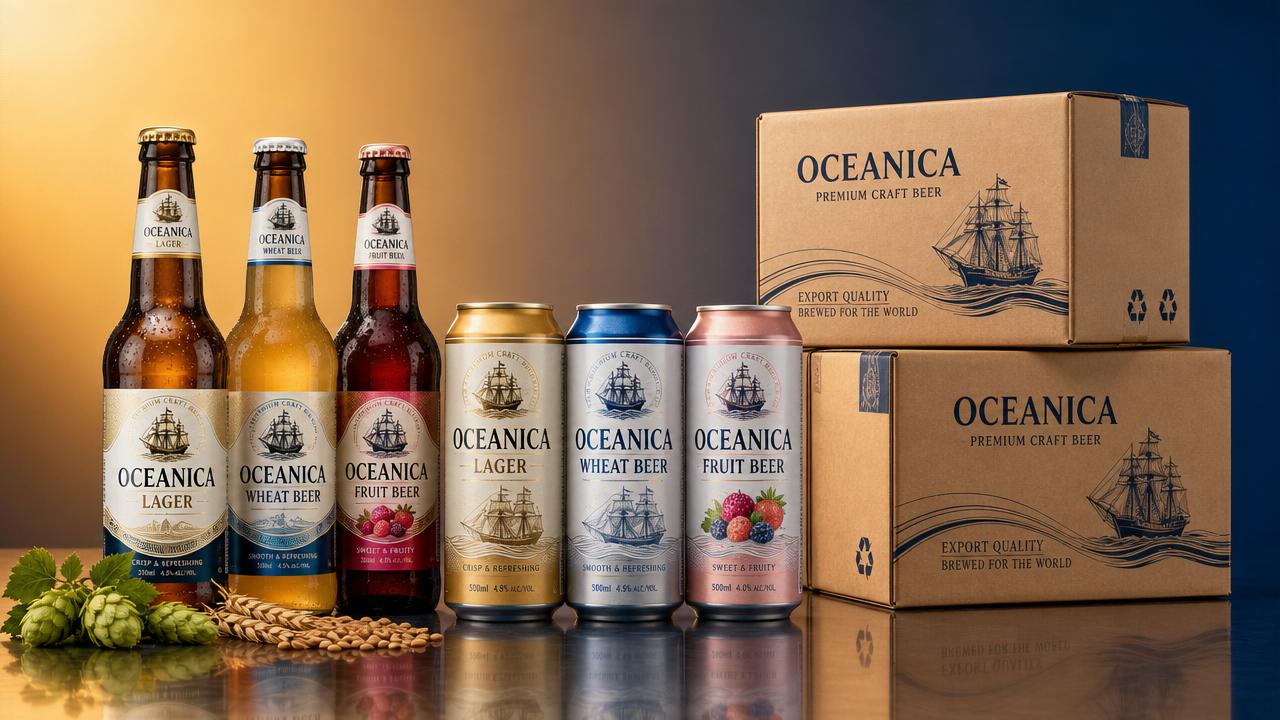
Can Chinese craft beer factory export truly support custom label requirements for distributors, agents and brand owners? With growing demand for private-label beverages, reliable OEM/ODM partners are becoming essential. Jinpai Beer combines craft beer R&D, flexible production and global supply experience to help buyers create market-ready products with tailored flavors, packaging and branding for diverse retail and hospitality channels.
What do distributors really need from Chinese craft beer factory export?
For importers and channel partners, custom label beer is not just about putting a logo on a can. It involves recipe fit, market positioning, packaging compliance, shelf appeal and repeatable supply. That is why the topic of Chinese craft beer factory export matters most at the decision stage.
A distributor may need fruit beer for convenience stores, wheat beer for restaurants, low-calorie options for modern retail, or functional specialty beer for niche promotions. Each scenario requires different label messaging, pack formats and order planning.
Jinpai Beer operates across R&D, production and distribution of craft beer, which gives buyers an advantage when they need one supplier to coordinate taste development, OEM or ODM production, packaging execution and export support.
- Private-label flexibility for classic lager, German wheat, sugar-free low-calorie beer, fruit-flavored beer and functional specialty beers.
- Supply options for supermarkets, bars, restaurants, online channels and mixed retail distribution.
- OEM/ODM cooperation that helps agents reduce development time and align products with local consumer demand.
Why custom label capability is more than packaging
Many buyers first ask whether a Chinese craft beer factory export partner can print custom labels. The better question is whether the factory can integrate branding, beer style, pack format, export documents and production scheduling into one practical project flow.
If the label looks good but the beer profile misses the target market, sell-through weakens. If the formula works but the packaging size does not fit local retail shelves, reorders slow down. Strong export cooperation must connect all these points.
Which custom label beer formats are most suitable for different sales channels?
When evaluating Chinese craft beer factory export options, channel fit should come before artwork approval. Different buyers need different combinations of flavor, alcohol profile, pack size and visual positioning.
The table below helps distributors map product types to retail and hospitality scenarios where customized beer labels can generate stronger commercial value.
This comparison shows why a capable Chinese craft beer factory export partner should not push one standard beer across every market. Jinpai Beer’s broad product line gives distributors room to match beer style with actual channel economics and consumer behavior.
Channel-specific opportunities
- Retail chains often prioritize consistent labeling, barcode readiness and repeat supply for core SKUs.
- Bars and restaurants care more about style identity, margin potential and distinctive packaging that supports menu placement.
- Online channels usually respond well to visual differentiation, giftability and flavor-led storytelling on product pages.
How to judge whether a factory can truly handle OEM/ODM custom label projects
Not every supplier that offers printing can support a full private-label program. Buyers should review formulation flexibility, packaging coordination, production planning and export communication before committing to a project.
The next table outlines practical evaluation points that importers can use when screening a Chinese craft beer factory export partner for long-term cooperation.
A structured review like this helps buyers move beyond price-only thinking. In beverage distribution, the cheapest offer can become costly if relabeling, reformulation or missed launch windows occur later.
Key signs of a more capable partner
- The supplier asks about your target channel before discussing artwork.
- The team can recommend beer styles based on consumer positioning, not only existing stock.
- There is a clear approval process for sample confirmation, label content and production scheduling.
- They can support both wholesale supply and customized development without losing operational clarity.
What are the main risks in custom label beer export, and how can buyers reduce them?
The biggest risk in Chinese craft beer factory export is not always manufacturing quality. In many projects, problems arise from unclear specifications, local compliance gaps, unrealistic launch timing or mismatch between target audience and selected beer style.
Distributors can reduce risk by using a disciplined project checklist before deposit payment and before mass production approval.
Common mistakes buyers should avoid
- Choosing a beer style based only on trend headlines instead of local sell-through patterns.
- Approving label design without checking mandatory information required in the destination market.
- Launching too many flavors at once, which can increase inventory pressure for new distributors.
- Comparing quotes without reviewing pack format, carton configuration and scope of customization.
- Ignoring the need for pre-launch samples to evaluate taste, branding and transport suitability together.
A safer implementation path
Many successful private-label programs start with a focused SKU strategy. One core lager or wheat beer can establish market presence, while one differentiated product such as fruit beer or low-calorie beer can create a margin story.
Because Jinpai Beer covers both mainstream and niche craft styles, buyers can start with fewer SKUs, test response across channels, and then expand into adjacent products after reorder data becomes clearer.
How do packaging, compliance and delivery affect export success?
For custom label projects, packaging and compliance are often as important as the beer itself. A strong Chinese craft beer factory export program should support practical discussions around label text, shelf language, packaging materials, transport protection and destination-market documentation.
The table below shows the main operational areas distributors should confirm before final production approval.
Even where country-specific rules differ, early coordination always saves time. Buyers should treat label compliance and logistics planning as part of product design, not as final administrative steps.
What does a practical procurement process look like for private-label beer?
A reliable Chinese craft beer factory export project works best when procurement follows a staged process. This is especially important for agents and distributors who must balance launch speed with inventory risk and local market expectations.
Recommended workflow
- Define the target channel, price band, consumer profile and expected annual volume.
- Select one or two beer styles that fit local demand, such as lager for volume or fruit beer for differentiation.
- Discuss OEM or ODM scope, including flavor adjustment, packaging format and custom label direction.
- Review samples and confirm artwork details, mandatory labeling points and carton specifications.
- Lock production timing, export documentation expectations and replenishment planning.
This process helps distributors avoid a common trap: approving product aesthetics before confirming channel suitability. Jinpai Beer’s combined R&D and production model is useful here because recipe, packaging and supply discussions can be connected early.
FAQ: common questions about Chinese craft beer factory export
Can custom label beer work for both premium and mass-market channels?
Yes, but the product architecture should differ. Mass-market channels often need approachable styles such as classic lager with efficient pack economics. Premium channels usually benefit from stronger style identity, such as wheat beer or specialty variants with more distinctive branding.
How should distributors choose between OEM and ODM?
OEM is often suitable when the buyer already has a clear concept, artwork direction and product positioning. ODM is more useful when the buyer wants factory support in developing flavor, product mix or market-ready brand execution. For new market entry, ODM can shorten trial-and-error cycles.
What matters most when testing a new private-label beer line?
Focus on sell-through logic, not only first shipment price. Review taste acceptance, pack visibility, expected reorder speed, warehouse handling and how easily sales teams can explain the product to retailers or on-premise customers.
Is fruit beer or low-calorie beer a better entry point than standard lager?
That depends on the channel. Standard lager usually offers broader volume potential and easier education. Fruit beer and low-calorie beer can create stronger differentiation, especially in younger, urban or online-driven channels. Many distributors benefit from combining one mainstream SKU with one trend-focused SKU.
Why choose us for custom label beer export?
If you are evaluating Chinese craft beer factory export partners, Jinpai Beer offers a practical combination of product breadth, OEM/ODM capability and channel-oriented thinking. Our portfolio covers classic lager, German wheat, sugar-free low-calorie beer, fruit-flavored beer and functional specialty beers, making it easier to match products with your market strategy.
We support wholesalers, distributors, agents and brand owners who need more than contract filling. Buyers can discuss flavor direction, packaging selection, custom label planning, supply scope and route-to-market fit in one coordinated process.
You can contact us to review product selection, sample support, target channel matching, custom packaging options, delivery cycle expectations, export document coordination and quotation details. If you are preparing a private-label launch, we can also help you narrow the initial SKU plan to reduce risk and improve market entry efficiency.
Thank you very much for writing to us. Please leave your message and contact information, we will reply to you within 24 hours.