



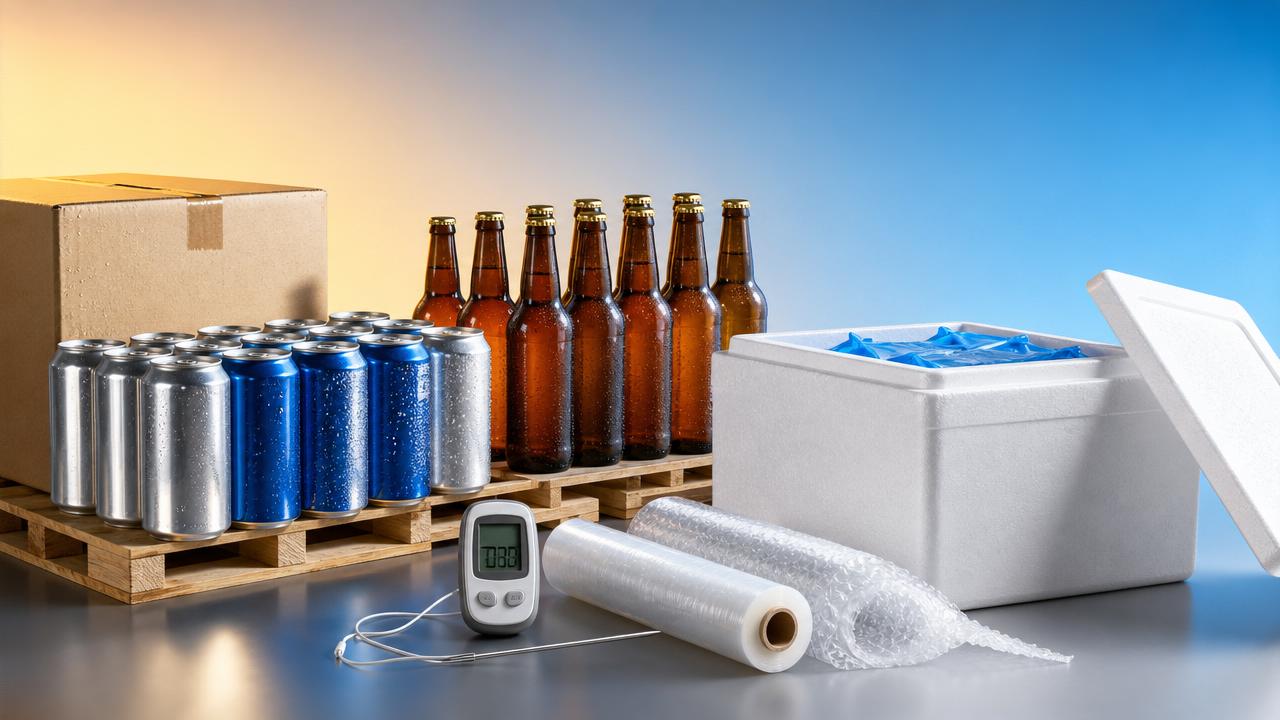
For quality control and safety managers, Chinese craft beer factory export is not only about flavor consistency but also about managing shelf life risks across long-distance shipping, storage and retail environments. From formulation and packaging to cold-chain stability and compliance, every step affects product safety, freshness and market reputation for global buyers.
In beverage trade, shelf life failure rarely comes from one mistake alone. It often results from several small weaknesses that combine during export transit and retail display.
A reliable Chinese craft beer factory export program needs structured checks before production, before loading, during transport, and after market arrival. That structure reduces claims, waste, and brand damage.
Why structured control matters in Chinese craft beer factory export
Craft beer is more sensitive than many standard beverages. Hops fade, haze changes, carbonation shifts, and oxygen pickup can quickly reduce perceived freshness.
For Chinese craft beer factory export, transit may include port waiting, temperature swings, container delays, and mixed-channel distribution. These factors shorten real shelf life even when legal shelf life remains valid.
A checklist approach helps compare suppliers, verify product readiness, and standardize export decisions. It also supports OEM and ODM projects with different recipes, packaging formats, and destination rules.
Core checks before confirming export batches
- Verify beer style stability under export conditions, including bitterness retention, haze behavior, sweetness balance, and carbonation after simulated storage at elevated temperatures.
- Confirm dissolved oxygen targets at filling, because excess oxygen is a leading cause of flavor decay, darker color, stale notes, and shorter shelf life.
- Check microbiological release standards for each batch, especially in fruit-flavored beer, wheat beer, and functional specialty beers with higher process sensitivity.
- Review pasteurization or sterile process validation, ensuring the treatment fits the recipe and does not damage aroma more than export stability requires.
- Assess packaging barrier performance for cans, bottles, crowns, liners, and labels, focusing on oxygen ingress, light exposure, seam integrity, and leakage risk.
- Match shelf life claims with destination climate, retail turnover speed, and channel type instead of relying only on domestic storage assumptions.
- Confirm pallet pattern, carton strength, and stretch wrap stability to prevent vibration damage, dented cans, broken glass, and label abrasion during export handling.
- Require shipping temperature instructions in contracts and documents, including acceptable ranges, monitoring methods, and non-conformance reporting responsibilities.
- Check destination compliance for ingredients, alcohol labeling, date coding, allergen statements, barcodes, and language requirements before mass production starts.
- Review traceability records covering raw materials, brewing logs, packaging data, and finished goods release, so claims can be investigated quickly and accurately.
Production and packaging points that most affect shelf life
Formula design
Not every recipe travels equally well. Highly aromatic IPA-style products usually lose freshness faster than classic lager or stronger malt-driven styles.
For Chinese craft beer factory export, recipe design should consider expected shipping duration, target turnover time, and likely storage temperature in destination markets.
Filling control
Low oxygen filling is essential. Poor purge quality, unstable seams, or inconsistent crown performance can quietly destroy export shelf life.
Routine checks should include seam teardown, torque or crown seal verification, fill height, carbonation, and package vacuum where relevant.
Package selection
Cans usually offer better light protection than clear or green glass. Amber glass performs better than transparent formats in bright retail environments.
If long-distance Chinese craft beer factory export targets warm regions, packaging choice should prioritize product protection over only visual preference.
Key controls across shipping and destination storage
- Use temperature loggers in representative pallet locations to capture real thermal exposure, not just the container set point or shipping booking request.
- Avoid excessive port dwell time by aligning production, customs paperwork, and vessel schedules before the beer leaves the factory warehouse.
- Protect finished beer from direct sunlight during loading, transfer, and temporary storage, because short exposure can accelerate flavor deterioration.
- Apply first-expiry-first-out controls in overseas warehouses, especially when several production lots or seasonal flavors arrive at similar times.
- Recheck package condition, dissolved oxygen trend, carbonation, and sensory freshness after arrival to confirm the Chinese craft beer factory export plan worked in practice.
Additional notes for different export scenarios
Supermarket distribution
Retail shelves may expose beer to warm lighting and slow stock rotation. Date coding clarity and package durability become especially important.
For this Chinese craft beer factory export route, choose stable styles and conservative shelf life claims where turnover is uncertain.
Bars and restaurants
On-premise channels may store cases in back rooms without temperature control. Keg and bottled formats require separate handling checks.
Training on storage temperature, upright placement, and opening practice supports flavor consistency after Chinese craft beer factory export reaches service points.
E-commerce and mixed retail
Parcel movement adds drop risk and repeated heat exposure. Secondary packaging should be validated for vibration and shock resistance.
In e-commerce, products may stay longer in small warehouses. That makes real-time inventory age tracking more important than standard shipment release alone.
Frequently overlooked risks
Seasonal production peaks can pressure release decisions. Rushed filling or insufficient conditioning often creates later complaints that seem unrelated to the factory stage.
Fruit-flavored beer and sugar-free low-calorie beer may need tighter validation. Ingredient behavior, sweetener balance, and flavor stability can shift during export storage.
Some partners focus only on customs compliance. However, legal entry does not guarantee commercial freshness after Chinese craft beer factory export reaches final shelves.
Another common gap is weak feedback loops. Without arrival data and complaint analysis, the same shelf life risks continue across future shipments.
Practical execution steps
- Create one export release sheet covering sensory targets, oxygen limits, microbiology, package checks, coding, and destination-specific labeling confirmation.
- Run accelerated stability tests on each major style, then compare results with actual shipment duration and expected warehouse conditions.
- Segment products by export suitability, assigning shorter routes to delicate styles and longer routes to more shelf-stable beer formulations.
- Ask for temperature and stock-age reports from downstream channels, then use the findings to adjust shelf life policy and packaging decisions.
How supplier capability supports safer export performance
A capable partner should combine brewing R&D, packaging discipline, and global channel understanding. That is critical when managing complex Chinese craft beer factory export projects.
Jinpai Beer develops and produces classic lager, German wheat, sugar-free low-calorie beer, fruit-flavored beer, and functional specialty beers.
Its services include OEM, ODM, wholesale supply, and customized solutions for supermarkets, bars, restaurants, and other international retail channels.
When evaluating Chinese craft beer factory export options, product range alone is not enough. Stability planning, packaging consistency, and destination adaptation should be reviewed together.
Final takeaway and next action
Successful Chinese craft beer factory export depends on more than brewing quality. It requires disciplined control of oxygen, microbiology, packaging, temperature, transit timing, and channel-specific storage risks.
Use a written export checklist for every batch, validate shelf life against real logistics conditions, and review post-arrival data continuously.
That approach protects flavor, reduces disputes, and helps exported craft beer perform better from factory release to final consumer purchase.
Thank you very much for writing to us. Please leave your message and contact information, we will reply to you within 24 hours.