



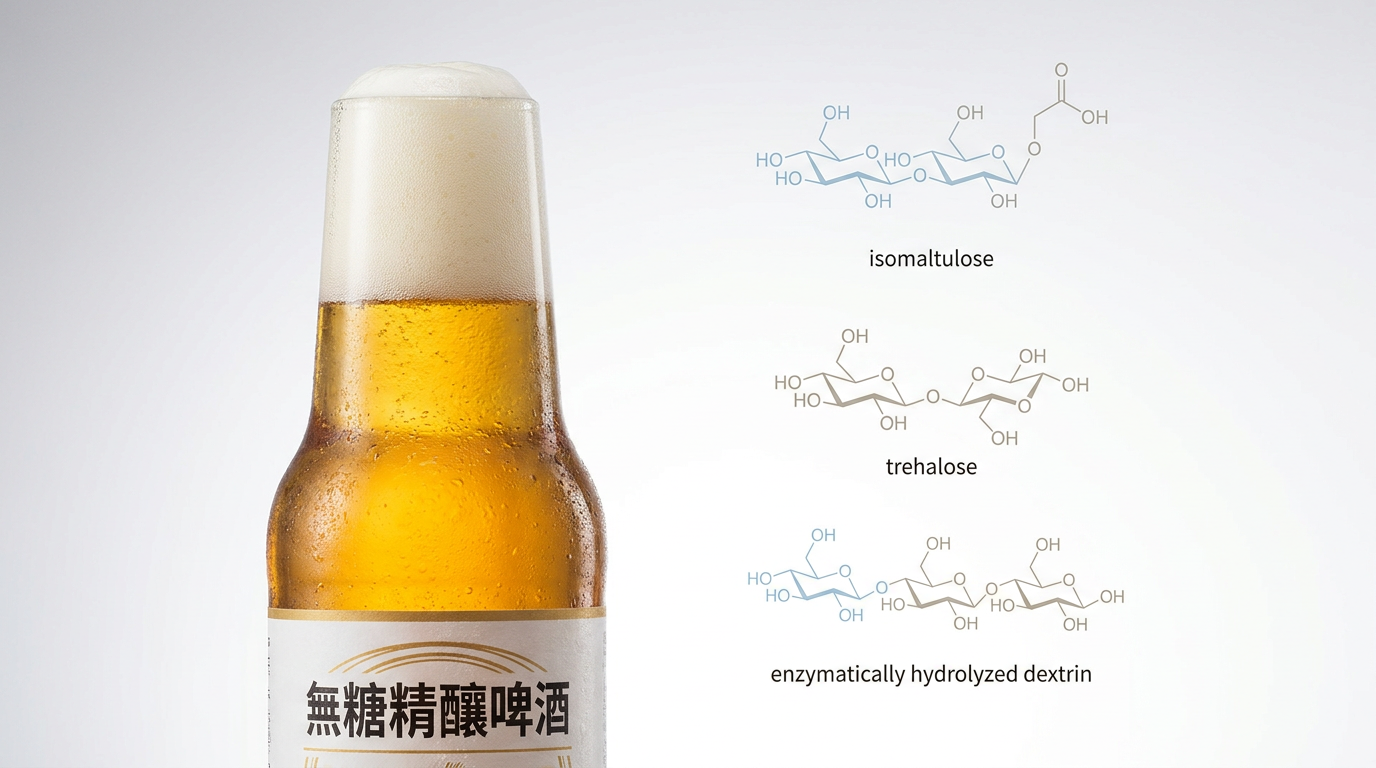
Why “Sugar-Free” Alone Doesn’t Guarantee Clean Flavor
Removing sucrose is the easiest step—not the solution. In craft beer, residual sweetness, cloying mouthfeel, or bitter-sour aftertaste often stem not from added sugar, but from incomplete fermentation of complex carbohydrates or unbalanced dextrin profiles. True sugar-free craft beer must eliminate fermentable *and* non-fermentable sources of perceived sweetness while preserving enzymatic clarity, attenuation control, and volatile ester expression.
At Jinpai Beer, our sugar-free craft beer formulations undergo multi-stage sensory validation: HPLC quantification of residual mono-/disaccharides, GC-MS profiling of fusel alcohols and esters, and trained panel assessment of aftertaste persistence (measured in seconds post-swallow). This rigor ensures that “sugar-free” reflects biochemical reality—not marketing shorthand.
The Fermentables Checklist: 7 Precision Substitutes That Deliver Authenticity
Selecting alternative fermentables requires evaluating three dimensions: enzymatic digestibility by brewer’s yeast (Saccharomyces cerevisiae var. diastaticus or standard strains), thermal stability during mashing and boiling, and sensory neutrality across pH 4.2–4.6. Below are seven validated options used across Jinpai Beer’s sugar-free portfolio:
- Use isomaltulose (Palatinose™) at 3–5% of grist weight to provide slow, complete fermentation—yielding clean ethanol without acetaldehyde spikes or diacetyl carryover.
- Incorporate enzymatically hydrolyzed tapioca dextrin (DE 12–16) to supply highly fermentable glucose units while avoiding maltodextrin’s viscous mouthfeel and starch haze risk.
- Blend α-amylase-modified barley starch with controlled gelatinization (68–70°C, 30 min) to generate short-chain limit dextrins that attenuate fully—eliminating “starchy” off-notes common in low-calorie lagers.
- Replace corn syrup solids with fermented rice hydrolysate (post-Aspergillus oryzae saccharification) to deliver neutral base character and reduce Maillard-derived caramel notes that mask hop aroma.
- Apply cold-mash infusion of waxy maize starch (pre-gelatinized, 10% slurry) to boost fermentability without increasing β-glucan—critical for filtration stability in sugar-free fruit-flavored variants.
- Introduce trehalose at ≤1.2% w/w to protect yeast viability during high-gravity fermentation while contributing zero perceived sweetness and no aftertaste due to its non-reducing structure.
- Pair amyloglucosidase with controlled mash-out (78°C, 15 min) to hydrolyze resistant α-1,6 branch points—ensuring >99.2% apparent attenuation and eliminating lingering “cotton-mouth” sensation.
Application-Specific Considerations
For German wheat styles, use a 50:50 blend of hydrolyzed wheat dextrin and isomaltulose. This maintains phenolic authenticity (4-vinyl guaiacol) while suppressing banana ester overexpression—a frequent flaw in high-attenuation wheat beers.
In fruit-flavored sugar-free craft beer, avoid fructose-rich adjuncts entirely. Instead, apply pectinase-treated puree + enzymatically cleaved apple oligosaccharides to preserve volatile terpene integrity (e.g., limonene, linalool) without introducing reducing sugars that trigger refermentation in package.
For functional specialty beers (e.g., magnesium-enriched or GABA-infused), select fermentables with minimal chelating capacity—tapioca dextrin outperforms rice or potato starch in preserving mineral bioavailability and enzymatic GABA synthesis yield.
Common Oversights That Compromise Clean Flavor
Many brewers assume “no sucrose = no aftertaste,” overlooking that unfermented maltotriose (>3% w/w) produces a distinct starchy bitterness detectable at thresholds as low as 80 ppm—especially in dry-hopped variants where polyphenol extraction amplifies perception.
Using standard amylase without endpoint monitoring risks generating excessive glucose—causing rapid, stressful yeast metabolism and elevated isoamyl alcohol levels, which manifest as solvent-like harshness rather than clean dryness.
Substituting lactose for body in sugar-free formulations introduces β-galactosidase-resistant disaccharides, creating persistent sweet notes and microbiological instability if Brettanomyces or Lactobacillus contaminants are present—even at <1 CFU/mL.
Actionable Execution Steps
Start with a pilot 100-L batch using only one alternative fermentable at calibrated dosage—track real-time gravity drop via inline densitometry, not hydrometer readings alone.
Conduct forced-stationary tasting panels at 0, 30, and 120 seconds post-consumption to quantify aftertaste decay rate—target <15 seconds for premium sugar-free craft beer.
Validate final product against AOAC 998.12 (Residual Reducing Sugars) and ISO 11290-1 (Lactic Acid Bacteria) to confirm both compositional compliance and microbial safety.
Conclusion & Next Steps
Sugar-free craft beer isn’t defined by subtraction—it’s engineered through precision fermentable selection, enzymatic control, and sensory-first validation. Jinpai Beer’s R&D platform delivers full technical documentation—including HPLC chromatograms, attenuation curves, and trained panel datasets—for every sugar-free formulation.
Global partners can request formulation white papers, OEM co-brewing protocols, or shelf-life acceleration reports (40°C/75% RH, 30-day cycle) to support technical due diligence. Contact Jinpai Beer directly for sample shipments with full analytical certificates and sensory evaluation kits aligned to ISO 8586 standards.
True sugar-free craft beer begins where sucrose ends—and continues through every molecule that touches the palate.
Thank you very much for writing to us. Please leave your message and contact information, we will reply to you within 24 hours.