



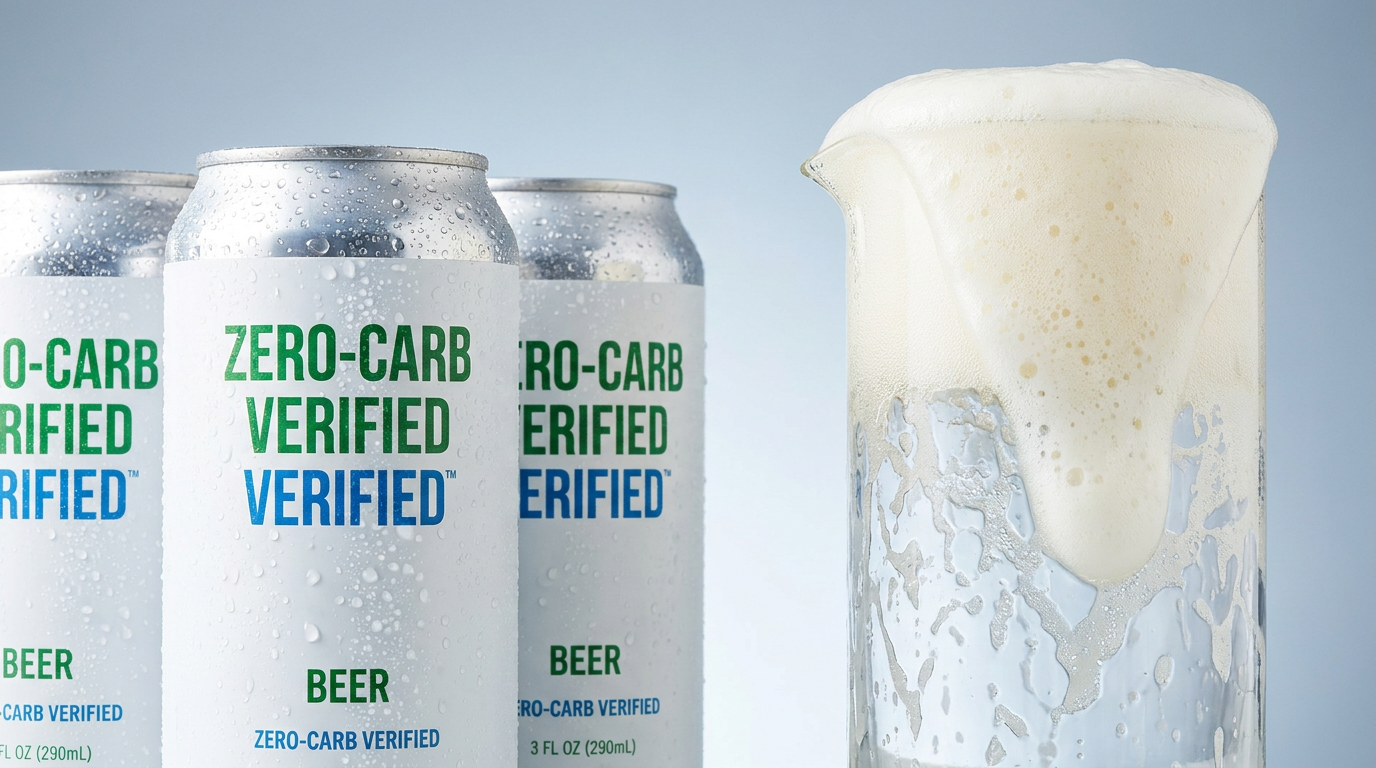
Zero-carb beer labels often mislead: how many brands quietly use maltodextrin or dextrose to stabilize foam?
Zero-carb beer is gaining traction among health-conscious consumers—but how many truly deliver zero carbs? A growing number of labels claim 'zero-carb' while quietly adding maltodextrin or dextrose to enhance foam stability and mouthfeel. These ingredients, though low in flavor impact, contribute measurable carbohydrates—undermining the label’s promise. For information seekers evaluating authenticity, transparency, and formulation integrity, this discrepancy raises critical questions about regulatory oversight and brand accountability. As Jinpai Beer pioneers sugar-free, low-calorie craft options with fully disclosed ingredient profiles, understanding what ‘zero-carb’ really means has never been more essential.
What “zero-carb” actually means—and why it’s rarely absolute
Legally, “zero-carb” in the U.S. (per FDA labeling rules) means ≤0.5g total carbohydrate per serving. In the EU, it’s ≤0.1g per 100ml. That tiny threshold allows brands to round down—even when trace carbs are present. But rounding isn’t the issue. The real concern is intentional inclusion: maltodextrin and dextrose are added not for sweetness, but for functional performance—foam retention, head density, and body perception. Neither appears on many “zero-carb” labels as a *carbohydrate source*, because they’re classified as processing aids or adjuncts. Yet both contain ~4g carbs per gram. One teaspoon of maltodextrin adds ~3.8g carbs—enough to push a 330ml can from “0g” to “1g” on a strict lab analysis.
Why foam-stabilizing carbs slip through labeling cracks
Regulatory frameworks treat functional ingredients differently than nutritional ones. Maltodextrin, derived from corn or rice starch, is GRAS (Generally Recognized As Safe) and exempt from mandatory declaration if used below certain thresholds—or if deemed “incidental.” Dextrose faces similar ambiguity: it’s often listed as “natural flavor enhancer” or omitted entirely when used in sub-gram quantities per batch. But scale matters. In commercial brewing, even 0.05% w/v addition translates to ~170mg dextrose per 330ml can—contributing ~0.68g carbs. That exceeds the FDA’s “zero” threshold. Yet without mandatory carb-by-ingredient disclosure, consumers see only the rounded nutrition panel—not the formulation logic behind it.
How to spot hidden carbs—beyond the nutrition label
Start with the ingredient list—not the front-of-pack claim. Look for: “maltodextrin,” “dextrose,” “glucose solids,” “corn syrup solids,” or vague terms like “stabilizers,” “foam enhancers,” or “brewing adjuncts.” Cross-reference with the brand’s technical documentation: reputable craft brewers publish full spec sheets online. If none exist, that’s a red flag. Third-party verification helps too: certifications like “Certified Low Carb” (from the Low Carb Program) or independent lab reports (e.g., ISO 17025-tested carb assays) add credibility. Jinpai Beer, for example, discloses every functional ingredient—including its proprietary foam-stable, zero-carb alternatives—on all product pages and SDS documents. No rounding. No omissions.
What’s really at stake for health-focused consumers
For people managing diabetes, ketogenic diets, or insulin resistance, even 0.5–1g of hidden carbs per serving can disrupt metabolic goals—especially across multiple servings. More critically, repeated exposure to low-dose glucose polymers may condition gut microbiota toward increased carb absorption over time—a subtle but emerging concern in nutritional science. It’s not about acute blood sugar spikes; it’s about long-term dietary fidelity. When a consumer chooses “zero-carb” to align with a clinical or lifestyle protocol, undisclosed dextrose undermines trust, compliance, and outcomes. Transparency isn’t marketing—it’s metabolic accountability.
How Jinpai Beer builds zero-carb integrity—without compromise
Jinpai avoids maltodextrin and dextrose entirely—not as a cost-saving measure, but as a formulation philosophy. Instead, we use enzymatically modified hop polyphenols and cold-settled barley protein isolates to achieve stable lacing and creamy mouthfeel. Our sugar-free low-calorie beers undergo triple-stage carb validation: (1) HPLC quantification of mono-/di-/oligosaccharides, (2) AOAC 991.43 enzymatic hydrolysis assay, and (3) third-party verification at accredited labs in Germany and Singapore. Every batch report is publicly accessible via QR code on packaging. Why? Because “zero-carb” shouldn’t require detective work—it should be verifiable, repeatable, and honest.
What regulators aren’t doing—and why it matters
FDA and EFSA currently lack binding requirements for disclosing *functional carbohydrate sources* in fermented beverages. Unlike soft drinks, where added sugars must be itemized, beer falls under “alcoholic beverage” exemptions—leaving carb origin unregulated. The TTB (Alcohol and Tobacco Tax and Trade Bureau) mandates ingredient listing only for allergens or sulfites—not for carb-contributing adjuncts. This gap enables technically compliant—but substantively misleading—labeling. Until policy closes it, due diligence rests with the consumer and ethical brands alike. That’s why Jinpai supports the Craft Beer Transparency Initiative, advocating for mandatory carb-source disclosure in all “zero-carb” and “low-carb” claims.
Practical steps for informed decision-making
First, prioritize brands that publish full ingredient decks—not just “brewed with water, barley, hops, yeast.” Second, check for third-party carb verification: look for test method citations (e.g., “AOAC 991.43”) and lab accreditation logos. Third, contact customer service with one direct question: “Does this product contain maltodextrin, dextrose, or any glucose-based stabilizer?” A transparent answer (“No”) plus documentation beats a vague “We comply with all regulations.” Finally, compare per-serving carb values *across brands* using standardized 330ml/12oz units—not marketing slogans. Consistency in measurement beats consistency in messaging.
Conclusion: Zero-carb isn’t about absence—it’s about intention and evidence
“Zero-carb” is not a loophole. It’s a promise—one that demands formulation rigor, analytical precision, and full ingredient accountability. Many brands use maltodextrin or dextrose not out of malice, but convenience—trading clarity for foam stability. But convenience shouldn’t eclipse credibility. For information seekers, the takeaway is clear: verify, don’t assume. Demand ingredient-level disclosure. Favor brands that treat carb accounting as science—not semantics. At Jinpai Beer, we believe zero-carb craft beer should deliver uncompromised taste, proven carb integrity, and total transparency—batch after batch, label after label. Because when health meets enjoyment, honesty isn’t optional. It’s the first ingredient.
Thank you very much for writing to us. Please leave your message and contact information, we will reply to you within 24 hours.