



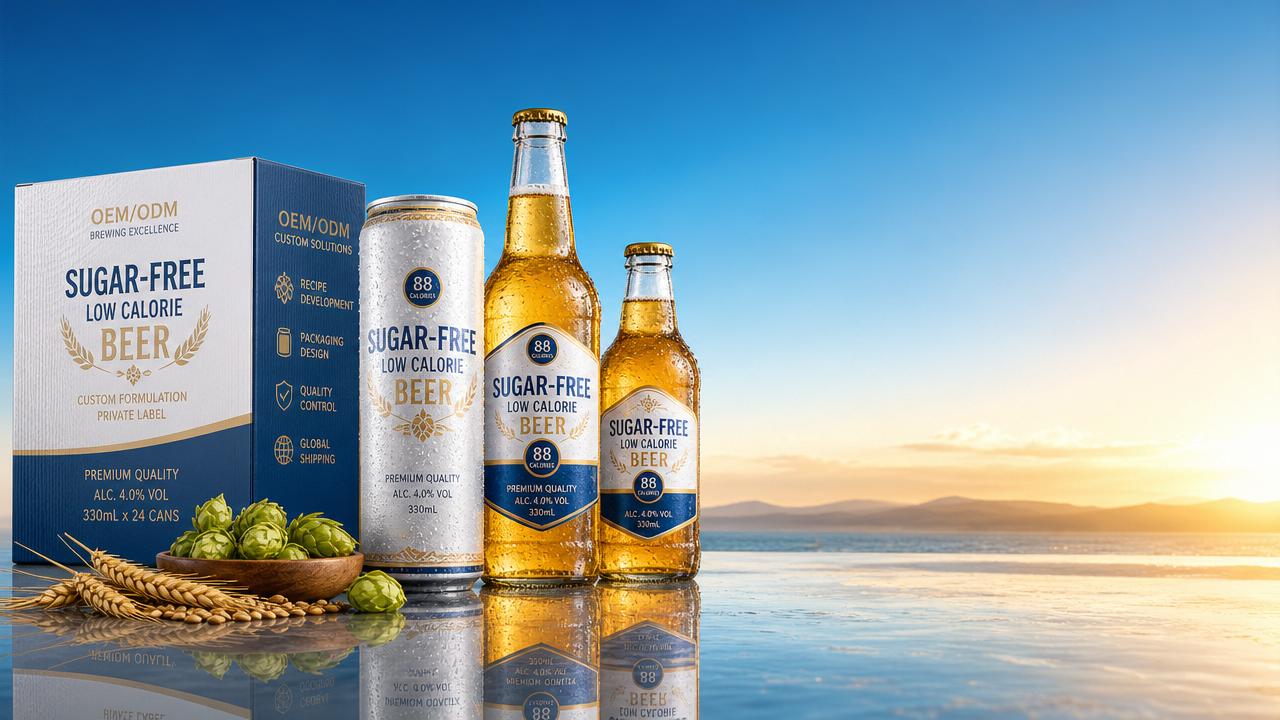
As a sugar-free beer supplier China, Jinpai Beer helps buyers navigate shifting prices and protect margins with reliable OEM/ODM supply, flexible wholesale options, and consistent quality. From sugar-free low-calorie beer to a full craft beer lineup, the company supports restaurants, supermarkets, bars, distributors, and retail channels with customized solutions built for long-term growth. When pricing moves because of raw materials, freight, packaging, or exchange rates, a structured review process makes it easier to control landed cost and keep product positioning competitive.
Why a structured review matters when prices change
In the beverage business, a small cost increase can quickly reduce profit if the sales price, pack format, or channel strategy stays unchanged. This is especially true for sugar-free and low-calorie beer, where buyers often expect stable taste, clean labeling, and consistent shelf appeal while also comparing prices closely across imported and local alternatives.
Working with a dependable sugar-free beer supplier China is not only about getting a quote. It is also about understanding what drives price changes, which cost items are temporary, which are structural, and how formulation, packaging, and order planning can protect margin without weakening brand value. A checklist-based approach reduces guesswork and supports faster decisions.
Core points to review before accepting a new quote
Use the following checkpoints when comparing offers from a sugar-free beer supplier China. These points help clarify total cost, margin impact, and practical supply reliability rather than focusing only on the ex-factory unit price.
- Confirm whether the price change comes from malt, hops, yeast, cans, bottles, cartons, energy, labor, or freight, and ask which cost drivers are short-term versus likely to remain.
- Check if the quoted product specification is identical, including alcohol level, bitterness, sweetness profile, calorie target, shelf life, filling format, and carton configuration.
- Review minimum order quantity and production batch size, because a lower unit price may require larger inventory exposure and slower cash turnover.
- Compare OEM and ODM options to see whether an existing formula reduces development cost or whether a custom recipe creates stronger long-term margin potential.
- Ask for landed cost estimates by destination, including ocean freight, customs-related charges, palletization, and packaging adjustments needed for local distribution requirements.
- Evaluate packaging alternatives such as slim cans, standard cans, glass bottles, or mixed packs, because packaging often changes perceived value and gross margin more than recipe cost.
- Verify quality consistency through sample comparison, lab indicators, and batch control documents, since unstable taste or appearance can damage repeat sales and promotional efficiency.
- Confirm lead time, peak season capacity, and reorder flexibility, especially if the sugar-free beer supplier China serves multiple export markets with seasonal demand spikes.
- Check labeling, compliance, and formula claim support for sugar-free or low-calorie positioning so that market entry is not delayed by documentation gaps.
- Model your target margin by channel, separating wholesale, retail, on-trade, and online pricing to identify where a quote still works and where pack or price changes are needed.
The main reasons pricing changes for sugar-free beer
A professional sugar-free beer supplier China should be able to explain price movement in practical terms. Raw materials are one factor, but not the only one. Specialty enzymes, selected yeast, filtration steps, and flavor-balancing work can affect the production cost of sugar-free low-calorie beer more than standard lager in some formulations. Packaging also plays a major role, especially when aluminum or printed materials fluctuate.
Currency shifts can matter as well. If ingredients or packaging materials are linked to international commodity pricing, a stable factory operation may still need to update quotations. Freight volatility, container availability, and route changes add another layer. This is why comparing quotes across time requires matching all conditions, not only reading the final number.
Jinpai Beer addresses these issues by offering a broad craft beer portfolio, OEM/ODM support, and customized solutions that make it easier to switch formats, optimize specifications, or plan volume in a way that protects channel competitiveness.
How price changes affect margin in real sales channels
Supermarkets and chain retail
Retail channels are usually sensitive to shelf price bands. If the purchase cost rises, the easiest response is not always a higher shelf price. In many cases, margin is better protected by changing pack count, can size, carton structure, or promotional timing. A sugar-free beer supplier China with flexible packaging choices can support this adjustment without changing the brand promise.
Bars, restaurants, and on-trade outlets
On-trade channels often have more room for premium positioning, but consistency matters even more. If a sugar-free beer loses flavor balance or visual appeal because of uncontrolled cost cutting, repeat orders can drop quickly. In this setting, protecting gross profit usually means preserving quality and refining serving format rather than pursuing the lowest possible purchase cost.
Online and cross-border sales
Online channels move fast and make price comparison easy for consumers. Margin can be impacted by shipping charges, breakage control, and promotional discounts more than by recipe cost alone. A reliable sugar-free beer supplier China should help optimize carton durability, SKU mix, and replenishment rhythm to reduce hidden cost leakage.
Private label and customized brand projects
Private label projects can create stronger margin because the offer is less directly comparable with mainstream products. However, initial design, compliance review, and smaller trial runs may increase early-stage cost. The advantage comes when the formula, packaging, and positioning are aligned with the target channel and supported by scalable production.
Frequently overlooked items that reduce profit
Sample price and commercial price do not always match
A sample may use a different packaging setup, smaller batch process, or temporary ingredient sourcing. Before confirming volume, verify that the final quotation reflects the exact product approved during tasting and evaluation.
Low unit price can hide higher total inventory cost
If a lower price requires very high MOQ, the extra stock may weaken cash flow and increase warehouse risk. The best offer from a sugar-free beer supplier China is the one that balances price, inventory speed, and reorder reliability.
Packaging changes can affect brand perception
Reducing cost by downgrading can thickness, print quality, or carton strength may create damage, weaker shelf impact, or more complaints. Margin protection should improve cost structure without reducing customer trust.
Ignoring compliance can delay market entry
Sugar-free and low-calorie claims often require careful label wording and supporting documentation. A shipment delay caused by label revision or missing paperwork can cost more than a moderate price increase.
Focusing only on one SKU limits negotiation flexibility
Jinpai Beer produces classic lager, German wheat, sugar-free low-calorie beer, fruit-flavored beer, and functional specialty beers. Combining multiple SKUs in a broader sourcing discussion can improve production planning and strengthen overall commercial terms.
Practical steps to protect margin with a sugar-free beer supplier China
- Build a simple cost sheet covering ex-factory price, packaging, freight, customs-related costs, local delivery, and expected promotional expense for each channel.
- Request two or three packaging options for the same beer profile so you can compare margin impact without changing product taste.
- Review annual volume planning with quarterly call-offs, which often supports more stable pricing and better production scheduling.
- Use pilot orders for new markets, then scale into OEM or private label programs after confirming repeat sales and acceptable return rates.
- Ask for a full product range discussion, not only one SKU, because mixed portfolio sourcing can improve negotiation efficiency and channel coverage.
- Track actual margin after launch by comparing planned landed cost with real invoices, freight changes, discounting, and sell-through speed.
What to ask before starting OEM or ODM cooperation
When choosing a sugar-free beer supplier China, ask how recipe development, packaging design, sampling, production scheduling, and export support are managed. Clear answers show whether the supplier can support long-term brand building rather than only provide short-term low pricing.
It is also useful to ask about the full product roadmap. A sugar-free launch may succeed first, but later channel expansion may require fruit beer, wheat beer, or functional specialty products. Working with a partner that already covers multiple beer styles creates flexibility for growth and helps maintain a consistent supply relationship.
Conclusion and next steps
Price changes do not automatically have to reduce profit. With the right review process, a sugar-free beer supplier China can become a source of margin improvement through better packaging choices, clearer cost visibility, stable quality, and more suitable OEM/ODM planning. The key is to evaluate total commercial impact rather than comparing quotations in isolation.
Jinpai Beer combines R&D, production, and global distribution support across sugar-free low-calorie beer and a full craft beer range. With wholesale supply, customized solutions, and flexible cooperation models, the company helps build sustainable channel value for supermarkets, bars, restaurants, online sales, and private label development. The next practical step is to review target market requirements, shortlist preferred formats, and request a quote comparison based on matched specifications and realistic landed cost assumptions.
Thank you very much for writing to us. Please leave your message and contact information, we will reply to you within 24 hours.