



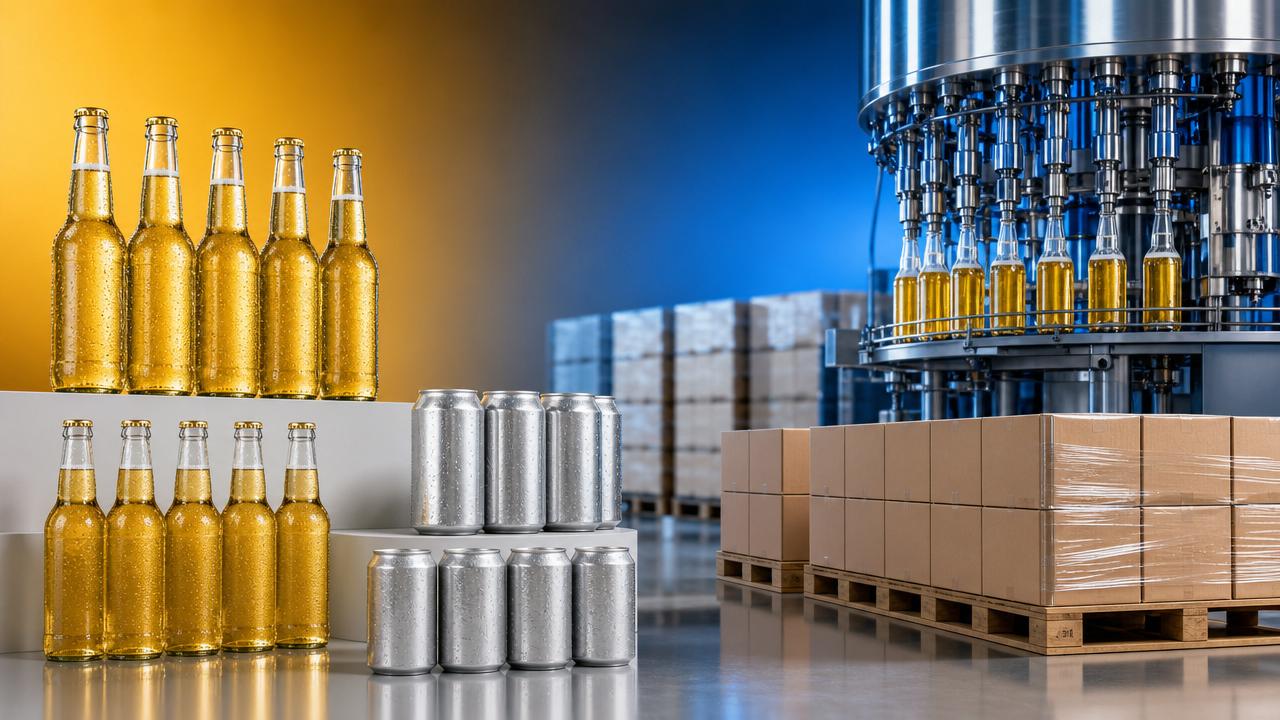
As a sugar-free beer supplier China, Jinpai Beer supports business evaluation with export-ready craft beer solutions built for compliance, consistency, and market demand. From OEM/ODM development to wholesale supply and customized formulas, we offer a full portfolio including sugar-free low-calorie beer, classic lager, German wheat, fruit-flavored beer, and functional specialty beers. For distributors, agents, and retail buyers seeking reliable long-term cooperation, our audit-focused production and global supply capability help reduce sourcing risk and improve commercial confidence.
Why sugar-free beer matters in export procurement
In beer sourcing, sugar-free and low-calorie products are no longer niche items. They now sit at the intersection of wellness trends, premium positioning, and channel expansion. For a sugar-free beer supplier China, the real value is not only recipe development, but also whether the product can pass commercial evaluation across labeling, shelf appeal, batch stability, and export documentation.
Business evaluators usually compare 4 things first: product consistency, supply capacity, compliance readiness, and market fit. If one of these areas is weak, the deal may move slower even when the price looks attractive. That is why buyers in restaurants, supermarkets, bars, and multi-store retail chains often prefer suppliers that can support both standard SKUs and customized formulas under the same system.
Key buyer concerns in a 30-day sourcing cycle
A typical sourcing cycle for imported beer can be 2–4 weeks for initial screening and another 7–15 days for sample testing and commercial review. During this period, the supplier must answer practical questions: Is the sweetness profile stable? Does the low-calorie positioning remain credible after packaging translation? Can the brewery maintain the same taste across repeated orders? These questions are especially important for sugar-free beer, where formulation precision directly affects repeat purchase.
The table shows why procurement is not limited to unit price. A reliable sugar-free beer supplier China must demonstrate control over formulation, documentation, and delivery timing, otherwise commercial risk rises quickly. For evaluators, this is often the difference between a short trial order and a long-term supply relationship.
Product positioning that supports different channels
Jinpai Beer’s portfolio covers classic lager, German wheat, sugar-free low-calorie beer, fruit-flavored beer, and functional specialty beers. This range helps buyers build a more balanced SKU structure: core volume products for supermarkets, premium or specialty items for bars, and lighter-positioned options for restaurants and health-oriented retail channels.
For business evaluation, portfolio breadth matters because it lowers dependency on a single SKU. A distributor may start with sugar-free beer, then expand into lager or wheat beer once market feedback is positive. That creates a smoother 3-stage commercial path: test, expand, and scale.
Audit focus: what buyers should inspect before placing orders
When reviewing a sugar-free beer supplier China, the audit should focus on production discipline rather than marketing language. In beer supply, small process differences can affect foam stability, flavor balance, and shelf performance. A clear audit framework helps buyers judge whether the supplier can support export orders, repeat production, and multi-channel distribution without quality drift.
Production checkpoints for business evaluators
A practical audit usually covers 6 checkpoints: ingredient handling, brewing control, filtration or stabilization, filling accuracy, packaging consistency, and finished goods storage. Buyers should also ask how the brewery manages batch records and sample retention. For sugar-free beer, formulation traceability is especially important because the product claim must match the actual recipe and labelling language.
A strong audit result does not require flashy claims. It requires visible control points and consistent execution. For importers and agents, this is a practical way to compare suppliers before committing to MOQ, which for many beverage programs may start from a container-based order or a negotiated mixed-SKU arrangement.
Common risk signals in supplier evaluation
Several warning signs often appear during evaluation. If the supplier cannot explain formulation differences between sugar-free beer and standard lager, or if sample timelines keep moving by 5–7 days without reason, the project may face delays later. Another risk is vague documentation around ingredients, packaging specs, or export coordination. These issues can slow customs clearance and weaken retailer confidence.
Buyers should also watch for unstable pricing structures. Beer sourcing is sensitive to raw material changes, packaging format, and carton volume. A transparent quotation should separate product price, packaging option, shipping terms, and any customization cost. This gives business evaluators a clearer picture of landed cost and margin potential.
How Jinpai Beer supports OEM/ODM and wholesale supply
For distributors and retail buyers, the value of an OEM/ODM partner lies in speed, control, and scalability. Jinpai Beer provides custom development and wholesale supply across online and offline channels worldwide, which allows buyers to match product design with local demand. Whether the goal is a private label sugar-free beer or a broader multi-SKU beer program, the supply model can be adjusted to fit channel needs.
In practice, most custom projects follow 5 steps: requirement review, formula or style selection, sample confirmation, packaging approval, and mass production. A structured process reduces miscommunication and helps align marketing claims with actual product performance. For business evaluation teams, this is especially useful because it shortens internal approval time.
Typical cooperation flow
- Confirm target market, sales channel, and sugar-free positioning.
- Select from lager, wheat beer, fruit beer, or specialty beer base styles.
- Review sample taste, packaging format, and label content.
- Approve order quantity, production schedule, and shipping plan.
- Track batch output, export handling, and re-order planning.
This workflow gives distributors a repeatable decision path. It also helps reduce launch risk when entering new retail channels, because the product, packaging, and supply schedule are all aligned before the first shipment leaves the brewery.
Channel fit by product type
Different beer styles serve different commercial goals. Sugar-free low-calorie beer is often selected for health-conscious consumers and premium supermarket shelves. Classic lager remains the safest option for broad-volume sales. German wheat beer supports a more crafted image, while fruit-flavored beer can perform well in casual restaurants and younger consumer segments. Functional specialty beers may fit promotional or seasonal launches.
The best supplier is not simply the one with the most product types. It is the one that can translate those types into a workable sales plan with consistent packaging, stable taste, and manageable lead times, usually within 15–30 days depending on order size and customization level.
Decision checklist for distributors, agents, and retail buyers
Before signing a supply agreement, business evaluators should compare at least 4 variables: product fit, MOQ flexibility, export readiness, and after-sales coordination. These variables help predict whether the supplier can support a small trial order and then grow into a stable repeat business. In beverage trade, that progression matters more than a single attractive quotation.
- Check whether sugar-free claims match the actual product positioning and label content.
- Confirm if sample approval can be completed within 7–15 days.
- Ask for packaging options that suit restaurants, supermarkets, and bar channels.
- Review how the supplier handles reorder timing, replacement issues, and pallet protection.
For long-term cooperation, consistency is the real commercial asset. A supplier that can maintain taste, documentation, and delivery discipline across multiple shipments is more likely to support brand growth. That is why Jinpai Beer positions its export-ready craft beer portfolio around practical sourcing needs, not short-term promotion.
If you are evaluating a sugar-free beer supplier China for your next sourcing round, Jinpai Beer can support sample review, OEM/ODM development, wholesale supply, and customized solutions across multiple beer styles. Contact us to discuss your target market, request product details, or get a tailored export plan for your channel.
Related Posts
- ▶ What Makes a Chinese Beer Factory Competitive in Global Contract Brewing? Quality Consistency, Scalability, and IP Protection Frameworks
- ▶ How Chinese Beer Factory Export Performance Differs by Destination: EU Tariff Quotas vs. Southeast Asia Local Content Rules
- ▶ Why Malt Drink Factories Often Underestimate Water Treatment Needs for Beer Production — Hardness, Chlorine, and Silica Implications
Online Message
Thank you very much for writing to us. Please leave your message and contact information, we will reply to you within 24 hours.