



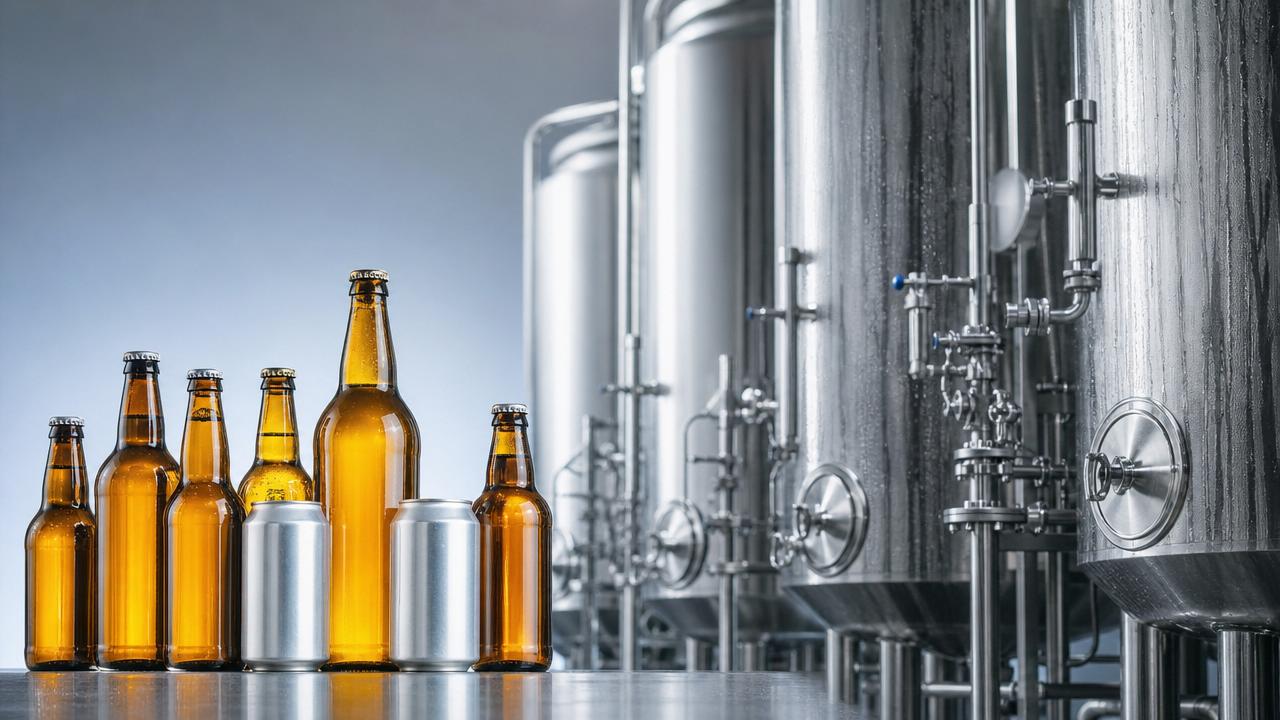
Scaling your craft beer brand? You’re not alone—many project managers face a critical inflection point when their trusted 'small-batch' Craft Beer ODM partner begins scaling up. Suddenly, consistency, lead times, compliance, and customization flexibility are put to the test. At Jinpai Beer, we bridge that gap: our end-to-end Craft Beer ODM service combines artisanal formulation rigor with industrial-grade scalability—without compromising flavor integrity or regulatory readiness. Designed for global foodservice and retail partners, we empower project leaders to future-proof supply chains while maintaining brand authenticity.
The Quiet Shift: When 'Small-Batch' Craft Beer ODM Enters Growth Mode
What was once a niche, hands-on collaboration—brewing 500-liter batches in a shared pilot facility—is now evolving into multi-thousand-hectoliter production runs across ISO-certified lines. This isn’t just about output volume. It’s a structural shift in how Craft Beer ODM operates: from reactive co-creation to proactive platform-based development, from batch-by-batch approvals to embedded QA/QC protocols, and from regional compliance support to simultaneous FDA, EFSA, CFIA, and ANVISA readiness. Market data shows over 68% of craft-focused brands launching internationally between 2022–2024 selected an ODM partner already operating at ≥30,000 HL/year capacity—up from 41% in 2019. The signal is clear: scalability is no longer optional—it’s the baseline expectation for serious Craft Beer ODM engagement.
Why This Transition Is Accelerating Now
Three interlocking forces are driving this shift:
- Consumer Demand Maturation: Shoppers no longer treat “craft” as synonymous with “local-only.” They expect consistent taste across markets—and demand functional variants (e.g., sugar-free low-calorie beer, probiotic-infused wheat) without sacrificing authenticity.
- Retail Channel Consolidation: Global supermarket chains and premium on-trade groups now require minimum order quantities (MOQs) of 10,000+ units per SKU and 12-week forecast visibility—conditions small-batch facilities cannot reliably meet.
- Regulatory Convergence: New labeling rules (EU’s Nutri-Score integration, US FDA’s updated alcohol beverage nutrition labeling draft), traceability mandates (blockchain-ready batch logs), and allergen transparency standards increasingly favor vertically integrated Craft Beer ODM providers with centralized R&D, QA, and documentation systems.
How Scaling Impacts Core Business Functions
The implications ripple across planning, operations, and commercial execution:
Five Non-Negotiables for Sustainable Craft Beer ODM Partnerships
As your brand expands, these criteria separate transitional partners from long-term enablers:
- Batch-to-Batch Flavor Lock: Verified sensory panels (not just lab metrics) confirm identical profile replication across facilities and volumes—critical for fruit-flavored beer and German wheat variants where ester balance defines authenticity.
- Modular Customization Architecture: Pre-validated base platforms (e.g., “Clean-Lager Core,” “Hazy IPA Framework”) allow rapid iteration—no reformulation needed for ABV adjustment, calorie reduction, or functional additive integration.
- Global Regulatory Onboarding Velocity: Ability to launch in new markets within ≤8 weeks—including label design, import license prep, and local language technical dossier assembly.
- End-to-End Traceability: From malt origin GPS coordinates to finished-can laser etching, with full digital audit trail accessible via secure portal.
- Co-Branding Flexibility: Support for dual-labeling (your brand + Jinpai’s ODM certification mark), private-label e-commerce SKUs, and limited-edition collaborative releases—all under one contractual framework.
Your Next Step: From Evaluation to Execution
Start with a targeted diagnostic—not a generic RFP. Request:
- A side-by-side sensory report comparing your current best-selling SKU against a 10,000-unit production run (same recipe, same facility, different batch date);
- Documentation of their last three non-routine audit findings—and how each was resolved;
- Proof of active registrations in your top two target export markets (e.g., Health Canada License, EU Responsible Person appointment);
- Sample timeline for launching a sugar-free low-calorie beer variant—from concept approval to first container departure.
Jinpai Beer delivers all four—on standard terms. With dedicated Craft Beer ODM project managers fluent in English, Mandarin, and Spanish, we align formulation science, regulatory precision, and commercial agility. Our portfolio spans classic lager, German wheat, sugar-free low-calorie beer, fruit-flavored beer, and functional specialty beers—each built on scalable, auditable, and flavor-locked foundations. Whether you serve restaurants, supermarkets, bars, or direct-to-consumer channels, our OEM/ODM services, wholesale supply, and customized solutions are designed for growth—not just survival.
Ready to stress-test your Craft Beer ODM partnership? Contact Jinpai Beer today for a confidential production-readiness assessment—and discover how artisanal integrity and industrial scale can coexist in every sip.
Related Posts
- ▶ What Makes a Chinese Beer Factory Competitive in Global Contract Brewing? Quality Consistency, Scalability, and IP Protection Frameworks
- ▶ How Chinese Beer Factory Export Performance Differs by Destination: EU Tariff Quotas vs. Southeast Asia Local Content Rules
- ▶ Why Malt Drink Factories Often Underestimate Water Treatment Needs for Beer Production — Hardness, Chlorine, and Silica Implications
Online Message
Thank you very much for writing to us. Please leave your message and contact information, we will reply to you within 24 hours.