



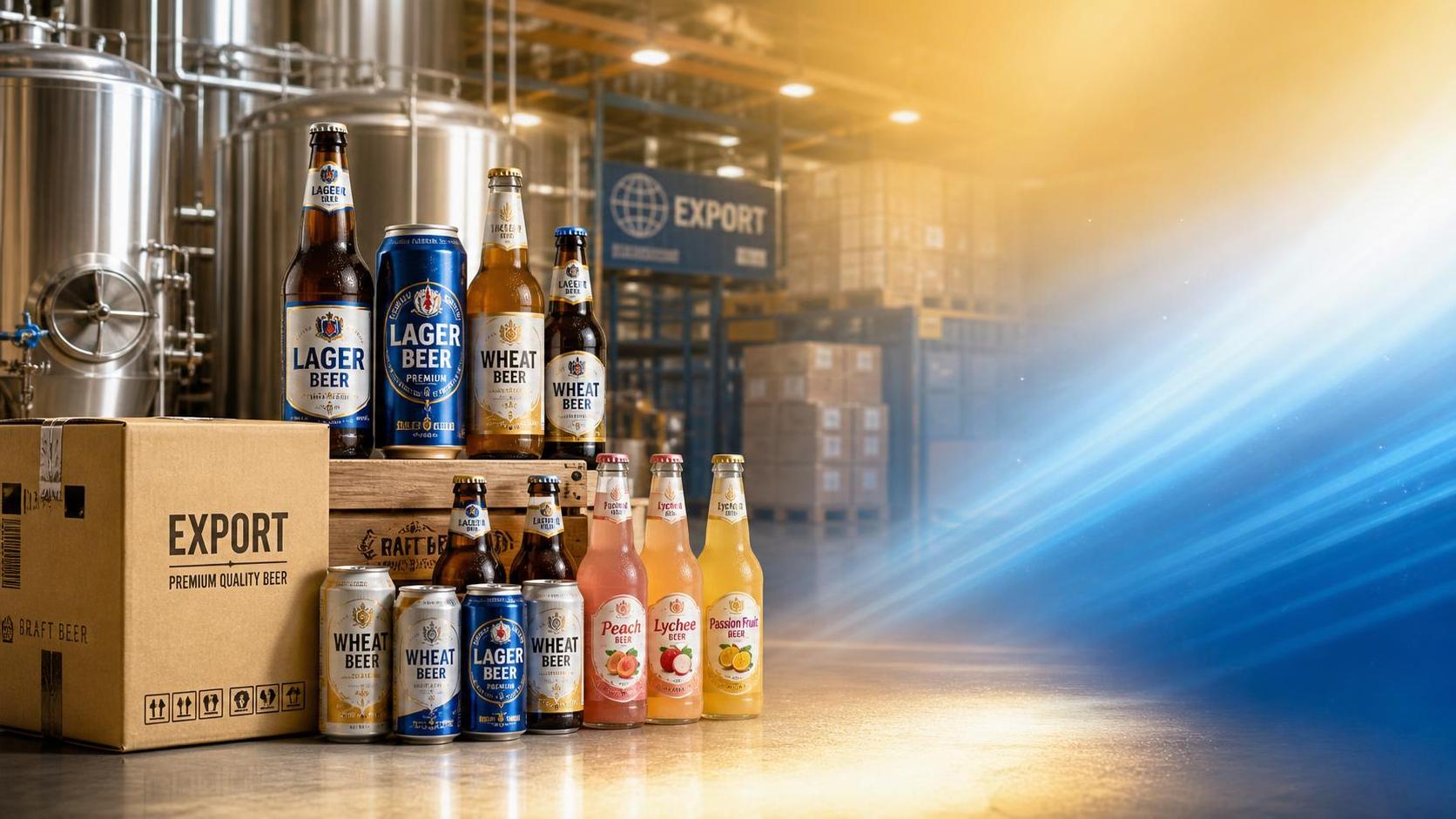
The answer is usually yes, but diversification should be selective rather than broad for its own sake. A stronger global beer supply chain is not created by adding the largest possible number of breweries, SKUs, or countries of origin. It is created by reducing exposure to a few failure points while keeping quality, margins, inventory, and route-to-market manageable.
Beer portfolios are under pressure from several directions at once. Freight availability can change. Ingredient costs can move unexpectedly. Import procedures and label requirements vary by market. At the same time, consumer demand is becoming less uniform: a dependable lager may remain the volume driver, while wheat beer, fruit-flavored options, low-calorie products, and specialty beers create reasons for customers to trade up or try something new.
That makes diversification a commercial decision as much as a risk-management decision. The useful question is not “How many supply sources should we have?” It is “Which dependencies could interrupt our core business, and which additional products or production partners can create profitable demand without making operations harder?”
Why the global beer supply chain now needs more flexibility
A beer business can appear stable until one link in the chain stops working. Reliance on one brewery, one shipping route, one package format, or one fast-moving style creates concentration risk. If the supplier has a production delay, a container is held up, or a key product fails to clear local market requirements on time, the issue is not limited to one missed order. Restaurants lose tap continuity, retailers face empty shelf positions, and sales teams have no credible substitute to offer buyers.
Diversification gives a business room to respond. It can mean qualifying a second production source for core styles, splitting manufacturing between regions, adding locally suitable formats, or carrying products that address different drinking occasions. These are different decisions, and they should not be treated as one.
For example, adding a second source of classic lager may protect a high-volume account. Adding a fruit-flavored beer serves a different purpose: it may broaden appeal in casual dining, convenience retail, seasonal promotions, or social occasions where a traditional bitter profile is less suitable. A sugar-free low-calorie beer may help a portfolio address consumers who are looking for lighter options, but it will not automatically replace the role of a mainstream lager in every channel.
The most resilient portfolio therefore has both continuity products and growth products. Continuity products protect revenue that already exists. Growth products test demand, differentiate the offer, and reduce dependence on a narrow customer base.
Diversify the dependency, not every part of the business
Over-diversification can be as damaging as excessive concentration. Too many small suppliers create fragmented purchasing, uneven specifications, duplicate label work, inconsistent lead times, and slow-moving inventory. The result may be a larger-looking portfolio with less cash efficiency and less confidence from buyers.
A practical approach is to identify where dependence is most commercially dangerous, then diversify that point first. The table below separates the main areas of the global beer supply chain and shows what a useful response can look like.
This is not an argument for duplicating every product. A substitute only has value when it is commercially usable. It should meet the expected taste profile, price position, package needs, and label requirements for the accounts it is intended to protect.
Product diversification works when each beer has a job
Category expansion often fails because products are selected by novelty rather than by role. A beer may be well made and still be wrong for a portfolio if no one can clearly explain where it belongs, who will buy it, and what it replaces or complements.
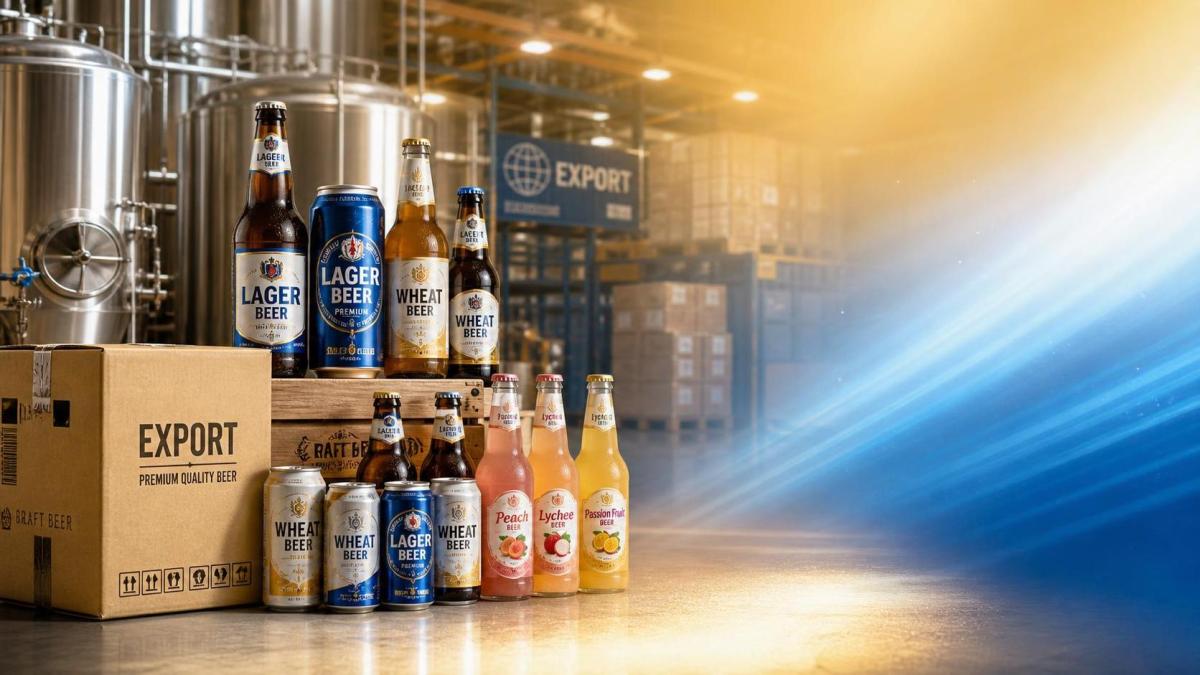
Classic lager typically provides familiarity, repeat purchase potential, and broad menu compatibility. It is often the product that supports stable replenishment in supermarkets, casual restaurants, and everyday retail. German wheat beer can offer a recognizable style cue and a softer, more aromatic alternative for venues seeking variety without moving into highly experimental craft territory.
Fruit-flavored beer is not simply a seasonal add-on. In the right market, it can create entry points for customers who prefer lighter bitterness or more expressive flavor. It often needs careful channel selection: a product suited to a relaxed bar, festival setting, or lifestyle retailer may not perform the same way in a traditional beer-led outlet. Its supply plan should also account for flavor consistency, shelf presentation, and the risk of carrying too many similar variants.
Sugar-free low-calorie beer deserves a separate commercial assessment. Demand for lighter choices is real in many markets, but the product needs a clear sensory proposition. Buyers will not reorder merely because the label uses a better-for-you message. The beer must still fit local expectations for taste, price, and occasion. It may work well as a portfolio extension where customers already seek moderation or lower-calorie choices, but it should not be assumed to be a universal replacement for full-strength mainstream beer.
Functional specialty beers require even more discipline. “Functional” language can create regulatory, labeling, and positioning questions across markets. The product should be reviewed for what claims can be communicated, how the ingredients are presented, and whether the intended channel can explain the proposition responsibly. A niche product can build differentiation; it can also become dead inventory if the commercial story is unclear.
Source diversification should follow a channel map
Supply decisions become clearer when they begin with the sales channel rather than the supplier catalog. A restaurant may need dependable keg availability, an accessible core range, and predictable replacement timing. A supermarket may place greater weight on shelf-ready packaging, barcode and label readiness, stable case configuration, and dependable replenishment. Bars may accept more rotation and experimentation, provided that the product has a credible service story and the supplier can maintain availability.
Online sales create another set of needs. Product photography, clear descriptions, multipack logic, shipping suitability, and stock visibility matter more than they do in a simple wholesale transaction. A product designed only for on-premise discovery can struggle online if the label and positioning do not communicate quickly.
This is why a broad product catalog alone is not a supply-chain strategy. The portfolio should be organized around channel use:
- Core products that can be replenished reliably across major accounts.
- Channel-specific products with a defined reason to exist, such as a retail-friendly multipack or a bar-focused specialty release.
- Test products brought in with limited initial exposure and a pre-agreed review point.
- Backup supply options for the products that create the greatest revenue or account risk.
A business supplying restaurants, supermarkets, bars, and mixed retail channels will rarely need exactly the same assortment everywhere. Trying to force every SKU through every channel usually increases discounting and slows rotation. A tighter range with a clear channel role is easier to forecast, sell, and replenish.
OEM and ODM can be part of diversification, but only with control points
Private-label and customized production can reduce dependence on a single branded import and allow a portfolio to fit local pricing, flavor preferences, packaging requirements, or retailer programs. It can also create more control over how products are positioned. However, OEM or ODM is not a shortcut around supply-chain complexity. It shifts the work from selecting finished products to managing specifications.
Before adding a customized beer program, define the non-negotiables: beer style, alcohol range where applicable, package format, artwork approval process, minimum production planning, quality-release expectations, lead-time assumptions, and responsibility for label adaptation. A vague brief creates disputes later, especially when the first shipment does not match the commercial expectation.
Jinpai Beer provides an example of a supplier model that can support a more diversified approach. Its range includes classic lager, German wheat, sugar-free low-calorie beer, fruit-flavored beer, and functional specialty beers, alongside wholesale supply and OEM/ODM options. For a business building a mixed portfolio, the practical value is not that every category must be listed. It is the ability to assess whether a core product, a differentiated line, or a customized format can be sourced through a coordinated production and distribution relationship.
The right question in supplier discussions is not “What is your full range?” It is “Which products can you supply consistently for our intended channels, what can be customized without creating unnecessary complexity, and how will changes be managed after launch?”
Common mistakes that make diversification expensive
Confusing more suppliers with more security. Two suppliers using the same production region, shipping route, packaging source, or sales season may not provide meaningful protection. Independence matters more than supplier count.
Adding categories without removing weak lines. Portfolio expansion should include an exit rule. If a new product does not achieve acceptable rotation, margin, or account uptake within the planned review period, its role should be reconsidered. Keeping every launch indefinitely ties up working capital.
Using one forecast for all beers. Core lager demand and seasonal fruit beer demand should not be forecast in the same way. The first may need deeper continuity stock; the second may need smaller, more frequent commitments to reduce aging and markdown risk.
Ignoring the operational cost of variety. Every extra SKU affects warehouse space, sales training, order accuracy, product data, and customer communication. A differentiated range works only when the organization can execute it.
Choosing on unit cost alone. A lower ex-works price can be offset by inconsistent availability, unsuitable packaging, higher minimum orders, slow rotation, or extra market adaptation work. Landed cost matters, but so does the cost of a missed customer commitment.
A practical way to decide what to diversify first
Start with the products and customers that would hurt most to lose. Map the top-selling beer styles, their current source, lead time, package format, and the accounts that rely on them. Then identify which item has no credible substitute. That is usually the first place where supply resilience should be improved.
Next, separate portfolio gaps from supply risks. A missing low-calorie option is a market opportunity question. A single-source lager is a continuity question. They may both lead to new supplier conversations, but they should be evaluated with different measures.
For each proposed addition, test five points before placing a full commitment:
- What channel and drinking occasion will it serve?
- Does it protect existing revenue, create new demand, or both?
- Can the business explain its difference in one clear sales conversation?
- Can inventory be replenished at a pace that fits its expected rotation?
- What happens if the original supplier or product plan changes?
A useful diversification plan normally begins with one or two priority changes, not a complete portfolio reset. It may involve securing an alternate source for a core beer, then introducing a limited differentiated range where channel demand supports it. That sequence preserves operational focus while giving the business evidence for the next decision.
What the market trend means in practice
The global beer supply chain is moving toward more flexible portfolios, more localized adaptation, and closer coordination between product development, production, and distribution. That does not mean imported beer loses its place. Origin, style authenticity, and brand story can remain valuable. It means origin should be balanced with the ability to serve the market reliably and profitably.
The strongest approach is usually a portfolio with a stable center and controlled variety around it: dependable core beers, a small number of relevant growth categories, supply alternatives where disruption would be costly, and production partners that can support changing channel needs. Diversification becomes worthwhile when it makes the next stockout, demand shift, or customer request easier to handle without turning the business into an unmanageable collection of products.
Thank you very much for writing to us. Please leave your message and contact information, we will reply to you within 24 hours.