



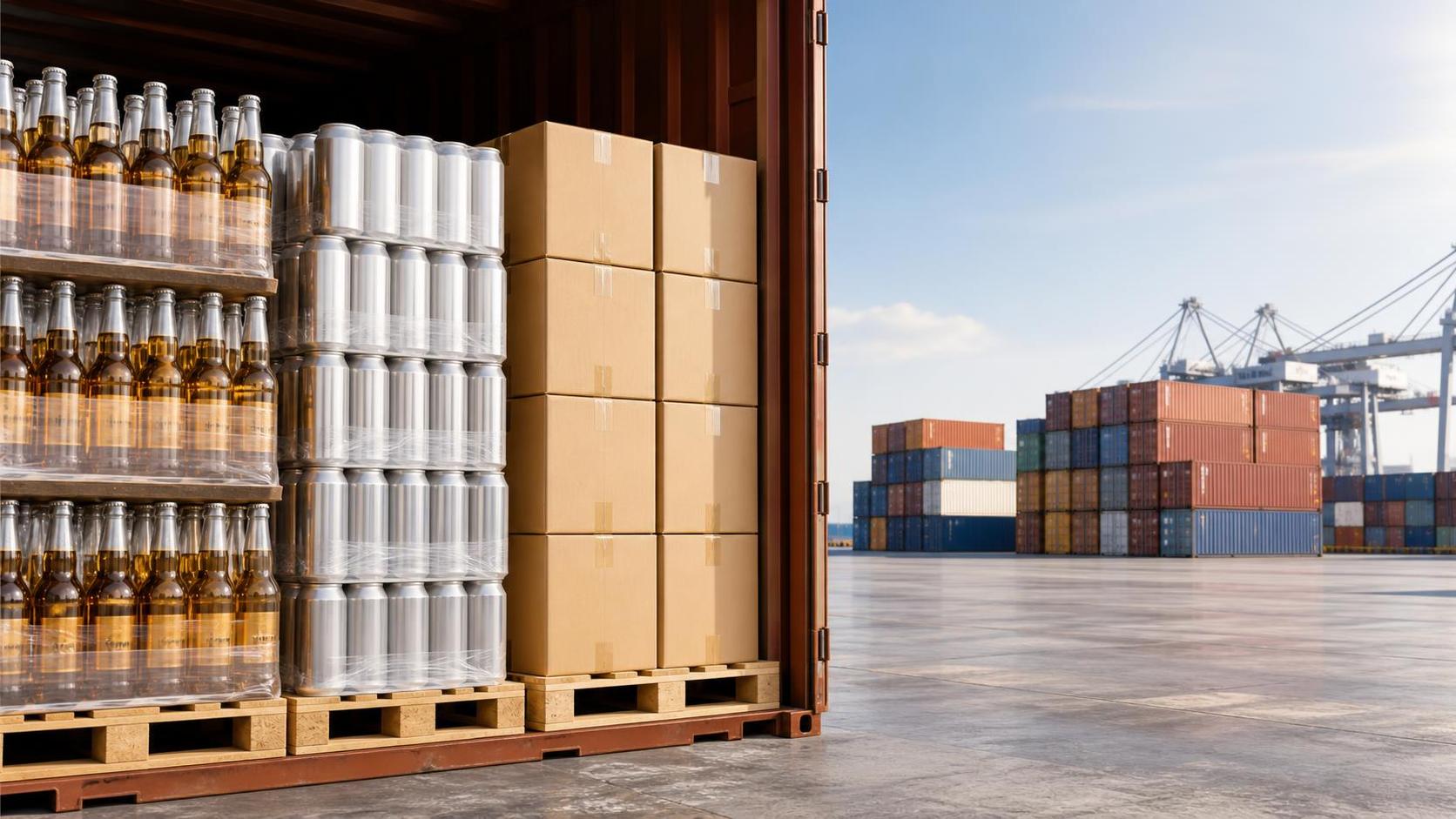
A beer quotation can look attractive until it reaches the destination warehouse. The unit price agreed with a brewery is only one part of the commercial picture; the number that ultimately matters to procurement is the landed cost: the total cost of getting saleable beer into the intended market, ready for distribution.
In the Global beer supply chain, landed cost is shaped by far more than the brewing process. Malt and hops move with agricultural cycles. Glass, aluminum, cartons and labels respond to commodity prices and regional manufacturing capacity. Freight conditions can change while an order is on the water. Customs rules may differ by beer style, alcohol content, packaging format or local product classification. For buyers sourcing craft beer, lager, wheat beer, fruit beer, low-calorie beer, or private-label OEM/ODM products, understanding these variables is central to protecting margin and avoiding expensive surprises.
The most useful approach is not to ask, “What is the beer price?” Ask instead: “What will this product cost us, in usable condition, at our chosen delivery point—and what could make that cost move?”
Start with the right landed-cost definition
For international beer procurement, landed cost usually includes the ex-works or FOB product price, export packing, inland transport to port, ocean or air freight where applicable, cargo insurance, destination port charges, customs clearance, import duties, excise taxes, local taxes, delivery to warehouse, and sometimes inspection, relabeling, or temperature-controlled storage.
That scope changes according to the Incoterm. A supplier’s FOB price may be appropriate for an experienced importer with established forwarders and customs brokers. A buyer working in a newer market may prefer a CIF, DAP, or another delivery structure because it provides more predictability. Yet a broader supplier quotation should still be unpacked. “Delivered” does not always mean every local tax, unloading cost, appointment fee, or warehouse charge has been included.
Procurement teams should build a cost sheet that separates known costs from variable costs. This makes it easier to compare suppliers fairly and to identify which party bears a risk when conditions change. A lower production price does not automatically produce a lower total acquisition cost.
Beer production costs begin long before the bottle is filled
Beer is a relatively bulky, liquid product, but its quality and commercial positioning begin with its recipe. Malted barley, wheat, hops, yeast, brewing water treatment, adjuncts, fruit preparations, sweeteners, and functional ingredients all affect the factory gate price. Their impact is especially visible in specialty and customized beverages.
A classic lager often has a more stable ingredient profile than a fruit-flavored or functional beer, but formulation simplicity does not remove exposure to raw-material volatility. Malt prices can be influenced by harvest quality, energy-intensive malting, and regional grain availability. Hop costs vary by variety, origin, crop conditions, and contract availability. A German-style wheat beer may require a different raw-material balance from a light lager, while a sugar-free low-calorie beer can demand additional process control or specialized ingredients to achieve its intended taste and nutritional profile.
For an OEM or ODM project, buyers should clarify whether the quoted formula is a standard brewery recipe, a modified existing product, or a new development. Product development, trial brewing, laboratory work, sensory reviews, packaging tests, and approval cycles may be separate costs. These should not be treated as hidden extras; they are part of the investment required to launch a differentiated product responsibly.
Alcohol content can affect more than the recipe
ABV influences material use, fermentation time, yield, excise exposure, labeling requirements, and sometimes transport or market-entry rules. In many importing countries, excise is calculated according to alcohol content, volume, or a combination of both. A small ABV adjustment may therefore affect the final shelf economics more meaningfully than expected.
Before approving a formula, check the target market’s tax bands and product definitions. A beverage positioned as beer in one jurisdiction may face a different category treatment elsewhere if it contains fruit, flavorings, botanicals, or functional components. Classification should be verified early, particularly for innovative beer-based products.
Packaging is often the largest cost lever buyers underestimate
Packaging protects the beer, communicates the brand, and determines how efficiently product moves through the supply chain. It can also be one of the most volatile cost components in the Global beer supply chain.
Glass bottles are familiar and premium-looking, but they add weight, increase breakage exposure, and raise freight cost per liter. Aluminum cans are lighter and protect beer from light, though can availability, minimum order quantities, printed artwork requirements, and regional recycling systems can influence their economics. Kegs are efficient for on-trade accounts, but require return logistics, cleaning, deposit administration, and compatible dispensing arrangements. Cartons, trays, shrink film, dividers, pallets, and corner protection all add to the delivered cost.
Customization introduces another layer. A standard-label product may be purchased with relatively short lead times, while printed cans, custom cartons, embossed bottles, special closures, or market-specific multipacks can require higher minimum volumes and longer production scheduling. The issue is not that customized packaging is inherently costly; it is that a buyer should understand how fixed artwork and setup costs are spread across the planned order volume.
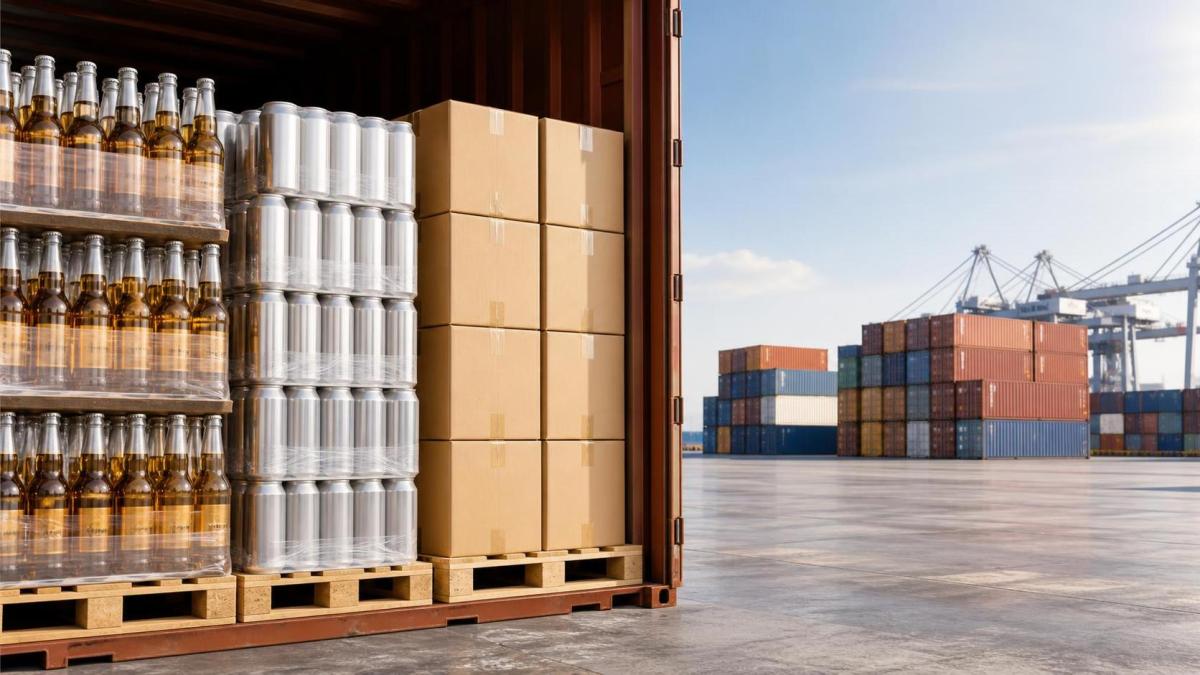
A practical procurement comparison should calculate cost by saleable liter, not just by case. It should also compare cubic utilization and gross weight. Two 24-pack formats can contain similar liquid volume but generate very different freight, damage, and handling costs. This becomes important when a business is supplying supermarkets, restaurants, bars, e-commerce fulfillment centers, and mixed retail channels from the same imported stock.
Freight is a moving target, not a line item to copy from an old order
Beer is heavy, and that fact shapes international sourcing decisions. Ocean freight is generally the natural mode for commercial volumes, but the total transport cost includes more than the headline freight rate. Origin drayage, terminal handling, container loading, documentation, surcharges, destination charges, chassis or demurrage exposure, and final-mile delivery can all shift the total.
Container utilization is critical. Buyers should review how many cases, trays, or pallets fit safely into a container, taking into account product dimensions, load limits, packaging strength, and destination handling practices. An underfilled container may preserve flexibility but can substantially increase logistics cost per case. Conversely, loading purely for maximum volume can create inventory pressure, higher working-capital needs, and greater risk if demand forecasts are not reliable.
Route choice matters as well. A direct sailing may cost more than a transshipment route but reduce transit uncertainty. A port with a low ocean rate may be less economical once inland transportation to the final warehouse is considered. Seasonal congestion, equipment shortages, labor disruption, geopolitical events, and fuel-related surcharges can alter the calculation quickly. Procurement teams should use current forwarder quotes for purchasing decisions rather than relying solely on a previous shipment’s freight history.
Temperature, shelf life, and handling losses belong in the model
Most packaged beer does not require a full cold chain in the way fresh dairy products do, but heat exposure, poor warehouse conditions, and prolonged transit can influence flavor stability, foam retention, and appearance. Hop-forward craft beer, fruit beer, and some specialty formulations may be particularly sensitive to poor storage practices. High temperatures can accelerate quality decline, while freezing conditions can damage containers.
Refrigerated transport may be justified for specific routes or products, but it increases cost and operational complexity. In many cases, the more commercially sensible answer is a combination of suitable packaging, sensible transit planning, clear storage instructions, and a shelf-life buffer appropriate to the market. The buyer should assess the expected age of the product at arrival, not merely the shelf life printed at production.
Allowance for breakage, leakage, damaged labels, rejected pallets, and short deliveries should also be considered. These losses may be small on a well-managed route, yet they are not imaginary. Agreeing claims procedures, inspection points, and evidence requirements before shipment is easier than negotiating after a damaged container is opened.
Taxes, tariff classification, and compliance can change the economics overnight
Import duty is only one component of border cost. Beer frequently carries excise obligations, and the applicable rate may depend on alcohol content, packaging volume, country of origin, or local tax regime. VAT, GST, sales tax, deposit-return charges, environmental fees, recycling contributions, and customs brokerage charges may also apply. Some of these are recoverable for certain importers; others become an unavoidable component of cost.
Correct HS classification is essential. A flavored malt beverage, a fruit-infused beer, or a functional specialty beer may need more detailed classification review than a conventional lager. Procurement should not assume that a product’s marketing name determines its customs treatment. Work with qualified customs advisers and verify the classification, origin rules, duty preference eligibility, and documentation requirements for the target country.
Compliance costs can extend beyond customs. Labels may need local-language information, alcohol warnings, ingredient and allergen declarations, nutrition panels, recycling marks, deposit codes, importer details, barcodes, or specific font sizes. Formula restrictions, permitted additives, sugar claims, and “low calorie” or “sugar-free” statements may require market-specific validation. If label changes are identified after packaging has been printed, the resulting rework can be far more expensive than early regulatory review.
Currency and payment terms quietly reshape the real purchase price
A brewery may quote in USD, EUR, RMB, or another currency, while the buyer sells in local currency. That creates exchange-rate exposure between purchase order, deposit payment, balance payment, customs entry, and final sale. A product that appears profitable on the day a quotation is received may look different when the invoice is settled several months later.
Payment terms also carry a cost, even when no finance charge is visible. A large deposit paid well before shipment ties up cash. Long transit times extend the period before inventory can generate revenue. A buyer ordering customized beer may need to fund packaging materials before production begins, especially where printed cans or cartons are involved. These are legitimate commercial realities, but they should be included in a total-cost and cash-flow view.
For recurring programs, buyers may consider agreed price-validity windows, transparent raw-material adjustment mechanisms, or currency-risk management through their own financial arrangements. The appropriate method depends on order frequency and risk tolerance, but doing nothing is still a decision with financial consequences.
Supplier capability affects cost through reliability, not just price
When comparing breweries, procurement teams naturally look at unit price, capacity, and lead time. The more revealing question is whether the supplier can consistently execute the agreed specification. A late shipment can create stockouts. Incorrect label language can stop goods at the border. Inconsistent packaging dimensions can disrupt pallet planning. A product that does not match approved samples can damage relationships with distributors and retail buyers.
For a supplier such as Jinpai Beer, which develops and produces classic lager, German wheat beer, sugar-free low-calorie beer, fruit-flavored beer, and functional specialty beers, the sourcing discussion should connect product ambition with operational detail. Buyers considering wholesale supply or OEM/ODM development should ask about available packaging options, minimum order quantities, production lead times, artwork approvals, export documentation, load planning, and the process for managing formula or label revisions.
It is also worth asking what is standardized and what is flexible. Standard products may offer faster replenishment and simpler planning. Customized solutions can create stronger brand distinction for a restaurant group, supermarket program, bar network, or regional distributor, but require more disciplined forecasting. Neither route is universally better. The right choice depends on projected volume, desired market positioning, and the cost of carrying inventory.
A buyer’s working checklist before issuing a purchase order
- Confirm the commercial Incoterm, named place, and which charges are included or excluded.
- Calculate product cost by saleable liter and by case, including packaging configuration.
- Request current freight assumptions and compare full-container, consolidated, and alternative port options where relevant.
- Verify tariff classification, duty, excise, tax treatment, and country-of-origin documentation.
- Review label, deposit, recycling, ingredient, allergen, and alcohol-marking requirements before printing.
- Check shelf life at arrival, expected transit conditions, and the process for handling quality claims.
- Model currency movement, payment timing, inventory carrying cost, and potential customs delays.
- Document specifications for ABV, pack size, pallet pattern, artwork, barcode, and acceptable delivery windows.
Make landed cost a decision tool, not a post-shipment calculation
The most resilient beer procurement programs treat landed cost as a living model. It should be updated when packaging changes, freight markets move, a new country is added, a beer’s ABV is revised, or a private-label project moves from trial volume to regular replenishment. This discipline helps buyers see whether a lower-cost source is genuinely competitive after transport and compliance, or simply appears so at the factory gate.
In the global beer supply chain, dependable value comes from aligning beer style, package format, route, tax treatment, and supplier execution with the realities of the destination market. When those elements are evaluated together, procurement can make decisions with fewer surprises—and bring the right beer to customers with margins that still make sense.
Thank you very much for writing to us. Please leave your message and contact information, we will reply to you within 24 hours.