



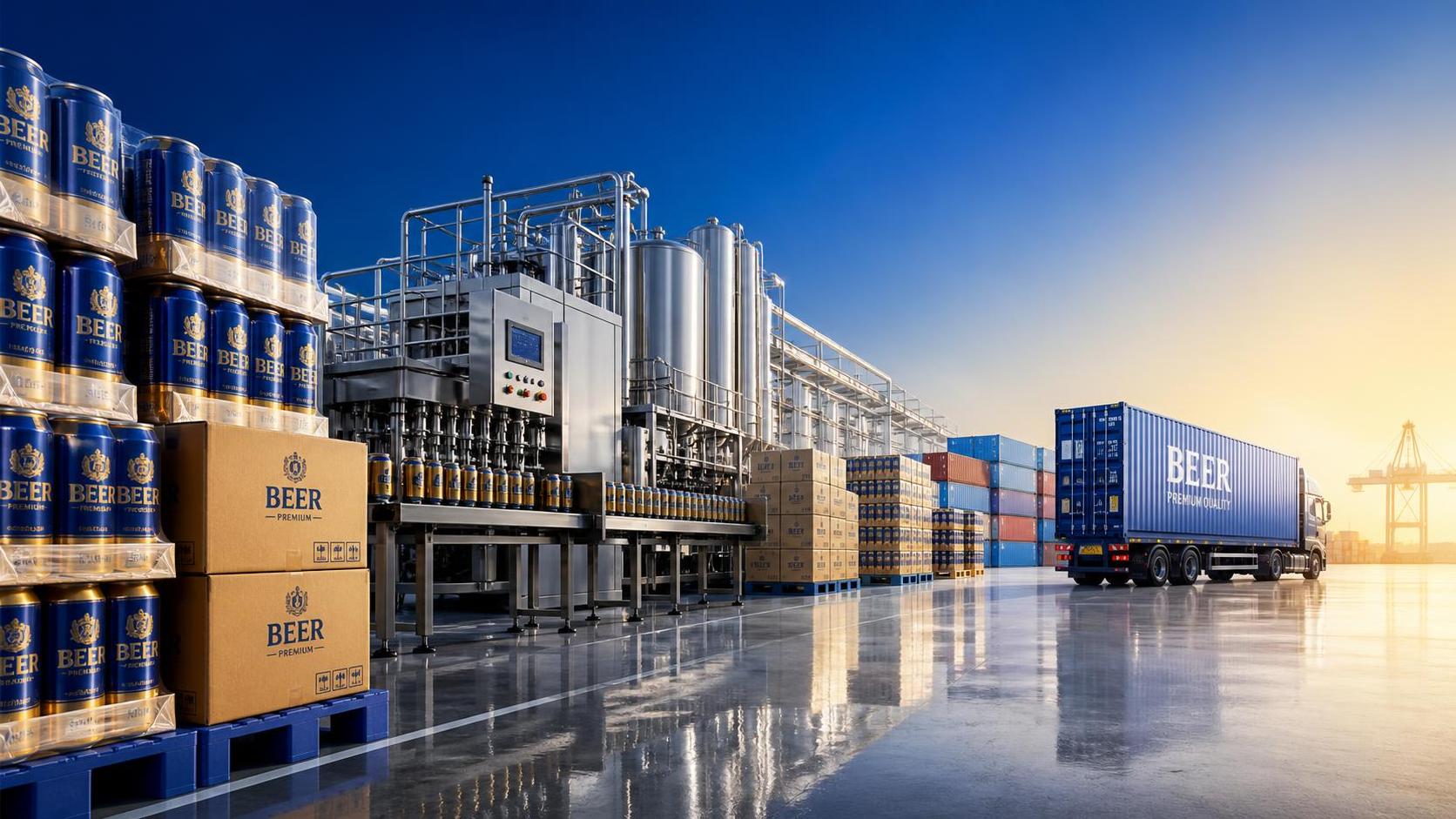
Reduce delays by managing flow, not isolated shipments
Breweries reduce delays in the global beer supply chain when they treat supply, production, packaging, inventory, and transport as one connected operating flow. Expediting a late container or adding a second freight forwarder may solve an immediate problem, but it rarely addresses the conditions that created the delay. The more durable approach is to identify where time is being lost, decide which products need protection, and create options before a disruption reaches the customer.
For operators, the priority is usually not to eliminate every delay. International beer distribution will always involve variable lead times, port congestion, customs procedures, changing demand, and supplier constraints. The practical goal is to prevent normal variation from becoming a stockout, a missed launch, an out-of-specification delivery, or a production stop. That requires visibility into the full lead time, disciplined planning, and enough flexibility to respond without compromising beer quality.
A brewery selling several formats or styles may face different supply-chain risks at the same time. A classic lager with stable demand can be planned around repeatable replenishment cycles. Seasonal fruit beer, low-calorie beer, wheat beer, and small-batch specialty products may require shorter planning loops because demand can shift faster and shelf-life exposure may be higher. Applying one inventory rule to every SKU often creates either excess stock or repeated shortages.
Start with the lead time customers actually experience
Many breweries calculate lead time from the moment finished beer leaves the warehouse. That is too narrow for operational planning. The relevant lead time starts when the business commits to supply a market or customer and ends when saleable product is available at the destination. It can include raw-material ordering, brewing and conditioning, packaging-material availability, quality release, export documentation, loading appointments, international transit, customs clearance, inland delivery, and receiving at the distributor or retailer.
Mapping this sequence exposes delays that are easily missed when departments work separately. For example, brewing may finish on schedule while printed cans are late, export labels have not been approved, or a shipment misses a vessel cutoff because the quality-release process was not aligned with the booking date. None of these issues is technically a brewing delay, yet each can postpone market availability.
Build the map around actual handoffs rather than standard lead times in an ERP system. Record when work is ready, when the next party can accept it, and why it waits. A useful review should distinguish between:
- Process time: the time spent brewing, conditioning, filling, inspecting, picking, or transporting.
- Queue time: the time product waits for a tank, packaging line, warehouse slot, booking, document approval, or customs action.
- Reliability risk: the stages where timing changes materially from one order to another.
- Quality-sensitive time: the periods when extra delay affects freshness, temperature exposure, carbonation, package condition, or remaining shelf life.
This distinction helps teams focus on the right problem. A four-day ocean transit variation may be manageable if stock and shelf life allow for it. A two-day hold before packaging may be much more damaging if it causes a brewery to lose a filling slot and wait another week. The largest average time is not always the most important source of disruption; the least predictable handoff can create the greatest operational damage.
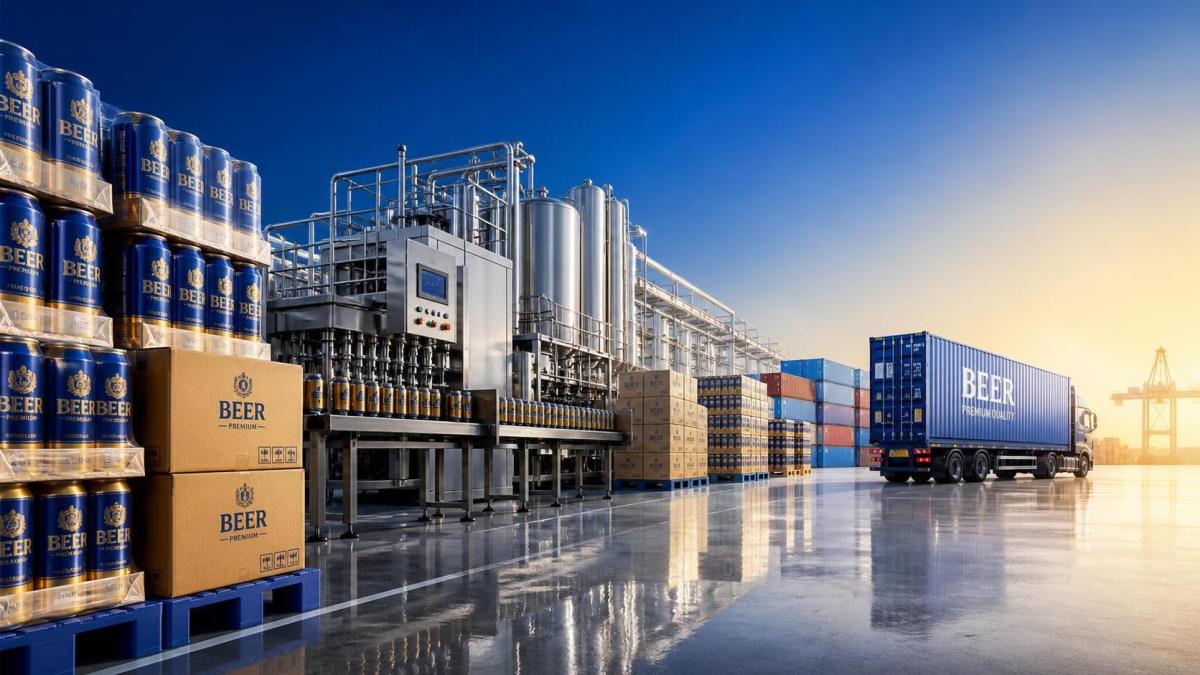
Protect the constraints that stop the whole chain
Brewing capacity is visible, but it is not always the binding constraint. In cross-border beer operations, packaging materials, approved labels, export-ready pallets, cold-storage space, certificates, and container availability can become the limiting factor. A brewery can have finished liquid ready while being unable to turn it into compliant, shippable product.
Packaging deserves particular attention because it connects production, brand requirements, logistics, and local compliance. Cans, bottles, closures, cartons, trays, labels, and shrink materials may have different replenishment cycles and supplier dependencies. Highly customized packaging increases brand differentiation, yet it also increases the cost of late artwork approval, minimum-order commitments, and supplier disruption. Where appropriate, breweries can reduce risk by standardizing components that customers do not need to see, while reserving market-specific customization for the elements that are commercially or legally necessary.
This does not mean every brewery should move to generic packaging. It means the team should know which component would stop shipment if it failed to arrive. Those items deserve earlier ordering signals, clear ownership, and more conservative reorder points than low-impact materials.
Ingredient planning requires the same discipline. Some materials can be substituted within an approved recipe framework; others define the expected character of the beer and cannot be changed without commercial or quality consequences. Before a shortage occurs, production, quality, procurement, and sales should agree on which substitutions are acceptable, which require customer notification, and which products should simply not be scheduled without confirmed supply. Trying to settle those questions after production has been promised is a common cause of avoidable delay and rework.
Segment products by replenishment risk, not just sales volume
Inventory is often discussed as a tradeoff between cash and service. For beer, that view is incomplete because inventory also carries freshness and quality implications. Holding more finished goods may protect service levels, but it can reduce the usable selling window, especially when international transit and distributor handling are uncertain. Holding too little inventory exposes the operation to missed orders and costly last-minute freight decisions.
A better approach is to segment products according to demand predictability, production frequency, packaging complexity, destination lead time, and shelf-life sensitivity. High-volume items with stable demand may support a planned safety stock at the destination or regional warehouse. Specialty beers with variable demand may be better served through scheduled order windows, smaller but more frequent production decisions, or a made-to-order model with a clearly communicated lead time.
The distinction matters for distributors as well. A distributor may request a broad range to satisfy restaurants, bars, supermarkets, and online channels, but broad availability is only reliable when each SKU has a defined replenishment model. A brewery should avoid treating every item as permanently available simply because it appears in a catalogue. Products should be classified internally as stocked, planned, limited-run, seasonal, or customer-order items, with different order rules for each.
Forecasts remain useful, but they should be treated as planning inputs rather than promises. Sales teams and distributors often have the closest view of upcoming promotions, menu placements, retailer resets, and local holidays. That information should reach production planning early enough to influence raw-material and packaging decisions. A monthly forecast received after the packaging plan is locked has limited value.
Use supplier redundancy carefully
Adding suppliers can reduce exposure, but dual sourcing is not automatically a solution. A second supplier that uses a different specification, lead time, quality system, or delivery location can create more operational work than it removes. Redundancy works when alternatives are qualified before an emergency and when the operating team knows exactly when to switch.
For critical inputs, breweries should maintain practical supplier visibility: confirmed production windows, order status, shipment status, expected delivery date, and escalation contact. Procurement teams also need to understand supplier constraints that may not be visible on a purchase order, such as production sequencing, minimum batch sizes, seasonal raw-material availability, or allocation rules during high demand.
Qualification should cover more than price and basic product conformity. Consider whether an alternate supplier can meet the required technical specification, packaging format, food-safety documentation, volume requirement, and delivery schedule. For imported ingredients or materials, confirm whether documentation and customs classification are consistent with the intended trade route. A backup source discovered only after the primary supply fails is usually an untested option, not a reliable contingency.
Plan transport around beer quality and delivery certainty
Transport decisions should be based on the destination’s service requirement, product sensitivity, shipment size, and total lead-time variability. The cheapest freight option may be reasonable for replenishment stock with a wide shelf-life margin. It may be unsuitable for a launch, a limited seasonal release, or an order where the distributor needs product for a confirmed event.
Breweries should avoid relying on one assumed transit time. Instead, planners need a working range: best-case movement, normal movement, and disruption movement. That range should be connected to production dates, remaining shelf life, booking cutoffs, and customer commitments. When the chain is operating close to its time limit, small delays at several stages can compound into an unusable delivery window.
Temperature management also belongs in this discussion. Not every beer requires the same transport condition, but all beer shipments should be assessed for the conditions likely to affect flavor stability, package integrity, and appearance. Long exposure to unsuitable temperatures, extended storage in uncontrolled areas, or repeated handling may not stop a shipment from arriving, yet it can create quality complaints after delivery. The logistics plan should specify handling expectations, receiving checks, and escalation steps when the product is held outside agreed conditions.
Shipping documentation should be prepared as an operational task, not a final administrative step. Invoice descriptions, packing details, product codes, certificates, destination labeling, and other required documents must align with the physical shipment. A document mismatch can hold cargo even when every other part of the order has been executed correctly. Assign ownership for document completion and establish an internal cutoff before the freight deadline, leaving time to correct errors.
Create a control routine that operators can use
Complex planning tools can help, but delay reduction often begins with a disciplined operating rhythm. A short cross-functional review can bring procurement, brewing, packaging, quality, warehouse, export, and sales into the same picture. The purpose is to identify exceptions early, not to repeat status updates that each department already knows.
The review should focus on orders at risk in the next several weeks: missing materials, constrained production slots, unfinished documentation, unconfirmed bookings, insufficient destination stock, or shipments approaching a shelf-life threshold. Each exception needs one owner, one next action, and a decision date. Vague statements such as “follow up with the supplier” do not reduce uncertainty unless they are linked to a specific confirmation or contingency decision.
A simple escalation hierarchy prevents teams from reacting too late. If a raw material is delayed, the decision may be to change the production sequence. If packaging is delayed, the brewery may preserve capacity for another SKU and reschedule the affected order. If a vessel booking is missed, the response may be to reallocate stock from a regional warehouse, adjust a customer delivery date, or use a different service level for a priority shipment. The right response depends on margin, customer importance, freshness, and operational feasibility, but the options should be considered before the order becomes critical.
Measure reliability, then improve the right failure point
On-time shipment is useful, but it can hide problems. An order may leave the brewery on time while arriving late, arriving with too little shelf life, or requiring costly emergency action to meet its date. Track performance across the full order cycle: material availability when scheduled, production completion as planned, packaging release, booking confirmation, departure, destination clearance, and receipt by the customer or distributor.
Review the reasons behind exceptions in a consistent way. Was the delay caused by an inaccurate forecast, a late purchase order, insufficient packaging stock, a quality-release hold, an incomplete document, carrier schedule variability, or poor coordination at the destination? The goal is not to assign blame to one function. It is to separate recurring system failures from isolated events and then change the rule, buffer, approval timing, or communication process that allowed the failure to recur.
Breweries that improve the global beer supply chain most effectively usually make fewer last-minute commitments, not more. They define realistic order cutoffs, protect the components that constrain output, keep inventory aligned with freshness and demand risk, and make shipment decisions with the full delivery window in view. That discipline gives operators more room to respond when disruption occurs, while giving distributors and retail customers a more dependable supply of beer.
Thank you very much for writing to us. Please leave your message and contact information, we will reply to you within 24 hours.