



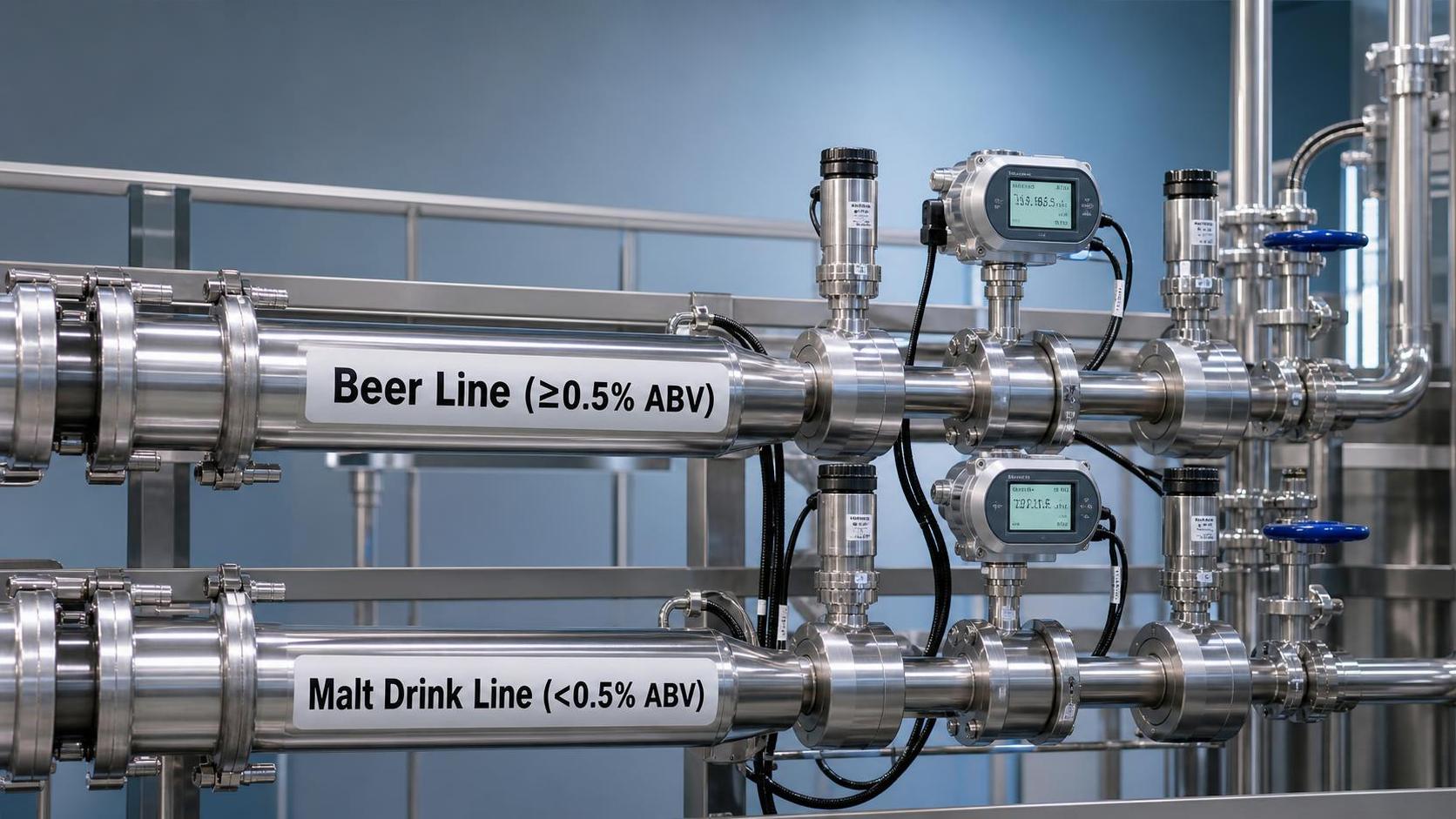
Navigating regulatory pathways for a beer factory or malt drink factory in ASEAN isn’t just about checking boxes—it’s about anticipating where systems collide. Many business evaluators assume that if a facility produces both alcoholic beer and non-alcoholic malt beverages, they can apply one set of rules to the whole operation. That assumption leads to delays: applications rejected mid-review, tax assessments recalculated retroactively, labels pulled from shelves after customs clearance, or production lines halted pending reclassification. These aren’t edge cases—they’re routine friction points when dual-use facilities operate across jurisdictions with divergent definitions of “beer,” “malt beverage,” and “alcohol-free.” The problem isn’t lack of regulation; it’s regulatory overlap—where licensing thresholds, excise tax brackets, and labeling triggers intersect unpredictably.
The impact compounds quickly. A single misclassified batch may trigger penalties in Thailand while being fully compliant in Vietnam. A label approved in Malaysia may fail Singapore’s bilingual font size requirement—or worse, violate Indonesia’s prohibition on terms like “refreshing” or “energizing” for malt-based drinks. For evaluators assessing OEM/ODM partnerships or wholesale expansion, these inconsistencies affect more than paperwork. They shape facility layout (separate fermentation vs. shared brewing tanks), documentation architecture (one master dossier or market-specific annexes), and even raw material sourcing (barley vs. malt extract specifications). Without mapping how each country treats the same physical product under different legal umbrellas, investment decisions rest on incomplete operational intelligence.
Start by recognizing that ASEAN doesn’t harmonize definitions. In Thailand, a beverage with ≤0.5% ABV is classified as a “non-alcoholic malt drink”—but only if it contains no added alcohol and uses traditional malting methods. In contrast, the Philippines regulates all fermented malt beverages under the Alcohol Tax Code regardless of final ABV, unless certified as “non-fermented” by the FDA—a designation requiring lab verification of zero yeast activity post-production. Malaysia applies tiered excise duties based on ABV *and* sugar content, meaning a low-calorie fruit-flavored beer might fall into a higher tax band than a classic lager with identical alcohol levels. These distinctions force evaluators to treat each market as a separate compliance unit—not just for labeling, but for facility design and process validation.
Licensing reveals deeper complexity. Cambodia requires separate manufacturing licenses for “alcoholic beverages” and “non-alcoholic malt-based drinks,” even if produced on the same line—each demanding distinct facility audits, water testing protocols, and staff training records. Indonesia, meanwhile, bundles both under its BPOM food license but imposes stricter microbial limits on non-alcoholic versions, treating them as ready-to-drink products rather than fermented goods. This means your same pasteurization step may satisfy one jurisdiction’s alcohol stabilization requirement but fail another’s pathogen control standard for non-alcoholic products. There’s no universal “dual-use” license—only layered, jurisdiction-specific authorizations that must be sequenced, not stacked.
Tax classification often hinges on analytical testing—not just declared specs. In Vietnam, customs authorities routinely test imported malt beverages for residual ethanol using gas chromatography, even if labeled “0.0% ABV.” A result above 0.05% ABV triggers full excise duty application, regardless of marketing claims. Similarly, Singapore’s Customs requires submission of full fermentation logs—not just final ABV—for any malt-based product entering duty-free zones, because “non-alcoholic” status depends on whether alcohol was ever generated during processing, not just removed afterward. This means production documentation must capture time-temperature profiles, yeast strain IDs, and filtration methods—not just end-product certificates.
Labeling overlaps are where assumptions break down fastest. A label compliant in Laos (which permits “malt beverage” as a standalone category) will likely violate Myanmar’s requirement that all malt-derived products declare “contains barley” and “may contain traces of gluten” in Burmese script—even if gluten-free. Brunei mandates that all malt drinks list total carbohydrate content per 100ml, but only if the product contains >2g/100ml sugar; yet its definition of “sugar” includes maltose and dextrose, not just sucrose. So a sugar-free low-calorie beer using isomaltulose may still require that declaration, while a fruit-flavored version sweetened with apple juice concentrate may not—despite higher total carbs. These aren’t formatting details; they’re legal triggers tied to ingredient behavior, not naming conventions.
For Jinpai Beer’s global partners evaluating OEM/ODM or wholesale opportunities, this means due diligence starts before site selection. Ask: Does the proposed facility have separate water supply lines for alcoholic and non-alcoholic production? Are fermentation tanks calibrated to log real-time ABV curves—not just endpoint readings? Can your QA team generate validated test reports showing ethanol degradation over time for non-alcoholic batches? If not, you’ll face repeated re-submissions in markets like Thailand or the Philippines. Also verify whether local regulators accept third-party lab reports from accredited ASEAN labs—or demand in-country testing. Some countries, like Indonesia, require BPOM-registered labs only; others, like Vietnam, accept ISO/IEC 17025 reports if the lab appears on Vietnam’s national recognition list.
Operational scalability depends less on equipment capacity and more on documentation modularity. Instead of building one master dossier, structure technical files around three core modules: (1) raw material traceability (including malt source, yeast strain, and adjuncts), (2) process parameters (fermentation duration, temperature bands, filtration method), and (3) finished product analytics (ABV, residual sugar, pH, microbiological counts). Each module must be version-controlled and cross-referenced to specific regulatory clauses—not generic “food safety standards.” This allows rapid adaptation: swapping Module 2 for Malaysia’s sugar-content-based tax rules, or adding Module 3 annexes for Singapore’s fermentation-log requirement.
Finally, don’t rely on distributor-provided compliance summaries. They often reflect historical practice—not current enforcement trends. Check recent rulings: Thailand’s FDA issued updated guidance in Q2 2024 clarifying that “functional specialty beers” containing added vitamins must comply with dietary supplement labeling rules *in addition to* beer regulations. Vietnam’s General Department of Vietnam Customs published new inspection criteria in March 2024 targeting malt beverages with botanical extracts—requiring botanical origin certificates and heavy metal screening reports previously waived for standard lagers. These shifts mean last year’s compliant setup may no longer suffice.
Regulatory feasibility in ASEAN isn’t determined by whether you meet requirements—but whether your facility, documentation, and decision logic can pivot across them without redesign. Dual-use operations work only when compliance is treated as an integrated system—not a checklist applied once per market.
Thank you very much for writing to us. Please leave your message and contact information, we will reply to you within 24 hours.