



For enterprise decision-makers evaluating production partnerships in emerging markets, choosing between a beer factory and a malt drink factory is a strategic ROI decision—not just a manufacturing one. With health-conscious consumers driving demand for low-calorie, sugar-free, and functional beverages, the operational realities of each facility type directly shape cost structure, time-to-market, regulatory flexibility, and long-term margin sustainability. This comparison focuses on tangible inputs: raw material sourcing constraints, fermentation vs. non-fermented processing, shelf-life implications, labeling compliance across jurisdictions, and the inherent scalability of formulation iteration.
Raw Material Sourcing and Input Cost Volatility
A malt drink factory typically relies on malt extract, corn syrup solids, caramel colorants, and added vitamins—ingredients subject to high price volatility due to agricultural commodity cycles and regional tariff regimes. Malt extract, for instance, requires consistent barley supply, drying, roasting, and enzymatic conversion—all adding layers of procurement risk in markets with fragmented grain infrastructure. In contrast, a modern beer factory uses base malt, adjunct grains, hops, yeast, and water as primary inputs. While barley remains sensitive to climate conditions, the broader range of acceptable adjuncts—rice, sorghum, millet, cassava starch—enables localized sourcing in many emerging economies. This reduces freight dependency, import duties on finished extracts, and foreign exchange exposure. More critically, yeast propagation and controlled fermentation allow for precise attenuation control, meaning residual sugars—and thus final calorie content—can be tuned without adding artificial sweeteners or enzyme inhibitors that complicate label declarations.
Processing Infrastructure and Energy Efficiency
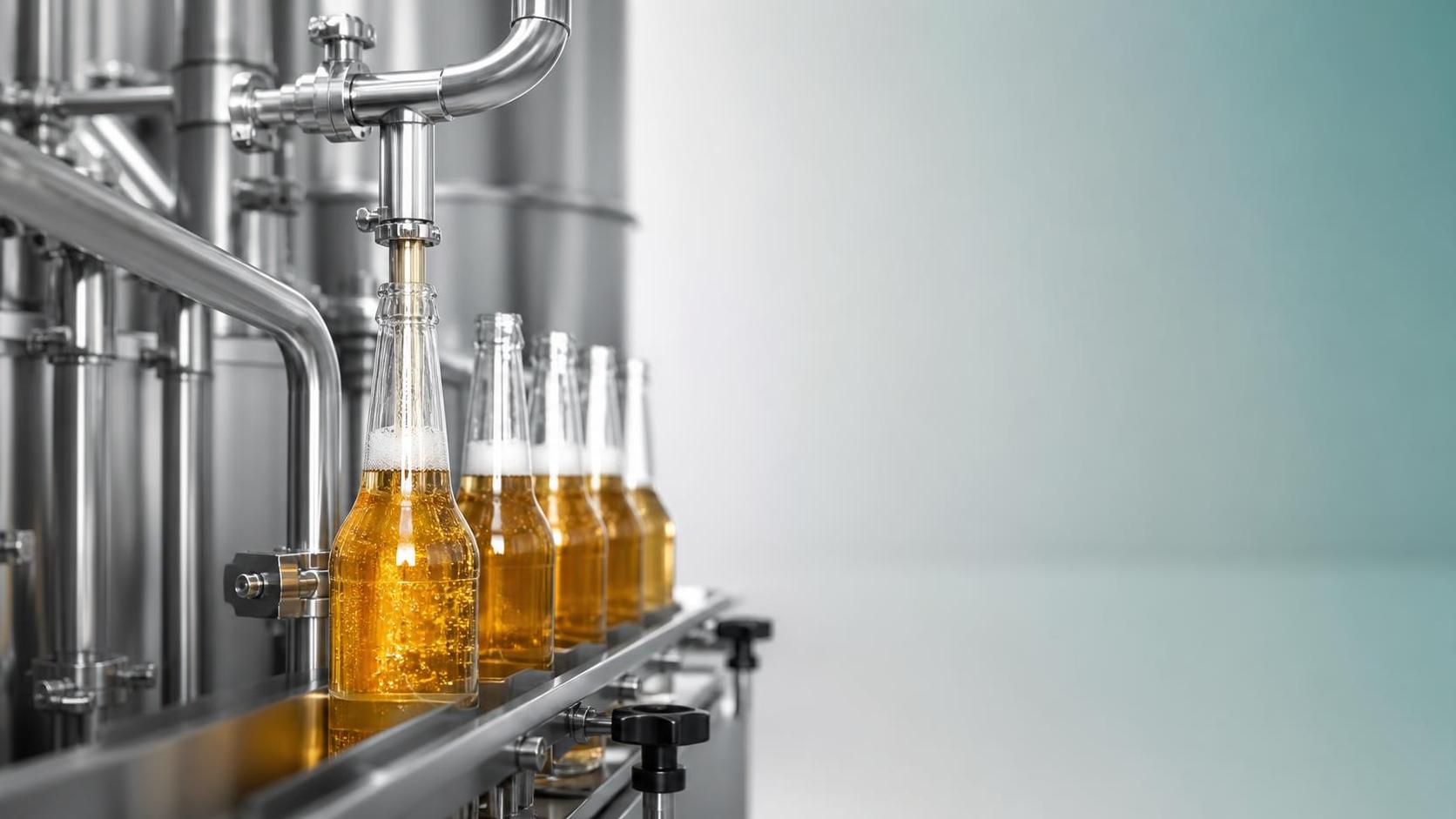
Malt drink production often follows a hot-fill, high-pasteurization model: blending, heating to 85–95°C for microbial stability, then hot-filling into PET or aluminum cans. That process demands significant thermal energy and limits container options—glass and certain lightweight cans cannot withstand sustained heat. A beer factory, by contrast, operates under cold-chain-compatible protocols after primary fermentation. Filtration, carbonation, and sterile bottling at ambient temperature reduce per-unit energy consumption by up to 30% in comparative facility audits. Moreover, cold-fill lines support wider packaging formats—including returnable glass, aluminum slim cans, and recyclable mono-material pouches—without reformulating preservative systems. This matters where retail refrigeration is intermittent: a malt drink’s reliance on thermal stabilization makes it vulnerable to temperature abuse during last-mile delivery, accelerating off-flavor development and shortening viable shelf life from 12 months to under 4.
Regulatory Pathways and Labeling Agility
In most ASEAN, African, and Latin American jurisdictions, malt drinks fall under soft drink regulations—subject to strict sugar-content caps, mandatory front-of-pack warnings, and restrictions on functional claims like “supports digestion” or “vitamin B complex.” Beer, however, is classified separately. Though alcohol content triggers excise duties, it also unlocks access to functional ingredient allowances not permitted in non-alcoholic categories: certain botanicals, adaptogens, probiotic strains, and amino acid fortifications can be incorporated within defined ABV thresholds (e.g., ≤0.5% or ≤1.2%, depending on country). This allows formulation teams to respond rapidly to local health trends—adding tart cherry extract for recovery positioning in Brazil, or moringa leaf powder for iron fortification in Nigeria—without triggering full re-registration as a new food category.
Formulation Iteration and Shelf-Life Economics
Developing a new malt drink variant usually requires full-scale pilot batches to validate viscosity, sedimentation behavior, and thermal stability—leading to 8–12 weeks of lead time before market testing. Beer formulations benefit from modular yeast strain selection and hop oil infusion techniques that permit rapid prototyping: changing bitterness units (IBUs), adjusting ester profiles, or introducing post-fermentation botanical infusions can be validated in under 10 days using existing fermentation vessels. Crucially, the natural acidity and ethanol content of beer provide inherent microbial suppression, reducing dependence on potassium sorbate or sodium benzoate—preservatives increasingly restricted in key export markets like Kenya and Vietnam. Longer ambient shelf life—typically 6–9 months versus 3–5 for malt drinks under similar storage conditions—lowers inventory carrying costs and mitigates write-offs from heat-damaged stock.
Distribution Channel Alignment
Malt drinks are often positioned alongside sodas and juices, competing for chilled shelf space in supermarkets and convenience stores—categories facing intensifying scrutiny over added sugar. Beer, even at low ABV, occupies distinct retail real estate: dedicated cooler sections, bar back bars, and specialty beverage aisles where health-aligned positioning resonates more credibly. Consumers in Jakarta, Lagos, and Bogotá increasingly associate lightly hopped, fruit-infused, or zero-sugar craft-style beers with wellness-oriented choices—not recreation alone. This perception shift enables premium pricing without requiring structural reformulation; a sugar-free lager priced at $1.80/unit achieves gross margins 12–18 percentage points higher than an equivalently positioned malt drink priced at $1.45, primarily due to lower preservative, stabilizer, and thermal processing inputs.
Supply Chain Resilience and Local Compliance
Malt drink factories frequently rely on imported flavor concentrates and vitamin premixes, creating customs bottlenecks when documentation fails to meet evolving local food safety standards—especially for synthetic additives banned in multiple Andean and East African nations. Beer factories source core ingredients regionally and use only GRAS- or EFSA-approved processing aids, simplifying documentation and reducing clearance delays. Fermentation itself acts as a built-in quality gate: inconsistent yeast performance or contamination becomes visible early in batch monitoring, allowing corrective action before packaging. Malt drink production lacks this biological feedback loop; microbial spoilage may only surface post-filling, resulting in costly recalls and brand erosion in tightly networked social commerce environments.
The ROI differential emerges not from theoretical efficiency metrics but from how each facility type absorbs real-world friction: fluctuating input costs, uneven cold chain coverage, shifting regulatory boundaries, and the increasing consumer expectation that health alignment need not mean compromise on sensory experience. Facilities designed around fermentation-based production offer tighter control over caloric profile, faster adaptation to local ingredient availability, and fewer structural barriers to functional innovation—all converging toward stronger unit economics in markets where trust, transparency, and taste are inseparable.
Thank you very much for writing to us. Please leave your message and contact information, we will reply to you within 24 hours.