



Why Malt Drink Factories Often Underestimate Water Treatment Needs for Beer Production — Hardness, Chlorine, and Silica Implications
Time : Aug 25, 2026
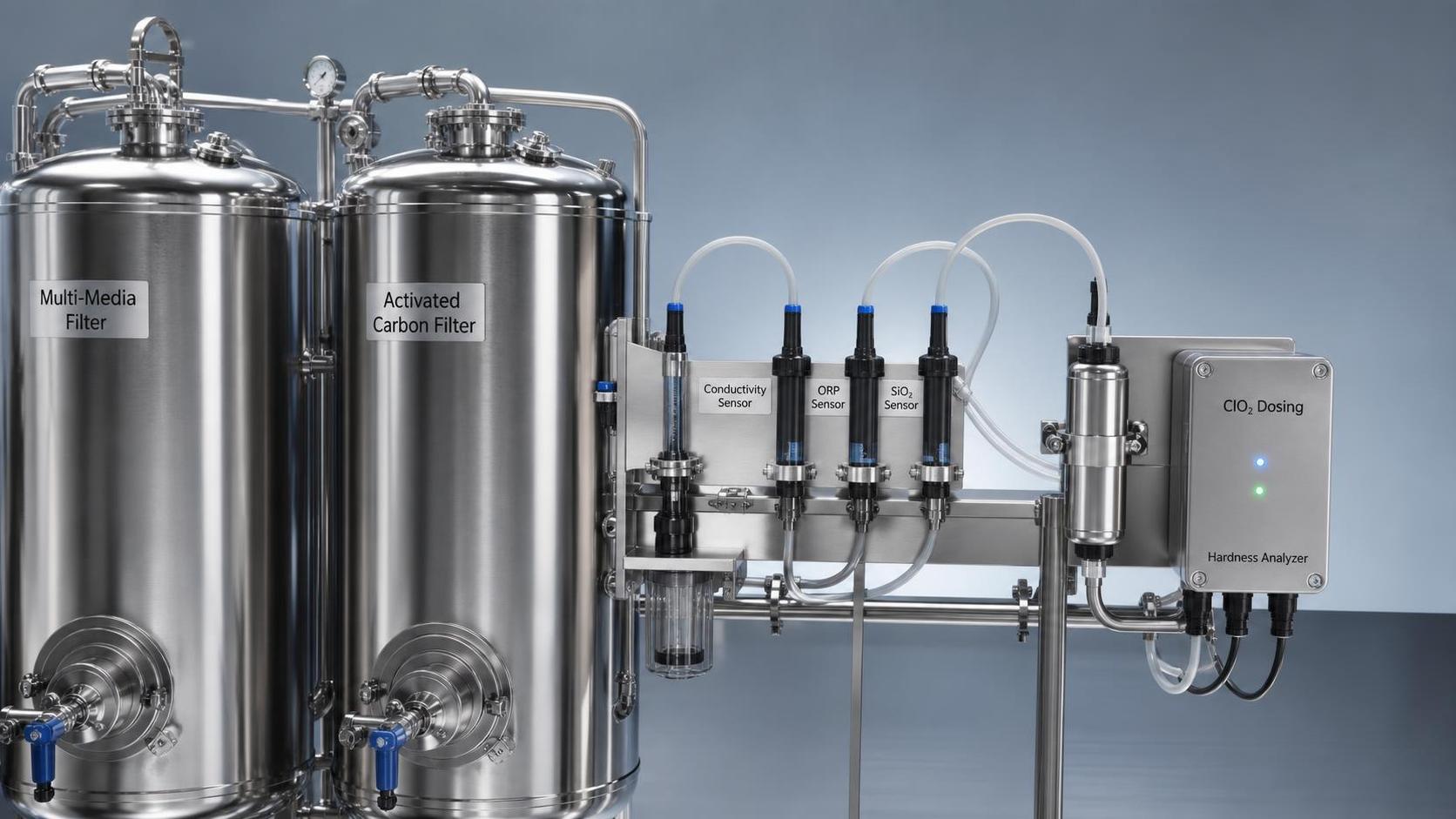
Beer factory and malt drink factory operators frequently overlook how critical water treatment is to consistent beer quality—especially when brewing craft styles like German wheat or low-calorie lagers. At Jinpai Beer, our R&D and OEM/ODM processes reveal that unaddressed water hardness, residual chlorine, and silica levels directly impact mash efficiency, yeast health, and final flavor stability. For technical evaluators assessing production scalability or water system upgrades, underestimating these parameters risks batch inconsistency, filtration challenges, and accelerated equipment scaling. This article breaks down the often-missed interplay between raw water chemistry and brewery performance.
Water isn’t just a solvent in brewing—it’s an active ingredient. Unlike soft drinks or spirits, beer relies on precise ionic interactions during mashing, fermentation, and stabilization. Yet many malt drink factories treat water as a passive input: “It meets municipal standards, so it’s fine.” That assumption fails at scale—and collapses entirely when product portfolios diversify beyond basic lagers into sensitive styles requiring tight ion control.
Hardness—specifically calcium and magnesium—is routinely misjudged. High Ca²⁺ supports enzyme activity in the mash tun and aids yeast flocculation, but excessive Mg²⁺ (>30 ppm) suppresses α-amylase and promotes off-flavors like astringency or metallic notes. More critically, hardness interacts with sulfate and chloride ratios. A water profile optimized for a hop-forward IPA may destabilize a delicate German wheat beer where low sulfate (<50 ppm) and balanced Ca:Mg ratios (<3:1) are essential for clean ester expression and haze stability. Technical evaluators reviewing water specs must map hardness not as a single number, but as a *ratio-driven system*—and verify whether lab reports reflect total hardness (as CaCO₃) or individual cation concentrations. Many municipal reports list only total hardness, obscuring magnesium’s contribution—a blind spot that becomes costly when replicating recipes across sites.
Residual chlorine compounds are another silent disruptor. Municipal chlorination typically uses free chlorine (Cl₂) or chloramine (NH₂Cl). Free chlorine degrades rapidly during storage but chloramine persists—often surviving standard carbon filtration if contact time or bed depth is underspecified. At Jinpai Beer, we’ve traced inconsistent diacetyl rest failures and sluggish attenuation in low-calorie lager batches to chloramine carryover below 0.1 ppm. That level is undetectable by smell or routine titration but sufficient to oxidize sulphydryl groups in key yeast enzymes (e.g., alcohol dehydrogenase), impairing ethanol metabolism and increasing fusel alcohol formation. Chloramine also reacts with phenolic compounds in malt—generating chlorophenols that manifest as medicinal or band-aid notes at thresholds as low as 30 ppb. Standard activated carbon filters rated for “chlorine removal” often lack validation for chloramine breakthrough under continuous flow conditions typical of 24/7 production. Evaluators must demand third-party challenge testing data—not just manufacturer claims—against chloramine at design flow rates and temperature ranges.
Silica is the least monitored but most operationally disruptive parameter. Dissolved silica (SiO₂) originates from silicate minerals in aquifers or leaching from concrete tanks and sand filters. Below 15 ppm, it rarely affects sensory outcomes—but above 25 ppm, it polymerizes during wort boiling and hot-side aeration, forming colloidal silica gels that coat heat exchangers, foul plate filters, and bind polyphenols into irreversible haze. In fruit-flavored and sugar-free beers—where clarity and shelf-life stability are non-negotiable—silica-induced haze appears within weeks, even with rigorous cold crash and centrifugation. Worse, silica deposits accelerate scaling in steam generators and CIP lines, reducing thermal efficiency by up to 18% over 12 months in one OEM facility we audited. Most inline silica analyzers measure only monosilicic acid; they miss polymerized forms that dominate post-boil. Reliable monitoring requires either ICP-MS analysis of hot-side samples or real-time UV-Vis detection calibrated for colloidal species—not simple colorimetric kits.
These three parameters don’t act in isolation. Hardness modulates chlorine reactivity: high Ca²⁺ buffers pH shifts during chloramine reduction, altering carbon filter residence time requirements. Silica solubility drops sharply below pH 6.5—meaning acidulated mashes or low-pH sour beers concentrate silica deposition risk precisely where corrosion resistance is already compromised. And magnesium competes with silica for binding sites on yeast cell walls, affecting both fermentation kinetics and downstream clarification behavior.
The consequence isn’t theoretical. At a Southeast Asian malt drink factory supplying regional craft brands, under-specified carbon filtration led to chronic chlorophenol taints in 42% of seasonal wheat beer batches over two years—traced only after cross-referencing municipal water logs with yeast viability assays. In another case, a European OEM partner scaled production from 10 to 50 HL per batch without adjusting softening resin regeneration cycles; rising magnesium carryover correlated directly with increased lautering time (+37%) and reduced extract efficiency (-2.3°P). Neither issue appeared in routine QC checklists—they emerged only through correlation of water analytics with process KPIs.
For technical evaluators, this means water assessment can’t be siloed. It must integrate with:
- Mash schedule validation (especially for multi-step infusions),
- Yeast propagation protocols (chloramine tolerance varies by strain),
- Filtration membrane selection (silica load dictates pre-coat strategy),
- CIP chemical compatibility (hardness impacts chelator efficacy).
And it must account for variability: seasonal rainfall changes aquifer silica content; drought conditions elevate chloride in surface-fed supplies; aging infrastructure increases iron and copper leaching—each altering baseline chemistry unpredictably.
There’s no universal “ideal” water profile. But there is a universal requirement: *measured, mapped, and managed*. Not once at commissioning—but continuously, across source points, treatment stages, and process nodes. Where labs report monthly averages, breweries need real-time conductivity and ORP trends aligned with batch records. Where suppliers certify “chlorine-free,” evaluators must specify detection limits and test methods—not just accept compliance statements.
Underestimation isn’t ignorance—it’s misallocation of analytical priority. Water sits at the intersection of microbiology, thermodynamics, and materials science in brewing. Treating it as a utility rather than a process variable guarantees diminishing returns on recipe R&D, yeast investment, and packaging innovation. For malt drink factories scaling into functional or low-calorie segments—where sensory precision and shelf-life predictability define market viability—that gap isn’t operational noise. It’s the difference between reproducible quality and recurring deviation.
Jin Pai Beer Co., Ltd
Thank you very much for writing to us. Please leave your message and contact information, we will reply to you within 24 hours.