



What Equipment Must Be Replaced When Converting a Malt Drink Factory to a Full Beer Factory?
Converting a malt drink factory into a full beer factory isn’t just about swapping out tanks—it’s a systems-level recalibration. Malt drinks are non-alcoholic, often pasteurized, and brewed with minimal fermentation (if any). True beer—especially craft beer like Jinpai’s lagers, German wheats, low-calorie variants, or fruit-infused batches—relies on controlled biological activity, precise thermal management, and packaging integrity that malt drink lines simply weren’t designed for. If you’re evaluating such a conversion, your first question shouldn’t be “What can we keep?” but rather, “Where will the process fail first—and what breaks the moment yeast wakes up?”
The Core Disconnect: Fermentation Isn’t Optional Here
Malt drink facilities typically use hot-fill or flash-pasteurization lines with short hold times. Their tanks are often jacketed for heating only—not cooling—and rarely rated for pressure. That’s fine when you’re stabilizing a sweet, non-fermented beverage. But in beer production, fermentation generates heat, CO₂, and delicate flavor compounds. A standard malt drink fermenter won’t hold glycol at -2°C, won’t withstand 1.5–2.5 bar of CO₂ pressure during active fermentation, and almost certainly lacks sanitary CIP spray balls or bottom discharge valves needed for yeast harvesting.
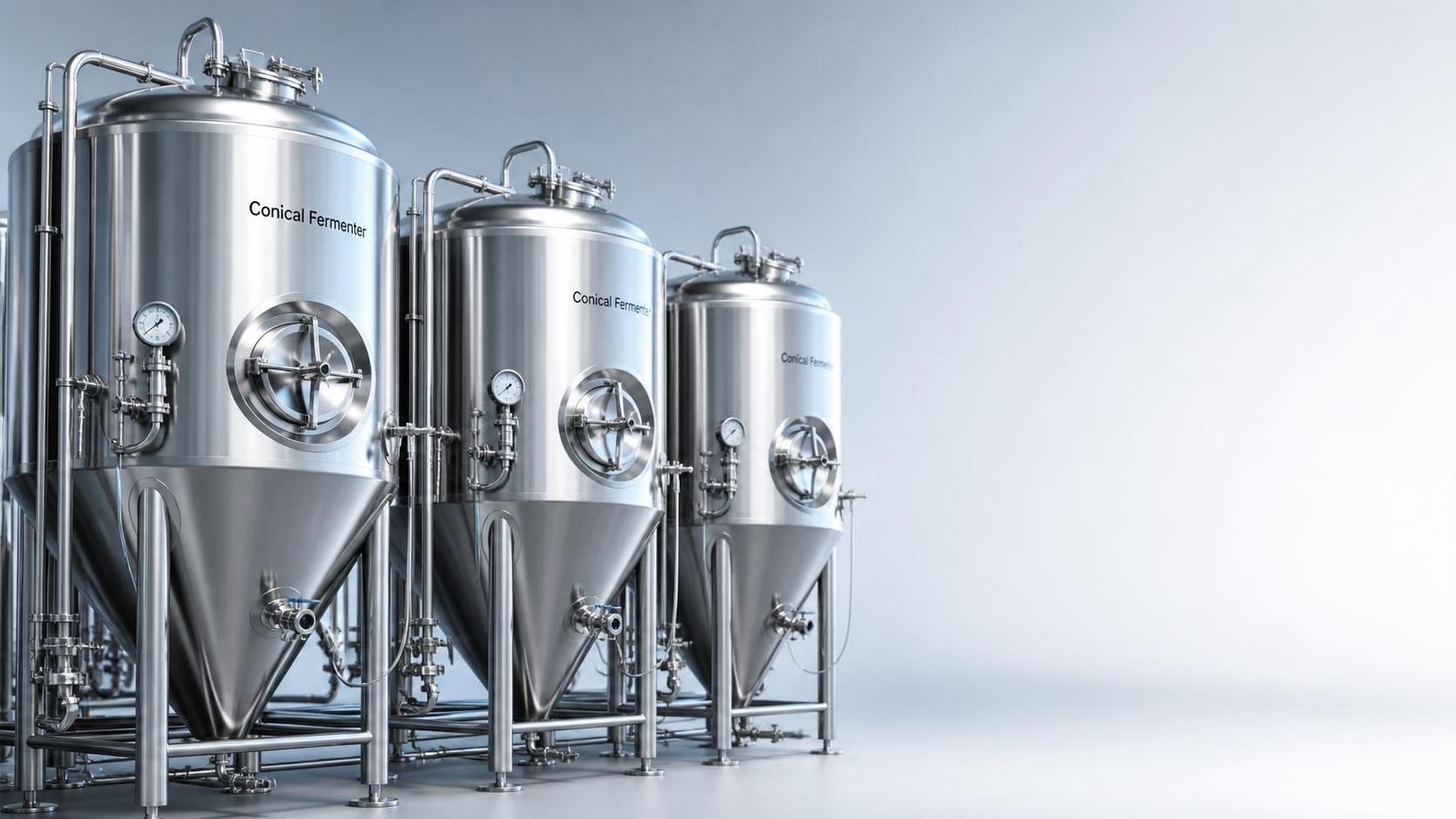
So yes—you’ll replace fermenters. But not just one type. For Jinpai’s portfolio, you’ll need at least three distinct vessel classes: conical fermenters (for lagers and wheat beers), open fermenters or shallow cylindro-conicals (for some fruit-beer infusions where oxygen exposure is managed intentionally), and small pilot-scale vessels (under 5 hl) for functional or experimental batches. The material matters too: 304 stainless is common, but for acidic fruit additions or extended dry-hopping, 316-grade is safer long-term.
Boiling & Wort Handling: Where “Just Hot Enough” Stops Working
Malt drink kettles usually operate below 95°C—just enough to pasteurize and blend. Beer requires a vigorous, rolling boil at or near 100°C for ≥60 minutes to isomerize alpha acids, coagulate proteins, and drive off volatile off-flavors. That means your existing kettle likely lacks steam capacity, proper evaporation control, or a whirlpool arm for trub separation.
More critically: wort cooling. Malt drink lines often rely on plate heat exchangers sized for ambient-temperature product. Beer wort must drop from boiling to pitching temperature (often 10–20°C) in under 30 minutes to avoid DMS formation and microbial risk. You’ll need a dedicated wort chiller—typically a two-stage plate unit with glycol pre-cooling—and a cold liquor tank large enough to buffer chilled water demand across multiple brews.
Filtration & Carbonation: Not All Clarity Is Equal
Malt drinks are filtered for visual clarity only—usually via cartridge or diatomaceous earth (DE) filters with nominal 5–10 µm ratings. Beer filtration serves dual purposes: microbiological stability *and* colloidal clarity. For unpasteurized craft beer—like Jinpai’s sugar-free or functional variants—you’ll need at least 0.45 µm sterile filtration (membrane or crossflow), plus inline CO₂ dosing capability to carbonate post-filtration. That’s not an add-on; it’s a redesign of the entire bright beer line.
Centrifuges are optional—but increasingly common for hazy IPAs or wheat beers where heavy hop/oil suspension makes membrane filtration impractical. If you’re making fruit-beer blends, expect higher solids load and more frequent cleaning cycles. Your existing filter housings probably lack sanitary clamp connections, pressure monitoring, or flow-controlled backflush capability. Those aren’t upgrades—they’re replacements.
CO₂ Recovery: It’s Not Just About Cost—It’s About Consistency
Malt drink plants rarely recover CO₂. Beer fermentation produces significant volumes—and for craft producers, that CO₂ is both a cost center and a quality variable. Unrecovered CO₂ means inconsistent carbonation levels across batches, especially when blending or force-carbonating fruit-infused or low-calorie variants where residual sugars are minimal and natural carbonation unreliable.
A basic recovery system includes condensate scrubbers, amine-based absorption towers, and high-pressure storage. But here’s what most technical evaluators miss: recovery efficiency drops sharply below 12°C ambient. If your facility is in Southeast Asia or southern China, you’ll need active chilling on the absorber loop—not just insulation. And if you’re scaling beyond 10 hl/batch, modular recovery units start making economic sense faster than expected.
Packaging: Pasteurization ≠ Craft Integrity
This is where many conversions stall—or worse, compromise brand positioning. Malt drink fillers are built for still, pasteurized liquid at 85–95°C. Beer fillers must handle cold, carbonated, unpasteurized product at 0.5–2.5 vol CO₂ without foaming, oxidation, or yeast shear. That means vacuum-assisted fillers, CO₂ purging nozzles, and inline dissolved oxygen (DO) monitors below 50 ppb.
Canning lines add another layer: seamer torque consistency affects shelf life dramatically in low-calorie or functional beers where preservative margins are thin. Bottling? You’ll need crown cappers with torque verification, not just mechanical stops. And don’t assume your existing labeler handles moisture-sensitive paper labels on cold, condensing cans—many don’t.
What Often Gets Overlooked (But Shouldn’t)
Utilities. A malt drink plant might run on 0.6 MPa steam and 20°C chilled water. Beer needs 0.8–1.0 MPa steam for efficient boiling, and glycol at -5°C to -10°C for fermentation control. Your existing chillers and boilers may be undersized by 30–50%—and retrofitting them mid-conversion creates bottlenecks no spec sheet predicts.
Also: yeast propagation. Malt drink factories don’t propagate yeast. Craft beer does—especially for strains used in German wheat or functional variants where strain health directly impacts ester profile and attenuation. You’ll need a dedicated propagation tank, sterile air filtration, and temperature-controlled incubation space. Skipping this leads to inconsistent fermentation starts, stuck batches, and off-flavors that show up only after packaging.
A Final Note for Technical Evaluators
Don’t treat this as a checklist. Every malt drink line has different legacy constraints—tank geometry, floor loading, pipe routing, even ceiling height. What’s critical for a 20 hl lager program may be over-engineered for a 5 hl fruit-beer pilot line. Start with your highest-volume, lowest-tolerance product (e.g., Jinpai’s sugar-free lager), map its thermal, pressure, and sanitation path end-to-end, and work backward. Anything outside that path is negotiable. Everything inside it is non-negotiable—even if it means scrapping 70% of the original layout.
Because at the end of the day, converting isn’t about equipment replacement. It’s about building a system where biology, physics, and flavor intent align—every single batch.
Thank you very much for writing to us. Please leave your message and contact information, we will reply to you within 24 hours.