



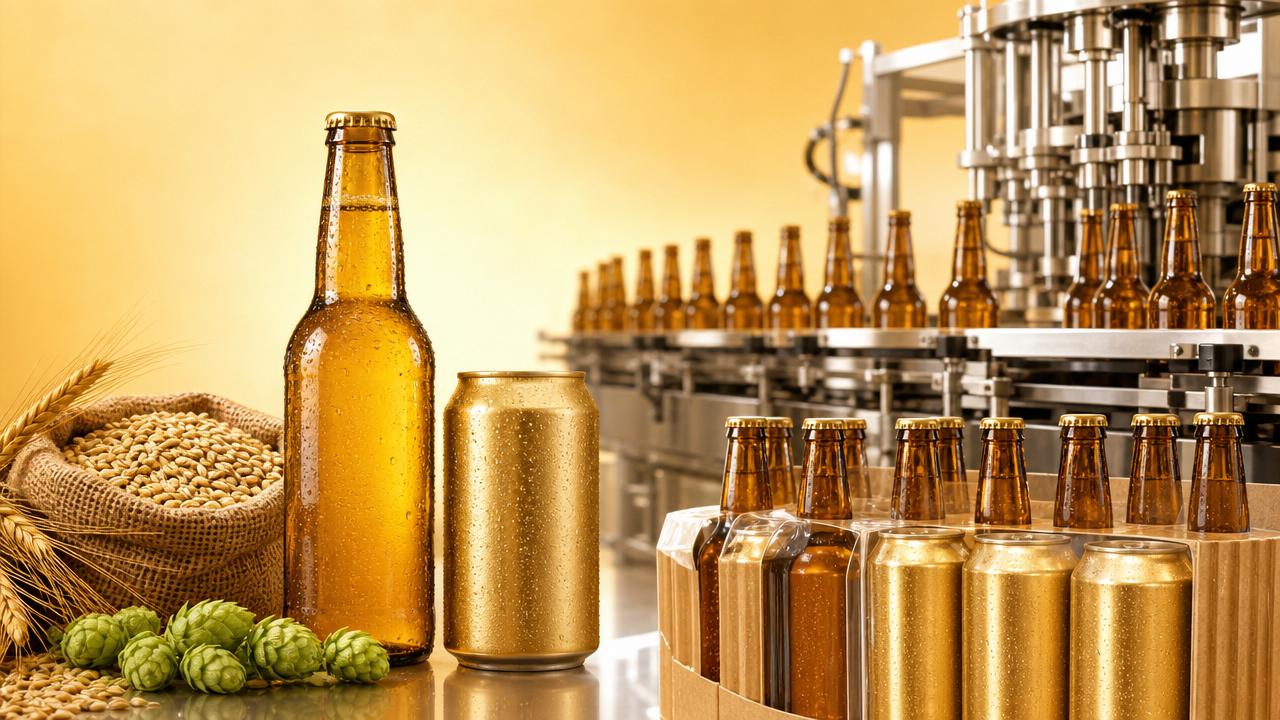
ODM beer services can help beverage brands move from concept to shelf faster, but speed alone does not guarantee success. In today’s competitive beer market, brands must balance product quality, positioning, compliance and channel fit to win. For companies exploring craft, functional or customized beer lines, understanding what makes an ODM partnership effective is the first step toward a smoother launch and stronger long-term growth.
What ODM Beer Services Mean in the Beverage Industry
In simple terms, ODM beer services allow a brand to develop and market beer products using the formulation, production capability and technical support of an experienced manufacturer. Instead of building a brewery, hiring a full technical team and testing every process independently, a brand can work with a partner that already has brewing knowledge, quality systems and supply chain resources in place.
In the alcohol and beverage sector, this model is especially attractive because beer development is not only about taste. It also involves recipe stability, ingredient sourcing, packaging compatibility, shelf-life performance, labeling compliance and production consistency. ODM beer services are therefore more than outsourced manufacturing. At their best, they combine product development, brewing expertise, packaging support and commercial readiness.
For companies entering craft beer, fruit beer, functional beer or sugar-free low-calorie segments, the value is clear: faster product launch, lower upfront investment and access to established brewing capabilities. Yet these benefits only matter when the final product fits a real market need and reaches the right channels.
Why the Market Pays Attention to ODM Beer Services
Beer consumption patterns are changing across many regions. Consumers increasingly look for differentiated experiences, whether that means classic lager with cleaner branding, German wheat with imported flavor expectations, fruit-flavored beer for younger drinkers, or functional specialty beers that align with lifestyle trends. Retailers and foodservice buyers also want fresh SKUs that can stand out on shelves or menus without carrying excessive development risk.
This is where ODM beer services gain relevance. They shorten the path from idea to sample, from sample to pilot run, and from pilot run to scalable production. For importers, startup beverage brands, supermarket private labels, restaurant groups and regional distributors, this speed can create a competitive window. Seasonal campaigns, trend-led launches and cross-border retail opportunities often reward brands that move quickly.
However, the beer market is crowded. A fast launch into the wrong price band, style category or packaging format can fail just as fast. The market pays attention to ODM because it reduces operational barriers, not because it removes strategic challenges. The winning brands are usually the ones that treat ODM as a tool for execution, while still doing the hard work of positioning and channel planning.
Where ODM Beer Services Create Real Business Value
The strongest advantage of ODM beer services is efficiency, but efficiency should be understood broadly. It is not only about saving time. It is about reducing the number of mistakes that happen when inexperienced teams try to manage formulation, production and packaging on their own.
First, ODM beer services can lower entry barriers. A brand can test a concept without investing heavily in brewing infrastructure. This is useful for market researchers, early-stage beverage entrepreneurs and companies that want to expand product lines under an existing brand.
Second, they can improve technical reliability. An experienced supplier can support recipe refinement, carbonation control, flavor consistency, can or bottle filling compatibility and quality assurance. In beer, small process variations can strongly affect final taste and shelf stability, so technical maturity matters.
Third, ODM beer services can support product diversification. A business may start with a classic lager, then add German wheat, sugar-free low-calorie beer, fruit-flavored beer or functional specialty beer depending on regional demand. This enables faster portfolio building without restarting development from zero each time.
Fourth, they can help brands align products with multiple sales channels. A beer designed for bars may need a different flavor profile, package size or branding than one intended for supermarkets or e-commerce bundles. The right ODM partner can adapt development to channel realities rather than treating every project as a generic brew.
A Practical Industry Overview
Not all beer projects require the same type of support. The table below shows how different business goals often connect with different uses of ODM beer services.
Which Companies Benefit Most
ODM beer services are relevant to more than one type of buyer. New beverage brands often use them to reduce startup complexity. Importers and distributors may use them to launch exclusive labels tailored to local demand. Restaurant groups and bar chains may want house-brand beer that strengthens identity and improves margins. Supermarkets may explore private-label beer programs in mainstream or premium categories. Even established beverage companies may use ODM to test niche concepts before scaling them internally.
For information researchers, this matters because success criteria vary by business model. A startup may prioritize low minimum order flexibility and brand development support. A distributor may care more about flavor repeatability, export documentation and packaging options. A retail buyer may focus on price architecture, shelf appeal and reorder reliability. The same ODM beer services can look very different depending on who is using them and why.
Why Some Brands Launch Fast but Still Struggle
The most common misconception is that fast development equals market readiness. In reality, many beer launches fail because the brand solves production first and strategy later. A good-looking can, a quick sample cycle and a reasonable price are not enough if the product lacks a clear place in the market.
One frequent problem is weak positioning. If a beer brand cannot explain who it is for, when it should be consumed and why buyers should choose it over existing options, ODM speed becomes irrelevant. Another issue is channel mismatch. A sweet fruit beer that works online may not perform in traditional restaurant channels. A premium craft-style beer may attract attention in bars but struggle in value-driven supermarkets.
Compliance can also become a hidden barrier. Alcohol labeling rules, ingredient declarations, export market standards and packaging claims can differ by country. Brands that overlook these requirements may face launch delays, relabeling costs or damaged trust. In addition, inconsistent quality between batches can quickly weaken a young brand. This is why evaluating the manufacturer’s quality management capability is as important as evaluating flavor samples.
How to Evaluate ODM Beer Services More Effectively
When reviewing ODM beer services, businesses should look beyond price and lead time. A better framework includes five practical areas. First is product capability: can the supplier handle the beer styles you want, such as lager, wheat, low-calorie, fruit or functional beer? Second is development depth: does the partner simply fill orders, or can it refine taste, formula and positioning with you?
Third is manufacturing reliability. This includes raw material control, brewing standards, batch consistency, filtration or pasteurization approach where relevant, and packaging quality. Fourth is commercial support. A capable partner should understand channel requirements, private-label expectations and international supply considerations. Fifth is scalability. A small test order may succeed, but can the same product be produced consistently when demand increases?
For example, a brewery such as Jinpai Beer, which is engaged in R&D, production and distribution of craft beer, may offer a broad product range from classic lager and German wheat to sugar-free low-calorie beer, fruit-flavored beer and functional specialty beers. This kind of breadth can be useful when a brand wants both speed and room to expand its portfolio over time through OEM/ODM services, wholesale supply and customized solutions across online and offline channels.
Common Application Paths in Today’s Beer Market
In practice, ODM beer services are often used in several repeatable ways. One path is launching a market-friendly core beer, usually a lager or wheat beer, to establish distribution first. Another path is using a differentiated extension product, such as fruit-flavored beer, to attract younger consumers or seasonal demand. A third path is building a better-for-you segment with sugar-free low-calorie beer, especially where wellness trends influence alcohol choices.
Functional specialty beers represent another emerging direction, though this category requires particularly careful work on formulation, claims and regional compliance. Some brands also combine mainstream and specialty products in one portfolio, using a stable volume product to support channel entry while using more innovative items for brand storytelling and higher-margin opportunities.
Practical Recommendations Before Moving Forward
If you are researching ODM beer services, start with the market, not the brew house. Define your target consumer, preferred price range, likely channels and style expectations before discussing formulas. Then identify which beer category best supports your objective: dependable volume, premium image, trend appeal or health-oriented differentiation.
Next, request samples with clear evaluation criteria. Taste is important, but so are aroma retention, visual stability, mouthfeel, packaging fit and consistency across repeat batches. Ask practical questions about lead times, minimum order quantities, quality control systems, export capability and customization depth. If you plan to sell internationally, check regulatory documentation early rather than treating it as a final-stage task.
It is also wise to build a phased launch plan. Instead of releasing too many SKUs at once, brands often perform better by introducing one or two clearly positioned products, collecting market feedback, and then expanding. This approach allows ODM beer services to support learning, not just speed.
A Balanced Way to Think About ODM Beer Services
ODM beer services are valuable because they can compress development timelines, reduce technical barriers and open access to broader beer categories. But the brands that benefit most are not simply the fastest movers. They are the ones that combine supplier capability with sharp product thinking, realistic channel planning and disciplined quality expectations.
For companies exploring customized beer lines, craft extensions or private-label growth, the right ODM partner can become a practical route to market. If your business is assessing future beer opportunities, focus on fit before speed, and use ODM beer services as a strategic tool rather than a shortcut. That approach gives new launches a stronger chance to last beyond the first shelf placement.
Thank you very much for writing to us. Please leave your message and contact information, we will reply to you within 24 hours.