



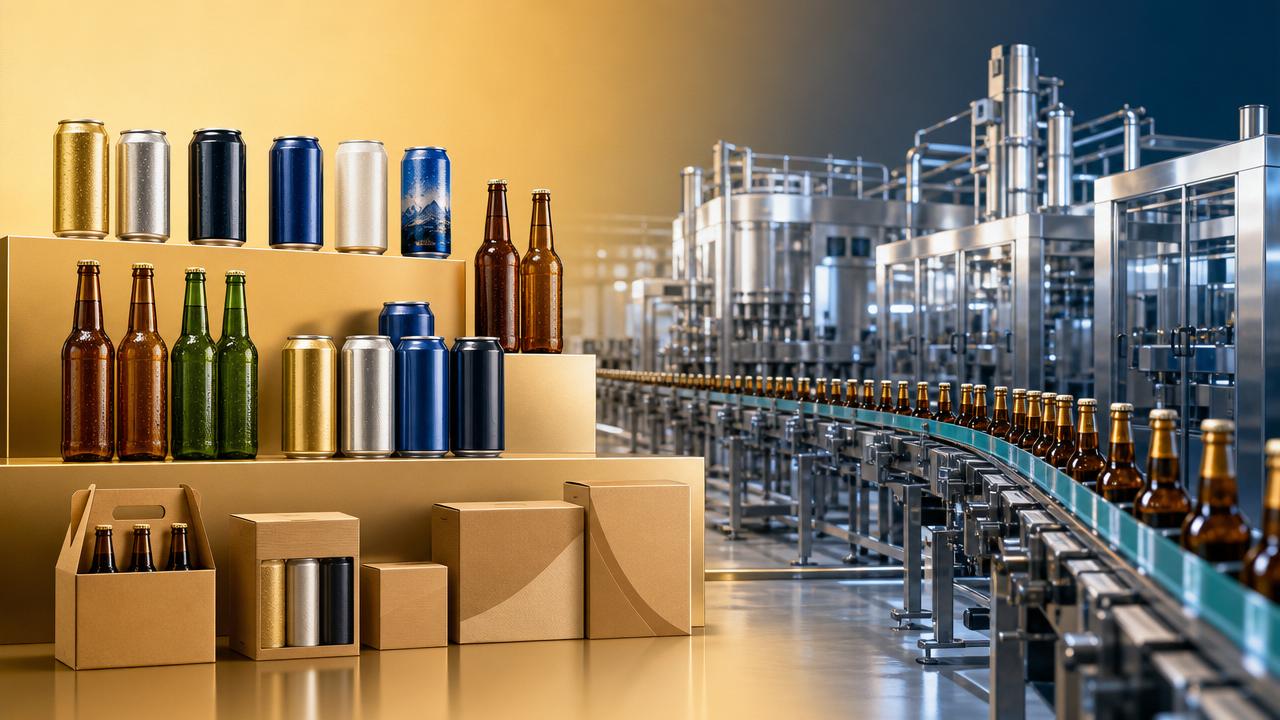
In 2026, China beer OEM minimum orders are shifting as distributors, agents and importers demand more flexible production, faster launches and lower inventory risk. For buyers exploring craft, functional and customized beer lines, understanding these MOQ changes is essential to choosing the right manufacturing partner. This article explains what is changing, why it matters, and how to secure better OEM terms in a competitive global market.
China beer OEM buyers are entering a more flexible order environment
One of the clearest signals in 2026 is that minimum order expectations in China beer OEM are no longer as rigid as they were a few years ago. For distributors, agents and private label importers, this is more than a pricing issue. It reflects a broader shift in how beer is developed, tested, launched and expanded across international markets. Instead of committing to very large first orders, many buyers now want smaller trial runs, more packaging options and room to adjust flavor direction after early market feedback.
This trend is especially visible in craft beer, fruit beer, sugar-free low-calorie beer and functional specialty beer. These segments move faster than traditional mass-market lager because consumer preferences change quickly. A distributor may want to test one SKU in bars first, then expand into supermarkets, convenience retail or online channels. In that context, a high MOQ increases risk. As a result, many China beer OEM suppliers are redesigning their production and negotiation models to attract buyers who value flexibility over sheer volume.
For global channel partners, the implication is straightforward: MOQ is no longer just a fixed factory rule. It is becoming a negotiable business variable tied to packaging format, formula complexity, ingredient sourcing, seasonal timing and the long-term value of the account.
What is changing in 2026 and why the signal matters
The old model often favored large-volume standard beer production. Buyers were expected to accept limited flexibility if they wanted competitive pricing. In 2026, that model is evolving. More China beer OEM manufacturers are willing to discuss mixed-product production, phased orders and customized launches because export competition is stronger and buyer decision cycles are shorter.
The most important change is not that every MOQ is suddenly low. Rather, factories are separating minimums by production scenario. Standard lager in common packaging may still support relatively efficient runs, while customized beer can now be structured through pilot batches, shared raw material planning or bundled SKU production. This creates new room for negotiation, especially for buyers with a clear market plan.
The main drivers behind lower or more flexible MOQ discussions
Several forces are pushing this shift in China beer OEM. First, beer demand is fragmenting. Importers are no longer building entire portfolios around only classic lager. They are adding German wheat, zero-sugar options, flavored beer and seasonal concepts to reach niche audiences. Fragmented demand naturally works against oversized first orders.
Second, channel behavior has changed. Restaurants, bars, specialty shops and online sellers increasingly prefer products with clear differentiation. A distributor that serves multiple channels may need different label designs, pack counts or flavor combinations. This puts pressure on manufacturers to support more adaptive production planning.
Third, inventory discipline matters more than before. International buyers face exchange-rate pressure, shipping uncertainty and cash-flow sensitivity. Even when demand looks promising, many prefer to validate sell-through before expanding. Flexible China beer OEM cooperation becomes attractive because it aligns production with real market absorption.
Fourth, manufacturing capabilities have improved. Better batching, packaging coordination, formula management and supply chain planning allow some suppliers to serve customized orders more efficiently. Not every factory can do this well, but the capability gap is becoming an important competitive factor.
Why this is not simply a race to the lowest MOQ
Buyers should be careful not to interpret the 2026 trend as a universal promise of very low minimums. In beer manufacturing, MOQ still depends on canning lines, bottle formats, carton design, ingredient procurement, tax-compliant labeling and shelf-life management. The real shift is that more China beer OEM suppliers are willing to redesign order logic when the buyer shows credible growth potential, repeat business plans or a smart rollout strategy.
Which buyers are affected most by the MOQ shift
The 2026 MOQ transition does not affect all buyers equally. It is most relevant for market entrants, portfolio diversifiers and channel specialists. A mature importer with stable replenishment volumes may still prioritize price and consistency over flexibility. But newer or more agile operators often benefit directly from the new environment.
For agents and distributors, the strategic value is clear. More flexible China beer OEM terms make it easier to test premium craft lines, low-calorie concepts or fruit beer ranges without overcommitting warehouse space. That can improve speed to market and reduce dead stock, especially in markets where trends move faster than annual procurement cycles.
How product type now influences MOQ negotiations more than before
In 2026, MOQ conversations are increasingly product-specific. A standard lager in a common can format is easier to schedule than a functional specialty beer requiring customized ingredients, technical stability testing or distinct label claims. Buyers should expect China beer OEM suppliers to classify projects by complexity, not just by volume.
This matters because some distributors approach sourcing with a single MOQ question: “What is your minimum order?” That is no longer enough. A better question is: “What is the minimum by formula, packaging type, label version and order phase?” The answer will often reveal whether a supplier truly understands flexible OEM cooperation or is simply offering a superficial quote.
For example, classic beer products may allow lower operational complexity, while fruit-flavored or sugar-free beer may involve more ingredient planning and production sequencing. That does not make such products less attractive. It simply means that the best China beer OEM partners are those able to explain where flexibility is possible and where stability requirements still set practical limits.
Signals distributors should watch before choosing an OEM partner
Because MOQ flexibility is becoming a selling point, buyers need to distinguish real capability from sales language. Several signals deserve attention during supplier evaluation.
- Whether the factory can explain MOQ by SKU, packaging and formula rather than using one blanket figure.
- Whether sampling, pilot runs and follow-up production are connected through a clear scale-up plan.
- Whether the supplier supports both standard and customized beer categories, including craft and functional lines.
- Whether packaging coordination, label compliance and export documentation are handled smoothly.
- Whether the supplier asks about your channel strategy, not only your first purchase volume.
A serious China beer OEM manufacturer will usually discuss reorder rhythm, market positioning, target retail environment and expected growth path. That is a positive sign. It means the supplier is evaluating production fit, not simply trying to push a one-time order.
What this shift means for pricing, lead time and launch strategy
Lower MOQ or more flexible MOQ does not automatically mean lower cost. In many cases, smaller runs carry higher unit pricing because setup costs are spread over fewer units. However, for distributors and agents, the real comparison should be between unit cost and total business risk. A slightly higher production cost may still produce better profitability if it prevents overstock, reduces markdowns and improves product-market fit.
Lead time is also changing. Some China beer OEM suppliers can launch faster when projects use existing bottle or can resources, standard carton sizes or established base formulas. Customized work may still require longer preparation, but buyers now have more options to shorten the first phase through modular development. This is useful for seasonal promotions, limited editions and market-entry campaigns.
From a launch strategy perspective, phased ordering is becoming smarter than all-at-once ordering. A distributor might begin with one flagship product, validate sales in restaurants and bars, then expand into retail packs and wider flavor sets. The more adaptable the China beer OEM relationship, the easier it becomes to build a portfolio in stages rather than gamble on a full-line launch.
Practical negotiation ideas for better China beer OEM terms in 2026
Buyers who want improved MOQ terms should come prepared with more than a price request. The strongest negotiations are based on operational clarity and future business logic. Suppliers are more open to flexibility when they see disciplined planning.
- Present a phased demand plan with trial, reorder and expansion stages.
- Limit early customization variables if speed matters, such as using standard packaging first.
- Bundle related SKUs when possible to improve production efficiency.
- Share target sales channels so the OEM can recommend practical product formats.
- Discuss long-term cooperation potential rather than only first-order volume.
This is where an experienced supplier such as Jinpai Beer can be relevant for channel buyers. With capabilities across classic lager, German wheat, sugar-free low-calorie beer, fruit-flavored beer and functional specialty beers, combined with OEM/ODM and wholesale support, a broader product base can create more practical room for structured launches and customized solutions.
The next judgment call: flexibility is valuable, but supplier fit matters more
The deeper trend in China beer OEM is not just lower minimum orders. It is a move toward more demand-responsive manufacturing. For distributors, agents and importers, that creates opportunity, but only if supplier selection stays disciplined. MOQ flexibility should be evaluated together with quality consistency, category capability, export experience and long-term scaling potential.
As 2026 develops, the most successful buyers will likely be those who treat MOQ as part of a larger market-entry system. They will test faster, adjust earlier and build portfolios with less inventory stress. If your business wants to judge how these changes affect your beer sourcing strategy, focus on five questions: Which products need trial-scale entry first? Which packaging choices can stay standardized? What reorder speed can your channels support? Which OEM can scale after validation? And how well does the supplier understand your route to market?
Those answers will help you move beyond a simple MOQ comparison and identify the right China beer OEM partner for sustainable growth.
Thank you very much for writing to us. Please leave your message and contact information, we will reply to you within 24 hours.