



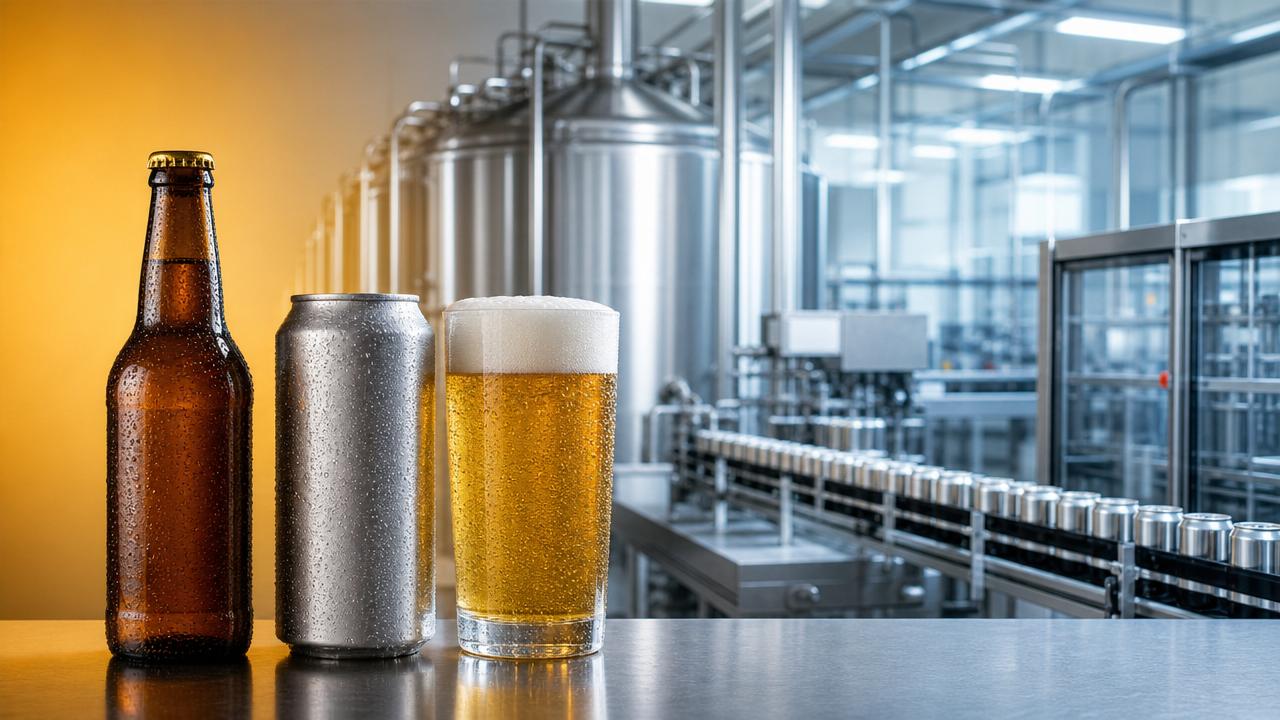
Beer OEM samples can impress in tasting rooms yet fail on the production line when consistency, shelf stability and process compatibility are overlooked. For operators and brand owners, understanding why a sample tastes right but scales poorly is essential to avoiding costly delays and quality issues. This article explores the key gaps between pilot success and commercial manufacturing, helping you make smarter Beer OEM decisions.
Why this issue is getting more attention now
In the beverage industry, the gap between a great pilot sample and a reliable commercial product has become more visible than ever. This is not only a brewing problem. It is a market trend shaped by faster product launches, more fragmented consumer demand, tighter quality expectations and wider global distribution. A Beer OEM project that once succeeded with a simple flavor match now faces more pressure from shelf life, packaging line efficiency, ingredient sourcing, regulatory review and channel-specific performance.
Operators are feeling this change directly. In the past, many teams judged an OEM sample mainly by immediate taste, aroma and appearance. Today, that is only the first checkpoint. A sample may taste excellent in a lab or small-batch trial, but when scaled to larger fermentation tanks, different filtration systems, longer logistics cycles or diverse storage conditions, the same formula can drift in unexpected ways. The result is a product that is acceptable in theory but unstable in practice.
This shift matters because Beer OEM is no longer a side option for many brands. It is now a strategic route to market for craft concepts, low-calorie lines, fruit-infused innovations, functional specialty beers and channel-exclusive SKUs. As more brands rely on external production partners, sample-to-scale risk becomes a business issue, not just a technical one.
The main trend signals behind sample-to-scale failure
Several industry signals explain why Beer OEM samples that taste right may still scale poorly. These signals are not isolated. Together, they are changing how operators should evaluate OEM feasibility from the start.
For operators, the key takeaway is clear: the Beer OEM decision standard is shifting from “Does the sample taste good?” to “Can the sample survive real manufacturing and real distribution without losing its promise?”
What usually goes wrong between pilot success and full production
The most common failure is that the sample was optimized for sensory impact, not for industrial repeatability. In a tasting room, brewers can present the sample at ideal freshness, ideal temperature and ideal carbonation. On the production line, however, the beer must tolerate process variables, storage time and channel handling.
Ingredient behavior changes at scale
A Beer OEM sample may use ingredients that perform well in small volumes but behave differently in larger tanks. Fruit concentrates can separate, sweeteners can create aftertaste shifts, specialty grains can affect filtration, and hop aroma can fade more quickly than expected. If ingredient lots vary or supply alternatives are introduced later, the final product can move even farther away from the approved sample.
Process compatibility is underestimated
Many formula discussions focus on taste notes but not enough on process reality. Fermentation kinetics, yeast performance, maturation time, dissolved oxygen control, pasteurization sensitivity and filling-line behavior all shape the final result. A Beer OEM sample that requires unusually narrow process conditions may be difficult to reproduce economically or consistently.
Shelf stability is tested too late
This is especially important in today’s multi-channel environment. Products may sit in warehouses, convenience stores, supermarket shelves or containers during export. Flavor fade, color changes, haze formation, pressure variation or microbial risk often emerge after the sample approval stage. When stability is treated as a secondary step, the Beer OEM program can face relaunches, claims or returns.
Packaging changes the drinking experience
Cans, bottles and kegs do not treat beer in the same way. Oxygen pickup, light protection, carbonation retention and distribution stress all differ by format. A sample served from a bright tank may not reflect what consumers will taste from packaged retail units. This is one of the most overlooked reasons why Beer OEM samples seem right at approval but underperform after launch.
Why certain beer categories are becoming harder to scale well
The scaling challenge is growing because beer innovation is moving toward more demanding categories. Standard lager remains comparatively stable for many OEM programs, but newer segments often carry hidden technical trade-offs.
Sugar-free and low-calorie beer require careful balance. Removing sweetness or body can expose bitterness, thinness or fermentation defects more clearly at scale. Fruit-flavored beer adds complexity through pulp, sugar systems, acidity and natural aroma retention. Functional specialty beers may include botanicals or active ingredients that create sediment, haze, flavor instability or process restrictions. German wheat and other high-protein styles may face foam and turbidity issues that become more obvious in high-volume packaging.
This does not mean innovation should slow down. It means Beer OEM projects in modern categories must be judged with broader production criteria from the beginning. The market is rewarding differentiation, but the cost of under-validating differentiated products is also rising.
Who is most affected by this shift
The impact of poor scalability spreads across multiple roles. What looks like a brewing detail can quickly become a procurement, sales, operations and brand issue.
For users and operators, this means Beer OEM evaluation should not be isolated inside product development. Cross-functional review is becoming a practical necessity.
The new decision standard for Beer OEM projects
A stronger Beer OEM process now requires a shift in what counts as an “approved sample.” Approval should cover not only sensory acceptance, but also process fit, packaging behavior, supply continuity and expected shelf performance. In other words, the sample is no longer just a taste reference. It is an early business model for the final product.
This is where experienced OEM producers create value. A capable partner does not simply replicate a flavor target. It helps identify whether the target can be brewed repeatedly, filled efficiently, transported safely and sold through different channels without undermining the brand promise. For beverage operators, this broader view reduces hidden risk more effectively than chasing a perfect tasting-room impression.
What operators should check before approving a sample
As the Beer OEM market matures, the most useful response is not caution alone but better validation discipline. Before sample approval, operators should confirm whether the formula has been reviewed through a scale-up lens.
These checks do not slow innovation. In most cases, they accelerate better launches by reducing reformulation and post-launch correction.
How the Beer OEM landscape is likely to develop
Looking ahead, Beer OEM partnerships are likely to become more technical, more data-aware and more channel-specific. Buyers will increasingly ask not only for custom flavor profiles but also for evidence of process compatibility and shelf resilience. OEM suppliers with stronger R&D, broader product categories and practical scale-up experience will have an advantage because they can connect concept development with manufacturing reality.
Another direction to watch is the rise of more targeted beer programs. Instead of one formula serving all channels, brands may request separate Beer OEM solutions for retail, on-premise and export. This reflects a broader industry realization: the same beer concept may need different technical decisions depending on how it is sold, stored and consumed.
At the same time, pressure for cleaner labels, lower sugar, lower calories and more distinctive flavor experiences will continue. That means scalability questions will become even more important, not less. The more creative the product concept, the more disciplined the validation model must be.
Practical direction for brands, operators and OEM partners
For companies entering or expanding Beer OEM, the most effective approach is to treat sample evaluation as an early operational review. Ask whether the sample reflects real ingredients, real equipment, real packaging and real distribution conditions. Ask whether the production partner can support classic lager, wheat beer, sugar-free low-calorie beer, fruit-flavored beer and functional specialty beers with category-specific process knowledge rather than one generic method.
A reliable OEM partner should be able to discuss R&D logic, process limits, packaging routes, wholesale supply planning and customization trade-offs in practical terms. That is especially important for businesses serving supermarkets, restaurants, bars and global retail channels, where product stability and consistency affect repeat orders directly.
For operators, the most important mindset change is simple: do not let a strong first tasting end the evaluation too early. In today’s market, good Beer OEM decisions come from understanding the full path from sample bench to packaged product in the field.
Final judgment and next-step questions
The current trend is clear. Beer OEM success is being defined less by sample appeal alone and more by the ability to deliver repeatable quality under commercial conditions. The change is driven by product innovation, wider distribution, faster launches and higher buyer expectations. For operators and brand owners, the real risk is not approving a bad-tasting sample. It is approving a good-tasting sample that cannot travel, store, package or repeat well.
If your business wants to judge how this trend affects your own Beer OEM strategy, focus on a few questions: Is the approved sample based on ingredients and process conditions that can be sustained at volume? Has packaging performance been validated in the intended format? Does the product match the storage and logistics reality of your target channel? And can your OEM partner explain not only how the beer tastes today, but how it will perform batch after batch in the market?
Those answers will do more to protect launch quality, channel confidence and long-term brand growth than sample flavor alone.
Thank you very much for writing to us. Please leave your message and contact information, we will reply to you within 24 hours.