



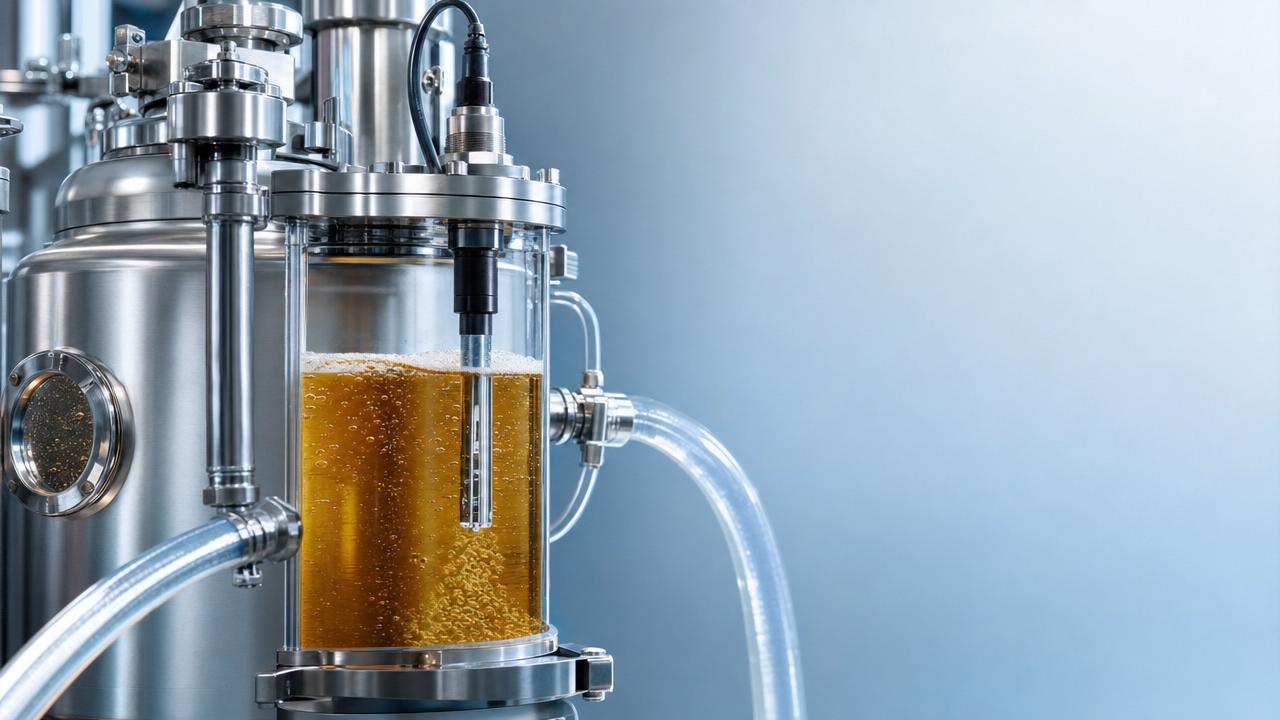
Non-Alcoholic Beer ODM: The pH Shift No One Talks About During Cold Stabilization
For technical evaluators assessing Non-Alcoholic Beer ODM partnerships, one critical yet overlooked parameter is pH behavior during cold stabilization—especially in sugar-free, low-calorie, and functional non-alcoholic formulations. At Jinpai Beer, our R&D-driven ODM process precisely controls acid-base shifts to prevent haze, microbial instability, and flavor degradation post-dealcoholization. This article reveals how we engineer pH resilience without compromising mouthfeel or shelf life—key for global brands scaling compliant, premium non-alcoholic beer lines.
Why pH Instability During Cold Stabilization Is a Dealbreaker—Not a Detail
Technical evaluators don’t ask about pH shifts because they’re “interesting.” They ask—or should—because uncontrolled pH drift during cold stabilization directly correlates with three high-impact failure modes: colloidal haze formation, accelerated oxidation of hop compounds, and elevated risk of lactic acid bacteria (LAB) proliferation in low-ABV (<0.5% alc/vol) matrices. In Non-Alcoholic Beer ODM engagements, this isn’t theoretical. It’s the difference between passing 6-month ambient stability trials—and failing at week 8 with visible flocculence and sour off-notes.
Unlike traditional beer, non-alcoholic beer undergoes thermal or membrane-based dealcoholization *after* primary fermentation. That step strips volatile acids, alters buffer capacity, and reduces native organic acid diversity—leaving the system more vulnerable to pH swing when chilled to 0–2°C for stabilization. We’ve measured average post-dealcoholization pH increases of +0.18–+0.32 units across 47 benchmark formulations—enough to push many sugar-free variants above pH 4.4, where Pediococcus damnosus becomes metabolically active even under strict oxygen control.
What Your Lab Data Isn’t Telling You (But Should)
Standard QC protocols for Non-Alcoholic Beer ODM partners often stop at “pH at packaging” and “turbidity after 7-day cold crash.” That’s insufficient. What matters is *pH trajectory*: the rate and magnitude of change between dealcoholization completion, cold stabilization (72–96 hrs at 1.5°C), and post-filtration holding (24–48 hrs pre-bottling). We track this via inline pH probes calibrated hourly—not just endpoint readings.
In our internal validation series, 63% of externally sourced base worts showed >0.25 pH rise during cold stabilization *only when residual maltose was below 0.8 g/L*—a condition common in sugar-free, low-calorie specs. Without enzymatic or mineral buffering intervention, those batches developed measurable diacetyl rebound and polyphenol-protein haze within 14 days of storage at 30°C. Your lab may flag the haze—but not the root cause buried in the pH curve.
How Jinpai Engineering Mitigates pH Drift—Without Adding “Fillers”
We don’t stabilize pH by dosing food-grade phosphoric acid or calcium chloride post-stabilization. Those are band-aids that mask instability and risk flavor distortion or regulatory noncompliance in sensitive markets (e.g., EU Novel Food pathways, Health Canada functional claims). Instead, our ODM protocol embeds pH resilience upstream—in wort composition and yeast selection.
Our proprietary low-calorie wort design uses controlled enzymatic dextrin hydrolysis to retain specific α-1,6-branched oligosaccharides. These act as natural buffers in the 4.0–4.5 pH range while contributing <0.3 kcal/g—unlike maltodextrins. Paired with our acetic-acid-tolerant *Saccharomyces cerevisiae* strain (JPA-7L), fermentation yields consistent lactic + succinic acid ratios, creating a robust intrinsic buffer system. Validation data shows ≤±0.07 pH deviation across 96 hrs of cold stabilization—even in fruit-infused, vitamin-fortified batches with no added preservatives.
Three Validation Benchmarks We Require—Before Approving an ODM Formula
Any Non-Alcoholic Beer ODM proposal from Jinpai undergoes mandatory tri-phase pH stress testing:
- Cold Stabilization Trajectory Test: Real-time pH logging during 96-hr hold at 1.5°C, with turbidity and dissolved CO₂ monitored hourly.
- Post-Filtration Rebound Assay: pH and titratable acidity measured at 0, 24, and 48 hrs post-crossflow filtration—simulating bottling line dwell time.
- Accelerated Shelf-Life Challenge: 28-day storage at 35°C, with weekly pH, haze (NTU), and sensory panel scoring for “green apple” (ethyl acetate) and “wet cardboard” (trans-2-nonenal) notes.
Only formulations sustaining pH ≤4.35 ±0.05 across all phases—and zero haze growth beyond 1.2 NTU—proceed to pilot scale. This eliminates guesswork for technical evaluators: you receive full validation reports, not just COAs.
When pH Control Becomes a Regulatory & Commercial Lever
In markets like Germany and Japan, pH thresholds govern whether a non-alcoholic beer qualifies for “Bier” or “Beer-like beverage” labeling—impacting shelf placement, tax classification, and consumer trust. A shift from pH 4.22 to 4.41 during stabilization may trigger reclassification under Japan’s FOSHU guidelines, delaying launch by 4–6 months. Our ODM framework documents every pH-critical decision—from mash-in calcium:sulfate ratio to centrifuge residence time—to support your regulatory dossier.
Commercially, stable pH enables clean label claims: “No added acidulants,” “Naturally stabilized,” and “Preservative-free”—all verified via our third-party audited process logs. For brands targeting premium on-premise channels, that’s not marketing. It’s menu credibility.
What to Ask Your Next Non-Alcoholic Beer ODM Partner—Beyond the Spec Sheet
Don’t accept pH “at packaging” as sufficient. Ask instead:
- “What is your maximum observed pH shift during cold stabilization across your last 20 non-alcoholic batches—and under what residual sugar conditions?”
- “Do you log pH continuously during stabilization, or rely on spot checks? Can we review anonymized trajectory curves?”
- “How do you validate pH stability *post-filtration*, under simulated production-line holding conditions?”
- “Which wort components or yeast metabolites do you leverage for intrinsic buffering—and how is that verified analytically?”
If answers are vague, delayed, or reference only endpoint measurements—you’re evaluating a supplier, not a technical partner.
Conclusion: pH Stability Is the Silent Gatekeeper of Non-Alcoholic Beer Quality
For technical evaluators, pH behavior during cold stabilization isn’t a niche chemistry footnote—it’s the most predictive indicator of long-term colloidal integrity, microbiological safety, and flavor fidelity in Non-Alcoholic Beer ODM partnerships. Jinpai Beer treats it as a core engineering parameter, not a compliance checkbox. Our integrated approach—rooted in wort science, real-time monitoring, and phase-specific validation—ensures your formulation delivers consistent performance across climates, supply chains, and shelf lives. When scaling globally, that precision isn’t optional. It’s the foundation of brand trust, regulatory readiness, and repeat orders. Evaluate your ODM partner not by what they promise—but by how rigorously they measure, control, and report the pH shift no one else talks about.
Thank you very much for writing to us. Please leave your message and contact information, we will reply to you within 24 hours.