



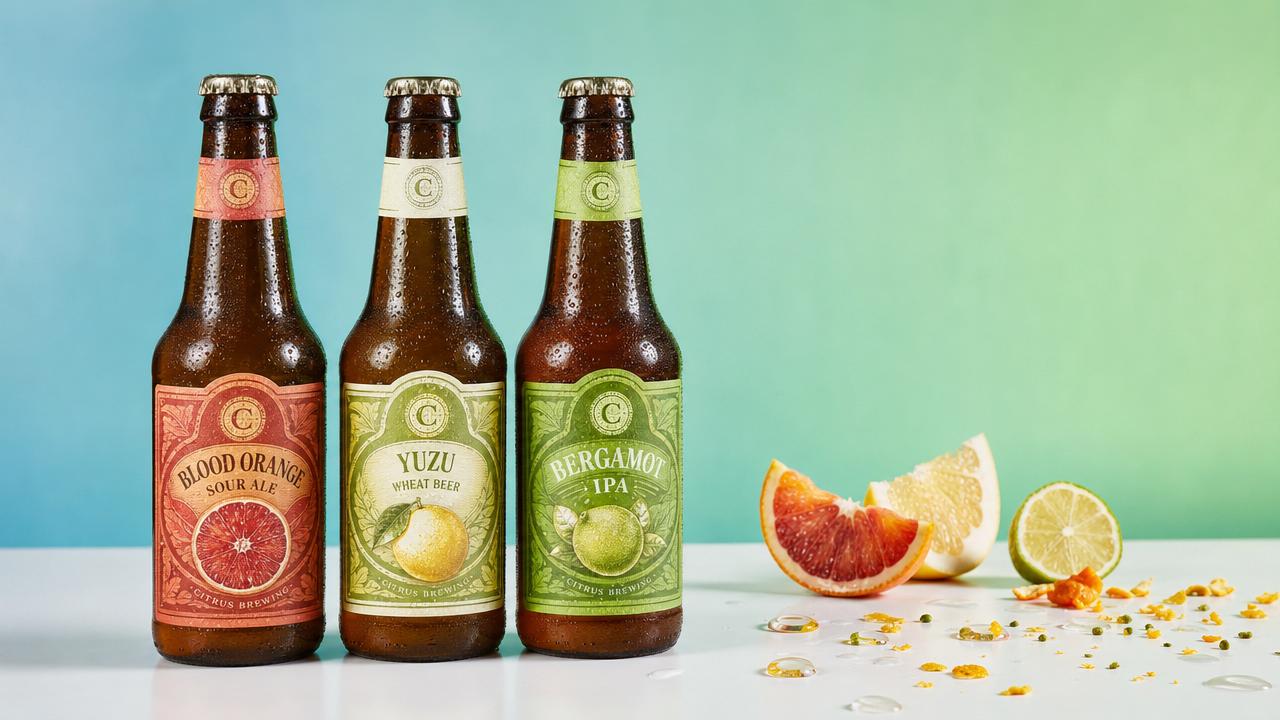
For Flavored Beer ODM partners and quality assurance professionals, citrus-infused variants introduce unique stability challenges—volatile oils, pH sensitivity, and oxidation risks demand tailored testing protocols beyond standard beer shelf-life assessments. At Jinpai Beer, our R&D-driven ODM services integrate sensory, chemical, and microbiological stability testing specifically calibrated for fruit-accented formulations. This article explains why citrus-flavored beers require dedicated acceleration, light-exposure, and temperature-cycling protocols—and how proactive stability validation protects brand integrity, regulatory compliance, and consumer experience.
Why citrus flavor profiles break standard Flavored Beer ODM stability assumptions
Standard beer stability testing—designed around malt, hops, and ethanol interactions—assumes relatively stable pH (4.2–4.6), low volatile organic content, and predictable oxidation kinetics. Citrus-flavored beers disrupt all three. Natural or nature-identical citrus oils (e.g., d-limonene from orange peel, γ-terpinene from grapefruit) are highly volatile, photo-sensitive, and prone to autoxidation at ambient storage temperatures. Their presence lowers formulation pH toward 3.8–4.1, accelerating Maillard reactions in wort-derived compounds while destabilizing hop iso-α-acids. Crucially, these compounds do not behave uniformly across dosage forms: cold-steeped zest extracts differ markedly from steam-distilled oils or enzymatically stabilized emulsions—each demanding distinct Flavored Beer ODM validation pathways.
At Jinpai Beer, over 68% of our Flavored Beer ODM portfolio includes citrus variants—mandarin lager, yuzu witbier, blood orange sour, and bergamot IPA. Internal benchmarking shows that citrus-accented batches fail accelerated shelf-life tests (ASLT) at 3× the rate of non-citrus fruit beers when subjected to generic protocols. That discrepancy isn’t noise—it’s chemistry signaling misalignment between test design and ingredient behavior.
How citrus volatility reshapes acceleration, light, and thermal stress protocols
Generic ASLT (e.g., 38°C/30 days) assumes Arrhenius kinetics apply uniformly. But citrus terpenes degrade non-linearly: d-limonene half-life drops from ~14 months at 20°C to just 9 days at 38°C. Applying standard acceleration inflates degradation rates beyond real-world relevance—masking subtle off-flavors (e.g., “wet cardboard” from limonene hydroperoxides) while overstating color shift. Jinpai’s citrus-specific ASLT uses dual-phase ramping: 28°C for 21 days (mimicking warehouse summer conditions), then 32°C for 7 days (simulating retail transport exposure), with weekly GC-MS quantification of key volatiles and peroxide value tracking.
Light stability also diverges. While most beers prioritize blue-light (450 nm) protection against riboflavin-mediated skunking, citrus oils absorb strongly in UV-A (320–400 nm). Unshielded exposure generates limonene-derived carveol and carvone—contributing medicinal or camphoraceous notes within 48 hours. Our Flavored Beer ODM protocol mandates IEC 60068-2-5 irradiance cycling (0.65 W/m² UV-A, 8 h/day) alongside sensory triangle testing by trained panels trained on citrus-specific defect thresholds.
Critical differences across citrus delivery formats demand scenario-specific validation
Not all citrus is equal—and Flavored Beer ODM success hinges on matching test rigor to delivery method. Below is how Jinpai categorizes and validates each:
Three commonly overlooked pitfalls in citrus Flavored Beer ODM testing
- Assuming sensory shelf life = chemical shelf life. Panelists detect citrus oxidation products (e.g., α-terpineol) at sub-ppb levels—long before HPLC shows measurable limonene loss. Jinpai embeds quantitative descriptive analysis (QDA) at every timepoint, not just endpoint.
- Testing only in clear glass under lab lighting. Real-world distribution involves corrugated cartons, mixed pallet loads, and LED-retail coolers emitting 395 nm spikes. We replicate full supply-chain photic environments—not just “light vs dark.”
- Using single-batch validation for multi-source citrus. A bergamot oil from Calabria behaves differently than one from Côte d’Ivoire—even with identical GC profiles. Each origin requires independent stability mapping.
Next steps: Align your Flavored Beer ODM partnership with citrus-ready science
If you’re developing a citrus-forward Flavored Beer ODM project—or scaling an existing variant—proactive stability alignment prevents costly reformulations, shelf-life shortfalls, and consumer complaints. Jinpai Beer offers three actionable entry points:
- Citrus Ingredient Profiling Service: Submit your citrus source (oil, puree, extract); we deliver a stability risk scorecard + recommended test matrix within 10 business days.
- Protocol Co-Development Workshop: Jointly design ASLT, photostability, and thermal cycling parameters aligned with your target markets (EU cold-chain vs. SEA ambient-distribution).
- Pre-Launch Stability Dashboard: Real-time access to your batch’s volatile profile, peroxide accumulation curve, and sensory drift trajectory—updated weekly during validation.
Jinpai Beer’s Flavored Beer ODM framework treats citrus not as a flavor note—but as an active functional ingredient with defined physicochemical boundaries. That precision enables faster time-to-market, fewer recalls, and consistently vibrant drinking experiences across global channels—from Tokyo izakayas to Berlin bottle shops.
Ready to validate your next citrus variant with science-led rigor? Contact our ODM Technical Team to initiate a stability scoping session—no minimum order, no upfront fee.
Thank you very much for writing to us. Please leave your message and contact information, we will reply to you within 24 hours.