



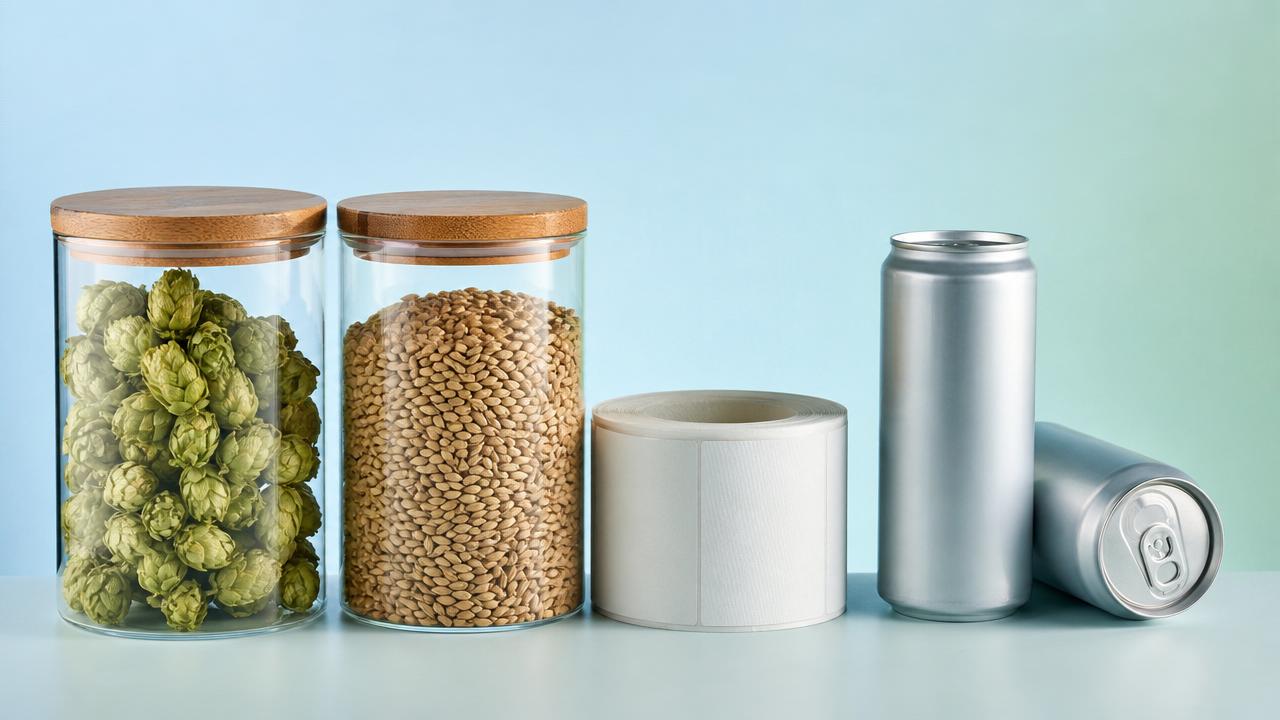
Sustainable Beer ODM isn’t just a marketing tagline—it’s reshaping sourcing, formulation, and lead times across the craft beer supply chain. For procurement professionals evaluating partners like Jinpai Beer, carbon-neutral commitments often trigger unexpected delays: traceable organic hops, certified low-impact barley, or eco-certified packaging can extend ingredient lead times by 4–12 weeks. This article uncovers where those bottlenecks hide—and how forward-thinking ODM providers mitigate them without compromising sustainability claims or delivery reliability.
Carbon Neutrality Is Accelerating Supply Chain Scrutiny—Not Just Slowing It Down
The shift toward Sustainable Beer ODM reflects deeper structural change—not merely greenwashing or compliance theater. Global beer buyers increasingly demand full lifecycle transparency: from barley field emissions and hop farm irrigation methods to brewery energy sources and pallet recyclability. Unlike legacy OEM arrangements, Sustainable Beer ODM requires verifiable data at every tier—certifications (e.g., PAS 2060, ISO 14067), third-party audits, and batch-level carbon accounting. This granularity doesn’t inherently cause delay; rather, it exposes preexisting fragilities in conventional sourcing: single-source suppliers, unverified “eco-friendly” claims, and paper-based traceability systems that collapse under audit rigor.
Four Hidden Sources of Lead-Time Inflation in Sustainable Beer ODM
Delays rarely originate from brewing itself. They emerge upstream—where sustainability verification intersects with agricultural cycles, certification logistics, and regional regulatory variance. Here’s where time slips occur:
- Organic Hop Sourcing Lag: Certified organic hop varieties (e.g., Hallertau Blanc, Nelson Sauvin) require 3-year land transition periods and yield 20–30% less per acre. Global organic hop acreage grew only 8.3% in 2023—far below demand surge. Lead times stretch to 10–12 weeks when aligning harvest windows, cold-chain logistics, and lab-confirmed pesticide residue reports.
- Low-Carbon Barley Certification Gaps: Barley grown using regenerative practices (cover cropping, no-till) lacks standardized carbon sequestration metrics across regions. Suppliers in Canada or Germany may hold EU Ecolabel or Climate Neutral Certified status—but U.S.-based maltsters often lack equivalent validation, forcing parallel testing and documentation rework.
- Eco-Packaging Validation Loops: Recycled-content cans (≥90% PCR aluminum) and FSC-certified cardboard sleeves require batch-specific mill certificates. A single misaligned certificate triggers re-submission, QA hold, and production rescheduling—even if physical materials arrive on time.
- Cross-Border Carbon Accounting Handoffs: When malt is milled in France, hopped in New Zealand, and brewed in China (as with Jinpai Beer’s global ODM model), each jurisdiction applies different GHG calculation rules (e.g., DEFRA vs. EPA vs. GHG Protocol Scope 3). Reconciling these adds 2–3 weeks per formulation review cycle.
Why Jinpai Beer’s Sustainable Beer ODM Model Reduces Friction—Without Diluting Integrity
Jinpai Beer embeds sustainability resilience into its ODM architecture—not as an add-on, but as a built-in operational layer. Three design choices materially compress lead-time volatility:
This infrastructure enables Jinpai Beer to maintain average Sustainable Beer ODM lead times within 6–8 weeks—even for complex functional specialty beers requiring dual-certified botanicals (e.g., adaptogenic kava-infused lagers) or sugar-free low-calorie formulations using enzymatically hydrolyzed starches with verified low-water-footprint sourcing.
What to Prioritize When Evaluating Sustainable Beer ODM Partners
Look beyond the carbon-neutral logo. Focus on operational evidence:
- Traceability Depth: Can they provide farm-level GPS coordinates, soil health reports, and harvest-date-linked carbon data—not just “organic” or “sustainable” labels?
- Certification Currency: Are all active certifications displayed with issue/expiry dates and auditor names—not generic statements?
- Lead-Time Buffer Transparency: Do they disclose standard buffer windows (e.g., “+3 weeks for new organic hop varietals”) upfront—or treat delays as exceptions to be negotiated post-PO?
- Scope 3 Integration: Does their carbon accounting include inbound logistics, packaging manufacturing, and agricultural inputs—or only brewery operations?
- Contingency Protocols: What alternatives activate if a certified supplier misses harvest? Are substitute ingredients pre-validated for taste, stability, and carbon equivalence?
Next Steps: From Assessment to Action
Sustainable Beer ODM is no longer optional—it’s a prerequisite for shelf access in EU supermarkets, premium bar programs, and climate-conscious retail chains. But speed and integrity need not compete. Jinpai Beer invites global partners to:
- Request a Sustainable Ingredient Timeline Audit: Receive a granular breakdown of lead times for your target SKU—including certified hop/barley availability windows, packaging certification readiness, and carbon reconciliation milestones.
- Access Jinpai’s Open LCA Dashboard (NDA-protected): View real-time emissions data for existing formulations—filterable by ingredient origin, transport leg, and energy source.
- Co-develop a Phased Sustainability Roadmap: Start with one certified input (e.g., organic Saaz hops), then layer in regenerative barley, low-carbon malt kilning, and closed-loop packaging—without resetting lead-time baselines.
Sustainable Beer ODM isn’t about eliminating delays—it’s about making them predictable, accountable, and ultimately shorter than the status quo. With Jinpai Beer, carbon neutrality accelerates trust, not timelines.
Thank you very much for writing to us. Please leave your message and contact information, we will reply to you within 24 hours.