



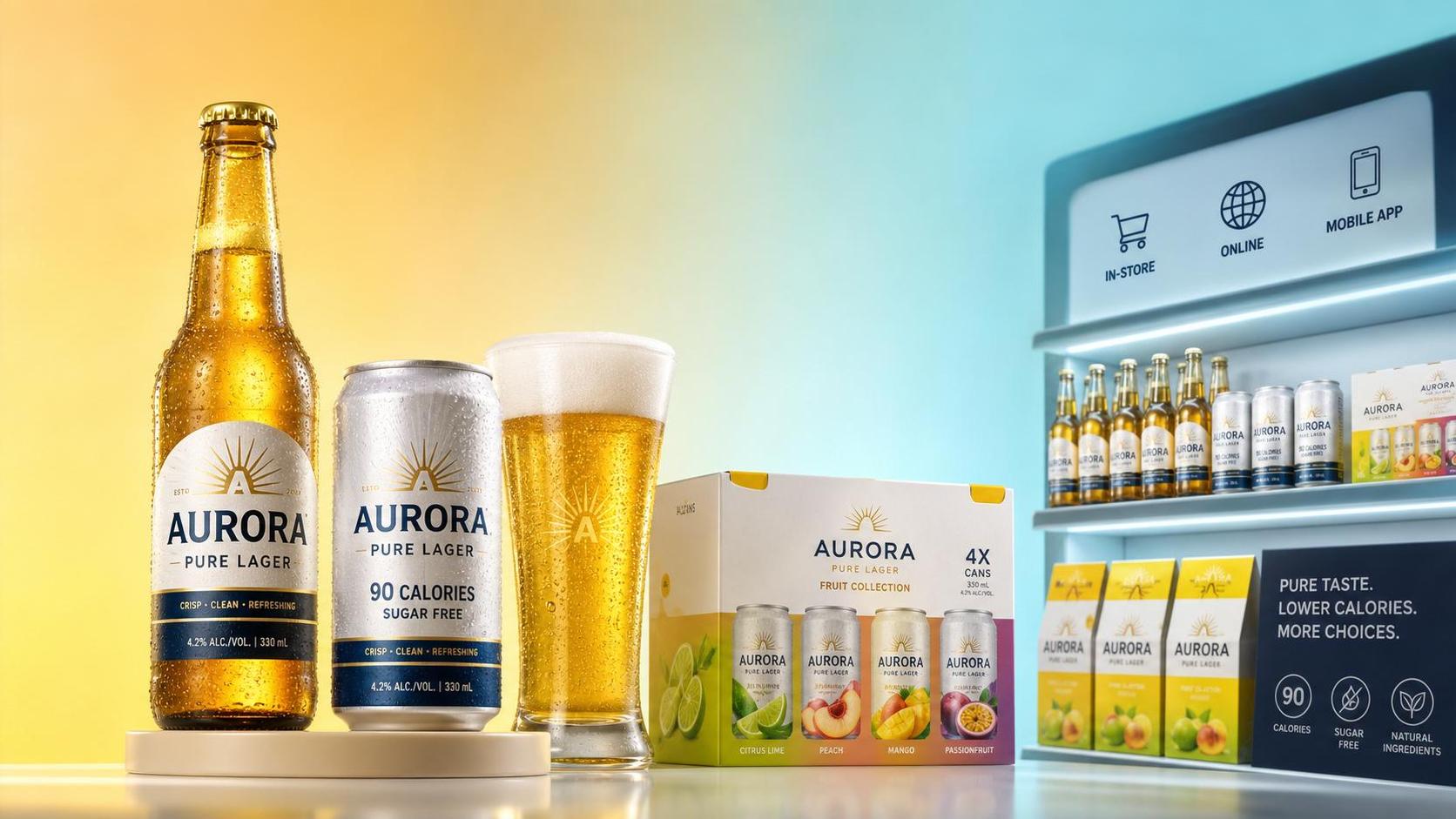
Lager beer demand in 2026 is no longer moving on volume alone
Lager beer demand is entering 2026 with a different rhythm than many expected just a few years ago.
Growth still exists, but it is spreading unevenly across price points, retail channels, and drinking occasions.
What matters now is not simply whether people drink lager, but which lager formats fit current lifestyles.
The strongest market signals point to premiumization, lighter flavor expectations, health-aware choices, and faster channel adaptation.
That shift is especially relevant in beverage markets where classic lager remains a high-rotation category.
It is also relevant for businesses balancing mainstream demand with newer segments such as sugar-free, low-calorie, flavored, and functional beer.
In practical terms, lager beer demand in 2026 is becoming more selective, more occasion-driven, and more dependent on portfolio precision.
The clearest signals are coming from consumer choice, not just market size
Recent demand patterns show that standard lager still holds scale, yet the category is fragmenting in meaningful ways.
Drinkers are not abandoning lager beer.
They are becoming more specific about taste, ingredient profile, packaging convenience, and social context.
This creates a market where classic lager remains essential, but it can no longer do all the work alone.
More buyers are watching which subcategories bring better turnover with less discount pressure.
That is why lager beer demand now has to be read through several smaller signals together.
- Premium lager is gaining attention where consumers want cleaner branding and more refined flavor.
- Low-calorie and sugar-free variants are moving from niche shelves into broader retail visibility.
- Smaller pack sizes are helping trial, convenience, and mixed-channel sales.
- Fruit-led and functional line extensions are pulling new traffic into beer portfolios.
The result is a broader decision map.
Lager beer demand remains strong, but loyalty is less automatic than before.
Why this change is becoming more visible now
Several forces are converging at once, and that is why the category feels different in 2026.
Economic pressure has not disappeared, yet consumers still reward products that feel worth the price.
At the same time, wellness awareness is affecting even traditional alcohol categories.
Lager beer demand is therefore being reshaped by both value sensitivity and quality expectations.
What stands out is that these drivers reinforce each other.
A lighter lager with premium cues can now answer more than one demand signal at the same time.
Demand is splitting by channel and drinking occasion
One reason lager beer demand appears harder to read is that channels are no longer moving together.
Restaurant, supermarket, bar, convenience, and e-commerce each reward different product decisions.
In on-trade settings, drinkability and brand presentation still matter most.
In supermarkets, pack architecture and price laddering carry more weight.
Online channels often favor discoverability, gifting, mixed bundles, and niche variants with clearer stories.
This means lager beer demand should be assessed by occasion clusters rather than by a single average trend.
Where the category is finding fresh momentum
- Casual dining continues to favor easy-drinking lager with stable supply and consistent taste.
- Modern retail is seeing stronger response to low-calorie and sugar-free beer choices.
- Night venues still support premium lager, especially when packaging and branding feel upgraded.
- Cross-border and digital channels reward broader portfolios instead of one hero item.
For suppliers with flexible product development and OEM or ODM capability, this fragmentation is not necessarily a problem.
It can become an advantage if channel needs are matched early.
Premium lager and better-for-you beer are no longer opposite directions
A more interesting development in 2026 is that premium and health-aware demand are starting to overlap.
Consumers increasingly view quality through ingredients, brewing credibility, balance, and after-drinking comfort.
That changes how lager beer demand should be interpreted.
A sugar-free or low-calorie lager is not only a functional offer.
It can also be a premium proposition when taste remains clean and packaging feels contemporary.
This is where broad portfolio breweries are in a stronger position.
Businesses that already produce classic lager, wheat beer, low-calorie beer, fruit beer, and functional specialty beer can respond faster to mixed demand.
They are not forced to treat lager beer demand as a single-style question.
Instead, they can use lager as the anchor while extending into adjacent categories that widen shelf opportunity.
What this means for portfolio planning and supply decisions
The practical impact is clear.
Lager beer demand in 2026 rewards portfolios that are coherent, not simply large.
Adding many SKUs without clear role definition creates inventory pressure and channel confusion.
A better approach is to build around a few demand jobs.
- Core volume: dependable classic lager for broad retail and food service rotation.
- Trade-up segment: premium lager with stronger brand cues and refined taste messaging.
- Lifestyle segment: sugar-free or low-calorie beer for wellness-aware occasions.
- Traffic builder: fruit-flavored or functional specialty beer to widen appeal.
This structure aligns well with producers that combine R&D, brewing, packaging flexibility, and global distribution support.
It also makes OEM and customized solutions more meaningful because product adaptation follows actual market signals.
The next phase will favor speed of adjustment over scale alone
Looking ahead, lager beer demand is unlikely to turn into a single global pattern.
Regional taste, price tolerance, retail structure, and regulation will keep shaping the category differently.
Still, the broader direction is becoming easier to read.
Demand is moving toward cleaner positioning, smarter segmentation, and products that fit real consumption moments.
That is why the most useful next step is not broad expansion for its own sake.
It is careful comparison of channel data, format performance, and emerging taste preferences inside each target market.
Lager beer demand in 2026 still offers room for growth, but the strongest opportunities are tied to sharper judgment.
Review which lager styles are gaining traction, which health-led claims are becoming credible, and which adjacent beer categories improve portfolio balance.
A phased plan built around those signals will be more durable than reacting to headline volume alone.
Thank you very much for writing to us. Please leave your message and contact information, we will reply to you within 24 hours.